REVIEW · DUBLIN
Dublin Traditional Irish Music Walking Tour with Live Performance
Book on Viator →Operated by Original Dublin · Bookable on Viator
A good tune can make a city feel personal. This Traditional Irish Music Walking Tour turns Dublin landmarks into sing-along stops, with an Irish musician telling the stories through folk ballads and other classics you’ll hear again and again. I love that you get both medieval-to-Victorian Dublin history and live performance in one compact walk, and I love the small-group feel capped at 20 people. One thing to consider: street noise in Temple Bar and a crowded meeting spot can make it harder to catch every lyric unless you position yourself well and confirm you’re with the right guide.
You start in the Temple Bar area and end near St Patrick’s Cathedral, so it’s a smart add-on even if you’re also doing museums or pub-hopping later. Expect a relaxed pace—short walks between stops—rather than a “race through sights” tour.
If you’re the sort of traveler who likes history with a soundtrack, this is a fun fit. Just go in knowing it’s part storytelling, part performance, and the energy depends on the guide and the group’s willingness to participate.
In This Review
- Key things to know before you go
- Price and what you’re actually paying for
- Temple Bar to St Patrick’s Cathedral: the route in plain terms
- Stop 1: Smock Alley Theatre (1662) and why an old stage matters
- Stop 2: Grattan Bridge’s seahorse lanterns and River Liffey mood
- Stop 3: Fishamble Street—Viking Dublin and Handel’s Messiah
- Stop 4: Christ Church Cathedral—medieval Dublin with darker corners
- Stop 5: Dublin Castle steps—ship street gate and famous footsteps
- Stop 6: St Patrick’s Cathedral finish—ending where you can keep exploring
- Guides, instruments, and the “real performance” factor
- What kind of traveler will enjoy this most?
- Practical tips so you don’t miss the music
- Should you book this Dublin Traditional Irish Music Walking Tour?
- FAQ
- Where is the meeting point?
- How long is the tour?
- What does the tour cost?
- Does the tour use a mobile ticket?
- What landmarks are included on the walk?
- What is the cancellation policy?
Key things to know before you go
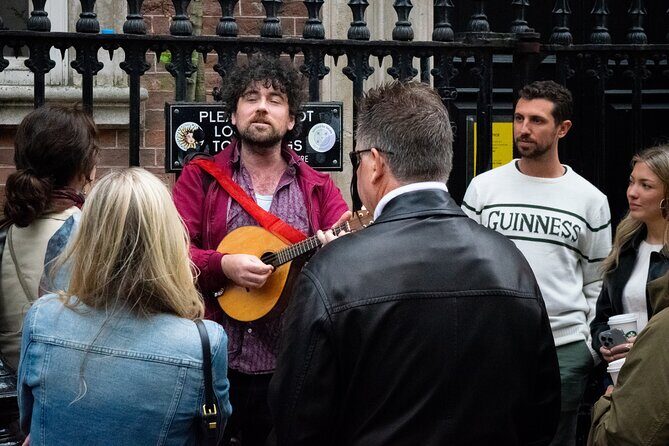
- Live traditional music, not a museum talk: your guide performs and ties each location to a song or verse.
- Temple Bar meeting point (3 Crown Alley): it’s central, but it can be busy—show up a bit early.
- A tight 2-hour route: six main stops keep things moving without long detours.
- Free entry at several stops: Smock Alley Theatre and the stops listed along the route are marked free for the tour moments.
- You’ll walk past famous Dublin corners: Grattan Bridge, Fishamble Street, Christ Church Cathedral, and Dublin Castle are all on the way.
Price and what you’re actually paying for
At $27.81 per person for about 2 hours, this tour is priced like a small-group walking experience with a working musician included. You’re not just paying for directions—you’re paying for a performer who brings the city’s stories to life with songs, poems, and occasionally dance-style audience interaction.
What makes the value feel fair is that the stops themselves are either major Dublin landmarks you’ll want to see anyway (like Christ Church Cathedral and Dublin Castle) or smaller historic sites that can be easy to miss on your own. The performance angle is the reason this costs more than a basic walk, and if that’s the kind of thing you enjoy, you’ll feel like your money is buying a show plus a history lesson.
Also, the group size matters. With a max of 20, it’s far easier to hear a guide’s voice than on larger tours. If you’re sensitive to hearing every word, arrive on time and keep your spot near the front when the guide starts singing.
You can also read our reviews of more walking tours in Dublin



Temple Bar to St Patrick’s Cathedral: the route in plain terms
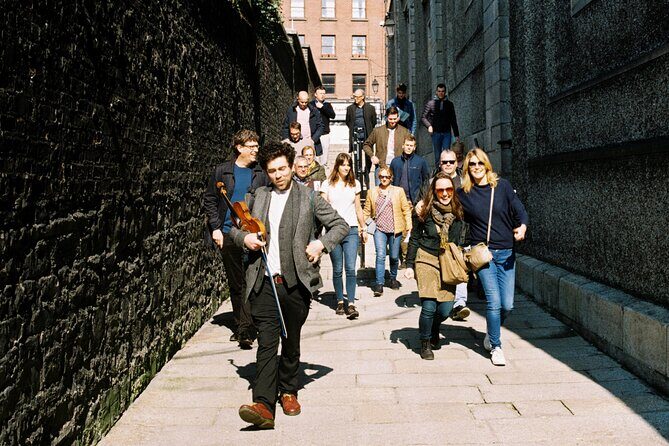
This walk is built like a guided “time travel” through Dublin—starting in the heart of Temple Bar and ending at St Patrick’s Cathedral. You begin at 3 Crown Alley, Temple Bar at 1:00 pm, and you finish at St Patrick’s Cathedral, St Patrick’s Close.
The route follows a classic Dublin pattern: iconic central spots, then streets and corners that feel older than they look—especially once you’re near the medieval core around Christ Church. Even if you’ve visited Dublin before, the music-and-story format changes how you see the same streets.
The structure is simple:
- You gather at Temple Bar
- You make quick stops (about 10 minutes each at the listed venues)
- You end close to the finish cathedral area, which is handy if you want to continue exploring on foot
Because the tour is only about 2 hours, you’ll get that “compact Dublin” feeling—enough time for multiple landmarks, without wiping out the rest of your day.
Stop 1: Smock Alley Theatre (1662) and why an old stage matters
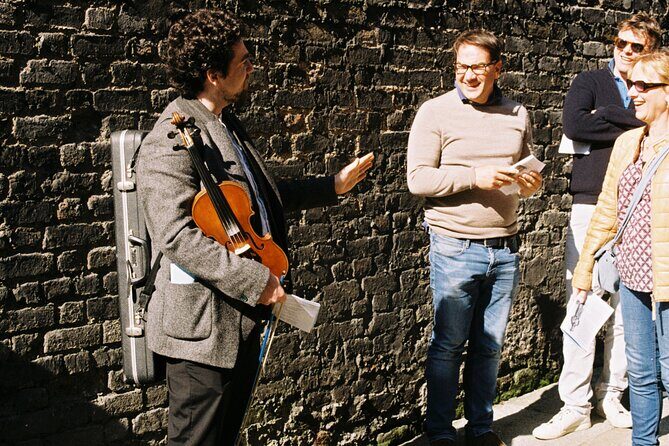
Your first landmark is Smock Alley Theatre (1662), in the center of Temple Bar. It’s listed as the oldest theatre in Ireland, and it’s a great opener because theatre and music are part of how Irish culture stayed loud even when history got rough.
At this stop, expect the guide to connect the setting to the idea of performance as community memory. A theatre built in the 1600s isn’t just a building—it’s a signal that Dublin has long treated songs, stories, and speech as public life.
Practical note: the time here is short (about 10 minutes). If you want photos, do them early, then focus on the guide’s story so you don’t feel rushed at the end.
Stop 2: Grattan Bridge’s seahorse lanterns and River Liffey mood
Next is Grattan Bridge, a picturesque River Liffey crossing linking Capel Street with Parliament Street. The bridge is decorated with seahorse lanterns, which is exactly the kind of detail you’d miss if you were just walking quickly between major sights.
This is a nice mid-tour contrast: you’ve started with theatre history, and now you’re on a river link that reminds you Dublin is a port city in spirit. The guide uses the spot as a jumping-off point to connect everyday scenes to songs people would have known long ago.
What to watch for: the Liffey area can feel lively. If it’s crowded, stand where you can still see the guide clearly when the performance starts.
Stop 3: Fishamble Street—Viking Dublin and Handel’s Messiah
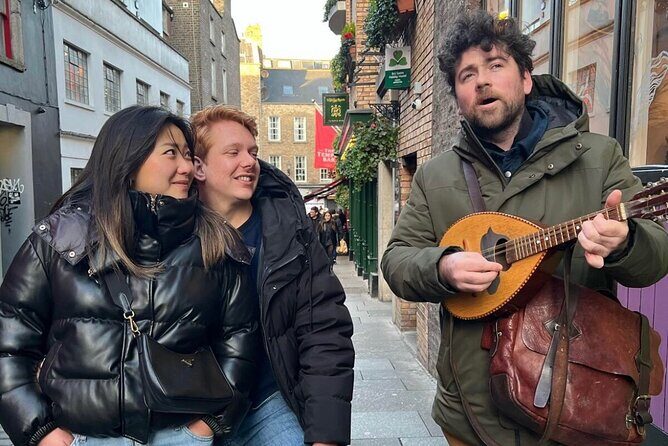
Then you move to Fishamble Street, often described as Dublin’s oldest street. Here’s where the walk earns its “history with personality” reputation: Fishamble Street ties together surprisingly different eras.
It’s linked to a major Viking settlement (the biggest found outside Scandinavia), and it’s also famous as the site of the first ever performance of Handel’s Messiah. That combination alone makes the street worth lingering on, even if you’re not a music nerd.
On this stop, the guide typically connects those facts to the role of music in public life—how communities gather around performance, and how a song can outlive the people who wrote it.
Photo tip: snap your cathedral/castle shots on your way to later stops too. This street is good for narrow-street atmosphere photos, but the tour’s best landmark photos come closer to Christ Church and Dublin Castle.






Stop 4: Christ Church Cathedral—medieval Dublin with darker corners
The biggest “wow” landmark on the route is Christ Church Cathedral, described as the heart of medieval Dublin where medieval and Victorian splendour meet.
This is also where the tour’s tone often shifts. The guide explores some of the cathedral and its surroundings through song, with a focus on the darker side of the story—because history in this part of Dublin wasn’t always gentle.
If you like your landmarks with real context (not just dates), this stop is a highlight. The cathedral is large, and it’s easy to feel small inside it. Having the performance and storytelling here helps the building feel less like a photo and more like a lived-in piece of the city’s past.
Consideration: cathedral interiors can echo, and your ability to hear depends on group placement. If you’re at the edge, scoot toward the guide when music starts.
Stop 5: Dublin Castle steps—ship street gate and famous footsteps
After Christ Church, the tour swings by Dublin Castle, aiming toward the Ship Street Gate and some of the famous steps that people associate with major moments in Irish governance.
Even with only a brief stop, this is a useful transition from medieval religious space (Christ Church) to political and civic power (Dublin Castle). The guide ties the city’s authority and social changes to songs and lyrical storytelling, which is one reason this tour works better than a standard “walk and read facts” route.
This is also a stop where you’ll likely want at least a quick photo. You’ll be moving again soon.
Small-group benefit: with fewer people, it’s easier to keep the focus on the guide instead of playing “where did everyone go?” with a huge crowd.
Stop 6: St Patrick’s Cathedral finish—ending where you can keep exploring
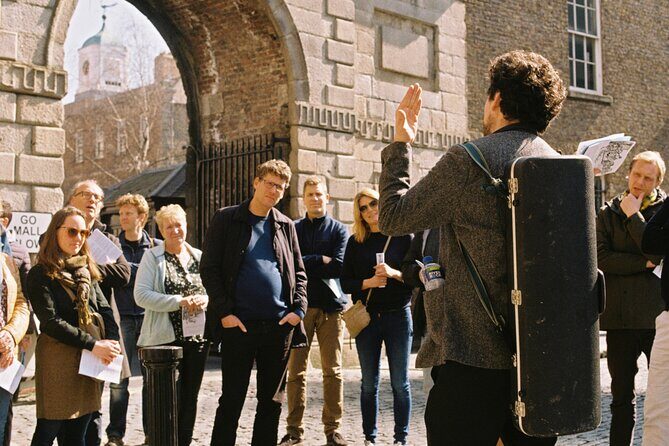
You finish at St Patrick’s Cathedral, specifically at St Patrick’s Close beside the cathedral. Ending here is smart because it drops you right into a famous area you can explore after the tour without needing taxis or extra planning.
By this point, you’ve heard a lot of Dublin’s story told through songs connected to different eras. Finishing at a major cathedral helps the last notes land in a place people already associate with Irish heritage.
If you’re planning after: this is a convenient ending point for continuing on foot through nearby streets, or for grabbing a quick drink or meal in the general cathedral/central corridor.
Guides, instruments, and the “real performance” factor
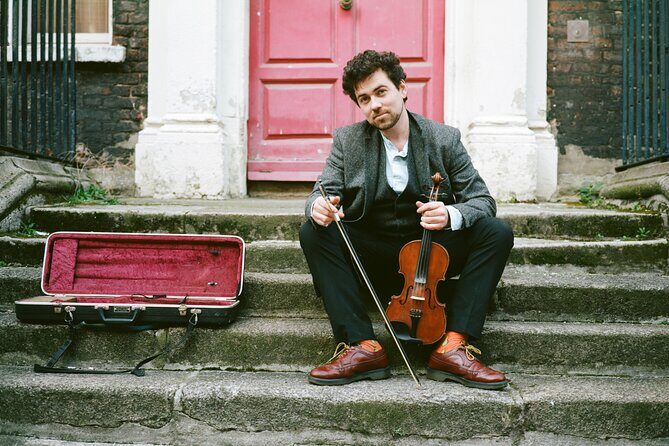
A big part of why this tour is highly rated is that your guide is an acclaimed Irish musician, not just a narrator. Names you may see associated with the leadership include Ciarán, Dylan, Sean, and Shaun.
You’ll likely hear traditional songs performed live, with instruments such as a mandolin mentioned in the experience. Some performances are interactive—think sing-along moments and light audience participation (and sometimes a playful push toward clapping or moving).
Here’s how to set yourself up for success:
- Keep your attention on the guide when they shift from walking to singing.
- If you don’t love participation, you can still listen—just stand where you’re comfortable and let the performance reach you.
- If you need to be able to hear clearly, don’t hang back behind taller people.
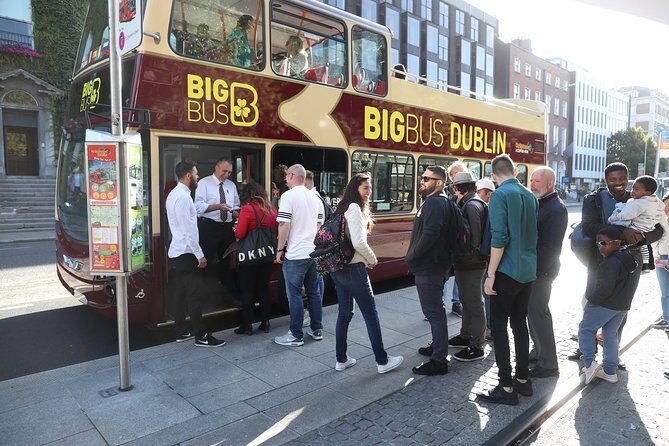
One practical caution from real-life group dynamics: Temple Bar is busy, and there can be more than one walking group around. Make sure you’ve got the correct tour and the correct meeting point staff/instrument before you start moving.
What kind of traveler will enjoy this most?
This is a strong match for:
- People who love Irish music and want the songs tied to real streets and landmarks
- First-timers who want a Dublin overview with a cultural twist
- Anyone who likes history told like a story, not a list of facts
It’s also a good choice if you want a break from “all museum, all the time.” The tour is part entertainment and part city context, which helps you remember what you see afterward.
If you’re mainly interested in architecture details only, you might find the performance takes a bigger slice than a pure sightseeing walk. But if you’re okay with a song-driven approach, you’ll likely feel like you got something different from the usual Dublin routine.
Practical tips so you don’t miss the music
Temple Bar can be noisy, and the tour relies on you hearing and watching the guide. Do these small things and the experience will feel smoother:
- Arrive a few minutes early at 3 Crown Alley so you can locate your guide before the crowd thickens.
- Aim to stand closer when the music starts, especially at Christ Church and cathedral-area stops.
- Bring a phone for photos, but don’t let photo-taking break your listening flow.
- Dress for walking. It’s a city walk, and you’ll be moving between short stops for the full ~2 hours.
Should you book this Dublin Traditional Irish Music Walking Tour?
If you’re craving Dublin with a soundtrack, I’d book it. The price feels reasonable because you’re getting a live musician-led performance plus multiple major landmarks in a compact route from Temple Bar to St Patrick’s Cathedral.
I’d skip it only if you strongly prefer quiet, lecture-style history and minimal audience interaction, or if you know you’re going to struggle with street noise and group hearing. Otherwise, this tour is a genuinely fun way to see Dublin’s old streets and famous buildings while you hear the songs those places helped shape.
FAQ
Where is the meeting point?
You meet at 3 Crown Alley, Temple Bar, Dublin (D02 CX67). The tour starts at 1:00 pm.
How long is the tour?
The tour is listed as about 2 hours.
What does the tour cost?
The price is $27.81 per person.
Does the tour use a mobile ticket?
Yes, the tour includes a mobile ticket.
What landmarks are included on the walk?
Key stops include Smock Alley Theatre, Grattan Bridge, Fishamble Street, Christ Church Cathedral, Dublin Castle, and the finish at St Patrick’s Cathedral.
What is the cancellation policy?
There’s free cancellation up to 24 hours before the start time for a full refund. If you cancel within 24 hours, there’s no refund.