REVIEW · DUBLIN
Dublin: Sightseeing Walking Tour in German
Book on GetYourGuide →Operated by Pat Liddy's Walking Tours of Dublin · Bookable on GetYourGuide
Dublin clicks into place on foot. This 2.5-hour German-language walk links Dublin Castle, Trinity College, and the grand sights in between with the kind of street-level stories that make the city feel personal. I like the small-group set-up (so you can actually hear the guide) and I really enjoy the mix of big landmarks plus odd little details you’d probably miss on your own.
One consideration: the tour is external only for the stops you see, so you won’t be doing full interior visits unless there’s an outside opportunity after the walk.
If you want a first-time route that covers both sides of the River Liffey and gives you a clear sense of where things are, this is a smart way to get oriented fast. It also works well if your group includes German speakers who want explanations, not just signs.
In This Review
- Key Things I’d Watch For
- Why This German-Language Walking Tour Makes Sense in Dublin
- Meeting Point at the Tree of Gold on Dame Street
- Dublin’s Medieval-to-Official Area: Dublin Castle and Christ Church Cathedral
- Quick practical note
- The Temple Bar-to-Liffey Swing: Fishamble Street, Smock Alley, and a Lot of Story Density
- Crossing the River Liffey: Millennium Bridge and the Wobbly-Bridge Moment
- The Italian Quarter Area: St Mary’s (Now a Café/Bar) and Henry & Moore Streets
- What I’d do if I had extra time
- O’Connell Street: The Big Stage and the Key Political Landmarks
- Ending Outside Trinity College: Book of Kells (Famed and Close)
- What You Really Learn Beyond the List of Sights
- The $34 Price Tag: Value for a 2.5-Hour Orientation
- Who Should Book This Tour (and Who Might Skip It)
- Tips to Get More From the Walk
- Should You Book This German Dublin Walking Tour?
- FAQ
- What language is the tour conducted in?
- How long is the walking tour?
- Where does the tour start?
- What is included in the price?
- Are you able to go inside the attractions?
- Is the tour wheelchair accessible?
- Is cancellation allowed, and how much notice is required?
Key Things I’d Watch For
- German-speaking guide, live and conversational so you can follow the story without guessing.
- Small group experience that stays easy-going rather than rushed.
- Both sides of the River Liffey so you connect Temple Bar to the Northside quickly.
- Landmarks plus offbeat surprises like a former Lisbon tram repurposed as a café and a wobbly-bridge moment.
- External-only viewing at major stops, which means great photo angles but no ticketed interiors.
- Trinity College Book of Kells finale (outside) to end on a Dublin highlight without a long wait.
Why This German-Language Walking Tour Makes Sense in Dublin
Dublin can feel like a patchwork at first: medieval bits here, grand Georgian streets there, and big national history around almost every corner. This tour helps you stitch it together by walking a route that makes geographic sense—starting on Dame Street, swinging through the Viking/medieval area, crossing the river zone, then ending near Trinity College.
The German language part is a big deal. If you’re traveling with German speakers—or you just prefer learning in German—this keeps you from splitting attention between visuals and translation. The guide’s role is practical too: they point out what you’re looking at, and they explain why it matters.
The pace is easy-going, and the route is designed for sightseeing without turning into a march. You cover a lot in 2.5 hours, but it doesn’t feel like you’re being dragged from stop to stop.
You can also read our reviews of more walking tours in Dublin
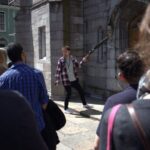

Meeting Point at the Tree of Gold on Dame Street
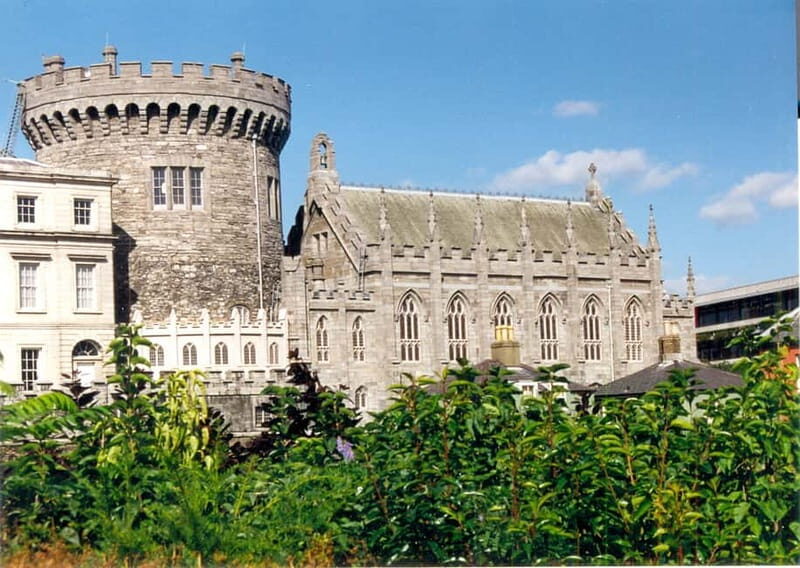
You start at the Tree of Gold Statue (Crann an Óir), at Central Plaza on Dame Street, Dublin 2—right by the corner of Dame Street and Fownes Street Upper. I like this start because it’s central. You don’t have to solve a maze of suburbs before the tour even begins.
From the first stretch, you’re set up for the tour’s main trick: turning familiar buildings into a story you can remember. The walking route begins in the heart of the city, so you quickly get that sense of Dublin’s layers rather than feeling like you’re seeing a random list of sights.
Dublin’s Medieval-to-Official Area: Dublin Castle and Christ Church Cathedral
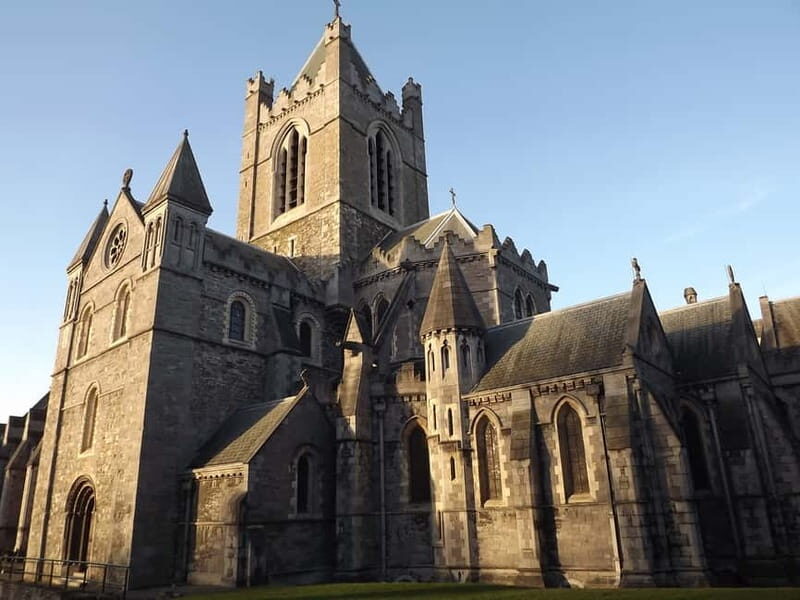
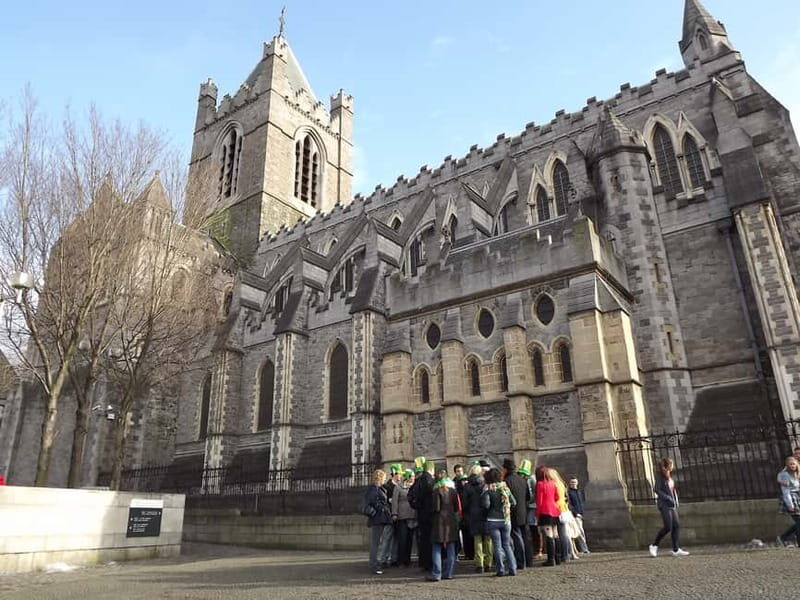
The first phase takes you through the former Viking and Medieval quarter. Dublin Castle and Christ Church Cathedral are the headline stops, seen from outside as part of the route, plus surrounding grounds and garden areas where viewing is possible.
What makes these stops work on foot isn’t just the architecture—it’s the way the guide connects time periods. Dublin Castle represents institutional power over centuries, while Christ Church Cathedral anchors an older religious presence that’s still visible in the city’s layout.
If you’re the type who likes to understand why streets are where they are, this early segment helps. You see how the city’s older core sits alongside later official buildings. It’s a solid start before you move into the more lively, commercial center.
Quick practical note
Because most visits are external, bring a phone camera mindset: look for angles, courtyards, gate lines, and street perspectives where the buildings reveal themselves even without entering.
The Temple Bar-to-Liffey Swing: Fishamble Street, Smock Alley, and a Lot of Story Density
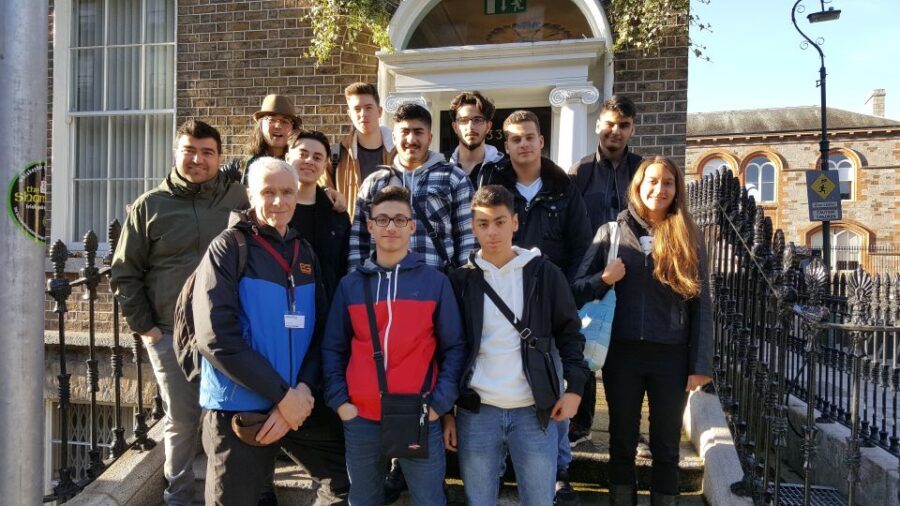
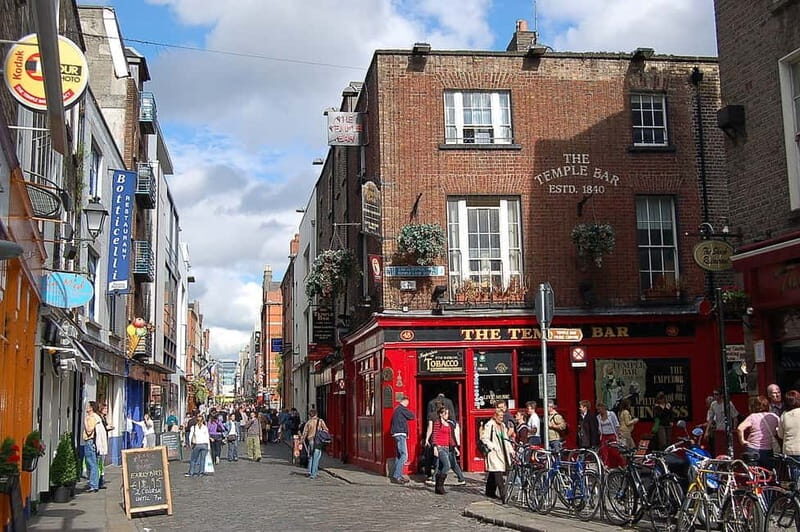
After the medieval/official zone, the tour rotates toward Temple Bar and makes its way along smaller historic streets like Fishamble Street and Smock Alley. This is where the walk starts to feel more like wandering with a smart local—still organized, but with room for curious side details.
From there, you pass Meeting House Square in Temple Bar and then move toward the River Liffey. You’re going for that classic Dublin mix: lively area energy paired with layered historical context.
One of the more memorable parts is the guide’s habit of pointing out repurposed places and odd artifacts. You’ll learn about a former Lisbon tram that’s now serving as a café—an example of how Dublin borrows and reuses rather than starting from scratch. You’ll also hear about a first but now defunct full-time cinema, which gives you a clear sense of how the city’s entertainment scene has changed over time.
These details matter because they teach you how to read the city. Instead of only seeing landmarks, you start noticing the human stuff: old functions, new purposes, and what that says about Dublin life.






Crossing the River Liffey: Millennium Bridge and the Wobbly-Bridge Moment
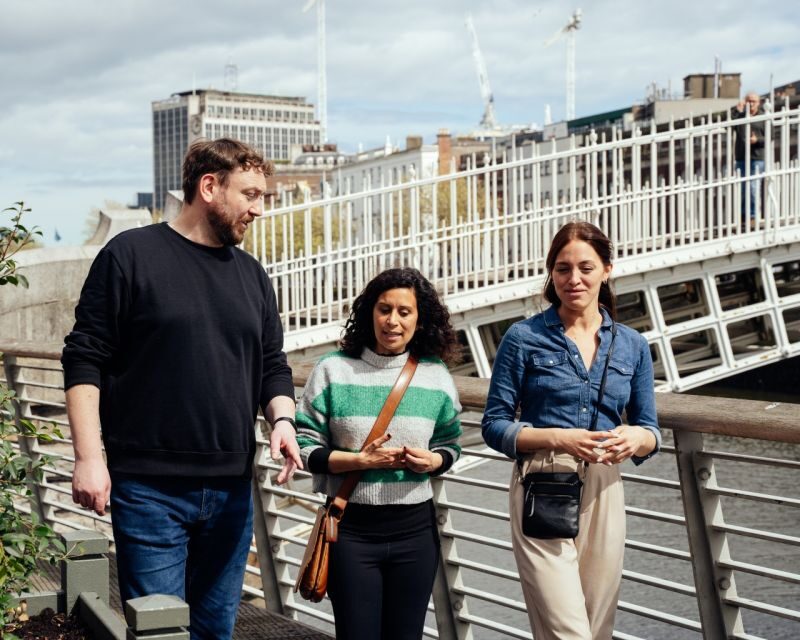
The route brings you across via the Millennium Bridge and through the riverside area, so you’re not stuck only with street-level views. This section gives you more than scenery: it’s a physical experience.
The tour includes a moment where you can feel the bounce of a wobbly bridge. That kind of sensory detail is why walking tours beat reading guides. You don’t just learn a fact—you get a memory hook tied to a specific place.
If you want a photo set-up, this is a great stretch for city-and-river shots, especially with the buildings framing the river. Even if you don’t care about the engineering, you’ll appreciate the change of pace as you move from street canyons to open river lines.
The Italian Quarter Area: St Mary’s (Now a Café/Bar) and Henry & Moore Streets
After the river crossing, you head into the city center on the north side zone, including the Italian Quarter and stops such as St Mary’s Church, which is now famous as a café/bar. Again, it’s external viewing—but the point here isn’t entry. It’s recognition.
This is one of those Dublin contrasts that sticks with you: a place that originally would have been defined by worship is now defined by gathering and conversation. That shift tells you a lot about how the city uses its buildings today.
You’ll also walk past Henry & Moore Streets. It’s the kind of area where you can look at Dublin as both modern and historic at once. The guide ties these streets back into the broader route, so it doesn’t feel like you’re wandering randomly around shops and cafés.
What I’d do if I had extra time
If you like photo breaks, this is a good place to pause for a quick look around. Since the tour isn’t emphasizing long stops, any extra time you add afterward works well here.
O’Connell Street: The Big Stage and the Key Political Landmarks
O’Connell Street is Dublin’s main historic artery in the city center, and the tour uses it to connect national moments with everyday urban life. You’ll pass the General Post Office (GPO) and the O’Connell Monument, and you’ll also see Dublin’s famous street scale as you walk.
The GPO stop is treated as more than a building photo. You’ll learn that it housed headquarters of the rebels of the 1916 Rising, and that the rebellion led to major destruction of the building and almost the entire street and surrounds. That’s heavy context, and it’s also what makes this portion valuable: you understand why this street has the importance it does.
Then the tour moves you along to the former Parliament House, now the Bank of Ireland. These official-era buildings help you see the city as a political map, not just a sightseeing map. The streets are the channels. The buildings are the landmarks of power.
Ending Outside Trinity College: Book of Kells (Famed and Close)
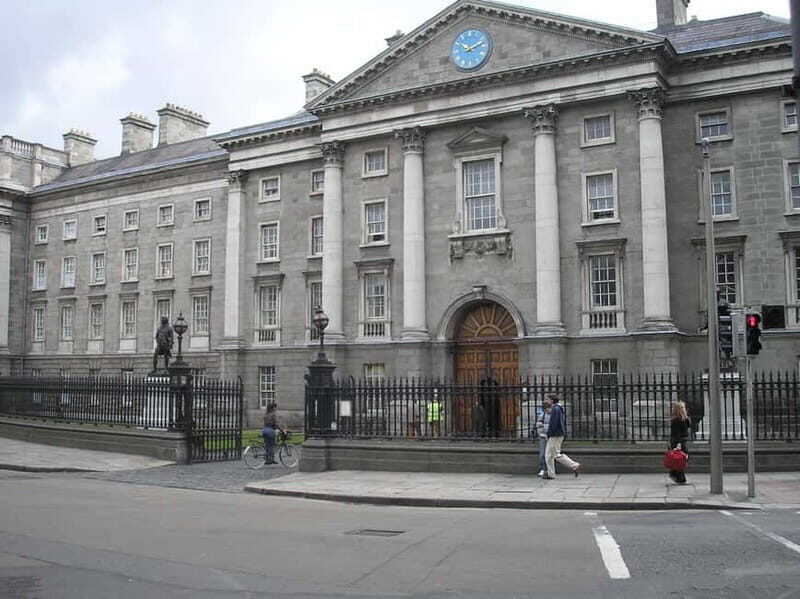
You finish around Trinity College, near the former 18th century Houses of Parliament. The tour ends outside Trinity College with its famed Book of Kells.
Even without entering, the finish feels satisfying because you end at a Dublin icon that most people recognize. It gives you a clear “arrival point” that you can build on later if you want to add ticketed visits.
I also like that this ending makes sense after walking the political and cultural stretches of the city. You start on Dame Street, see governance and rebellion sites along the way, and then end near the landmark of learning and Irish cultural identity.
What You Really Learn Beyond the List of Sights
I think this tour is strong because it teaches you how to look at Dublin, not just where to go. The guide includes a string of unusual story-hooks, and they’re exactly the kind of detail that changes how you experience a city after the walk.
Here are a few standout examples included in the tour:
- You’ll discover Dublin’s first but now defunct full-time cinema.
- You’ll hear about a church that’s not a church (a building-function surprise that gets explained on the walk).
- You’ll learn about a former Lisbon tram repurposed into a café.
- You’ll see an amusing representation of a da Vinci painting.
- You’ll get the wobbly-bridge physical moment at the river crossing.
- You’ll learn a tale of a post-box representing Ireland’s transition to independence.
- You’ll encounter a stark-naked representation of a very famous 18th century composer.
Some tours give you one big idea per stop. This one stacks ideas. That’s why it feels like a better introduction: by the end, you’re noticing Dublin’s odd mash-ups—old forms reused, history embedded in objects, and art popping up in places that look ordinary at first.
The $34 Price Tag: Value for a 2.5-Hour Orientation
At $34 per person for about 2.5 hours, you’re paying for guided route planning, interpretation, and a compact way to cover major central landmarks. For many visitors, that’s better value than piecing together multiple free walks plus map confusion.
The main thing you’re getting is guided context. Seeing Dublin Castle or Trinity College from the street is one thing. Understanding what the GPO meant during the 1916 Rising, or how certain sites shifted over time, is what turns sightseeing into learning.
Also, the small-group format helps here. If the group stays manageable, your guide can keep the storytelling clear and keep you from feeling like you’re listening from the back of a crowd.
If German is your preferred language, this adds another layer of value. Many Dublin tours run in English by default, even when you’d rather learn in German.
Who Should Book This Tour (and Who Might Skip It)
This tour fits best if you:
- Want your first Dublin walk to cover big-name sights across central areas and the river.
- Like history explained in a human way, not just dates and plaques.
- Travel with German speakers or you’re comfortable following a German guide.
- Prefer a small-group, easy-going pace.
You might consider skipping (or pairing it with other plans) if you:
- Specifically want inside visits. Since stops are external, you’ll likely need separate ticketed experiences for interiors.
- Don’t want a walking-heavy route for 2.5 hours, even if it’s easy-going.
Tips to Get More From the Walk
A few small choices make a big difference:
- Wear shoes you can walk in for 2.5 hours without thinking about it.
- Bring your camera mindset, since many of the best “view” points come from the street and nearby grounds.
- Pay attention early. The medieval and official zone sets up the meaning of later stops on O’Connell Street and near Trinity College.
- If you’re German-speaking, use the tour to ask yourself what you want to explore next. The walk gives you strong leads for follow-up.
Should You Book This German Dublin Walking Tour?
I’d book it if you want a friendly, structured way to connect the dots between Dublin’s top landmarks and its stranger side streets. The small-group feel plus German narration makes it a comfortable pick for travelers who don’t want to rely on translations or vague landmark spotting.
It’s also a smart first-day move. Starting on Dame Street and ending near Trinity College means you finish in a prime area for food, museums, or later ticketed stops.
If you’re mainly after inside visits, plan your expectations around external viewing. But if you like stories you can remember, the route does that job very well—especially thanks to the odd surprises the guide brings into the walk.
FAQ
What language is the tour conducted in?
The live tour guide speaks German.
How long is the walking tour?
The tour lasts about 2.5 hours.
Where does the tour start?
It starts at the Tree of Gold Statue (Crann an Óir), Central Plaza, Dame Street, Dublin 2, at the corner of Dame Street and Fownes Street Upper.
What is included in the price?
The price includes a professional well-trained guide.
Are you able to go inside the attractions?
All visits are external during the tour, though opportunities for such visits may be available after the tour.
Is the tour wheelchair accessible?
Yes, the tour is wheelchair accessible.
Is cancellation allowed, and how much notice is required?
Free cancellation is available up to 24 hours in advance for a full refund.