REVIEW · DUBLIN
Private Guided Walking Tour in Dublin
Book on Viator →Operated by MYBIKEORHIKE · Bookable on Viator
Dublin’s story comes best on foot. This private walking tour stitches together key downtown sights with real medieval leftovers, and it’s built for one-on-one questions. I love the live commentary from a local guide, and I also like that you leave with a souvenir video route map (captioned photos, video clips, and music). The only real catch: you’ll walk on uneven streets and one church stop depends on opening times.
The route is designed to feel logical, not random. You’ll start at Dublin’s Tourist Information Centre, then work your way through the medieval core, down into the Liberties, and finish near the big government-with-history finale at Dublin Castle. If the weather is rough, the tour may be rescheduled—so plan your Dublin outdoors time carefully.
In This Review
- Key highlights to look for
- Why this private Dublin walk feels better than “just sightseeing”
- Price and value: what $200.62 per group really covers
- Meeting at Dublin Tourist Information Centre and using your mobile ticket
- Royal Exchange to Parliament Street: starting with the city’s power center
- Essex Gate and Wood Quay: Vikings, walls, and street-name clues
- Christ Church Cathedral: the Norman presence you can walk around
- St. Audoen’s Church and the visitor centre: a stop with real “continuity”
- Brazen Head: Dublin’s oldest pub with a built-in story
- Medieval walls and the Liberties: street names that read like a roster
- Saint Patrick’s Cathedral and the garden pause for photos
- Dubh Linn Gardens: the “dark pool” story in the middle of town
- Dublin Castle: stacking 12th and 18th-century layers into one finale
- The video route map souvenir: a smarter way to remember Dublin
- Who this tour suits best (and who might want a different plan)
- Should you book this private Dublin walking tour?
- FAQ
- How long is the private guided walking tour in Dublin?
- What does it cost, and how big is the group?
- Where does the tour start?
- Is the tour guided for the whole time?
- What’s included versus not included?
- What souvenir do I get after the tour?
- Are church stops guaranteed to be open?
- Is the tour private?
- What happens if weather is bad?
- Is there free cancellation?
Key highlights to look for
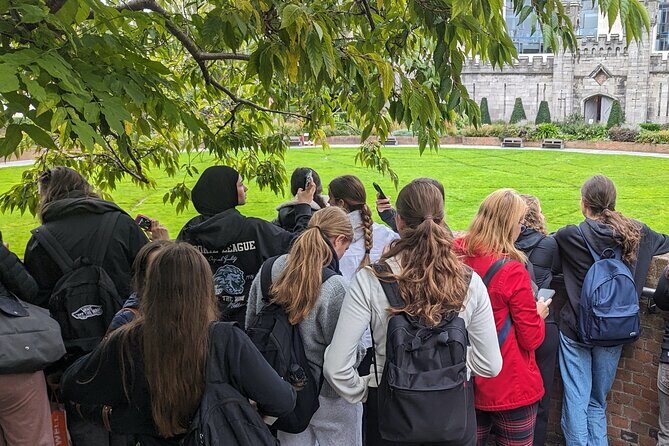
- One-on-one pace: ask your guide anything as you go, from Vikings to British rule.
- Cobbled medieval streets: Essex Gate and the cathedral area give you that walkable stone-city feel.
- St. Audoen’s Church access when open: long-running services plus a visitor centre stop.
- Brazen Head storytelling: a 1198 pub stop with a strong sense of place.
- Dubh Linn Gardens stop: the circular “dark pool” story and a calm break mid-walk.
- A souvenir you’ll actually use: a captioned, music-backed video route map.
Why this private Dublin walk feels better than “just sightseeing”
This tour works because it’s built around a real conversation, not a headset lecture. You get live guidance from a qualified local guide, and since it’s private, your questions don’t get squeezed into someone else’s schedule.
What I like about the focus here is the balance between Dublin’s big-name landmarks and the smaller medieval clues that most people miss. You’re not only looking at architecture—you’re learning why street names, alleys, walls, and places like Wood Quay matter.
One more practical bonus: the tour finishes back at your start point area, which makes it easier to plan dinner without rushing across the city. And if you’re the type who likes to keep notes, the video route map helps you refresh everything later—without trying to remember which tower was where.
You can also read our reviews of more walking tours in Dublin



Price and value: what $200.62 per group really covers
The price is $200.62 per group (up to 15 people), so the cost is really about what you’re sharing among your group, not a per-person ticket. For a small party, that often turns out to be strong value compared with booking separate guiding for multiple people.
What’s included is the big part: live commentary and entry to a medieval church and visitor centre stop (subject to opening times). What’s not included is food and drinks—snacks, refreshments, and alcohol are on you.
You’ll also want to factor in time. The total duration runs about 2 hours 20 minutes to 3 hours 30 minutes, and the walking time for the attractions is included in that estimate. That range matters because Dublin can slow down: cobbles, photo stops, and cathedrals where you’ll naturally pause.
Meeting at Dublin Tourist Information Centre and using your mobile ticket
You’ll meet at Dublin Tourist Information Centre on Barnardo Square, at 3 Palace Street, Dublin 2 (D02 T277). The end point is the same meeting point, so you don’t get stranded halfway across town.
You’ll get a mobile ticket, which is convenient if you’re also using your phone for navigation and photos. The tour is near public transportation, which is handy if you’re arriving by bus, tram, or walking in from a nearby hotel.
As you head out, wear comfortable shoes. The route includes cobblestones and older stone streets, and you’ll feel it in your feet if you show up in anything stiff or slippery. Also keep an eye on the weather: the experience requires good weather, and you’ll be offered a different date or a refund if it’s canceled due to poor conditions.
Royal Exchange to Parliament Street: starting with the city’s power center
Your first major stop is Dublin City Hall, a building that began life in the 18th century as the Royal Exchange. It later became headquarters for Dublin Corporation, and now it’s a multipurpose venue used for events like weddings and even movie shoots.
From there, you meander down Parliament Street. This is one of those streets where the modern buildings and old functions overlap, so the guide’s job is to make that timeline visible. You’ll also pass by places tied to commerce and city administration—like the area that once connected to a 17th-century custom house role.
Then you’ll glance toward Temple Bar. Even if you’ve already seen Temple Bar on Instagram, it lands better when you understand how the surrounding areas evolved.
Essex Gate and Wood Quay: Vikings, walls, and street-name clues
Next comes Essex Gate, a cobblestone street named for an entrance into Dublin’s medieval walled city. This is the kind of detail that makes a walking tour feel real: a street name isn’t just trivia—it’s a map to how people moved and defended the city.
Along this stretch, you’ll pass a theatre first opened in the 17th century, plus a Viking longboat that acts as a reminder of the earlier arrivals and conflicts. When you stand near Wood Quay, you’re at the site of an ancient Viking settlement—one of those moments where Dublin’s story stops being abstract.
After that, the tour turns toward Dublin’s oldest street area. Street names here act like a breadcrumb trail into medieval life, including market activity—Fishamble Street is named for a thriving market that once ran right through this part of the city.
You can also read our reviews of more guided tours in Dublin





Christ Church Cathedral: the Norman presence you can walk around
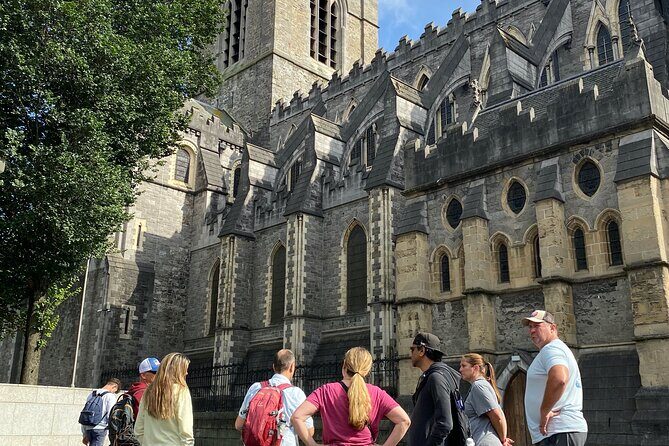
You’ll arrive at Christ Church Cathedral, built by the Normans in the 12th century. What makes this stop special on foot is how close you can get to the cathedral while still living in the surrounding medieval streetscape.
You’ll stroll along a cobbled walkway by the cathedral as it towers overhead. This is where your guide’s stories and the building’s scale help you understand how long-lasting these power structures were—centuries aren’t a metaphor here; they’re built into the stone.
If you like photos, plan on pausing. The cathedral’s position gives you multiple angles in a short distance, and you’ll be better off taking a couple of minutes now than trying to remember where to stand later.
St. Audoen’s Church and the visitor centre: a stop with real “continuity”
St. Audoen’s Church is one of the most compelling medieval stops on the walk. Services have continued uninterrupted since the 12th century, and the site now includes a visitor centre.
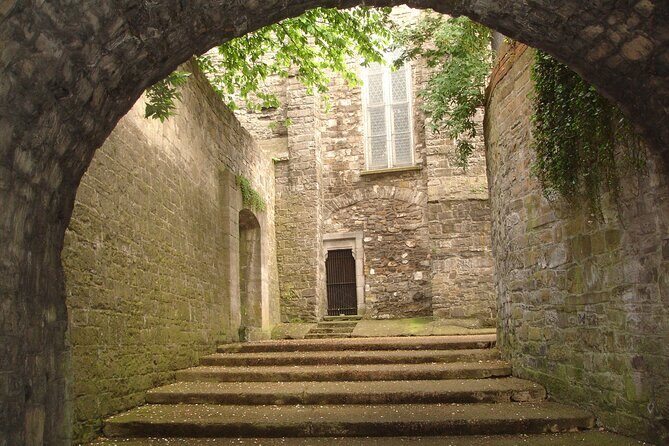
You’ll cross over Winetavern Street and pass through a residential area that has kept a medieval land-use pattern into modern times. Then you’ll reach an especially dramatic local feature called the Gates of Hell, before walking toward the church.
The visitor centre can be visited between April and October, and that part can be especially meaningful if you’re interested in how guilds, prayer, and burial practices shaped daily life. Admission is listed as free for this stop, but remember the overall tour includes entry to the church and visitor centre subject to opening times.
Brazen Head: Dublin’s oldest pub with a built-in story
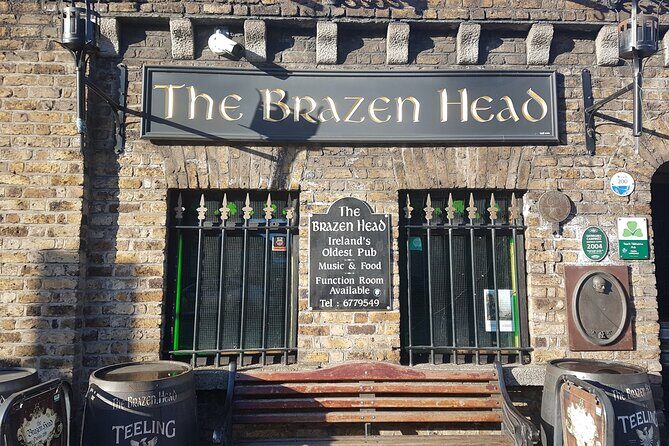
No medieval-themed Dublin day feels complete without a stop at The Brazen Head, described as the oldest pub in Dublin, established in 1198 CE. The name comes from braziers—barrels of burning fuel used to heat the charred hands of patrons on cold nights.
This is the right kind of break if you’re walking for hours. You’ll have time here for a tipple if you want, plus your guide will add context while you’re standing inside a space that’s clearly designed for stories and atmosphere.
The stop is about 15 minutes, so think of it as a quick taste rather than a long pub crawl.
Medieval walls and the Liberties: street names that read like a roster
As you continue, you’ll trace parts of the medieval city perimeter, including a distinctive section at Lamb Alley. This is where the tour shifts from single landmarks to how the city worked as a system—defense, boundaries, neighborhoods, and movement.
Then you head into the Liberties, a neighborhood known for its historical identity. You’ll pass the church of St. Nicholas of Myra, the once-thriving Iveagh Market, and streets named for major figures like Dean Swift, John Dillon, and Thomas Davis.
There’s also an arched alleyway where you’ll get a sense of how different scales of space connect—narrow passages to big institutions. And yes, competition comes up in the cathedral rivalry that follows.
Saint Patrick’s Cathedral and the garden pause for photos
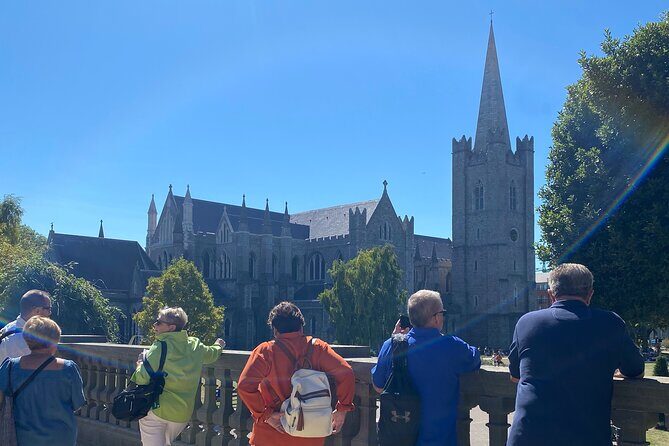
You’ll reach Saint Patrick’s Cathedral, often framed as a rival to Christ Church. This stop gives you wide views of both the cathedral and its gardens, with your guide walking through the city’s upheavals: Vikings, Normans, the Reformation, Oliver Cromwell, and the era connected with Guinness.
If time and weather allow, you might linger near an outdoor café and garden seating. Even if you don’t stop for a drink, this is a great place to reset your pace. After so much walking on street corners and in alleys, the open garden space makes the next wall-and-castle stretch feel less relentless.
Dubh Linn Gardens: the “dark pool” story in the middle of town
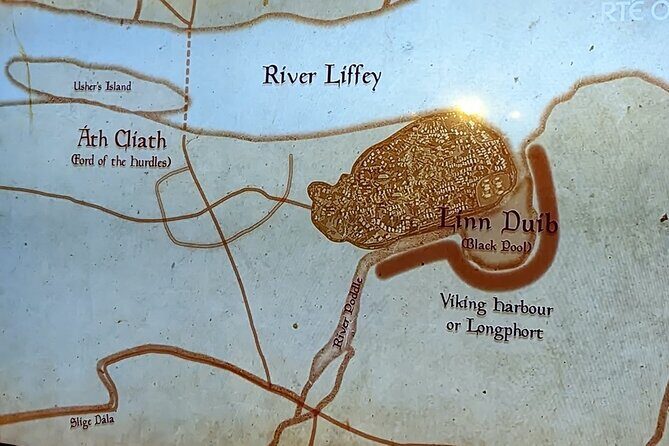
Next you’ll loop toward Dubh Linn Gardens, another strong “place-based” stop. The circular garden is tied to a “dark pool” idea—this connects to the name Dublin itself.
You’ll also pass a few notable memorial and public-art markers, including the Garda Memorial, a David & Goliath statue, and a tribute related to Special Olympics. If you enjoy mixing city history with modern identity, this garden stop does that without turning into a lecture.
The tour also highlights nearby cultural institutions such as the Chester Beatty Museum and Library. Even if you don’t go in on this walk, it helps you spot where to spend extra time later.
Dublin Castle: stacking 12th and 18th-century layers into one finale
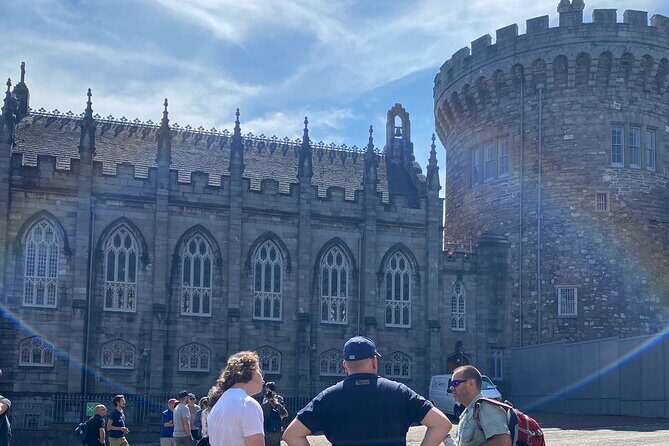
Your final attraction is Dublin Castle, the center of government administration during Ireland’s period under British rule. This is where Dublin’s timeline feels stacked rather than sequential.
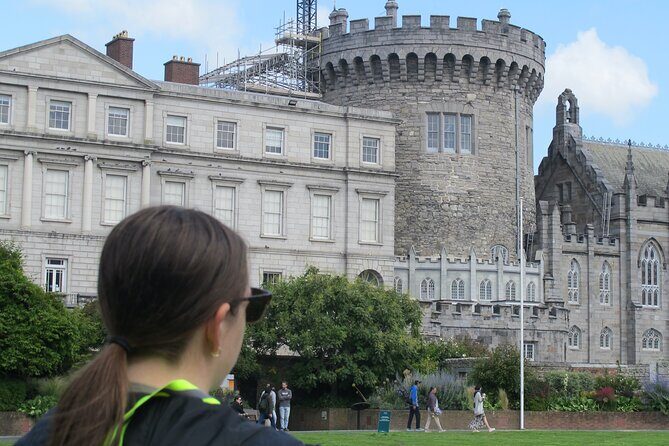
You’ll notice the juxtaposition of 18th-century and 12th-century architecture, plus remnants linked to early Norman rule. Your guide also connects the site to political drama, including the 16th-century escape of the last of the Gaelic chiefs from the still fully intact Record Tower.
After the castle courtyard, you’ll exit by City Hall, returning you close to where you started. It’s a clean finish for planning your evening.
The video route map souvenir: a smarter way to remember Dublin
This tour includes a souvenir that many walking tours don’t: a unique video route map with captioned photos, video clips, and music. That matters because Dublin days can blur together fast—cathedrals, alleys, and walls all start to look similar if you don’t have something to anchor them.
Think of this as your digital field note. When you’re back at your hotel, you can rewatch the route, match images to places, and decide what you want to revisit in daylight or with more time.
And if your guide helps with photos during the walk (some guides do), that video format gives you a more complete memory than a handful of selfies.
Who this tour suits best (and who might want a different plan)
This tour fits best if you:
- want a structured way to learn Dublin’s story in a few hours
- like medieval features—cathedrals, walls, old streets, and old pubs
- prefer a private pace where you can ask questions directly
You might want to skip or swap to something else if you:
- hate walking on cobbles or uneven surfaces
- are traveling only on days when you can’t risk weather-based rescheduling
- need lots of seated downtime, since it’s still a walking route with short stops
Should you book this private Dublin walking tour?
Yes—if your priority is a guided, story-driven walk through Dublin’s medieval core and surrounding landmarks. The value is strongest when you’re splitting the group price across a small party, and the souvenir video route map is a practical add-on you can use long after your boots come off.
Book it especially if you enjoy details: Viking Wood Quay, the medieval gates, St. Audoen’s Church’s long continuity, and the Liberties street-name trail. Just go in prepared for walking on older streets, and keep your schedule flexible enough for outdoor weather.
FAQ
How long is the private guided walking tour in Dublin?
The tour lasts about 2 hours 20 minutes to 3 hours 30 minutes, depending on the pace and time spent at stops.
What does it cost, and how big is the group?
It’s $200.62 per group, up to 15 people. Only your group participates since it’s private.
Where does the tour start?
You meet at Dublin Tourist Information Centre, Barnardo Square, 3 Palace St, Dublin 2, D02 T277, Ireland.
Is the tour guided for the whole time?
Yes. You get live commentary with a qualified local guide throughout the walking experience.
What’s included versus not included?
Included: live commentary and entrance to a medieval church and visitor centre (subject to opening times). Not included: snacks, refreshments, and drinks.
What souvenir do I get after the tour?
You receive a unique video route map with captioned photos, video clips, and music.
Are church stops guaranteed to be open?
No. The entrance to the medieval church and visitor centre is subject to opening times. One church stop (St. Audoen’s visitor centre) is listed as visitable between April and October.
Is the tour private?
Yes. It’s a private tour/activity, and only your group will participate.
What happens if weather is bad?
This experience requires good weather. If it’s canceled due to poor weather, you’ll be offered a different date or a full refund.
Is there free cancellation?
Yes. Free cancellation is available up to 24 hours in advance for a full refund.