Dublin clicks into place fast on foot. This 2.5-hour small-group highlights walk mixes major landmarks like City Hall and Trinity College with street-level surprises and stories that you only hear with a guide, including the kind of smart humor I saw from guides like Joe Brennan and John O’Flynn. What I like most is how easy-going the pace feels while still packing in places on both sides of the River Liffey.
You’ll be walking a lot, and there’s a chance the stride could feel a bit quick if you prefer slower sightseeing. One person even wished for a gentler walking pace, so it’s worth mentally preparing for steady footwork.
Most stops are viewed from the outside, but you’ll still get pointers on where you can explore more after the tour, including Trinity College’s Book of Kells area from the exterior. It’s a great way to get oriented fast, without turning your day into a checklist sprint.
In This Review
- Key things to know before you go
- From Dame Street to Dublin’s medieval core, this starts exactly where you should
- Dublin Castle grounds and Christ Church Cathedral: seeing the past without museum fatigue
- Fishamble Street, Smock Alley, and the Temple Bar edge: the city without the noise
- The Liffey crossing and Meeting House Square: two atmospheres in one hour
- Henry & Moore Streets and the Italian Quarter: where the route gets more personal
- St Mary’s Church turned café/bar and Dublin’s odd repurposing culture
- O’Connell Street and the GPO: the 1916 Rising story lands harder in the street
- Tiny symbols and bold weirdness: wobbly bridges, da Vinci mischief, and the naked composer
- Dublin City Hall and the finish outside Trinity College: Book of Kells, seen first-hand
- Price and value: about $31 for 2.5 hours and a guide who actually talks
- What you should take away for your independent time in Dublin
- Who should book this Dublin highlights and corners walk?
- Should you book it? My practical take
- FAQ
- FAQ
- How long is the tour?
- What’s the meeting point for the walk?
- Where does the tour end?
- Are you able to go inside the sights during the tour?
- What language is the guide speaking?
- How big is the group?
- Is the tour wheelchair accessible?
- What’s the cancellation policy?
- Is there a reserve now, pay later option?
Key things to know before you go
- Small group size (max 16, often less) keeps the tour personal and questions welcome
- Friendly, professional guides are a major strength, with storytelling and humor doing the heavy lifting
- Two sides of the Liffey means you see the city center’s different vibes in one go
- External-only sightseeing at the stops, with chances to go in after if you want
- Quirky Dublin details pop up along the way, from odd building uses to symbolic street objects
From Dame Street to Dublin’s medieval core, this starts exactly where you should
The meeting point is the Tree of Gold Statue (Crann an Óir), right on Dame Street at the corner with Fownes Street Upper. It’s easy to find, and it’s a smart start: you’re already in the heart of the city, surrounded by streets that feel like they’re layered with eras.
Once you begin, the tour follows a route that connects the Viking and medieval core to later city-center Dublin. I like this structure because it keeps the “why does this street look like this?” question in your head the whole time. Instead of only pointing at famous buildings, your guide helps you see how the city grew, shifted, and re-invented itself.
You can also read our reviews of more walking tours in Dublin


Dublin Castle grounds and Christ Church Cathedral: seeing the past without museum fatigue
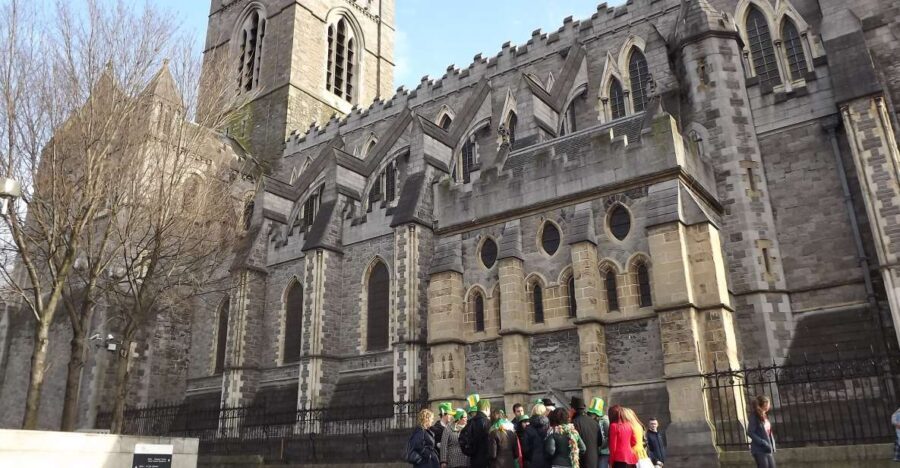
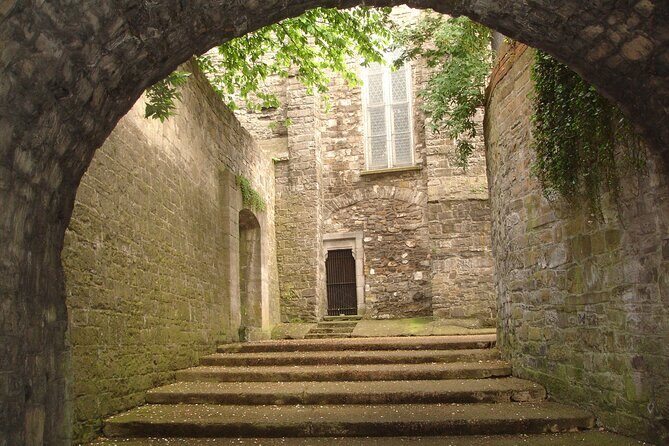
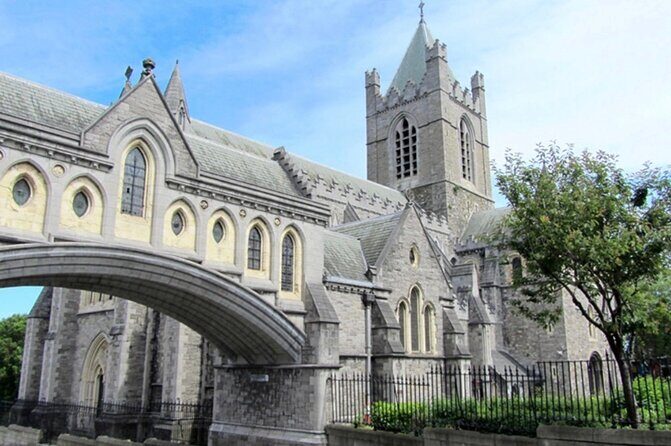
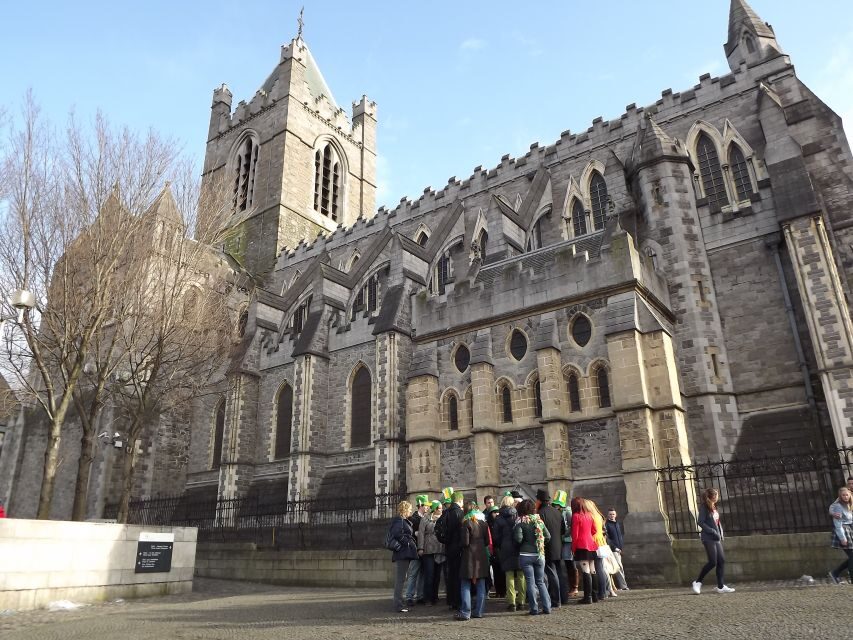
A big early payoff is Dublin Castle’s grounds and gardens, plus the area around Christ Church Cathedral. You’re not stuck staring at one monument for too long. Instead, you get the bigger picture: this is the kind of site where politics and power shaped the city’s layout.
Christ Church Cathedral also acts like a visual landmark for the way the medieval city operates. From the outside, you still pick up how places like this functioned as anchors—spiritual, civic, and historical all at once—while the surrounding streets evolved around them.
If you like architecture, you’ll appreciate how the guide frames what you see in plain language. It’s not just dates and names. It’s how Dublin’s buildings connect to the people who used them and the events that changed their fate.
Fishamble Street, Smock Alley, and the Temple Bar edge: the city without the noise
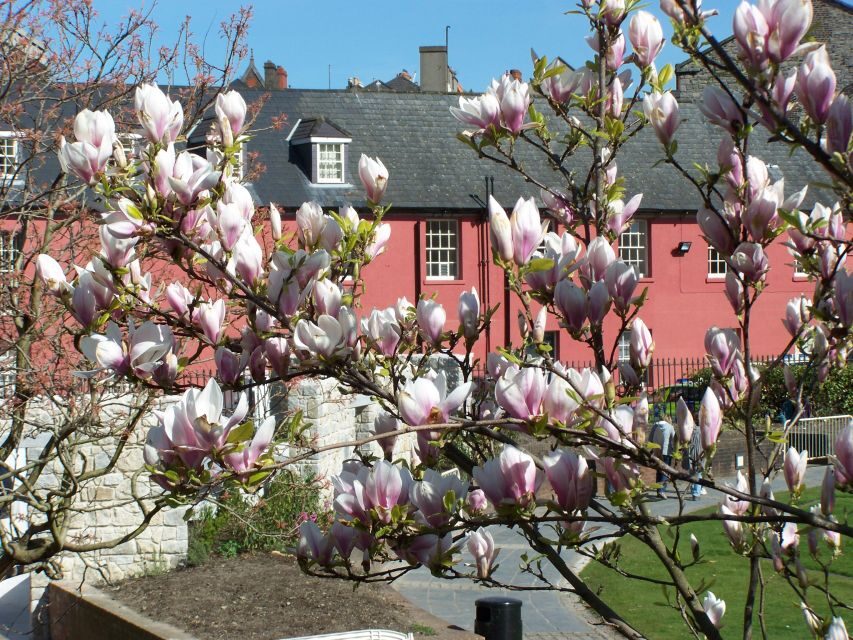
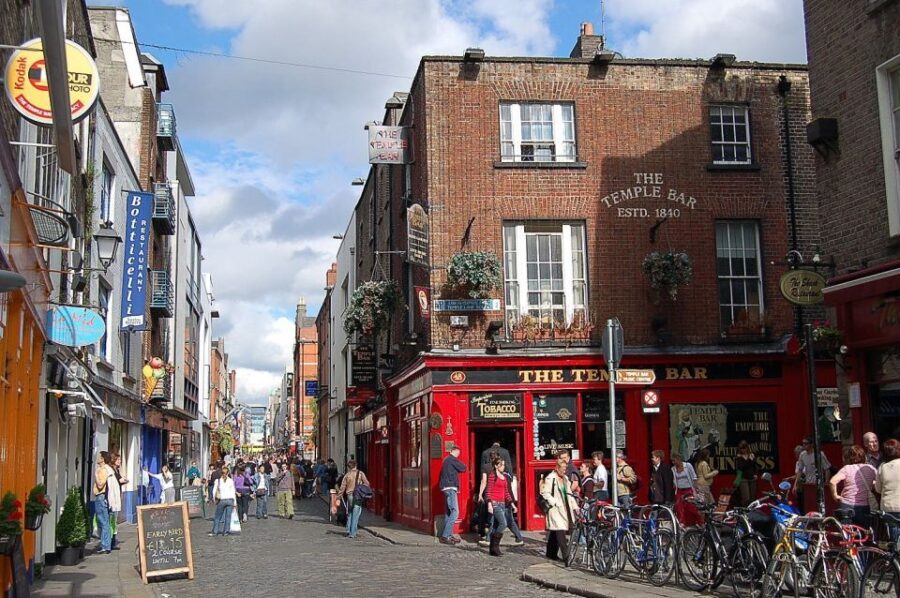
As the walk turns toward Temple Bar and the south-side lanes, you’ll pass through Fishamble Street and Smock Alley. These streets matter because they show Dublin’s dramatic talent history and its working-street character. The tour treats them like more than postcard backdrops.
Temple Bar is close enough to register immediately, but the tour doesn’t rely only on the busy vibe. You get the feeling of crossing into the party-famous zone while still spotting details that most people walk past.
This is where I think the guided storytelling really pays off. A good guide doesn’t just say what something is. They explain why it looks the way it does and what kind of Dublin life once happened there. That’s the tone you get here, and it helps the whole tour feel like a conversation rather than a lecture.
The Liffey crossing and Meeting House Square: two atmospheres in one hour
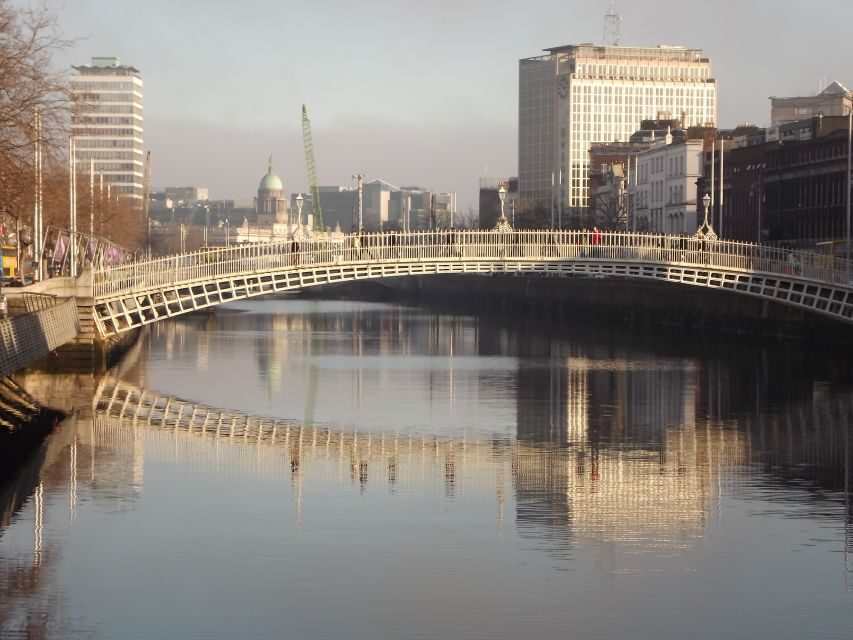
Then you work your way across the River Liffey via the Millennium Bridge. Feeling the bridge’s motion is one of those small moments that makes the tour memorable in a physical way. It’s also a practical viewpoint: you get a moving glance across the city, which helps you mentally map Dublin’s two sides.
From there, the tour heads toward Meeting House Square in Temple Bar’s orbit. This part of the route helps you understand Dublin as a city of meeting points—places where different communities, times, and uses collide. The stop doesn’t feel like filler because it’s tied to how people moved, gathered, and re-gathered over time.
If you’re the type who likes “put it on the map for me” tours, this section is a win. By the time you reach the next stretch, you’ll have a better sense of where everything sits relative to each other.
Henry & Moore Streets and the Italian Quarter: where the route gets more personal
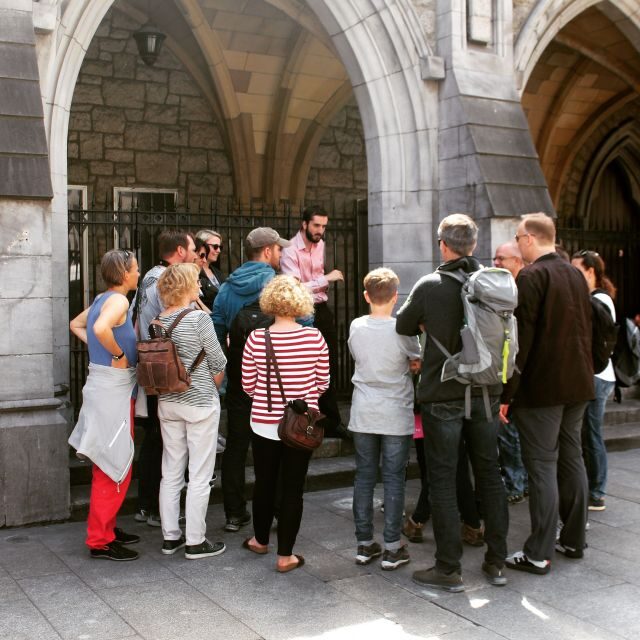
The tour brings you toward Henry & Moore Streets and into the Italian Quarter area. This is a great contrast point. After the heavier civic sites and political landmarks, the streets feel more everyday—shops, cafes, and that human scale that makes a city feel lived-in.
You also hear about a range of unusual attractions and building stories. The tour’s knack is pointing out things that aren’t what first glance suggests. You might spot clues about Dublin’s past entertainment scene (including a reference to a first but now defunct full-time cinema), and you may learn about a Lisbon tram now serving as a café—exactly the kind of quirky reuse that makes Dublin feel playful.
I like tours that give you these “wait, what is that?” moments because they turn your walk into discovery. Instead of only seeing what you expected to see, you collect odd details that you’ll remember later when you’re wandering on your own.
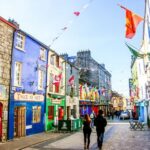





St Mary’s Church turned café/bar and Dublin’s odd repurposing culture
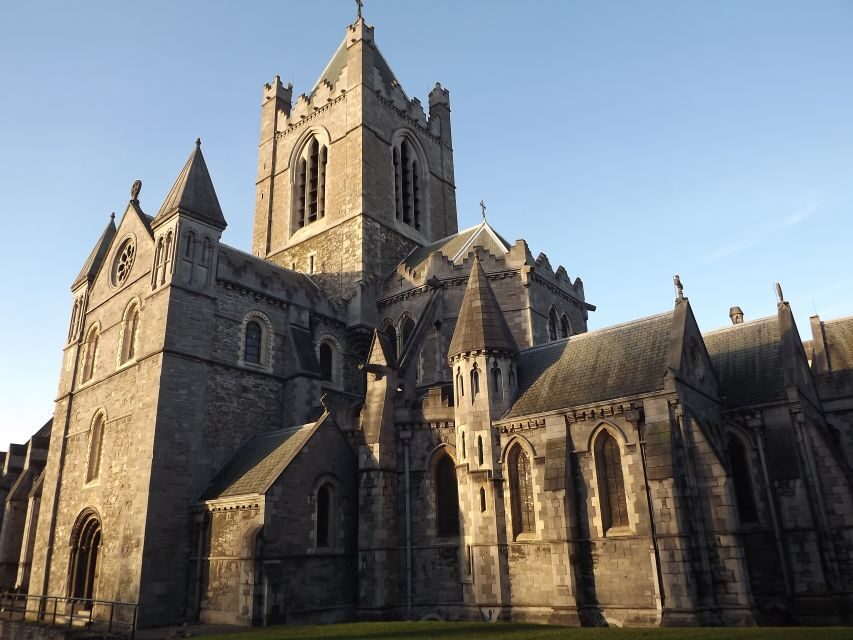
One of the standouts is St Mary’s Church, currently famous as a café/bar. Even if you’re not religious, it’s a fascinating lesson in how spaces change identity over time. A building like that is still recognizable, but its purpose has shifted to match modern Dublin life.
The guide also shares what to look for as you pass. That’s useful because so many of these sites are easy to miss if you’re just scanning for the next big landmark. Here, the guide slows you down just enough to notice the details.
This section is also where the humor and storytelling show up. Several of the guides praised in past tours were described as personable and funny, and you can feel that approach in how the oddities get explained. It keeps the tour from becoming overly solemn—Dublin isn’t stuck in one mood, and the walk reflects that.
O’Connell Street and the GPO: the 1916 Rising story lands harder in the street
Now you hit one of the most important political and symbolic stretches of Dublin. The tour includes O’Connell Street, the General Post Office (GPO), and the O’Connell Monument area, along with references to the former Parliament House (Bank of Ireland).
The GPO is a must-know stop on any Dublin first-timer walk, and the guide’s focus on the 1916 Rising matters because it explains why this street looks the way it does and why that building carries such weight. You’re not inside the building here, but the exterior setting does a lot of the emotional work.
I also like that you’re given context for the surrounding landmarks rather than just one stop in isolation. You’ll connect O’Connell Street to the monument, the civic buildings, and the sense of national history that’s built into the layout.
If you enjoy political history, this section is likely to be the emotional core of the tour. If you don’t, it still works because the guide keeps returning to human stories, not just events.
Tiny symbols and bold weirdness: wobbly bridges, da Vinci mischief, and the naked composer
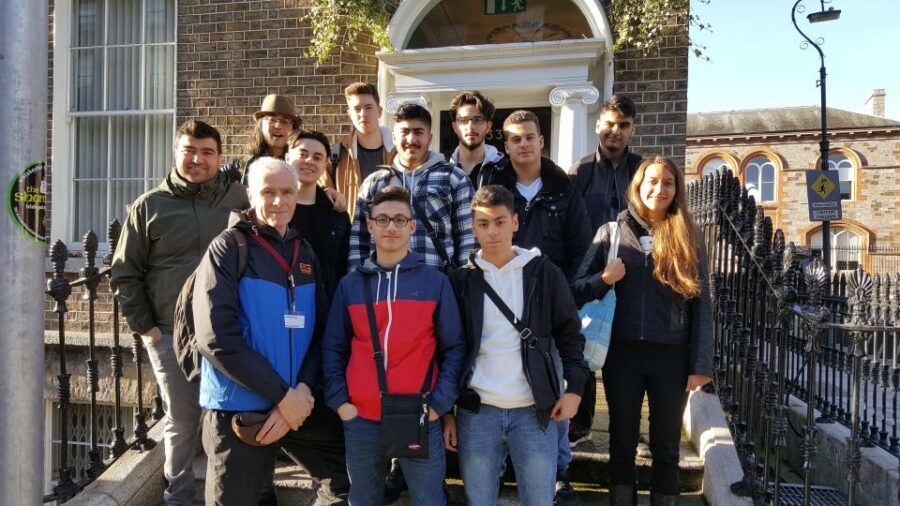
One of the ways this tour feels different is how it uses small symbolic objects to talk about bigger changes. You might learn about a post-box representing Ireland’s transition to independence. You’ll also be pointed toward other playful artistic references, including an amusing representation of a da Vinci painting and a very direct, stark portrayal of a well-known 18th century composer.
These moments aren’t random. They’re tools the guide uses to make themes stick: power shifts, national identity, cultural references, and the way Dublin turns history into public art and street-level storytelling.
If you’re the kind of traveler who thinks you hate “history tours,” give this one a chance. The route mixes serious context with oddball visuals so the story doesn’t feel like homework.
Dublin City Hall and the finish outside Trinity College: Book of Kells, seen first-hand
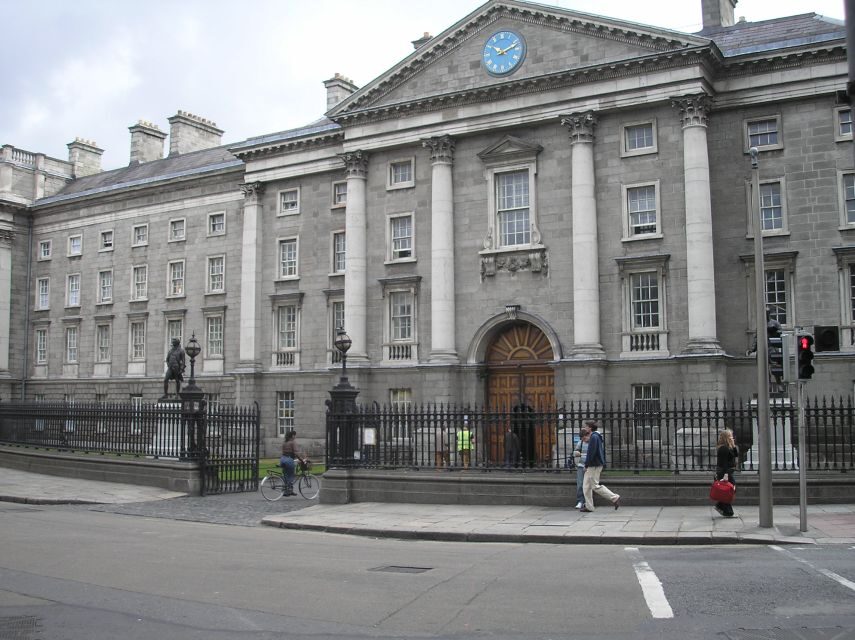
The walk also includes City Hall and heads toward Trinity College, finishing outside with its famed Book of Kells area. Seeing it from the outside is still valuable because Trinity College is such a strong visual anchor. It’s the kind of place you’ll want to return to later, and finishing here gives you a natural next step for your own exploring.
This is also one of the practical advantages of a highlights tour: you end in a logical place to spend more time. If you want to go inside afterward, you’ve got the mental map and the motivation. If you don’t, you can still enjoy the exterior architecture and the energy around the campus.
Price and value: about $31 for 2.5 hours and a guide who actually talks
At roughly $31 per person for a 2.5-hour walk, this is good value if you want orientation plus stories. The main reason is the guide-to-group setup: it’s capped at 16 people, and it’s often even smaller, which keeps it from feeling like an assembly line.
For this price, you’re paying for direction—how to look at Dublin, where to focus, and what to connect. You’re not paying for private transport, and you’re not stuck with long bus transfers. The whole format is made for a first visit.
Also, the “easy-going” feel matters. You’re walking, but the structure is designed so you’re not constantly sprinting to the next stop. Several reviews highlighted the walking pace and that it felt just right, with one exception for people who prefer slower steps.
What you should take away for your independent time in Dublin
By the time you’re done, you’ll have a clearer Dublin mental map: what’s on Dame Street, what defines the Temple Bar area, where the Liffey acts like a dividing line, and how civic history threads through O’Connell Street.
You’ll also have a list of places to follow up on later. The tour keeps visits exterior-only, but it signals where you might want to go inside after. That matters because it prevents the tour from becoming rushed. You can choose how much time you want at each site once you’re on your own.
Most importantly, you’ll have stories you can attach to streets. That’s how Dublin starts to feel like a place rather than a set of photos.
Who should book this Dublin highlights and corners walk?
This tour suits you if:
- You want a smart first walk that connects the big landmarks to the everyday streets
- You like guides who explain context in plain language and add humor
- You’re traveling with limited time but still want to cover both sides of the River Liffey
- You’d rather walk with a small group than try to self-navigate every stop
It may be less ideal if:
- You need a very slow pace and frequent long breaks
- You expect all major sights to be entered during the tour (these are exterior visits)
Should you book it? My practical take
I’d book this tour if it’s your first time in central Dublin and you want a guided route that makes the city make sense quickly. The small group size, the guide quality, and the mix of famous sites plus offbeat street details are a strong combo for the price.
It’s also a great “set yourself up for the rest of your trip” walk. You’ll finish with Trinity College as your next destination and enough local context to wander confidently afterward.
FAQ
FAQ
How long is the tour?
It runs for about 2.5 hours.
What’s the meeting point for the walk?
You start at the Tree of Gold Statue (Crann an Óir), Central Plaza, Dame Street Dublin 2, at the corner of Dame Street and Fownes Street Upper.
Where does the tour end?
The tour ends outside Trinity College with its famed Book of Kells area.
Are you able to go inside the sights during the tour?
All visits are external, but opportunities for such visits may be available after the tour.
What language is the guide speaking?
The tour is guided live in English.
How big is the group?
Maximum numbers are limited to 16 people, and it’s often less. Additional guides may be provided where required.
Is the tour wheelchair accessible?
Yes, it is wheelchair accessible.
What’s the cancellation policy?
Free cancellation is available up to 24 hours in advance for a full refund.
Is there a reserve now, pay later option?
Yes. You can reserve your spot and pay nothing today.