REVIEW · DUBLIN
2-Hour Historical Walking Tour from Dublin
Book on Viator →Operated by Historical Walking Tours of Dublin · Bookable on Viator
A city makes more sense when you understand the fights. This walking tour strings together Dublin’s biggest turning points, from medieval churches to the 20th-century legal battles, with a history postgraduate leading the way. I like that it keeps costs down with a small group (max 25) and includes free admission stops along the route. One thing to note: the content runs politics-and-history heavy, so it may feel dense if you want a lighter culture chat.
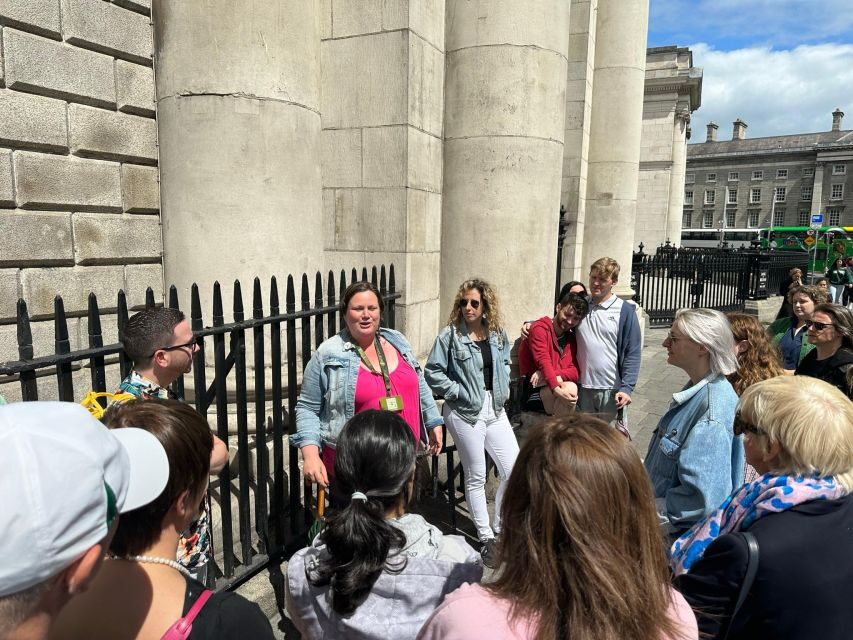
You’ll meet your guide at the Henry Grattan Monument on College Green, opposite Trinity College front gate, and get a clear, walkable route through Dublin’s core. I also like that the guide’s storytelling style tends to stay easy to follow, even when it’s freezing or windy—perfect if you still want your bearings fast. The possible drawback is pacing: at least one guide has run long by about 30 minutes, and the material asks for your attention.
In This Review
- Quick Picks: What Makes This Tour Worth Your Time
- Two Hours With a History Postgraduate in Control
- Starting Opposite Trinity College Dublin (Where You’ll Actually Find Them)
- Price and Value: Why $22.98 Works Here
- The Route in Plain English: What Each Stop Adds
- Trinity College Dublin and the Book of Kells Story You’ll Remember
- Bank of Ireland: Colonial Parliament to Neo-Classical Reminder
- Temple Bar as a 1990s Cultural Quarter, Not Just a Pub Name
- Wood Quay Amphitheatre: Viking Dublin in the Ground Beneath You
- Four Courts: The Legal Headquarters Where Civil War Ignited
- Christ Church Cathedral: From 1030 Origins to Strongbow’s 1170s Stone
- City Hall: Daniel O’Connell, Catholic Emancipation, and The Liberator
- Dublin Castle: Bad King John, British Administration, and the Name Dublin
- The Most Praised Part: Storytelling That Keeps You Paying Attention
- One Trade-Off: Politics Can Feel Dense (Especially on a First Day)
- Make It Work for You: After the Tour, What to Do Next
- Who Should Book This Tour?
- Should You Book the 2-Hour Historical Walking Tour from Dublin?
- FAQ
- How long is the tour?
- Where do I meet the guide?
- Where does the tour end?
- Is entry to the Book of Kells included?
- How many people are in each tour?
- What language is the tour offered in?
- Do I get a mobile ticket?
- Are service animals allowed?
- What’s the cancellation policy for a full refund?
Quick Picks: What Makes This Tour Worth Your Time
- Small group size (max 25) helps you hear the guide and ask questions.
- History postgraduate guides bring structure, not just scattered trivia.
- Free-to-enter stops keep the budget steady (Book of Kells entry is the exception).
- A tight route you can revisit later after the tour ends.
- Full sweep from early Dublin to modern events so you understand the city behind the headlines.
Two Hours With a History Postgraduate in Control
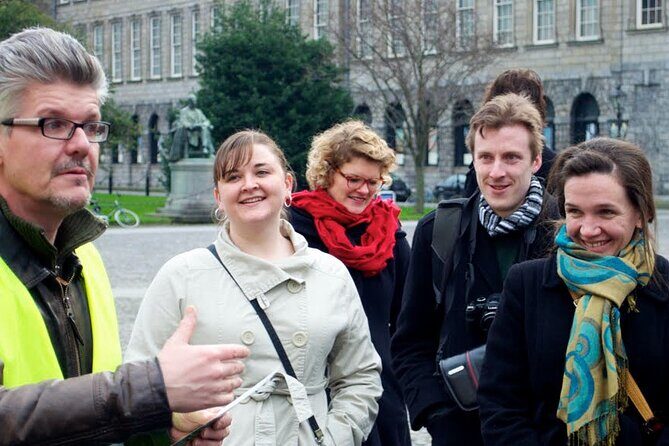
This tour is priced at $22.98 per person, and that matters—because it’s not just a basic stroll. You’re paying for a guide who’s built to explain. The guides are history postgraduates, and that shows in how they connect places to events without turning each stop into a random fact dump.
I love that it’s designed for a useful time payoff: plan for about two hours, then you’ve got the rest of your day free. That’s a smart move in Dublin, where the center is walkable and you’ll likely want time to wander back into whatever caught your attention.
The group size is capped at 25. That’s big enough to keep the vibe lively, but small enough that your guide can actually keep control of the conversation and volume.
One more thing: the tour runs in English, and you get a mobile ticket. If you’re traveling light (or just hate printing), this keeps things simple.
You can also read our reviews of more walking tours in Dublin



Starting Opposite Trinity College Dublin (Where You’ll Actually Find Them)
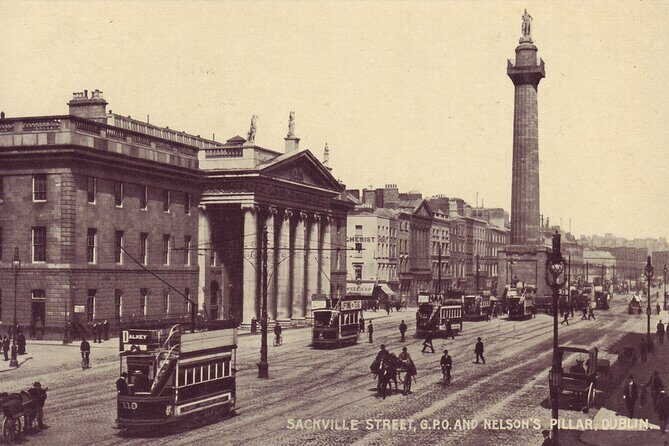
Meet at the Henry Grattan Monument on College Green, Dublin. The key detail is location: it’s opposite Trinity College Dublin, near the front gate area. If you’re standing at Trinity’s gates themselves, you’re close—but the correct target is the Grattan statue.
This start point is a practical win. It puts you right in the middle of Dublin’s pedestrian zone, so before the tour you can grab coffee, and after the tour you can keep walking without re-planning your day.
The walk ends at Christ Church Cathedral, on Christ Church Pl, Wood Quay (D08 TF98). Ending at a major landmark like this makes it easier to transition to lunch or an afternoon plan.
Price and Value: Why $22.98 Works Here
At $22.98, this isn’t a “buy the skyline” tour. You’re buying context. Most stops have free admission, which helps your money stay focused on the guide rather than ticket lines.
The one place you should be aware of is the Book of Kells. The tour highlights it, but entry to the Book of Kells isn’t included. If you want to see the manuscript itself, you’ll need to plan that separately.
For me, this is still good value because the tour gives you the story behind the artifact, plus the surrounding power and influence that shaped Dublin. Then, if you choose to add the Book of Kells later, you’re doing it with way more meaning than a quick photo stop.
The Route in Plain English: What Each Stop Adds
Trinity College Dublin and the Book of Kells Story You’ll Remember
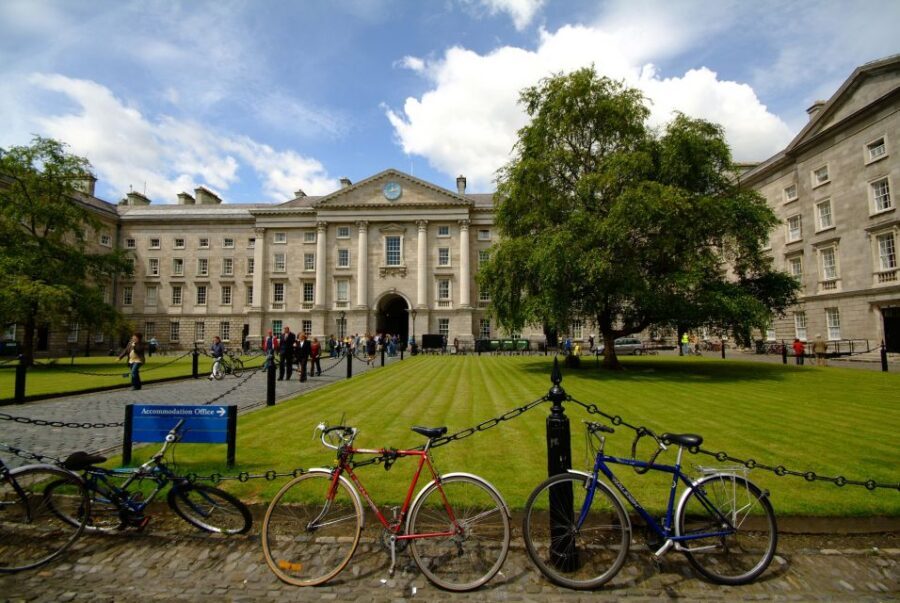
Your tour begins on College Green, with Trinity College Dublin as the first stop. You’ll enter the campus and get the big picture: Trinity is Ireland’s oldest university (founded in 1592) and one of its standout treasures is the Book of Kells, an 8th-century Latin manuscript of the four Gospels.
Stop time here is about 20 minutes, and entry for the tour itself is described as free. The key detail is the Book of Kells: the tour sets it up, but you’re not getting that paid entry as part of the tour.
Why this stop matters: Trinity College isn’t just a pretty campus. It connects to education, authority, and how power shaped what people could study, worship, and argue. Even if you don’t plan to go inside the Book of Kells exhibit, you’ll walk away with the context to understand why this place is so often at the center of Dublin’s cultural identity.
You can also read our reviews of more historical tours in Dublin




Bank of Ireland: Colonial Parliament to Neo-Classical Reminder
Next up is the Bank of Ireland. In this area, you’re looking at more than architecture. The building dates to 1729 and was originally Ireland’s colonial parliament. It was abolished by the Act of Union in 1800.
This stop is brief—about 10 minutes—but it’s pointed. You’ll hear how the building became symbolic of the period known as Protestant Ascendancy, and how the neo-classical design reflects that sense of authority.
If you’ve ever wondered why Dublin’s old power structures feel so visible, this stop explains it. It’s a reminder that buildings can function like political posters—just made of stone.
Temple Bar as a 1990s Cultural Quarter, Not Just a Pub Name
Then you’ll pass through Temple Bar, a narrow-street area that people now associate with nightlife. But the tour frames it differently: the area was once earmarked for demolition, and in the 1990s it was repurposed as Dublin’s Cultural Quarter.
Stop time is around 10 minutes. This isn’t about telling you which pub to pick—it’s about why the neighborhood became what it is. You’ll get a quick lesson in how cities choose what to preserve and what to reinvent.
A small caution: Temple Bar can already be crowded on foot. If you’re the type who hates noise, come back later for a quieter look. During the tour, you’re focused on the story, not lingering.
Wood Quay Amphitheatre: Viking Dublin in the Ground Beneath You
Wood Quay is where the tour shifts into archaeology. This area is tied to Viking Dublin: extensive excavations took place in the 1980s, uncovering evidence of a Viking city, founded in AD 840.
You get about 10 minutes here. Short, yes, but useful—because it gives you a timeline anchor. Dublin didn’t start as a tidy modern capital. It grew, shifted, and rebuilt itself over centuries, and Vikings are part of that foundation story.
If you like the way history feels physical—like, under your feet—this stop is a nice change of pace from the later political buildings.
Four Courts: The Legal Headquarters Where Civil War Ignited
Four Courts is one of those Dublin stops that makes everything after it feel more serious. This is Ireland’s legal headquarters, and it’s also the location where a Civil War began in June 1922, between supporters and opponents of the Treaty of December 1921, which ended the War of Independence (1919–21).
Stop time is about 20 minutes, and it’s where the tour’s “politics-and-history” weight becomes most noticeable.
Why it’s worth slowing down here: the story of Ireland in the 1900s can feel abstract unless you have place markers. Four Courts helps. It grounds the political split in a specific setting where decisions had real consequences, fast.
Christ Church Cathedral: From 1030 Origins to Strongbow’s 1170s Stone
Next is Christ Church Cathedral. Dublin’s oldest cathedral is said to date back to 1030, and it was rebuilt in stone in the 1170s by Strongbow.
In the tour narrative, Strongbow is central to the English invasion of the 1170s. That connection is the reason this stop isn’t just about looking at a church. It’s about tracing how conquest and legitimacy got written into religious architecture.
Stop time is about 10 minutes. It’s a quick hit, so if you want more than a story walk-through, give yourself time after the tour to come back and explore at your own pace.
City Hall: Daniel O’Connell, Catholic Emancipation, and The Liberator
Inside City Hall, you’ll see a statue of Daniel O’Connell, Dublin’s first Catholic Lord Mayor (1840). The tour ties him directly to Catholic Emancipation in 1829—ending anti-Catholic laws—and explains why he’s known as The Liberator.
This stop is about 10 minutes, and it’s a strong human pivot point. After stops centered on institutions and conflict, O’Connell gives you a person you can attach to the political shifts.
If you tend to remember names better than dates, this is a useful moment.
Dublin Castle: Bad King John, British Administration, and the Name Dublin
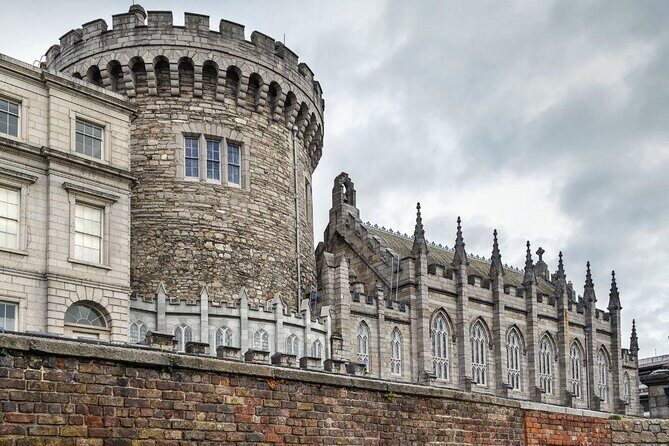
The final major stop is Dublin Castle. It traces back to 1204, built by King John, described in the tour as Bad King John. From there, it served as the seat of British administration until 1922.
You’ll also connect the castle area to the origin story of Dublin’s name: the Dubh Linn (Black Pool), from which Dublin gets its name.
Stop time is about 10 minutes, and it closes the loop on the tour’s theme: power moves around, but it leaves landmarks behind.
If you want one “aha” takeaway, it’s this: Dublin’s identity isn’t accidental. The city’s big names—universities, courts, castles—are tied to who held control at different points in time.
The Most Praised Part: Storytelling That Keeps You Paying Attention
This is where the guide really matters. The tour has scored extremely well overall—an average rating of 4.9 with 875 reviews, and 97% of reviewers recommending it. The common thread is that the guides bring energy and structure.
You’ll see that in how different guides describe the same city beats with different styles. For example, Eoin is mentioned for being entertaining while still clear, and for giving an easy-to-follow starting overview that frames thousands of years quickly. Jodie and Jody show up in multiple accounts for enthusiasm and actor-like performance skills—time flies because you’re not just hearing facts.
Even guides like Daragh and John D. are praised for being easy to listen to and for balancing humor with deeper political details. Colm is also noted for bringing the city to life through songs and stories.
So yes, it’s historical. But the best part is that it’s not delivered like a textbook.
One Trade-Off: Politics Can Feel Dense (Especially on a First Day)
The best version of this tour is perfect if you want the Dublin behind the flag. The most common downside is also clear from the same feature: it’s very history-and-politics focused, and some people find it more dense than other walking tours they’ve done.
If you’re the type who wants mostly culture—street life, daily habits, art, and food—this might feel heavy. It’s not a soft-focus city walk. It asks you to hold onto names, timelines, and the why behind conflict.
There’s also a pacing note: some experiences run a bit over the planned time. If your afternoon is tightly scheduled, build in buffer time.
Make It Work for You: After the Tour, What to Do Next
One of the most useful benefits of walking a tight historical loop is orientation. After two hours like this, you can look at the city and understand why a neighborhood feels the way it does.
Here’s how I’d use it: after the tour ends at Christ Church Cathedral, spend time re-visiting any spot that caught your attention. Want more on the legal battles? Go back near Four Courts. Want the medieval layer? Slow down around Christ Church. If Trinity’s story grabbed you, you can decide then whether the Book of Kells is worth an extra ticket.
And because the tour includes free admission stops at most points, you’re not stuck paying for each layer just to get started.
Who Should Book This Tour?
Book it if you:
- Want a fast, guided way to understand the why behind Dublin’s biggest landmarks
- Enjoy political history, not just architecture
- Like guides who tell stories clearly and keep you moving
- Are happy to walk for about two hours at a moderate pace
You might choose something else if you:
- Prefer a lighter, culture-first city walk with minimal politics
- Get frustrated when history gets detailed and names start stacking up
- Have a very strict schedule afterward and can’t tolerate a possible slight overrun
Should You Book the 2-Hour Historical Walking Tour from Dublin?
If you’re in Dublin for the first time and you want context that sticks, I think this is a strong booking. The guide format—history postgraduate expertise, small group size, and a route through Trinity, courts, cathedrals, and the castle—turns Dublin from a list of sights into a coherent story.
Just go in with the right expectation: it’s not only photos and folklore. It’s a focused history walk, with the politics left in, because that’s part of the city.
FAQ
How long is the tour?
It runs for about 2 hours.
Where do I meet the guide?
Meet at the Henry Grattan Monument on College Green, Dublin, opposite Trinity College front gate.
Where does the tour end?
The tour ends at Christ Church Cathedral on Christchurch Pl, Wood Quay, Dublin.
Is entry to the Book of Kells included?
No. The Book of Kells is highlighted, but entry to it is not included.
How many people are in each tour?
The tour has a maximum of 25 travelers.
What language is the tour offered in?
The tour is offered in English.
Do I get a mobile ticket?
Yes, the tour uses a mobile ticket.
Are service animals allowed?
Yes, service animals are allowed.
What’s the cancellation policy for a full refund?
You can cancel up to 24 hours in advance for a full refund. If you cancel less than 24 hours before the start time, the amount paid is not refunded.