REVIEW · DUBLIN
1916 Rebellion Walking Tour
Book on Viator →Operated by 1916 Rebellion Walking Tour · Bookable on Viator
Dublin’s 1916 streets hit different after this walk. This tour takes you from the famine-era backdrop to Easter Week, then along key landmarks where the rebellion and its aftermath shaped Irish life. You start at the International Bar, with guides who bring the era to life in a way that feels like a conversation, not a lecture.
I love how the tour gives you clear context before you even reach the big sites. Two hours of walking turns into real understanding, and you can ask questions as you go. I also like that it focuses on what you can see up close, including the bullet holes you’ll spot at O’Connell’s memorial, which makes the history feel immediate.
One consideration: the tour runs about 2 hours on the schedule, but some groups may take closer to 3 hours depending on pace and questions. And with up to 30 people, it helps to stand where you can hear clearly at each stop.
In This Review
- Key reasons this walk is worth your time
- Meeting at the International Bar and getting oriented
- From famine to Rising: why the intro changes everything
- City Hall and Dublin Castle: the power map of 1916
- Four Courts to O’Connell Monument: seeing the war on stone
- Jim Larkin statue: the working-class engine behind the rebellion
- The GPO and Moore Street: where Easter Week turns into impact
- Bank of Ireland and Trinity views: the post-1916 web
- Price, pacing, and practical tips for a smooth 2-hour walk
- Who should book this 1916 walk—and who might want something else
- Should you book the 1916 Rebellion Walking Tour?
- FAQ
- How long is the 1916 Rebellion Walking Tour?
- Where does the tour start, and does it end nearby?
- Is the tour offered in English?
- Are any entry tickets required for the stops?
- Are drinks included?
- What’s the group size limit?
- What happens if weather is bad or I need to cancel?
- Can children join?
Key reasons this walk is worth your time

- International Bar start: arrive early, grab a drink, and settle in with the guide’s intro materials
- From famine to Rising: you get the “why” behind Easter Week, not just the dates
- Landmarks you can see: bullet holes, HQ buildings, and power centers tied to 1916 and beyond
- Q&A friendly: many moments feel interactive, with guides who answer on the spot
- Some guides use storytelling and song: you might hear poetry or old rebel songs along the way
- Value for money: a professional guide and multiple major stops for a low per-person price
Meeting at the International Bar and getting oriented
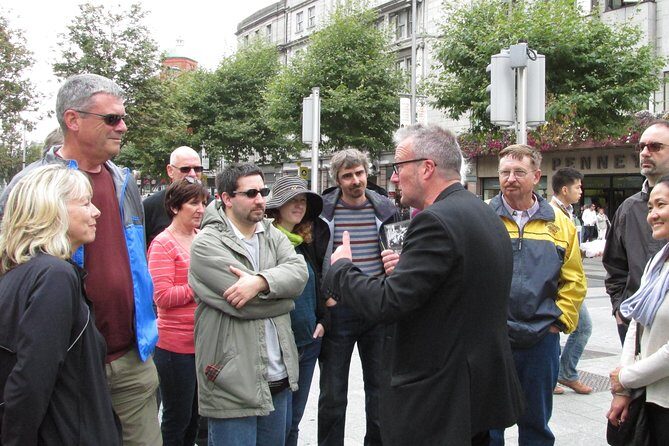
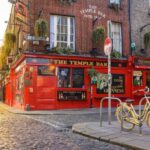
Your tour starts at 23 Wicklow St at the International Bar, a legendary pub that’s been the launchpad for the 1916 walk for years. Lorcan Collins has been running the 1916 tour since 1996, and that long experience shows in how smoothly the whole thing begins.
The best move is to arrive a little early. You’ll have a chance to enjoy a drink (alcoholic beverages are available to purchase) and skim the introductory literature the guide provides. This part matters more than you’d think. Instead of jumping straight to statues and buildings, you’re primed for the big picture: why Irish resistance grew over time, and how different groups, pressures, and ideas fed into the Rising.
From the first moments, expect a short build-up that starts with the Great Hunger and moves forward toward 1916. That arc helps you connect what you’ll see later—City Hall, Dublin Castle, the GPO—into one story. If you’re coming in with no background at all, you’re not behind. The pacing is designed to bring you along step by step.
You can also read our reviews of more walking tours in Dublin
From famine to Rising: why the intro changes everything

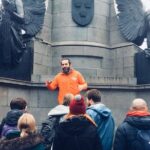
The tour’s big strength is the framing. You’ll begin with the Irish Famine of the 1840s, then work through the revolutionary buildup that culminates in the Easter Week Rising. This is one of those “small” tour choices that makes a huge difference in how you process the stops.
When you know the social and political pressure behind the rebellion, the landmarks stop being random. The GPO isn’t just a famous building—it becomes a headquarters with stakes. Dublin Castle isn’t just old stone—it represents the British administration’s grip. And City Hall isn’t just central—it becomes part of the story of how the Irish Citizen Army moved and organized.
You’ll also get time for questions right away, before the walk turns into a rhythm of streets and corners. That’s a smart design for first-timers. You can clear up terms, names, and factions early, and then the rest of the tour makes more sense as you see it play out in real locations.
City Hall and Dublin Castle: the power map of 1916
Once you’ve got the background, the tour shifts into location-based history. The first major stops keep the focus tight on authority and control—who held power, who challenged it, and what the British administration meant on the ground.
At City Hall, you’ll stop to talk about its role during Easter Week. The Irish Citizen Army occupied City Hall during the 1916 Rising, and you’ll connect that to what was happening across Dublin in 1916. This stop works well because it’s short but specific: you get the purpose of the location without needing to climb or tour inside.
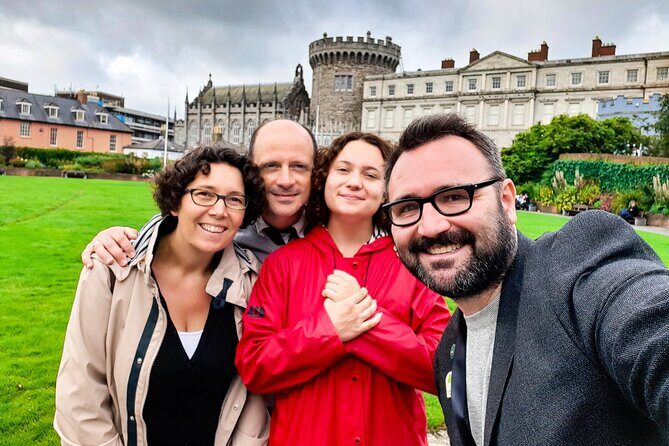
Next comes Dublin Castle, a key symbol of British administration controlling Ireland. If you’ve seen the Michael Collins film, you’ll recognize the place’s importance. Here, the guide explains how Dublin Castle fits into the Rising and into the later War of Independence, helping you understand how the struggle didn’t end in 1916—it shifted and continued.
The drawback to know: you’ll be standing outside or at street-level views for much of this walking section. That’s still fine because the tour is built around what you can see and talk through, but if you were hoping for lots of indoor museum-style time, this is more street-history than ticketed sightseeing.
Four Courts to O’Connell Monument: seeing the war on stone
One of the most chilling parts of the whole experience comes when you’re looking at the sites tied to armed occupation and conflict.
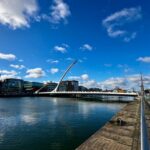
At Four Courts, the guide explains how the building was occupied by revolutionaries in 1916 and again in the build-up to the Irish Civil War in 1922. You won’t walk up to the building itself, and that’s a practical choice. You’ll instead view it from a bridge over the River Liffey. From there, you get the geometry of the area—the way the river and bridges shape movement and visibility—plus a clear explanation of why Four Courts mattered in both 1916 and 1922.
Then you move to O’Connell Monument, where you’ll stop to discuss Daniel O’Connell’s memorial and the bullet holes left on it from the Rising. Even though the tour covers big political movements, this stop brings it back to physical evidence. Seeing impact marks on a public monument turns the story from abstract to real, which is exactly what the best guides aim for on a walking tour.
A practical tip: wear comfortable shoes and plan for some standing time at corners and overlooks. These moments are brief, but you’ll want a steady spot for photos and for hearing the explanation without craning your neck.
Jim Larkin statue: the working-class engine behind the rebellion
Between the big civic buildings, the tour also slows down on people and influences you don’t always hear about in simplified versions of 1916.
At the Jim Larkin Statue, you’ll connect James Connolly’s world with Big Jim Larkin, a Union man from Liverpool and a comrade of Connolly. The guide explains Larkin’s contribution to the revolutionary period and how working-class organizing fed into the larger struggle in Dublin.
This stop is valuable because it adds texture. The Rising is often discussed as leaders, proclamations, and command decisions. Jim Larkin brings in the broader social force behind those decisions—labor movements, solidarity, and the role of everyday communities in pushing history forward.
If you care about how revolutions are built (not just how they happen), this is one of the stops that will stick with you after the walk ends.



The GPO and Moore Street: where Easter Week turns into impact
Now you reach the center of gravity.
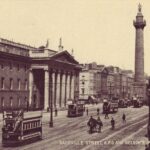
At An Post General Post Office (GPO), the tour stops at one of Dublin’s most important buildings in the Irish national psyche. This is where the revolutionaries set up headquarters in Dublin during Easter Week 1916. You’ll also hear about the moment when P. H. Pearse read the Proclamation. That’s the kind of detail you want in-person, because once you’re standing outside the GPO, the uprising feels less like a story in a book and more like a plan unfolding in real streets.
The tour then often continues to Moore Street. When time allows, the guide shows where the GPO garrison made their last stand in Easter Week. This stop is especially effective because it ties a dramatic ending back to the place you just learned about. You’re not just seeing a landmark—you’re seeing the geography of events.
You may notice the tour guides lean into storytelling here. Several guides in past groups have used poetry or even song to help the scenes land emotionally. Whether it’s humor, a spoken passage, or old rebel songs, the goal stays the same: make the walk feel alive while still keeping the facts straight.
Bank of Ireland and Trinity views: the post-1916 web
The tour wraps up with a final big landmark stop at the Bank of Ireland, often known as the Old Parliament. Depending on the route that day, you may get time to examine the building and talk about its role in Irish history.
This section also connects to nearby Trinity College. Even if the stop itself is short, the guide typically uses it to show how politics, institutions, and public life all link into the long aftermath of 1916. The walk doesn’t treat Easter Week as an isolated explosion. It shows how the rebellion and the years after rewired how people understood Ireland’s future.
If you like tours that end with interpretation—helping you look at the city as a map of changing power—this last stop does that well.
Price, pacing, and practical tips for a smooth 2-hour walk
At $27.81 per person, the value is strong for what you get: a professional guide, multiple major Dublin landmarks, and the chance to see key sites tied to 1916 and later conflict moments without paying for separate admissions at each stop.
The tour is listed around 2 hours, and many people find time moves fast once the narrative starts clicking. That said, one review note is worth taking seriously: some groups report it taking closer to 3 hours. If you have tight plans afterward, I’d leave a little buffer.
Group size also matters. The tour maxes at 30 travelers, which keeps it small enough to feel personal. Still, with 30 people, you’ll want to position yourself near the front when the guide talks, especially during stops where the explanation happens quickly.
Route details vary day to day, but you should still expect the core landmarks to appear—International Bar, City Hall, Dublin Castle, Four Courts views, O’Connell Monument, Jim Larkin statue, the GPO, Moore Street (when time allows), and the Bank of Ireland area.
Weather matters too. It’s scheduled for good-weather conditions, and poor conditions can change plans. So check the forecast and bring a light layer if Dublin is acting like Dublin.
Who should book this 1916 walk—and who might want something else
Book this if you want a guided way to understand the Easter Rising through the streets themselves. It’s a great fit for history buffs, but it also works for newcomers because the guide starts with the buildup—from the Irish Famine in the 1840s to 1916.
You’ll especially enjoy it if you like:
- asking questions and getting direct answers on the spot
- seeing physical evidence (bullet holes) while hearing what those impacts meant
- tours that mix serious explanation with real storytelling, and sometimes song or poetry
Consider another style of tour if you need a more museum-heavy format, because this experience is built for walking and street-level viewing. Also, if you hate groups, plan for the fact that up to 30 people share the same route and the same small stop spaces.
Should you book the 1916 Rebellion Walking Tour?
Yes—if your goal is to understand Easter Week 1916 in a way that sticks, this is one of the best uses of your time in Dublin. The combination of context first, then major landmarks, makes it easier to connect the dots between 1916 and what comes afterward.
I’d book it especially if you want that rare mix of facts plus atmosphere: you’ll see the places where decisions were made and you’ll hear how the story connects to broader Irish social and political pressure. If you’re the type who can’t stand vague tours, this one gives you specifics and gives you time to ask.
One last practical call: schedule it early in your trip if you can. It will give you a framework that makes other Dublin sights feel more meaningful on subsequent days.
FAQ
How long is the 1916 Rebellion Walking Tour?
It’s listed at about 2 hours, though the pace can vary depending on the day and the flow of questions and stops.
Where does the tour start, and does it end nearby?
The tour meets at 23 Wicklow St, Dublin (D02 VH59) and ends back at the meeting point.
Is the tour offered in English?
Yes, the tour is offered in English.
Are any entry tickets required for the stops?
Entry is ticket-free at the listed stops, and the included items cover the professional guide.
Are drinks included?
Alcoholic drinks are not included, but you can purchase drinks during the experience.
What’s the group size limit?
The tour has a maximum of 30 travelers.
What happens if weather is bad or I need to cancel?
It requires good weather. If it’s canceled due to poor weather, you’ll be offered a different date or a full refund. Cancellation is free up to 24 hours in advance for a full refund.
Can children join?
Children can join, but they must be accompanied by an adult.