Dublin history is best when it’s walked. This 2-hour highlights-and-hidden-gems style route strings together Viking-era to Georgian Dublin in a tight loop through the places you’d otherwise hit one by one. I like that it focuses on real landmarks plus story details you can actually use on your next stop.
Two things I especially like: first, the tour hits big-ticket sights like Dublin Castle and Trinity College without turning into a museum slog. Second, the pacing and guide energy seem built for people who want context fast—names you’ll hear mentioned include Helena, Karl, Keith, Dan, Dave, Barry, Deirdre, and James, all praised for humor and bringing the city to life.
One possible drawback: some stops may be closed on certain holiday periods. If you’re traveling during late December or early January, plan for the guide to adapt and don’t count on every interior moment.
In This Review
- Key highlights at a glance
- Why this 2-hour Dublin walk hits the sweet spot
- Temple Bar: cultural history first, famous pub second
- Dublin Castle: Viking roots through independence, in one concentrated stop
- Christ Church Cathedral: 1,000 years and the stories you’ll remember
- Smock Alley Theatre: the oldest stage that kept changing its role
- Temple Bar pub photo stop: fast, but useful for pacing
- Ha’penny Bridge and O’Connell Bridge: postcard views with real context
- College Green: Georgian Dublin’s tidy center and its quiet oddities
- Trinity College Dublin: the finish line with Book of Kells and the Brian Boru Harp
- What to bring and how to pace your day
- Price and value: why $29.02 can be a good deal
- Who this walking tour suits best
- Should you book this Dublin highlights walk?
- FAQ
- FAQ
- How long is the Dublin highlights walking tour?
- Where does the tour start?
- Where does the tour end?
- What language is the tour offered in?
- How much does the tour cost?
- Is admission included for the stops?
- What’s the cancellation policy?
- Is the tour weather dependent?
Key highlights at a glance
- Temple Bar + culture-first storytelling: you start right in the action and get context before you wander off on your own
- Dublin Castle without the headache: you get the big-picture timeline plus lesser-seen curiosities
- Christ Church Cathedral lore: 1,000 years of Dublin, plus the names and stories that make it click
- Smock Alley Theatre history: Ireland’s oldest theatre and its dramatic role-shifts over time
- Photo-perfect bridges with meaning: Ha’penny Bridge and O’Connell Bridge explained, not just pointed at
- Trinity College finish: you end at the front gate, with Book of Kells and the Brian Boru Harp as key takeaways
Why this 2-hour Dublin walk hits the sweet spot
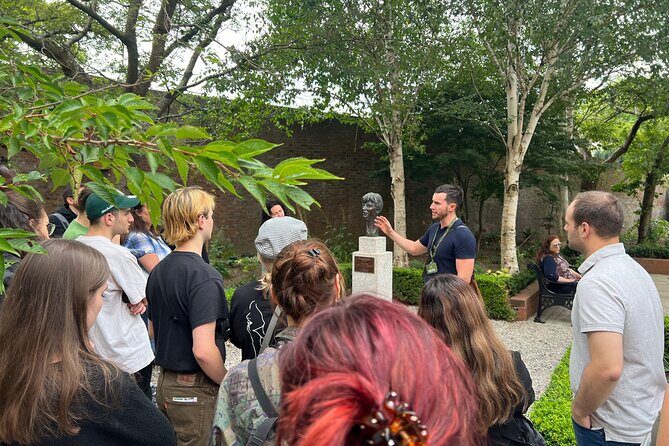
This is a central Dublin route that’s short enough to fit on your first day, but packed enough to help you understand the city’s “why.” You’ll cover classic sights like Trinity College and Dublin Castle, then connect them with smaller details—bridge trivia, theatre history, and cathedral legends—that make the map feel less random.
The group stays small (up to 30), and that matters. Smaller groups usually mean you can ask questions without getting shoved to the side, especially when a guide is in story mode. Also, this is offered in English with a mobile ticket, which is handy if you’re juggling multiple activities during your trip.
The price—about $29.02 per person for roughly 2 hours—works best if you value an efficient orientation. If you love to self-tour with a guidebook instead, you could do this route on your own. But if you want the city’s timeline explained while you walk, the time-to-information ratio is the appeal.
You can also read our reviews of more walking tours in Dublin



Temple Bar: cultural history first, famous pub second
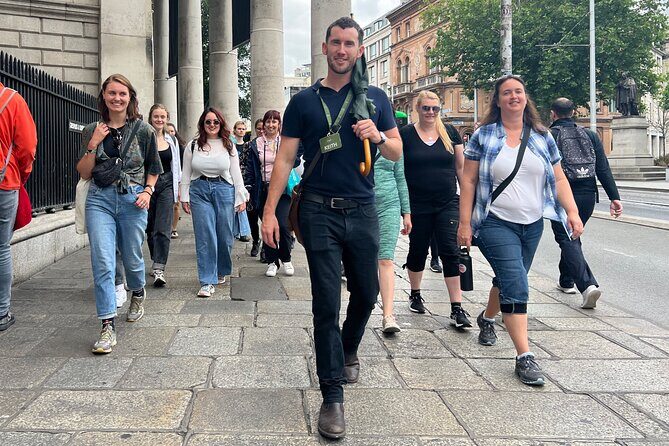
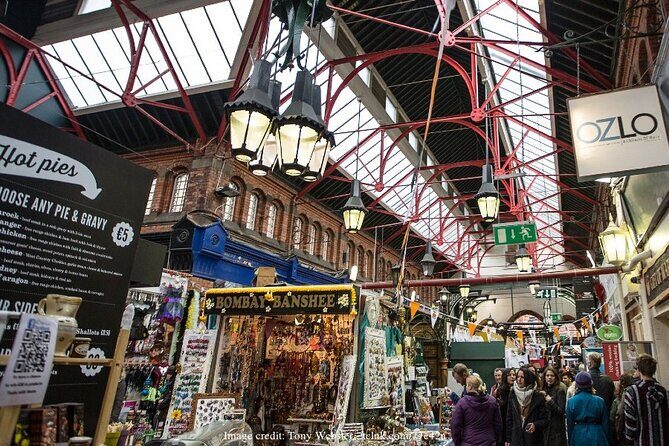
You begin in the middle of Temple Bar near the Old Storehouse Bar and Restaurant on Crown Alley. Expect a quick history primer and a route that loops back later, so you’re not just doing a one-street glance. Temple Bar can be a tourist magnet, but the best way to enjoy it is to understand why it became a cultural hub in the first place.
You’ll also pass Ireland’s most photographed pub, a classic Temple Bar stop. The key is that the tour doesn’t leave you at the headline level. It’s built to give you context and then point you toward places to keep exploring—so you can decide what’s worth your own time once the tour ends.
Practical note: Temple Bar streets can be crowded, especially when the weather is good. Wear shoes that handle uneven pavement, and don’t plan to be in a hurry. This part is about stories and location, not speed.
Dublin Castle: Viking roots through independence, in one concentrated stop
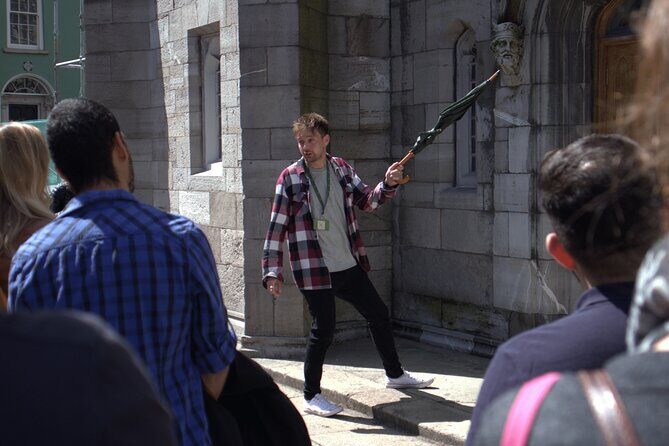
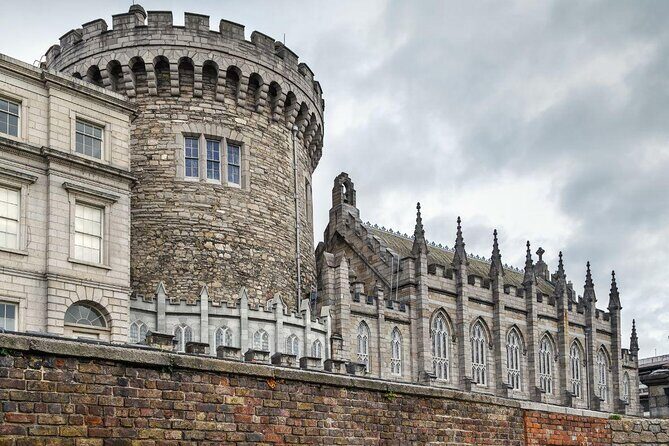
From Temple Bar, the tour heads to Dublin Castle—an enormous anchor for Irish history. The value here is that you’re not just looking at stone walls. You’re guided through the long arc: Viking origins, centuries of conquest and occupation, and the hard-fought road to independence.
You’ll explore the grounds and learn how the castle stayed close to the center of power for generations. The tour also includes quick nods to famous figures tied to the site, plus “lesser-spotted curiosities,” the kind you might miss if you were walking in alone.
Why this matters for your trip: Dublin can feel like separate eras laid on top of each other. Dublin Castle is one of the clearest ways to see the timeline in physical form. Once you get the castle’s story, the rest of central Dublin starts to make more sense—especially when you hit the cathedral and bridges later.
Christ Church Cathedral: 1,000 years and the stories you’ll remember
Christ Church Cathedral sits right at the heart of Dublin, and this stop is short on purpose. You get the core feeling—this place has been central for about 1,000 years—then you’re told the specific names and legends that turn “old building” into “I know this story.”
Highlights include references tied to Strongbow, Lorcan O’Toole, and the well-known Cat and Rat lore. Even if you don’t memorize everything, you’ll leave with names and themes that help you connect what you’re seeing to what you’ll read or hear later.
A drawback to plan around: cathedral spaces can be busy, and you may not get long inside time. This tour is designed as an overview, so if you want deeper exploration, you’ll likely want to return on your own after the walk.
Smock Alley Theatre: the oldest stage that kept changing its role
Smock Alley Theatre is one of those Dublin stops that feels like a plot twist. Ireland’s oldest theatre has been standing since 1662 in the Temple Bar area, and it has switched identities over time—Theatre Royal, later a Catholic Church, and back to theatre again.
What I like about this stop is the way it shows history as something that keeps moving. You’re not only learning dates; you’re learning how cultural spaces survive by changing function. It’s also a great contrast with the heavy political weight of Dublin Castle—same city, different kind of story.
If you enjoy the arts, this is a good mid-tour palate cleanser. It keeps the walk from becoming just monuments and timelines.
You can also read our reviews of more guided tours in Dublin




Temple Bar pub photo stop: fast, but useful for pacing
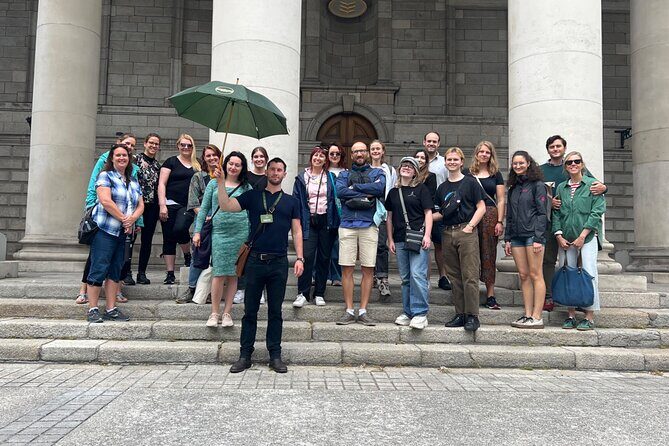
You’ll make a short pass by the iconic Temple Bar pub. This isn’t a long “sit and sip” moment. It’s more of a landmark check so you can say you saw it and move on—while still leaving you time to find your own better drinking spot afterward.
A practical tip: if you want a calmer drink, use this as a marker and then branch out. Temple Bar is great for atmosphere, but it’s also one of the areas that can get packed.
Ha’penny Bridge and O’Connell Bridge: postcard views with real context
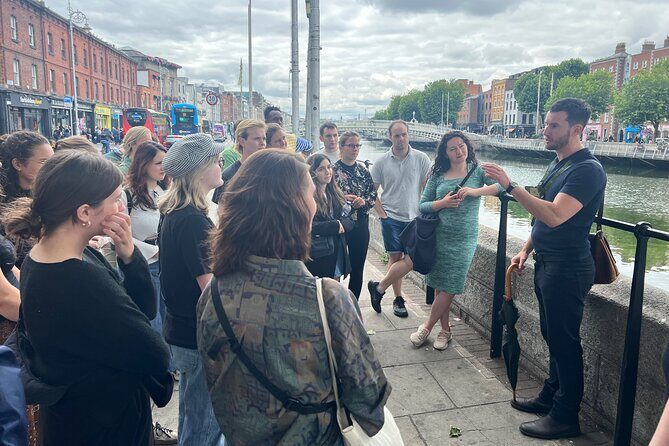
After the cathedral, the route shifts outdoors toward the River Liffey and the bridge stretch that gives Dublin its instantly recognizable look. Ha’penny Bridge is the star here: a Georgian footbridge straddling the Liffey since 1816.
What makes it more than a photo stop is the story connection. You’ll hear about its link to the battle of Waterloo and quirky details that help explain why this bridge has ended up in pop culture and street-level lore. It’s the kind of fact pattern that makes you notice things you’d skip otherwise.
Next comes O’Connell Bridge. The tour frames it as a witness to historic events that happen nearby and ties it to the man it’s named after. This is where the walk becomes useful for orientation. After this, you’ll be able to connect bridges to major central streets and better understand where key moments unfolded.
College Green: Georgian Dublin’s tidy center and its quiet oddities
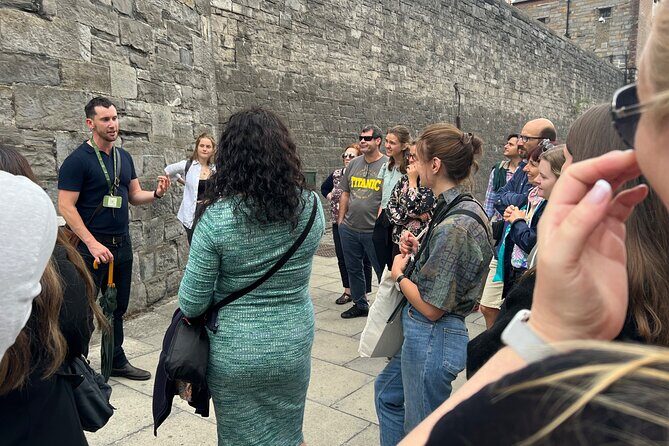
College Green is one of Dublin’s Georgian-era central points, lined with notable buildings. The tour treats it like more than a backdrop. You’ll get a sense of what made this area important, plus tips about “lesser-mentioned oddities” that are easy to miss on a casual walk.
This stop works well because it slows the pace a bit. You’re no longer bouncing from one landmark to another. Instead, you’re looking at how the city’s layout guides movement—where people would gather, where power shows up, and how Dublin tries to look orderly even when the stories beneath it are complicated.
If you’re the type who likes to understand a city’s design before you go off-script, this is the section to pay attention to.
Trinity College Dublin: the finish line with Book of Kells and the Brian Boru Harp
The tour ends directly outside Trinity College at the front gate near 27 College Green. Even without long interior time, Trinity hits hard—this is Ireland’s oldest and most famous college, and it’s tied to some of the country’s best-known treasures.
The tour points out the library’s role in preserving the Book of Kells and the Brian Boru Harp. That gives you a clear idea of what to prioritize if you decide to add museum or library time later.
Ending at Trinity is smart. It’s central, it’s easy to navigate from, and it sets you up for a second wave of exploring—whether you want to wander the campus edges, head toward the river, or grab food nearby.
What to bring and how to pace your day
Dublin weather can change fast, and this walk is outdoors for most of the time. Bring a layer you can handle in wind, and wear shoes that can handle cobblestones. If you’re doing this early in your trip, plan it for a time when you can still enjoy yourself after—because it can pack a lot into a short window.
Also, because guides often mix practical tips with stories, you’ll get more out of the walk if you have a rough plan afterward. Maybe you want a museum. Maybe you want a pub crawl. Either way, you’ll be better set up if you’ve got energy for round-two.
One more smart move: if you’re visiting during a holiday period, keep expectations flexible. A guide may have to adjust if some big stops aren’t available.
Price and value: why $29.02 can be a good deal
At about $29.02 per person for around two hours, you’re paying for time saved and context gained. The tour is structured so you’re not wandering between distant sights without a thread connecting them.
Several stops are tied to places that can be time-consuming on your own—think Dublin Castle and the cathedral experience. Even when admission is marked free for these stops, the real cost you avoid is the “guessing.” You get the names, the timeline, and the why behind what you’re seeing.
This is also the kind of tour where group size matters. When it stays small, you feel more like you’re learning with a guide rather than being rushed through a checklist.
If you already know Dublin history and love doing things solo, you might find self-guiding more satisfying. But for most first-timers, this pricing feels like a fair trade: pay once, then spend your remaining time exploring with better confidence.
Who this walking tour suits best
This tour fits best if you want:
- A first-day orientation to central Dublin without spending a full afternoon
- A walking route that connects politics, culture, and everyday landmarks
- Stories you can remember later when you see the same buildings in photos or from across the river
- A guide who brings energy and humor—names you’ll hear associated with great experiences include Helena, Karl, Keith, Dan, Dave, Barry, Deirdre, and James
If you’re short on time and hate overplanning, this is a strong choice. If you want a slow, deep visit where you linger inside every building, you’ll likely want to add separate time afterward.
Should you book this Dublin highlights walk?
Yes, if your goal is to understand Dublin quickly and hit the major sights in a way that makes them feel connected. I especially like that it blends major landmarks with “notice-this” details—bridges, theatre, cathedral lore—so you don’t just collect stops, you collect stories.
Book it early in your trip if you can. That way, the information helps you navigate the rest of your days. If you’re traveling during a holiday window when places may close, keep expectations flexible and treat the tour as a guided story of Dublin rather than a guarantee of every interior moment.
FAQ
FAQ
How long is the Dublin highlights walking tour?
It’s about 2 hours.
Where does the tour start?
The meeting point is the Old Storehouse Bar and Restaurant at 3 Crown Alley, Temple Bar, Dublin.
Where does the tour end?
The tour finishes outside the front gate of Trinity College at 27 College Green.
What language is the tour offered in?
The tour is offered in English.
How much does the tour cost?
The price is listed as $29.02 per person.
Is admission included for the stops?
The stops are marked with admission ticket free.
What’s the cancellation policy?
You can cancel for a full refund up to 24 hours in advance. If you cancel less than 24 hours before the start time, the amount paid isn’t refunded.
Is the tour weather dependent?
Yes. It requires good weather, and if it’s canceled due to poor weather, you’ll be offered a different date or a full refund.