REVIEW · DUBLIN
The Dublin Private Walking Tour
Book on Viator →Operated by Travelling Ireland · Bookable on Viator
Dublin feels personal when you walk it with a guide. This private 3-hour stroll strings together music-and-history landmarks and a just-your-group pace that helps you get your bearings quickly. I like that it’s built for real orientation, not a speed-run of random photos.
One possible downside: you’ll cover a lot of central pavement in a short time, and some stretches are on cobblestones, so comfortable walking shoes matter.
In This Review
- Key highlights at a glance
- A private 3-hour loop that gets you oriented fast
- Claddagh Records and the Wall of Fame: music landmarks you can point to
- Temple Bar cobblestones and Ha’penny Bridge over the Liffey
- College Green and Trinity College: where Ireland’s institutions show up in stone
- Molly Malone, Grafton Street, and St Stephen’s Green for street life
- The famine memorial and Dublin’s government heart near Shelbourne and Leinster House
- Oscar Wilde at Merrion Square: a classy wrap-up
- Price and timing: is $163.26 per person good value?
- What to expect from the guide experience (and how to get more out of it)
- Who should book this Dublin Private Walking Tour?
- Should you book this private walking tour?
- FAQ
- How long is the Dublin Private Walking Tour?
- Where do we meet and where does the tour end?
- Is this tour private?
- Are there admission tickets needed for the stops?
- What language is the tour offered in?
- Is there free cancellation?
Key highlights at a glance
- Private group only: you don’t share your route with strangers.
- Music stops that actually connect: Claddagh Records and the Wall of Fame put Irish pop culture on the map.
- Temple Bar to Trinity in one arc: you see the city’s social energy and its oldest institutions without hopping around.
- Free-entry listed stops: the landmarks on this route are marked as admission free.
- Umbrellas and photo opportunities: practical extras that keep the walk smooth.
- From politics to poetry: you end near Oscar Wilde in Merrion Square.
A private 3-hour loop that gets you oriented fast
Think of this as Dublin’s greatest-hits walk with context. You start in Temple Bar, then move east and north through Trinity College, along the shopping street energy of Grafton Street, and into the formal government zone around Leinster House and related buildings. The route stays walkable and centered, so you’ll finish with a clearer sense of where things are and how they connect.
The private format is the real advantage. Your guide can slow down for questions, adjust the flow, and include rest stops when you need them. It also helps if you’re traveling with kids or anyone who gets antsy when tours feel rushed.
Practical note: you’re out for about 3 hours, and the meeting and ending points are different (Temple Bar to Merrion Square). That’s usually ideal for getting set up for the rest of your day, but it does mean you may want to plan nearby for food after you’re done.
You can also read our reviews of more walking tours in Dublin



Claddagh Records and the Wall of Fame: music landmarks you can point to
You kick off at Claddagh Records, a music-focused landmark where Ireland’s identity shows up in a very specific way: the famous Claddagh ring. It’s a small stop, about 10 minutes, but it sets the tone for the tour. Dublin isn’t just museums here, it’s song, symbols, and stories people still use today.
Next comes the Wall of Fame, centered on Irish bands and singers like U2, Phil Lynott, Van Morrison, Sinéad O’Connor, and The Cranberries. This stop works well even if you’re not a hardcore music fan, because it turns familiar names into a map you can remember later. It also makes the rest of the tour easier to follow, since your guide can connect culture to place.
What I like about this pairing is that it mixes emotion and context. You’ll see the objects, then hear what they mean in Dublin’s everyday identity—music as a public language, not just entertainment.
Temple Bar cobblestones and Ha’penny Bridge over the Liffey
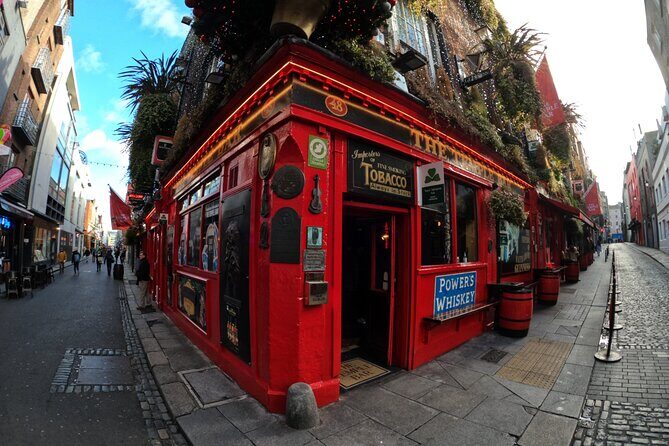
From Claddagh Records and the Wall of Fame, you head into the Temple Bar area, including a look at the Temple Bar pub, established in 1840. Temple Bar is famous for a reason, but here you’re not just looking at nightlife. You get the history of the area and a feel for why this corner of the city became such a magnet.
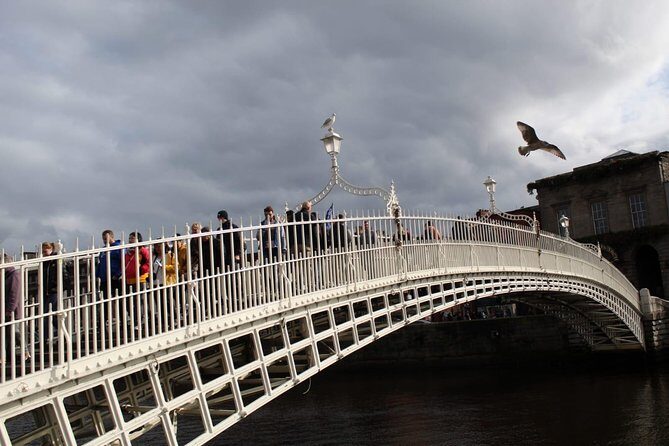
Then you walk toward Ha’penny Bridge, one of Dublin’s best-known crossings over the Liffey. You’ll hear the historic details and how the river ties into Dublin’s socioeconomic story. It’s about 15 minutes at this stop, so you get enough time to read the bridge and take in the water views without letting the walk stretch too long.
One small thing that matters: your guide will usually point out the good photo angles. That’s a simple quality-of-life win, especially if you’re traveling as a pair and don’t want to constantly trade camera duty.
College Green and Trinity College: where Ireland’s institutions show up in stone
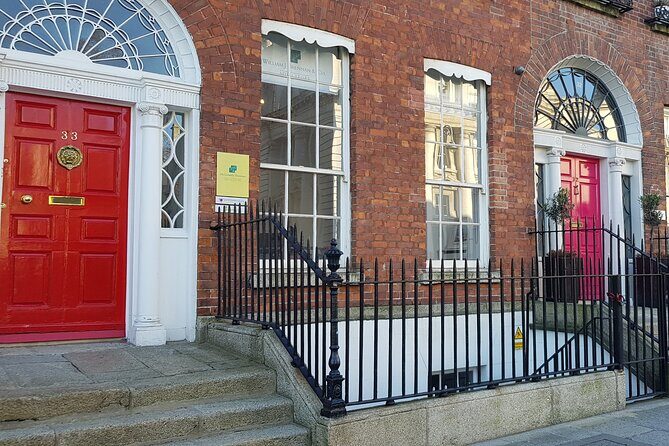
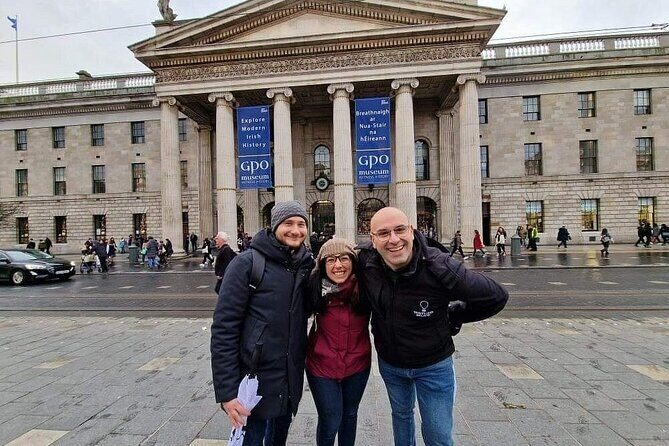
Next up is College Green, a three-sided plaza that puts major institutions in plain sight. On one side is the Bank of Ireland building, which was Ireland’s Parliament House until 1800. To the east sits Trinity College Dublin, and to the south you see a run of 19th-century architecture that frames the whole space.
This stop is about seeing how Dublin organizes power and learning around a single public stage. It’s also about timing: you’re hitting the political footprint and the academic footprint before you drift into the livelier streets later.
Then you stroll into Trinity College Dublin, the oldest college in Ireland. The tour focuses on history and current aspects, with time to walk the campus at an easy pace. You’re not just passing by the name—you’re getting oriented inside the place that shapes how many visitors understand Dublin.
If you’re the kind of traveler who likes to connect buildings to stories, this is where the tour starts to click.
Molly Malone, Grafton Street, and St Stephen’s Green for street life
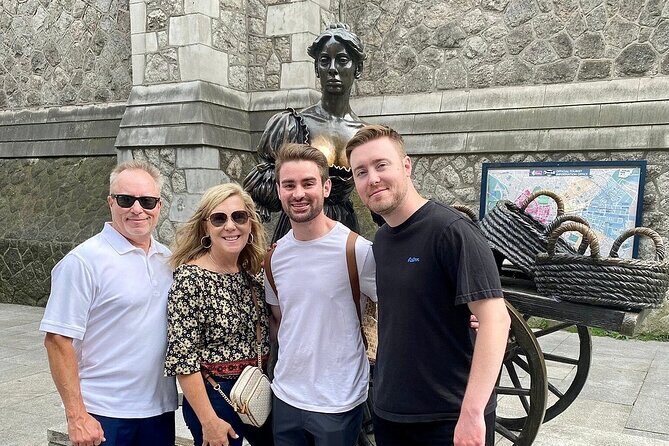
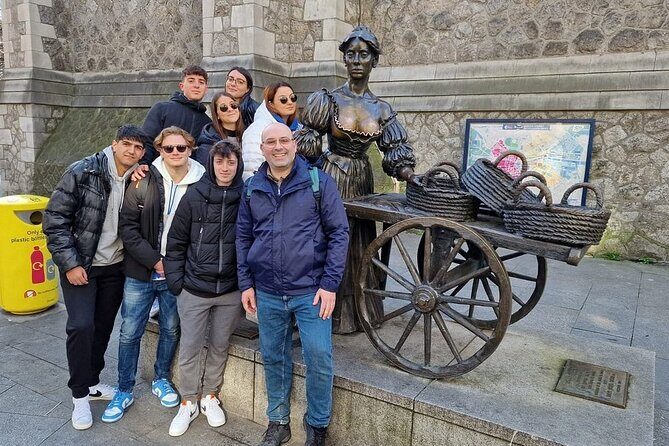
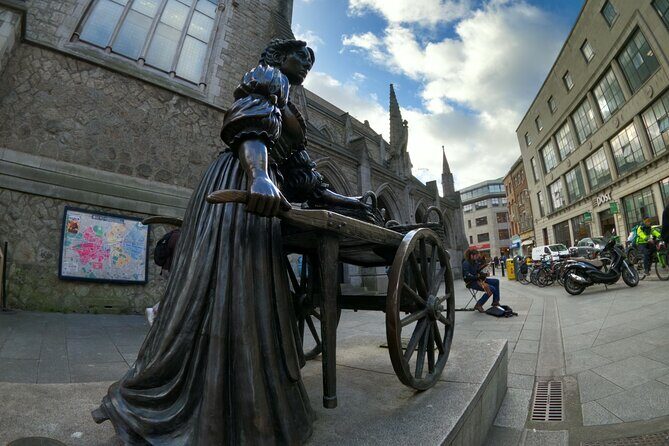
Now the walk turns more human-scale. You’ll visit the Molly Malone Statue, tied to Molly Malone’s folklore and the famous song made popular by the Dubliners. Even if you think you already know the story, the guide’s emphasis usually helps it land as part of Dublin’s street-level imagination, not just trivia.
After that comes Grafton Street, one of Europe’s busiest shopping streets. You’ll also learn what to watch for beyond store fronts—street performers, musicians, and poets show up daily, and the street’s energy is part of why it feels like Dublin.
At the top of Grafton Street sits St Stephen’s Green, Dublin’s central park, where you can walk through the green space and look out for swans and ducks. It’s about 15 minutes, and it’s a welcome change of pace from buildings and statues. On a practical level, it’s also a smart place to reset before you move back into memorials and political sites.
This section is a nice balance because it’s not only “what happened here.” It’s also “how people still use this city.”
You can also read our reviews of more private tours in Dublin





The famine memorial and Dublin’s government heart near Shelbourne and Leinster House
The route continues to Edward Delaney’s Famine Memorial, a sculpture that remembers the people who suffered and died during the Irish Great Famine. The figures are thin and struggling, meant to show hunger and hardship. This is an emotional stop, and your guide’s job is to keep it respectful without rushing past it.
Next you’ll see Theobald Wolfe Tone, widely regarded as the father of Irish republicanism. The statue sits in front of the Shelbourne Hotel, which makes the site feel grounded in real city life rather than set off in a textbook.
From there, you move into the government architecture zone with stops tied to official Dublin: the Department of the Taoiseach and then Leinster House. Leinster House is described as the former ducal residence of the Duke of Leinster, and since 1922 it has served as the parliament building of the Irish Free State. You’ll also get context for the surrounding Georgian buildings and how they shape the feel of the political core.
I like this stretch because it prevents the tour from becoming only about pubs and pretty streets. You see that Dublin’s identity includes governance, conflict, reform, and memory—all still visible in how buildings are placed and used.
Oscar Wilde at Merrion Square: a classy wrap-up
The walk ends at the Oscar Wilde Monument in Merrion Square North. This is a fitting finish because Merrion Square is known for Georgian urban design, and Wilde’s story fits that mix of art, debate, and city elegance.
You’ll connect Oscar Wilde the playwright to the physical setting, since his 18th-century home is tied into the area. The tour gives you time to take in the square and land the final notes on Dublin’s cultural side.
Ending here works well if you want to continue exploring on foot after the tour. It’s also a clean endpoint for getting oriented for the rest of your trip, since Merrion Square feels like a hub.
Price and timing: is $163.26 per person good value?
At $163.26 per person for about 3 hours, this is not a budget stroll. But private walking tours can be worth it when they replace two or three other “maybe” activities with one guided route that actually helps you plan the rest of your days.
Here’s where the value comes from:
- Private time with an experienced licensed guide, your group only.
- Targeted stops that cover music, landmarks, academic history, a famine memorial, and political institutions.
- Practical care like umbrellas provided and rest/toilet breaks if needed.
- Recommendations for where to eat, drink, and explore after the walk.
Also, the tour runs on a schedule with range of departure times, so you can choose a slot that fits your energy level. The average booking lead time is about 55 days, which suggests it can be in demand during peak travel periods. If you have a tight itinerary, booking earlier tends to keep options open.
If you’re the kind of traveler who wants structure but not stiffness, the pricing can feel fair. If you’re mainly looking for a free self-guided loop, you may feel the cost more strongly.
What to expect from the guide experience (and how to get more out of it)
The guides are consistently described as warm, friendly, and able to keep the walk engaging. Names that show up include Pasquale, Conor, Sharon, and Seamus—and the pattern is similar across them: light humor, answers to questions, and a willingness to adapt the pace.
A few extra touches can make the tour feel extra personal. Some guides have been known to:
- go at your pace rather than pushing a rigid timeline,
- share pop-culture and current-events context alongside the landmarks,
- create a photo-friendly experience with picture time at stops,
- and even make a detour for something you’d miss on your own (like wildlife sightings in green spaces).
If you want those extras, do one simple thing: tell your guide what you care about before you start. Music? Politics? Irish language and culture? Family-friendly pacing? You’ll usually get a better route flow when your interests are part of the conversation.
One more practical suggestion: bring a light layer. Even with umbrellas provided, Dublin weather can shift quickly, and being comfortable keeps the whole walk enjoyable.
Who should book this Dublin Private Walking Tour?
This is a strong fit if you:
- are visiting Dublin for the first time and want a clear orientation,
- prefer a private, paced experience over big group tours,
- want a mix of cultural and political Dublin, not only pubs,
- value photo stops and practical local suggestions for food and drinks,
- or you’re traveling with kids and want a guide who can keep everyone engaged.
It may be less ideal if you want a totally off-the-beaten-path day. This route is centered on major sights and public spaces, so you’ll get clarity on Dublin’s core more than you’ll uncover far-flung neighborhoods.
Also, if your group includes anyone with mobility limits, plan around the walking time and cobblestone sections. The tour is marked as most travelers can participate, but you’ll still be on your feet for the full loop.
Should you book this private walking tour?
Yes, if you want a well-shaped introduction to Dublin that covers real anchors of Irish culture, from music symbols like the Claddagh ring and names on the Wall of Fame to the solemnity of the famine memorial and the visible government core.
I’d skip it only if your priorities are very narrow or you’d rather build a flexible day on your own. In that case, you might prefer a map-and-museum strategy instead of a guided walk with a set route and about three hours of time.
If you do book it, I’d also plan your next steps right after. With the tour ending at Oscar Wilde in Merrion Square, you’re in a great spot to keep wandering, snack, and let Dublin sink in at street level.
FAQ
How long is the Dublin Private Walking Tour?
It lasts about 3 hours.
Where do we meet and where does the tour end?
You start at Travelling Ireland Viaggiare in Irlanda, 8 Cecilia St, Temple Bar, Dublin, and the tour ends at the Oscar Wilde Monument, Merrion Square North, Dublin.
Is this tour private?
Yes. It’s a private guided tour, and only your group participates.
Are there admission tickets needed for the stops?
The listed stops on this route are marked as admission ticket free.
What language is the tour offered in?
The tour is offered in English.
Is there free cancellation?
Yes. You can cancel up to 24 hours in advance for a full refund. If you cancel less than 24 hours before the start time, the amount paid is not refunded.