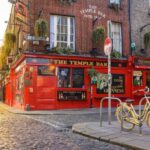
Dublin turns eerie after dark, and this 8pm walk stitches ghosts into real Northside landmarks. You’ll trace the former Viking enclave of Northside while the guide keeps the pace tight and the stories moving toward the old Brazen Head. Two things I really like: the small-group size that makes it feel personal, and the storytelling that connects names and legends (like Darkey Kelly) to what you see on the street.
Just note the subject matter can get disturbing, and the tour isn’t suitable for children under 12. If you’re bringing younger kids, you’ll want to skip this one and choose a gentler option.
In This Review
- Key highlights that matter (before you go)
- A tour that works best when you lean into night walking
- Price and what you actually get for $30.17
- Where you meet and how the start sets the tone
- Stop-by-stop: what you’ll see and why it matters
- Dublin Castle: the gothic storytelling start
- Christ Church Cathedral: short stop, heavy atmosphere
- Saint Audeon’s Terrace / Saint Audeon’s Gate: a “free” pause that gives context
- St. Michan’s Church: more history, tighter time
- Darkey Kelly’s stop: the witchcraft story you came for
- Hellfire Club and the Hellfire Pub: spooky reputation meets real landmarks
- The Brazen Head finish: ending at a real Dublin pub
- What you’ll hear from the guides (and how to make it land)
- Walking comfort: cobblestones at night are the real challenge
- Who should book this tour?
- Should you book Hidden Dublin: Haunted History Walking Tour v2.0?
Key highlights that matter (before you go)
- 8pm start means built-in atmosphere: it gets darker as you walk, which makes the stories land better.
- Darkey Kelly’s witchcraft case gets center stage: an 18th-century figure accused of witchcraft, later burnt at the stake.
- Northside’s haunted reputation is the through-line: Viking-era streets plus a string of dark Dublin sites.
- Hellfire Club and Hellfire Pub stops: you’ll hear about this reputation for cruelty and spectacle.
- You end at the Brazen Head: a genuinely old pub finish, not a random street corner.
A tour that works best when you lean into night walking
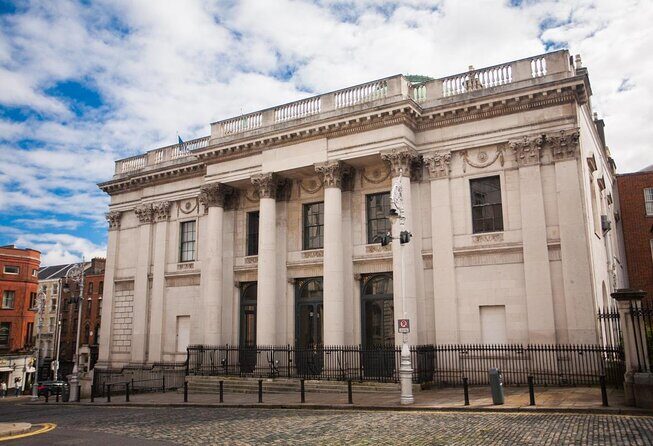
This is a walking tour built for the evening. It starts at 8:00 pm near Dublin City Hall (the meet-up is at Barnardo Square, 3 Dame St). The timing isn’t just for convenience. It shapes the whole experience. As you go, the light drops, the cobblestones feel more “street-level” dramatic, and you’ll notice how the guide uses pauses and pacing to make the stories hit.
I like that it stays focused. The tour isn’t a long shuffle across town. It’s more like a guided route through a tight cluster of historic Dublin spots, with supernatural stories layered on top. If you enjoy haunted-history as a mix of folklore, punishment, and the way cities remember their past, you’ll get a lot out of it.
The small-group setup helps too. The walk is capped at 15 people, which means you aren’t fighting for attention in a crowd. You’ll also be able to hear the guide better than on big mass tours.
You can also read our reviews of more walking tours in Dublin


Price and what you actually get for $30.17
At $30.17 per person for about 1 hour 50 minutes, this lands in the “good value” category—if your goal is stories and street-level sights rather than museum-style admission.
Here’s the practical part: admission is not included for several major stops. Dublin Castle and Christ Church Cathedral are on the route, but you’re not paying for entry as part of the tour. The same idea applies to other church stops listed along the way. You get short, meaningful time at points of interest, plus the guide’s context so you understand why each place carries a darker reputation.
So ask yourself this: Do you want to tour inside buildings for long stretches? If yes, this won’t fully satisfy that. This is a narrative walk—tight stops, lots of storytelling, and exterior or brief viewing moments.
If you’re happy with that format, the price makes sense because you’re paying for a live guide who links locations into one story arc, not for entry tickets.
Where you meet and how the start sets the tone
You meet outside the City Hall area at 8:00 pm, with the specific meeting point listed as Barnardo Square, 3 Dame St. That’s a big advantage for most visitors. You’re not hunting across the city in the dark.
Once you meet up, the tour kicks right into the content. The guide starts with Dublin’s haunted history immediately, with the cobblestones and city sounds doing half the mood work for you. It feels less like a classroom and more like you’re walking with someone who knows exactly where the best story corners are.
Stop-by-stop: what you’ll see and why it matters
Dublin Castle: the gothic storytelling start
One of the first named stops is Dublin Castle. The stop is listed around 10 minutes, and admission isn’t included. That means you’re likely looking at the surrounding areas and hearing stories tied to the castle’s role in power, punishment, and conflict.
Why I think this works: castles aren’t just pretty architecture. They’re administrative engines. When a haunted history tour leans into court cases, executions, and rule by force, castles naturally become the anchor point.
A quick reality check: with a short stop and no admission, don’t plan on fully “doing” the castle grounds. Plan on absorbing the guide’s narrative and moving on.
You can also read our reviews of more historical tours in Dublin



Christ Church Cathedral: short stop, heavy atmosphere
Next is Christ Church Cathedral, about 6 minutes, with admission also not included. Even if you don’t go inside, the cathedral setting alone adds weight to the stories. It’s the kind of place where people over centuries have looked for meaning, even when the events were grim.
What to expect here is historical framing with a darker edge. The tour is aimed at the macabre side of Dublin’s story, so the guide’s job is to connect what you see to what happened, not just to name the building.
Saint Audeon’s Terrace / Saint Audeon’s Gate: a “free” pause that gives context
There’s a stop at Saint Audeon’s Terrace and Saint Audeon’s Gate (around 8 minutes) and this one is listed as free. It’s a good breather point. It also helps that this part of the route isn’t about paying to access anything—so you can focus on the story.
This is one of those stops where the guide’s connections matter more than the duration. A gate or terrace is a physical boundary. In haunted-history storytelling, boundaries are where legends like to stick.
St. Michan’s Church: more history, tighter time
St. Michan’s Church is on the route next, around 6 minutes, again with admission not included. Churches here aren’t treated as scenic stops. They’re treated as witnesses.
Expect the guide to keep pushing the timeline: what Dublin was dealing with, who was punished, and how fear becomes part of the city’s memory. If you like haunted history that feels grounded in social reality—bad laws, disease, punishment—this stop fits the overall tone.
Darkey Kelly’s stop: the witchcraft story you came for
The tour culminates with the final story connected to Darkey Kelly, with about 10 minutes at the Darkey Kelly’s stop. Darkey Kelly is described as being accused of witchcraft and burnt at the stake in the 18th century.
This is the point where the tour title stops being marketing and starts being the whole show. The guide’s storytelling style matters most here. In past runs, guides such as Emma and Lydia have been singled out for engaging, clear delivery, with enough energy to keep the group following even at night.
Practical tip: stick close to the guide at the start of this section. This is one of the parts where the emotional intensity rises.
Hellfire Club and the Hellfire Pub: spooky reputation meets real landmarks
The tour also includes spooky stops tied to the Hellfire Club and an 18th-century Hellfire Pub. You’ll hear why this place developed its sinister reputation, and you’ll also walk toward a site considered to be the gates of Hell.
This is where the tour leans into the supernatural tone. You’ll want your brain switched on. Think of it like folklore plus fear plus politics, all tied to locations people can point to on a map.
If you’re expecting dramatic special effects, you won’t get those. But if you like the idea that “the story is in the street,” you’ll probably enjoy this section a lot.
The Brazen Head finish: ending at a real Dublin pub
The tour concludes at the Brazen Head, described as one of the oldest public houses in Dublin. That matters because you end somewhere people can actually relax in.
It also gives the night a satisfying shape. You start near City Hall, move through haunted landmarks, hear a witchcraft case and Hellfire stories, and then you land at a pub that feels like Dublin’s living memory.
If you want to keep the mood going after the tour, this is a good spot to grab a drink and compare notes with whoever you walked with.
What you’ll hear from the guides (and how to make it land)
This tour is a storytelling show. The guide is the product. A lot of what people praised centers on story delivery: being on time, pacing the walk so everyone can keep up, and keeping the group laughing while the content turns dark.
You may hear stories delivered by guides such as Emma, Lydia, Finn, Kate, Lea, or Katie. Guides named across different tours have been described as clear and loud, with a strong sense of timing, and an ability to answer questions without turning the walk into a lecture.
If you want the best experience:
- Go a bit earlier so you’re not late to the start.
- Stand near the front during the densest parts (the Darkey Kelly and Hellfire sections).
- If you’re a light sleeper, pack earplugs for after. Night traffic outside historic centers can be loud.
One more reality check from a balance standpoint: this is not always “scare-you-to-the-floor” horror. It leans heavily on history and why these sites got their reputations. If you only want intense paranormal performances, you may find it more like dark storytelling than full-on horror.
Walking comfort: cobblestones at night are the real challenge
The route is on cobblestones. That doesn’t sound scary until you’re standing on uneven stones in the dark. Wear shoes you trust. Keep your pace steady.
Because the stops can involve brief viewing near busy roads, audio can vary depending on where you stand and how loud street traffic is. If you care about hearing every word, position yourself well and don’t drift to the side.
Most people can participate, but if you have mobility issues, think about the fact that this is still a walking route with a night start.
Who should book this tour?
This is a great fit if you:
- Love haunted-history that mixes folklore with real places.
- Enjoy night walking and don’t mind dark subject matter.
- Want a guided route with short, meaningful stops instead of long indoor sightseeing.
- Prefer small groups (the walk is capped at 15).
Skip it if you:
- Want a kid-friendly tour. It’s not suitable for children under 12.
- Want long ticketed time inside Dublin Castle or Christ Church Cathedral. Admissions aren’t included, and stop times are short.
- Are hoping for a theatrical horror show. The delivery is story-and-setting, not special effects.
Should you book Hidden Dublin: Haunted History Walking Tour v2.0?
If your ideal evening in Dublin is a mix of history, fear, and great street storytelling, I’d say yes. At $30.17 for nearly two hours, you’re paying for a focused route, a local guide, and a payoff that ends at the Brazen Head instead of a vague meeting point.
Just don’t treat it like a children’s ghost walk or a guaranteed jump-scare event. This is for adults who enjoy the darker side of Dublin’s past, and who like their spookiness grounded in real buildings, real names, and real historical fear.
If that’s your thing, book it for a night. The 8pm start is a big part of why the experience works.