REVIEW · DUBLIN
Dublin: Historical and Cultural Historical Walking Tour
Book on GetYourGuide →Operated by Opatrip.comU.S. · Bookable on GetYourGuide
Dublin changes fast when you walk it. This Christ Church Cathedral to Temple Bar route pairs medieval stone and street-level culture, and I like how it hits both landmarks and the in-between moments. I also like the private group setup for a calmer pace and more back-and-forth with your guide. One thing to keep in mind: the stops are short, so it’s not built for deep, long museum-style visits.
Over 2 hours, you’ll cover eight major points with a live English/French/German/Russian/Spanish guide, starting at Christ Church Cathedral’s main entrance and finishing back at the same meeting point. The tour is simply a walking tour—no hotel pickup—so you’ll want to build in a little time to get yourself to Christchurch Pl, Wood Quay.
In This Review
- Key highlights you’ll notice right away
- Walking route: Christ Church Cathedral to Temple Bar in one tight loop
- Stop-by-stop: what you’ll do at each landmark
- Stop 1: Christ Church Cathedral (starting point)
- Stop 2: Dublin Castle (10 minutes)
- Stop 3: Smock Alley Theatre, Dublin (10 minutes)
- Stop 4: Temple Bar (15 minutes)
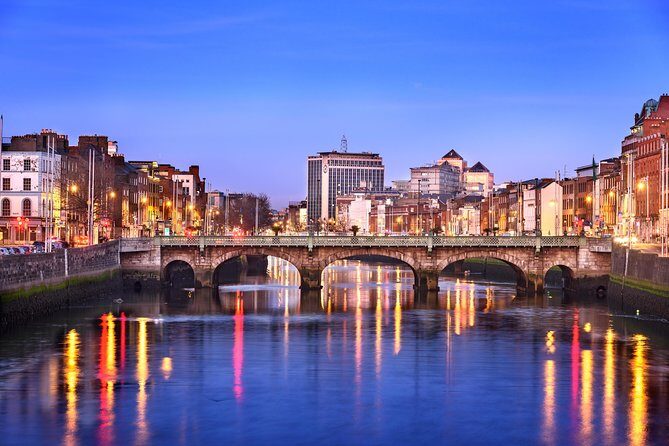
- Stop 5: Ha’penny Bridge (15 minutes)
- Stop 6: O’Connell Bridge (15 minutes)
- Stop 7: College Green (15 minutes)
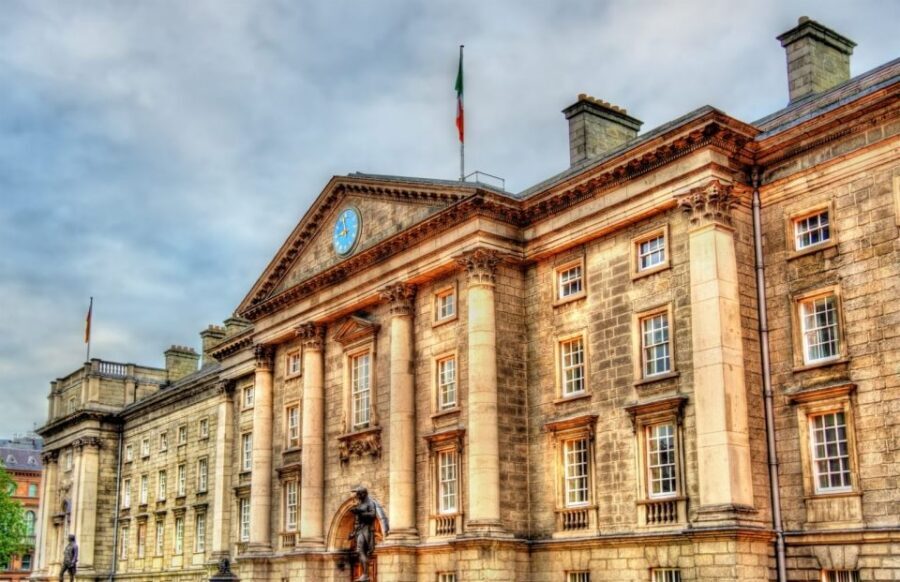
- Stop 8: Trinity College Dublin (15 minutes)
- Why the bridge stops make this tour easier on your brain
- Private group up to 4: the real value of a smaller tour
- Price and value: $502 per group up to 4
- Practical tips to get the most from 2 hours on your feet
- Should you book this Dublin historical and cultural walking tour?
- FAQ
- Where do I meet the guide?
- Where does the tour end?
- How long is the walking tour?
- How much does the tour cost?
- Is this a private tour?
- What languages are available for the live guide?
- Is hotel pickup included?
Key highlights you’ll notice right away
- Christ Church Cathedral start point: a dramatic gothic beginning that sets the tone immediately
- Dublin Castle photo-and-context moment: a quick stop that still gives you something to look for
- Smock Alley Theatre pause: a chance to connect arts culture with the city’s old streets
- Temple Bar time block: 15 minutes in the area most people use as a Dublin shortcut
- Two bridges, two vibes: Ha’penny Bridge (15) and O’Connell Bridge (15) to orient you fast
- Trinity College area focus: College Green plus Trinity College Dublin to feel Dublin’s academic pulse
Walking route: Christ Church Cathedral to Temple Bar in one tight loop

This tour works because it’s built like a smart orientation walk. You start at Christ Church Cathedral, then move into the older civic core (Dublin Castle), then shift toward arts and performance (Smock Alley Theatre), and finally hit the most famous Dublin nightlife district (Temple Bar). Along the way, you stop at Ha’penny Bridge and O’Connell Bridge, plus College Green and Trinity College Dublin—so you get both the “old Dublin” feeling and the “modern city in motion” feeling.
The route is also a good length for people who don’t want to over-plan. At two hours, you’re not stuck for half a day. You’re getting a compact overview with enough time at each location to actually notice details: the architecture when you’re at Christ Church Cathedral, the civic presence near Dublin Castle, and the street energy around Temple Bar.
One practical benefit: because this ends back at the same meeting point, you don’t have to figure out a return plan or worry about getting stranded at the far end of town. You simply finish, then go your own way—pub, café, museum, or just wandering.
You can also read our reviews of more walking tours in Dublin



Stop-by-stop: what you’ll do at each landmark

Below is what you can expect at each stop, plus the tradeoffs. I’m focusing on what matters for your time and attention on a two-hour walking tour.
Stop 1: Christ Church Cathedral (starting point)
You meet at the main entrance of Christ Church Cathedral on Christchurch Pl, Wood Quay. Since this is your first stop, the guide can set the context early—how the area feels medieval, how the building’s style shapes your first impressions, and what to look for as you walk.
Why it’s worth your attention: starting at a cathedral gives you a mental anchor. When later you see Dublin Castle and Trinity College Dublin, your brain has a clearer framework for the city’s different eras. The provided description also points out the cathedral’s gothic spires, which is exactly the kind of visual detail that makes the first five minutes feel special.
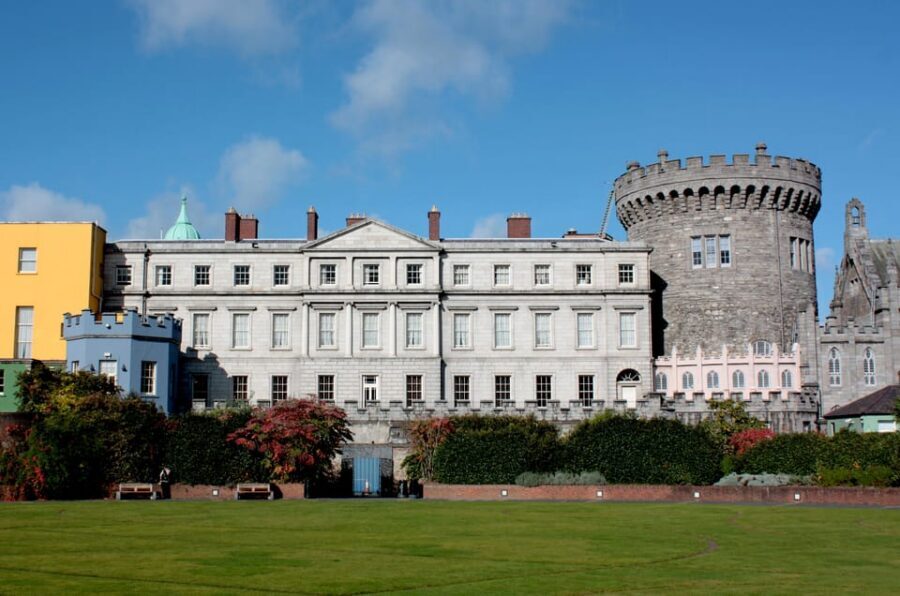
Stop 2: Dublin Castle (10 minutes)
You’ll visit Dublin Castle for about 10 minutes. This is a “look and learn” stop, not a long, in-depth session. Expect a quick walk-through of what this place represents and what it signals about Dublin’s past—power, government, and the city’s public face.
Tradeoff: with only 10 minutes, you’re not going to absorb everything there is to know. But for first-timers, a short stop like this is useful. You leave with a few key ideas, then you can decide later if you want more time on your own.
Stop 3: Smock Alley Theatre, Dublin (10 minutes)
Next is Smock Alley Theatre for another 10 minutes. This stop adds an arts angle to the historic core you just covered. Instead of only focusing on buildings with political or religious weight, you get a cultural stop that helps balance the walk.
Why I like this kind of add-on: theatre stops remind you Dublin isn’t just an archive of old stone. It’s a working city with creativity layered into it. If you’re the type who notices street culture—signs, entrances, small architectural cues—this stop gives you something extra without stealing time from the big landmarks.
You can also read our reviews of more historical tours in Dublin




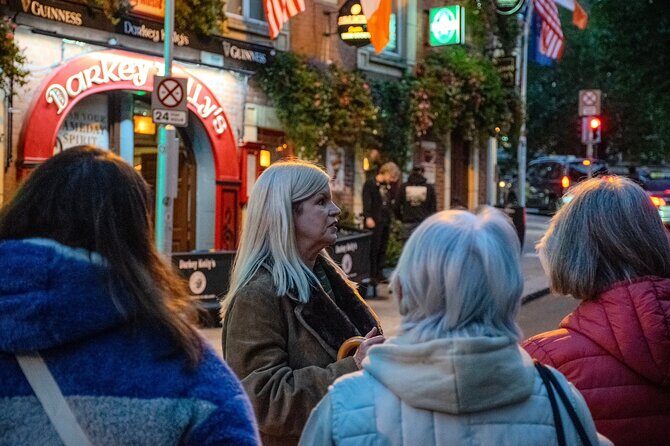
Stop 4: Temple Bar (15 minutes)
Temple Bar gets the longest stop time so far, at about 15 minutes. This is where the tour shifts from heritage heavy to street-level Dublin. You’ll spend enough time here to get the vibe—people, music energy, and the feeling that this is one of the city’s most recognizable zones.
Tradeoff: Temple Bar can be crowded compared with quieter historic lanes, and your time is still limited. Think of it as a targeted taste. If you love the atmosphere, you’ll know to come back later and linger on your own.
Stop 5: Ha’penny Bridge (15 minutes)
Ha’penny Bridge is next, with 15 minutes on the schedule. Bridges are smart stops on walking tours because they force you to slow down at a natural “pause point.” You also get a better sense of how different parts of Dublin connect—visually and practically.
Why it’s practical: when you’ve got only eight stops total, the bridge time helps you reset your bearings. You can take photos, look around, and just absorb the city’s scale before moving on to O’Connell Bridge.
Stop 6: O’Connell Bridge (15 minutes)
Then you move to O’Connell Bridge for another 15 minutes. Together, Ha’penny Bridge and O’Connell Bridge make this tour feel less like a list of monuments and more like a guided walk through Dublin’s real movement.
This second bridge stop also matters because it gives contrast. Ha’penny Bridge is often associated with classic Dublin views; O’Connell Bridge tends to feel more connected to the city’s main thoroughfares. Even without getting stuck in details, the change of feel helps you understand Dublin’s different moods.
Stop 7: College Green (15 minutes)
College Green comes next, and it’s a key transition point. Your tour description specifically notes the academic pulse you feel at Trinity College, and College Green is where that idea starts to make sense. This is the “you’re approaching the university zone” moment.
Why it works: you get the shift from older civic streets to an academic atmosphere before you reach Trinity College Dublin itself. That makes the final stop feel earned rather than random.
Stop 8: Trinity College Dublin (15 minutes)
You end at Trinity College Dublin with 15 minutes. The description frames this as a place to feel Dublin’s academic excellence and cultural heritage. Even with a short visit, this stop gives you a sense of where Dublin’s learning tradition shows up in everyday city life.
Tradeoff: 15 minutes is enough for orientation and a few highlights, not enough for a full campus experience. If you’re a deep history or architecture person, you’ll probably want extra time afterward. But as a guided closer, it’s a strong finish because it ties the whole walk together—cathedral to castle to arts to nightlife to learning.
Why the bridge stops make this tour easier on your brain

A lot of walking tours feel like pure “stop-and-go.” This one uses bridges and major streets as breathing points. That’s not a small detail. When you’re walking for two hours, mental fatigue builds fast. Bridge stops cut that fatigue by giving you space to look outward and reorient.
Ha’penny Bridge and O’Connell Bridge also help you in a very real way: they act like city bookmarks. After the tour, you’ll often remember where you were—cathedral start, castle/culture middle, Temple Bar area, then the bridge sequence leading you toward the College Green and Trinity College Dublin finish.
If you’re the type who likes to return on your own later, these stops are also useful because they’re clear reference points. You’ll be able to say: I started at Christ Church, walked past Dublin Castle, hit Temple Bar, then crossed those two iconic bridges before reaching Trinity.
Private group up to 4: the real value of a smaller tour
This is a private group experience for up to four people, with a live guide. That small group size matters more than people expect. It usually means:
- less waiting at the front of the group
- more chances for the guide to adjust pace to your questions
- fewer times where you feel like you’re rushing just to keep up
You also get flexibility through languages. The tour is offered in English, French, German, Russian, and Spanish, which is great if you’d rather not rely on your second language for the details.
Who this suits best:
- Couples and small families who want Dublin orientation without a big crowd feel
- First-time visitors who want a map of where to go next
- People who like history but also want the modern Dublin experience in the same walk
If you want long, ticketed time inside buildings, this format might feel short. But if you want a guided sense of direction and meaning in a compact timeline, it’s a good match.
Price and value: $502 per group up to 4
The price is $502 per group for up to four people. On the math side, that’s about $125.50 per person if you fill all four spots. If you book as fewer than four, the per-person cost rises—but you’re still paying for a private guide and a structured walking route.
Here’s the value angle that matters: you’re not paying to sit in a vehicle or do a checklist of random streets. You’re paying for a 2-hour guided walk with stops at major Dublin points—Christ Church Cathedral, Dublin Castle, Smock Alley Theatre, Temple Bar, Ha’penny Bridge, O’Connell Bridge, College Green, and Trinity College Dublin.
One more value factor: this tour includes the guide. It doesn’t rely on you finding information from a phone app alone. For a city like Dublin—where neighborhoods shift character block to block—having an on-foot guide helps you make sense of what you’re seeing as you walk.
The only cost-related caution in the basics: the price is per group, and hotel pickup/drop-off isn’t included. That means you’ll handle getting yourself to the meeting point.
Practical tips to get the most from 2 hours on your feet
This is a walking tour with a set route and short visit windows. That means you’ll get the most if you show up ready to move.
- Wear comfortable walking shoes. Two hours in a city center adds up, especially if you pause for photos.
- Plan for quick stops. Each location has a defined visit time, so don’t count on lingering for long.
- Arrive at the right meeting spot: the main entrance of Christ Church Cathedral on Christchurch Pl, Wood Quay. Find it before you’re rushed.
- Use the bridge moments to recharge your attention. Ha’penny Bridge and O’Connell Bridge give you that built-in pause, so take advantage of it.
Language-wise, if you have a preference (English, French, German, Russian, or Spanish), check that availability before you book so the experience matches what you want.
Should you book this Dublin historical and cultural walking tour?
I’d book this if you want a guided, compact overview of Dublin’s big landmarks in just two hours. The route makes sense: it starts with Christ Church Cathedral, threads through Dublin Castle and Smock Alley Theatre, hits Temple Bar for modern street culture, and finishes at Trinity College Dublin to bring the academic theme home.
You might skip it (or pair it with something else) if you crave long time inside buildings or you want a slower pace with fewer stops. The tour is designed for impressions and context, not deep study. That’s not a flaw. It’s a style.
If you’re deciding based on value: the private group up to four is the sweet spot, especially if you can share the cost and keep the walk calmer and more interactive. I like that you finish back at the starting point, because it makes your next move easy.
FAQ
Where do I meet the guide?
Meet the guide at the main entrance of Christ Church Cathedral, Christchurch Pl, Wood Quay, Dublin 8, Ireland.
Where does the tour end?
The tour ends back at the meeting point at Christ Church Cathedral.
How long is the walking tour?
The duration is 2 hours. Starting times vary, so you’ll need to check availability.
How much does the tour cost?
The price is $502 per group for up to 4 people.
Is this a private tour?
Yes. It’s listed as a private group, up to 4 people.
What languages are available for the live guide?
The live tour guide is offered in English, French, German, Russian, and Spanish.
Is hotel pickup included?
No. Hotel pickup and drop-off are not included.