REVIEW · DUBLIN
Secret and unusual Dublin: guided walking tour
Book on GetYourGuide →Operated by MP Tour Guiding · Bookable on GetYourGuide
Dublin has quiet surprises waiting. This Secret and unusual Dublin guided walking tour mixes iconic landmarks with lesser-known corners, so you see a side of the city beyond the usual postcards. You’ll get stories that tie Vikings, revolutions, architecture, culture, and literature into one easy 2-hour stroll.
I like two things a lot here. First, the guide brings a friendly, humorous style and keeps the pace relaxed, with plenty of anecdotes. Second, the tour is built around “unusual Dublin” stops—small streets, symbolic details, and surprising places you’d probably miss on your own.
One consideration: entrance fees are not included, so if you want to go inside any of the featured buildings, expect extra costs beyond the tour price. Also note the tour is not suitable for wheelchair users.
In This Review
- Key highlights worth planning around
- Two hours of secret Dublin: how the tour actually feels
- O’Connell Monument start: setting your bearings fast
- Temple Bar street art and culture: beyond the nightlife postcards
- The middle of the walk: Vikings, revolutions, and Celtic symbols
- Dublin Castle: emblematic buildings with explanations
- Powerscourt Townhouse: another century in the route’s later miles
- Trinity College finish: closing the loop on Dublin’s literature link
- Price and value: is $57 a good deal for this format?
- Who this tour suits best (and who might prefer something else)
- Should you book Secret and unusual Dublin?
- FAQ
- What is the duration of the Secret and unusual Dublin walking tour?
- How much does it cost?
- What language is the guided tour in?
- Where does the tour start?
- Where does the tour end?
- Are entrance fees included for the visited sites?
- Is the tour suitable for wheelchair users?
- What should I bring for Dublin weather?
- What is the cancellation policy?
- Can I reserve and pay later?
Key highlights worth planning around
- French-guided stories in a short walk: a 2-hour format that fits neatly into a first day or a half-day plan.
- Secret corners with real context: Viking heritage, independence rebellion remnants, and Celtic symbols come with explanations.
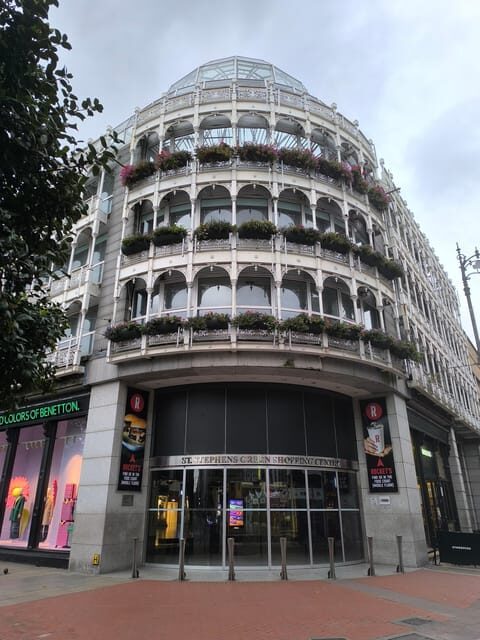
- Temple Bar seen from street level: street art and culture get real-time attention, not just a quick pass.
- Architecture across centuries: you’ll spot emblematic buildings from other times and connect them to the city’s shifts.
- Music and literature locations: places tied to Dublin’s writers and sounds are part of the route.
- Multiple stops, not one big museum visit: many guided moments outdoors, then a final pass through Trinity College.
Two hours of secret Dublin: how the tour actually feels
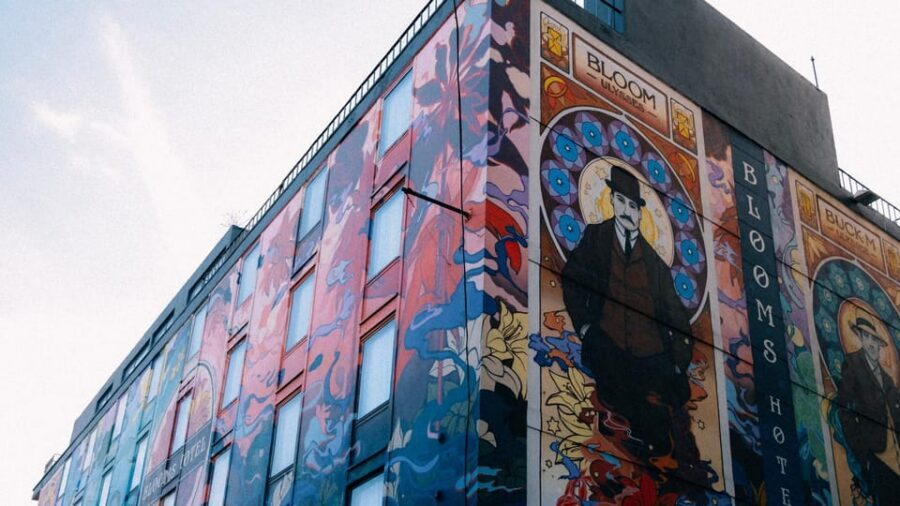
This is the kind of tour that works when you want understanding, not just photos. It keeps the tour moving with quick orientation stops at famous spots, but the main focus is on hidden, lesser-known places.
The sweet spot is the time. Two hours is long enough to feel like you learned something, and short enough that you’re not tired before dinner. If your schedule is tight, that matters in Dublin, where weather can shift quickly and sidewalks can get crowded around the center.
You’ll be walking as a group with a live guide in French, and the experience is clearly designed to be friendly and easygoing. Even when the topics get historical—Vikings, rebellions, revolutions—the delivery is meant to land as stories you can picture.
You can also read our reviews of more walking tours in Dublin



O’Connell Monument start: setting your bearings fast
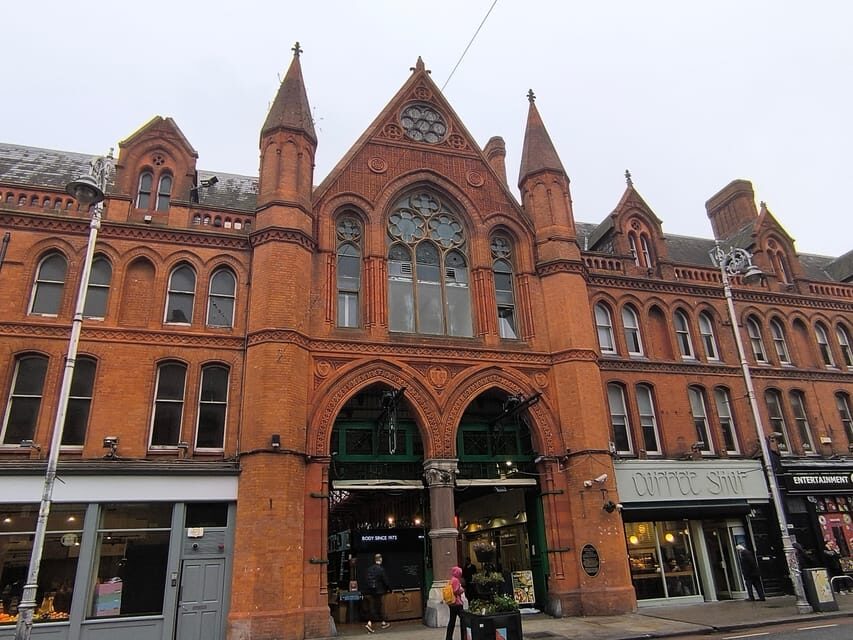
You begin in front of the O’Connell monument at the bottom of O’Connell Street. It’s a smart starting point because it anchors the walk in one of Dublin’s main axes, so the early minutes help you orient quickly.
From there, the tour shifts into the city’s quieter side. The goal isn’t to avoid iconic Dublin—it’s to use those markers briefly, then move into the streets where the details live.
If you’re the type who likes to connect buildings to the people who used them, this start helps. It gives you a reference point before your guide starts layering in “why this place matters” moments.
Temple Bar street art and culture: beyond the nightlife postcards
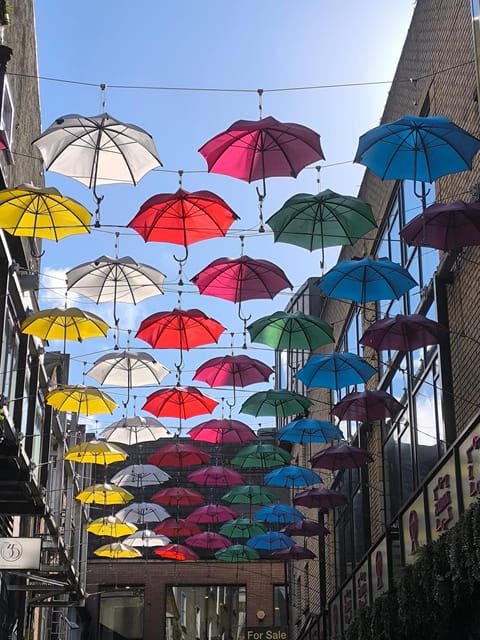
Temple Bar is on the route, but the approach is different from what many people expect. You’ll spend time here with a guided tour that looks at street art and culture as part of the neighborhood’s identity.
That focus matters because Temple Bar can feel like a theme park if you only watch the crowds. With a guide, you’ll notice how the area’s art and street details communicate Dublin’s ongoing creativity—then you’ll connect that to older layers of the city mentioned elsewhere in the route.
Practical tip: since this is an active walking tour, you’ll want to pay attention during the Temple Bar segment. The street-level details and symbols are the kind you won’t rewind later if you’re only thinking about where to eat.
The middle of the walk: Vikings, revolutions, and Celtic symbols
Between Temple Bar and the named landmarks later on, the itinerary turns into a chain of guided story-stops. Some are described as secret stops and others as hidden corners, but the common thread is the “atypical Dublin” theme.
This is where you’ll hear about:
- Remnants of old independence rebellions
- Viking heritage
- Places connected to music and literature
- Celtic symbols and their meanings
- Anecdotes tied to architecture and culture
What I like about this part is the way it prevents “history overload.” Instead of dumping big timelines, the tour uses specific visual prompts—symbols on surfaces, architectural cues, street-level features—to make the past feel present.
You also get a sense of how Dublin’s identity keeps rewriting itself. Vikings and rebellions are not just taught as dates; they’re framed as influences that show up in what you can see today. If you’re traveling solo or you like to understand a city’s mindset, this is one of the most useful segments.
Dublin Castle: emblematic buildings with explanations
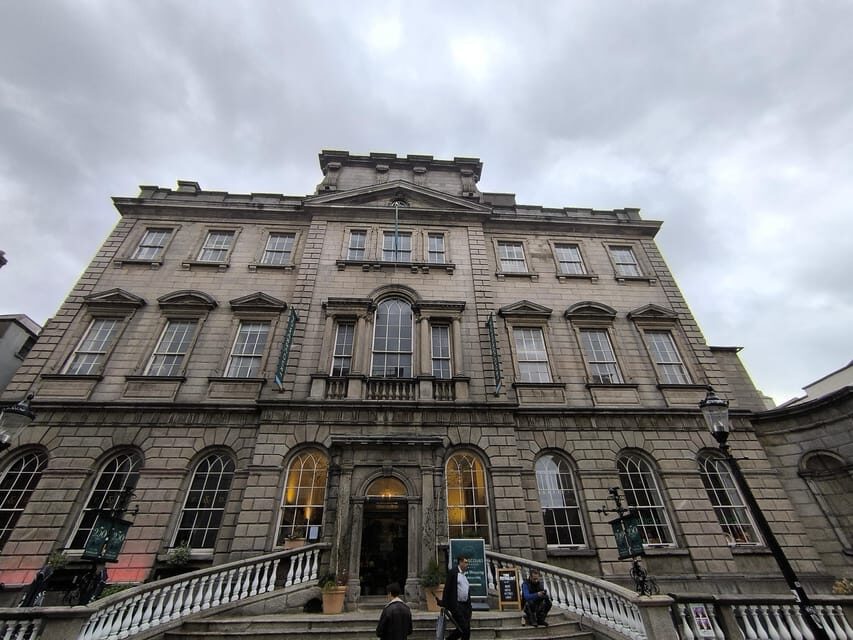
Dublin Castle appears as one of the main stops, and it’s a natural moment to slow down for meaning. This is one of the city’s emblematic buildings, and the guide’s job is to connect what you’re looking at with the broader themes of rule, change, and Irish identity.
The big limitation here is simple: entrance fees are not included. So you can still get a lot from the exterior and guided context, but your overall experience inside may depend on whether you choose to pay for entry separately.
If you enjoy architecture, this is the stop where your “why should I care?” questions get answered more directly. Even without going inside, the guide helps you read the building in terms of centuries, not just as a photo location.
You can also read our reviews of more guided tours in Dublin





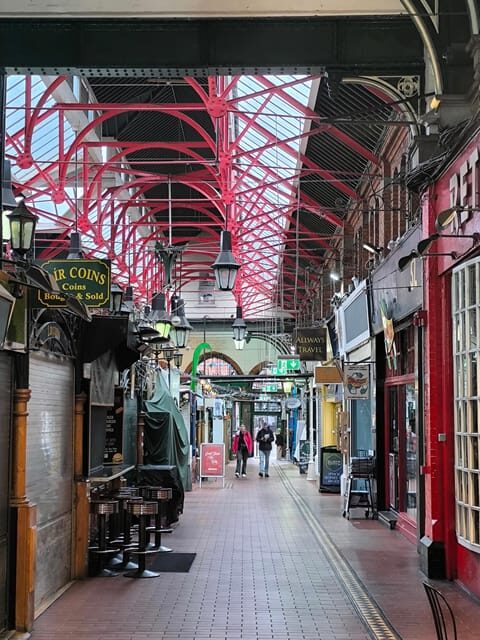
Powerscourt Townhouse: another century in the route’s later miles
Powerscourt Townhouse is another named highlight, and it adds a different flavor to the walk. The tour includes emblematic buildings from other centuries, and this stop fits that theme nicely—less about one headline landmark, more about how Dublin carries layers of style.
What makes stops like this valuable is pacing. Earlier in the tour you’re catching stories about Vikings, rebellions, and symbols. Later, when you reach a building like Powerscourt Townhouse, the architecture becomes the story anchor.
If you’re the type who likes to notice design and think about how people lived and gathered in different eras, you’ll get a lot out of this segment.
Trinity College finish: closing the loop on Dublin’s literature link
The walk ends at Trinity College. That final stop ties neatly into the tour’s focus on places connected to music and literature, since Trinity is strongly associated with Dublin’s intellectual life.
Depending on where you are in the route, the finish also helps you plan the next step of your day. You’ll be in a central, high-value area for a post-tour wander, a coffee break, or a self-guided visit nearby.
One small note: the organizer information says the activity ends back at the meeting point, but the itinerary lists Trinity College as the finish. Either way, you’ll be guided to an end point in the central area, and the key takeaway is that the tour wraps up near one of Dublin’s most useful zones for onward plans.
Price and value: is $57 a good deal for this format?
At $57 per person for a 2-hour French-guided walk, the value comes down to one thing: how much you want guided interpretation versus solo wandering.
You’re paying for:
- A live guide (French)
- A route that combines iconic quick stops with multiple hidden-corner segments
- Explanations tied to Vikings, rebellions, cultural symbols, architecture, and literature
Entrance fees are not included, which is important for your budgeting. If you only care about seeing the city and getting the stories, the tour works well as-is. If you plan to add paid entry to buildings along the way, you’ll want to budget extra on top of the tour price.
For most visitors, the best-case scenario is simple: you learn how to look at Dublin. Then when you walk on your own afterward, you’ll notice the symbols, the architecture clues, and the cultural references the guide trained you to see.
Who this tour suits best (and who might prefer something else)
This experience is a great match if you:
- Want a French-guided introduction to Dublin’s less obvious layers
- Like history when it’s told through places, symbols, and street details
- Prefer a walking format that fits in a half-day window
- Enjoy culture-literature links, not just museum stops
It’s less ideal if you need wheelchair access, since it’s not suitable for wheelchair users. And if you expect a tour where entry tickets are bundled into the price, you’ll want to know that you may pay extra separately for entrances.
Should you book Secret and unusual Dublin?
I’d book it if you want more than a standard highlights walk. The best reason is the mix: Vikings and rebellions, Celtic symbols, music and literature connections, plus Temple Bar street culture, all delivered in a friendly, humorous way over 2 hours.
Skip it (or choose another option) if you’re primarily hunting for paid interior experiences, because entrance fees are not included. Also, if you’re traveling with accessibility needs that require wheelchair access, this one won’t work.
If you like to return home with a few mental maps—where the city’s identity shows up in art, symbols, and architecture—this tour is a smart use of time in Dublin.
FAQ
What is the duration of the Secret and unusual Dublin walking tour?
The tour lasts 2 hours. Starting times vary, so you’ll need to check availability for the schedule.
How much does it cost?
The price is $57 per person.
What language is the guided tour in?
The guided tour is in French.
Where does the tour start?
It starts in front of the O’Connell monument at the bottom of O’Connell Street.
Where does the tour end?
The itinerary lists Trinity College as the finish point, and the activity notes that it ends back at the meeting point.
Are entrance fees included for the visited sites?
No. Entrance fees are not included.
Is the tour suitable for wheelchair users?
No, it is not suitable for wheelchair users.
What should I bring for Dublin weather?
Bring clothing suitable for Irish weather.
What is the cancellation policy?
You can cancel up to 24 hours in advance for a full refund.
Can I reserve and pay later?
Yes. You can reserve your spot and pay later.