REVIEW · DUBLIN
A Self-Guided Stroll Along Dún Laoghaire’s East Pier
Book on Viator →Operated by VoiceMap Audio Tours · Bookable on Viator
A walk along the sea, with stories built in. This self-guided route turns Dún Laoghaire’s East Pier into a timed, easy-to-follow narrative, starting at St Michael’s Church and finishing near the Roger Casement Statue. You get prompts on what to look for and why it matters, all while you move at your own pace.
I like that it comes with offline audio, maps, and geodata, so you can keep going even if your signal is flaky. I also like how the stops mix places you’d actually pass anyway (church, theatres, piers, monuments) with maritime moments like the RMS Leinster tragedy that shaped local memory.
The one drawback to plan around: you must bring your own smartphone and headphones. There’s no hand-holding on arrival, so charge up before you start.
In This Review
- Key highlights worth your attention
- Setting off from St Michael’s Church (your easy launch pad)
- Pavilion Theatre: where present-day culture meets the pier walk
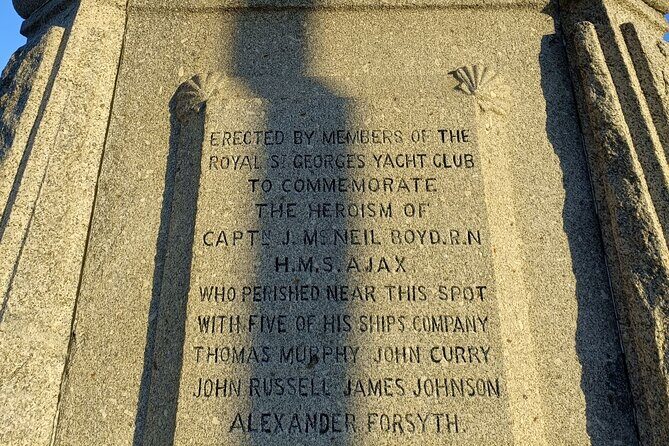
- King George IV Monument + the RMS Leinster Memorial: big memory, close to the path
- The Metals promenade: old railway lines turned into a walk
- East Pier Lighthouse: panoramic reward over Dublin Bay
- Carlisle Pier, the Forgotten Irish Memorial, and the Bandstand Sun Shelter
- The Crimean War cannon and the Romanov eagle motif: a Russian surprise in Dublin
- Ending near Roger Casement Statue: finishing with a rebel’s shadow
- Price and value: $8.99 for a story you can replay
- Who this self-guided East Pier walk suits best
- Tips to get the most from the audio
- Should you book this East Pier stroll?
- FAQ
- What is the walking time for this self-guided East Pier experience?
- What language is the audio available in?
- Do I need an internet connection?
- What equipment do I need to bring?
- Where do I start and where does it end?
- Is there transportation included?
- Is food or drink included?
- Is this experience refundable?
- Does it run year-round?
Key highlights worth your attention
- Offline VoiceMap audio with maps and geodata you can use on the move
- Monuments with clear context, including the RMS Leinster Memorial and the King George IV Monument
- The Metals promenade, where an old railway trace becomes a waterfront walkway
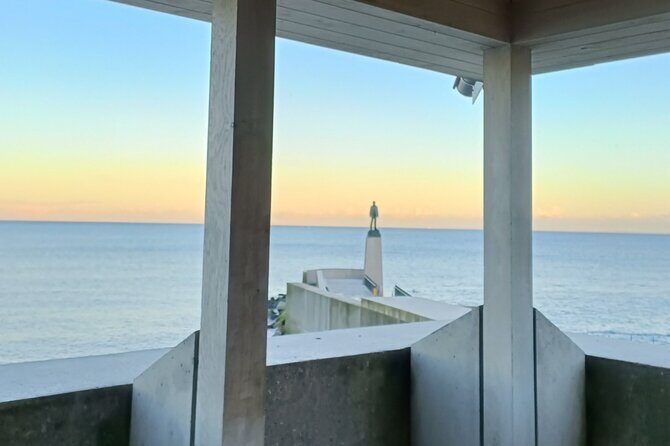
- East Pier lighthouse viewpoints over Dublin Bay and the city
- Carlisle Pier + multiple memorials, including the Forgotten Irish Memorial
- A Crimean War cannon with Romanov eagle details, plus a surprising Russia-to-Dublin connection
Setting off from St Michael’s Church (your easy launch pad)
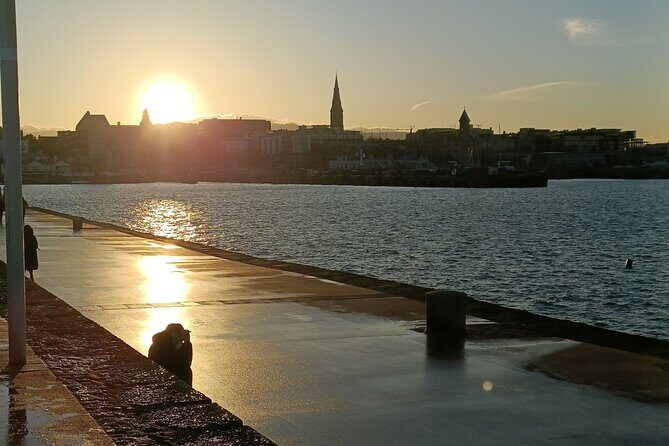
Start at St Michael’s Church on Marine Road in Dún Laoghaire. It’s the kind of place you can find without stress: a real community landmark, established in the 1820s. The audio guide begins by framing the area as something more than scenery. You’re not just walking a promenade. You’re moving through layers of a town that kept showing up—politically, culturally, and at sea.
I like this start because it gives you a mental anchor. Before you reach the water, you learn what kind of town you’re in, and that helps the rest of the route click. If you’re the type who usually rushes straight to the pier, this opening makes you slow down a little.
Practical tip: since this is voice-guided and self-paced, plan on a short pause at the beginning to sync up and get your volume set. That first minute matters; you’ll hear the best explanations right where you need them.
You can also read our reviews of more guided tours in Dublin



Pavilion Theatre: where present-day culture meets the pier walk
Next you pass by the Pavilion Theatre, Dún Laoghaire’s modern cultural hub. The point here isn’t architecture-spotting for its own sake. It’s the contrast: a contemporary arts venue right in the same town that remembers big maritime events and older monuments.
This stop works well if you enjoy that everyday travel feeling—seeing a place as it lives now, not only as it appears in postcards. If you’re visiting outside peak tourist hours, you’ll still get a sense of momentum here, because the theatre keeps the town from feeling frozen in time.
You’ll likely only spend a minute or two at this location, but it helps connect the story from the 1800s into the present day.
King George IV Monument + the RMS Leinster Memorial: big memory, close to the path
As you continue, the route brings you to two major markers: the King George IV Monument and the RMS Leinster Memorial.
The King George IV Monument gives you a sense of the regal stamp on local identity. Even if you don’t know the details right away, it’s the sort of landmark that sets up how leadership and politics shaped public space.
Then the RMS Leinster Memorial shifts the tone. This is one of the route’s emotional anchors. The audio explains the tragic sinking of the RMS Leinster during World War I and commemorates the lives lost in what’s described as one of Ireland’s deadliest maritime disasters. You’re not just looking at stone—you’re learning how one event became part of Dún Laoghaire’s collective memory.
If you’re sensitive to war stories, this stop is where you’ll feel it most. Give yourself a moment. Read what you can. Let the explanation play through once without rushing. It’s worth the pause.
The Metals promenade: old railway lines turned into a walk
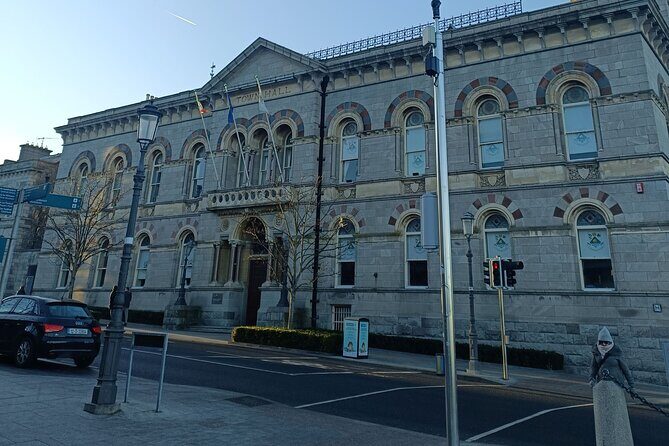
A standout segment is the path known as the Metals. This area preserves remnants of an old railway track, transformed into a promenade. The audio gives you the “how did this happen?” angle: the story of how the district grew from a fishing village into a busy port.
This is one of those places where the ground itself is the history. You’re walking a corridor that used to serve a different kind of movement—industrial and practical rather than leisurely. It makes your pier walk feel connected to work, not only to views.
What I appreciate here is the practicality. A promenade is meant for walking, and the guide uses that fact. You get context without turning the whole experience into a museum stop. You can keep moving while you learn.
If you’re visiting with kids or anyone who doesn’t want a long history lesson, this is a great middle ground: a fun, visible walking feature with story attached.
East Pier Lighthouse: panoramic reward over Dublin Bay
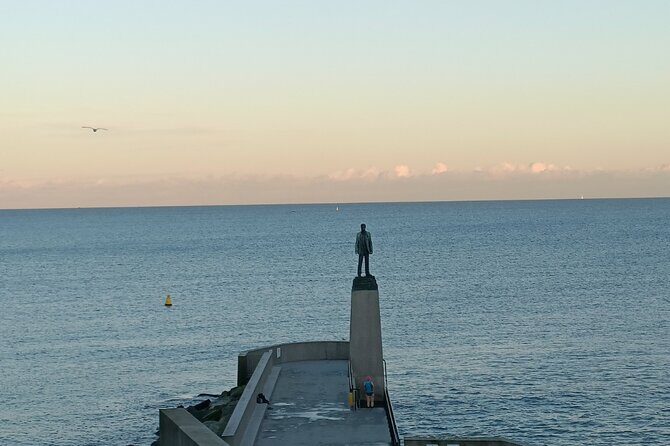
After the Metals, you reach the Dún Laoghaire Pier and the East Pier Lighthouse. This is the “stretch your legs and look around” part of the walk.
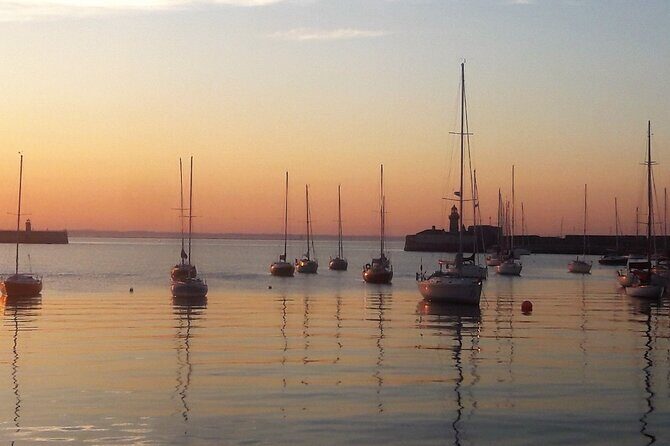
The payoff is straightforward: panoramic views of Dublin Bay and the city. In plain terms, it’s the best place on this route to take your time. Let your eyes roam across the water, and then let the audio bring the harbour into focus—specifically, the harbour’s construction and the role it played in shaping Ireland’s destiny.
That last point matters. It’s easy to see a pier as a pretty structure and stop there. The guide pushes you to connect infrastructure to outcomes. Ports and shipping routes influenced movement of people, goods, and power. When you hear that explanation while standing near the lighthouse, the whole coastline feels purposeful.
Practical note: wind can happen out here. If the weather turns, keep your stop time flexible. The lighthouse segment is scenic, but you don’t need to stand still in harsh gusts to get the value from the audio.
You can also read our reviews of more tours and experiences in Dublin




Carlisle Pier, the Forgotten Irish Memorial, and the Bandstand Sun Shelter
The route continues to Carlisle Pier, which dates back to the 1820s. The audio frames it as a maritime witness to Dún Laoghaire’s evolution across centuries. Again, you’re not only absorbing dates—you’re seeing the environment that made those changes possible.
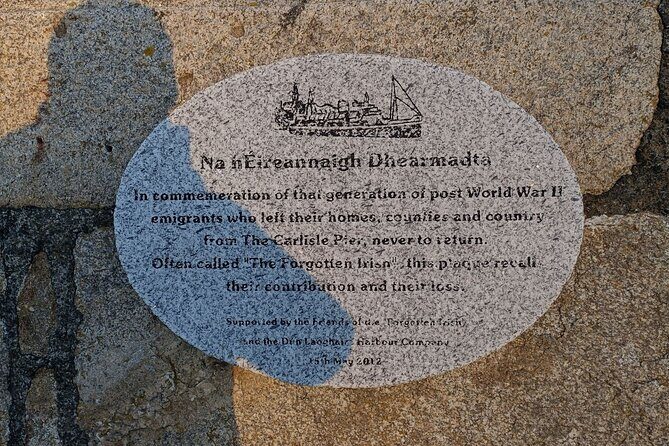
From there, you’ll encounter the Forgotten Irish Memorial. This one focuses on Irish emigrants: the resilience of people who left home, sought opportunities abroad, and faced the hard reality of starting over.
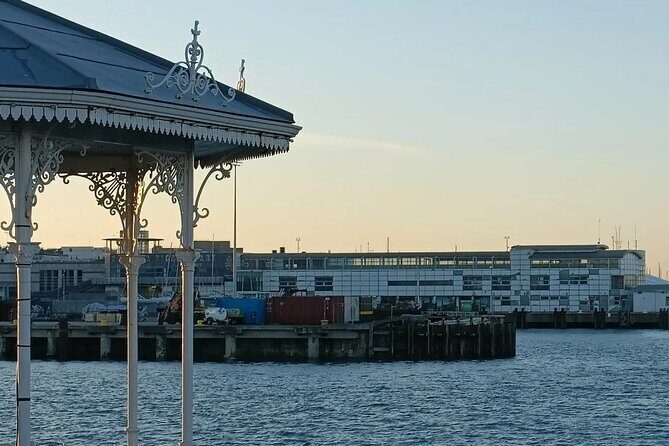
Next comes the East Pier Bandstand Sun Shelter, with its distinctive architecture. The guide keeps this from feeling like a random photo stop. It’s tied into the idea that piers weren’t only for shipping. They were also public gathering spaces where community life played out near the water.
If you want a good balance of solemn and everyday, this section delivers it. Memorials require slower attention. The bandstand gives you a lighter visual moment. You end up with a route that feels like a real place, not just a sequence of points on a map.
The Crimean War cannon and the Romanov eagle motif: a Russian surprise in Dublin
One of the more intriguing stops is the Crimean War cannon. You’ll be prompted to spot the eagle motif associated with the Romanov family. The audio then shares an unusual link: the story of a Russian cannon finding its way into Dublin.
This is the kind of detail that makes self-guided tours better than you’d expect. With a guided tour, someone might point it out. Here, the audio tells you what to look for, so you can actually find the motif on your own.
I like moments like this because they reward attention. You’re not just hearing about history; you’re seeing a small emblem that acts like a clue.
If you enjoy odd-but-true travel stories—objects with backstories—don’t rush this stop. Take a couple minutes to look around the cannon area before you move on. The audio is timed so you don’t miss the explanation.
Ending near Roger Casement Statue: finishing with a rebel’s shadow
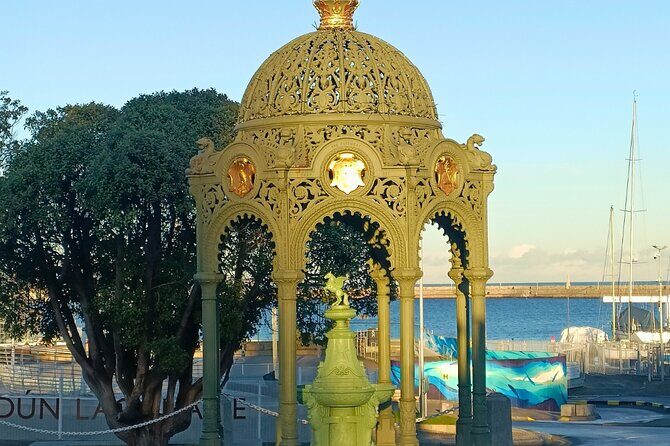
The tour ends near the Roger Casement Statue, honouring the Irish Revolutionary. This final note shifts the tone once more, connecting your waterfront walk to political struggle and identity.
Roger Casement is a strong “bookend” for the whole route. You started with a 1820s church. You passed theatres, royal monuments, WWI memorials, emigrant remembrance, and war-era objects. Ending with an Irish revolutionary ties those themes into a broader sense of resistance and agency.
Once the walk ends, you’re back at the starting area. That’s helpful if you want to grab food and drink nearby without a long transit plan. Even though the tour itself doesn’t include meals, you’ll be in a walkable part of Dún Laoghaire, ready for whatever you feel like next.
Price and value: $8.99 for a story you can replay
At $8.99 per person, this is priced like a low-cost way to make your own day better. The standout value isn’t just the route. It’s the lifetime access and the VoiceMap setup with offline materials.
Lifetime access matters because this is a walk you can repeat. You may not revisit every time you’re in town, but if you return in a different season or weather, the views and the mood change. The audio stays with the place.
Also, the time estimate—about 1 hour to 1 hour 15 minutes—is realistic. It’s long enough to feel like you did something meaningful, short enough to work on a day when you’re also doing Dublin sightseeing.
You’ll get the best value if you plan to walk without distractions. If you’ll spend most of that hour stopping for long meals or shopping, you might feel the pacing tight. This experience works best as a focused stroll.
Who this self-guided East Pier walk suits best
This tour is a good match if you:
- want a self-guided route that tells you what you’re looking at
- like waterfront walking with built-in interpretation
- enjoy memorials and maritime stories (without needing a live guide)
- need a flexible plan that fits into a day trip
It may be less satisfying if you want a hands-on guide who answers questions on the spot, or if you dislike using an app while walking. The payoff depends on your willingness to listen and look at the same time.
Tips to get the most from the audio
Keep a few simple habits and you’ll feel the experience click:
- Bring charged phone power. You’ll be using the VoiceMap app.
- Use headphones at a comfortable volume so you can still hear the surroundings.
- If it’s windy near the pier, pause in calmer spots and let the audio play.
- When you see a memorial, slow down for one full explanation pass before moving on.
Should you book this East Pier stroll?
Yes, if you want a short, meaningful walk that doesn’t require a strict schedule or a guide with a microphone. For $8.99, the combination of offline audio, a well-chosen pier route, and strong memorial storytelling is excellent value.
I’d skip it only if you hate app-based navigation, don’t want to bring headphones, or you’re looking for a purely scenic walk with no heavier themes. If you can handle a few moments of reflection, this is a smart way to see Dún Laoghaire beyond the obvious postcard views.
FAQ
What is the walking time for this self-guided East Pier experience?
It’s approximately 1 hour to 1 hour 15 minutes.
What language is the audio available in?
The tour is offered in English.
Do I need an internet connection?
You get offline access to audio, maps, and geodata through the VoiceMap app.
What equipment do I need to bring?
You need your smartphone and headphones. They are not included.
Where do I start and where does it end?
You start at St Michael’s Church on Marine Rd, Dún Laoghaire, and the experience ends back at the same meeting point.
Is there transportation included?
No, transportation is not included.
Is food or drink included?
No, food and drink are not included.
Is this experience refundable?
No. It’s non-refundable and cannot be changed for any reason once booked.
Does it run year-round?
The listed opening hours show it as available 12:00 AM to 11:59 PM within the date range shown.