REVIEW · DUBLIN
Private Dublin Historical and Heritage Tour by Bike
Book on Viator →Operated by MYBIKEORHIKE · Bookable on Viator
Dublin’s history looks better at bike speed. This private Dublin historical and heritage tour by bike strings together iconic places with lesser-known stops, so you get the big-name landmarks and the stuff you’d miss if you were just wandering on your own. I especially like the way the guide builds in local recommendations for what to do and eat, not just facts.
I also like the personal touch: your guide can help take photos for your group, plus you’ll get a souvenir video later with captioned photos from your route. One consideration: the tour expects a moderate physical fitness level, and snacks or drinks are not included—so plan ahead, especially if you’re the type who gets hungry mid-ride.
In This Review
- Key things to know before you ride
- Why this Dublin bike tour feels efficient (and not like sightseeing on rails)
- Meeting point and bike logistics: what your 2.5–3.5 hours likely looks like
- Grattan Bridge and Dublin Castle: starting with the city’s oldest overlap points
- Dubh Linn Gardens and the meaning behind Dublin’s name
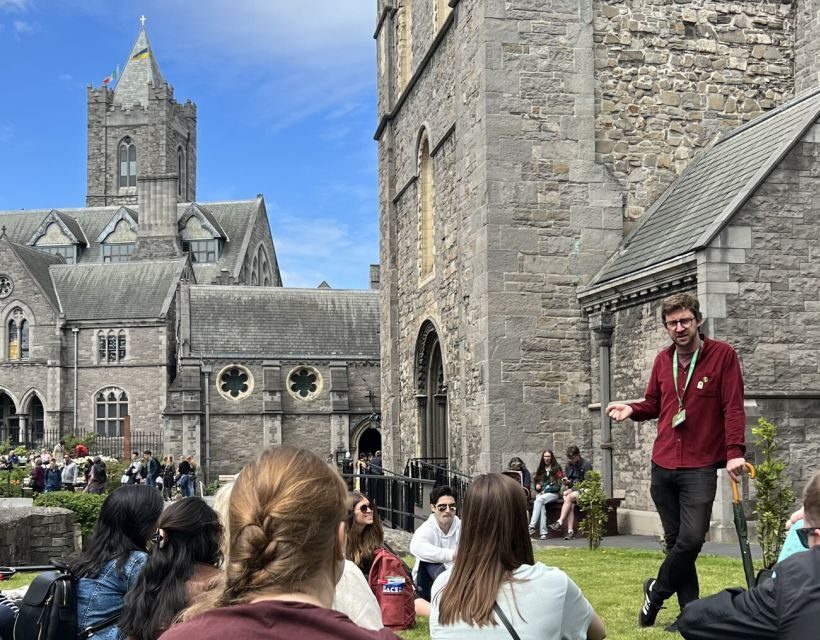
- The 40 Steps and St Patrick’s Cathedral: Swift, street stories, and cathedral views
- Teeling Whiskey and the Liberties: working-class Dublin with modern sparkle
- From Kilmainham hospital grounds to Kilmainham Gaol: memory through architecture and gates
- The War Memorial Gardens, the River Liffey cycle path, and Chapelizod
- Europe’s largest urban park segment: deer odds and a 17th-century wall gate
- Croppies Acre Memorial Park and the Guinness across the river
- The tour’s photo and souvenir video touch (and why it matters)
- Price and value: what $120.14 buys you in real terms
- Who this bike tour fits best (and who might rethink it)
- The guide impact: Ben and the difference a real storyteller makes
- Should you book this bike tour?
- FAQ
- How long is the private Dublin historical and heritage tour by bike?
- What is the meeting point and where does the tour end?
- Is pickup available?
- Do I need to buy tickets for the stops?
- Is bicycle use included?
- What should I know about food and drinks?
- What weather conditions affect whether the tour runs?
Key things to know before you ride
- Private guide, private pace: it’s only your group, so stops feel less rushed and more flexible.
- Photo help + captioned keepsake video: you get support capturing the trip, then a follow-up video later.
- Mix of headline sights and side streets: you hit Dublin Castle and St Patrick’s Cathedral, but also places like Dubh Linn Gardens and the 40 Steps.
- Traffic-free cycling sections: you’ll spend time on safer paths, including parts along the River Liffey.
- Snacks aren’t included: budget a snack stop on your own before or after, or bring your own.
- Good weather matters: the experience requires good weather, so have a backup plan if it gets rainy.
Why this Dublin bike tour feels efficient (and not like sightseeing on rails)
This tour is built for people who want momentum. You’re not stuck on a bus schedule or forced to choose between “top attractions” and “interesting side streets.” Cycling lets you cover a lot of ground in a short time window—yet the stops are timed like little breaks, not a constant sprint.
The private format is the other big win. If you want extra time at a particular spot or you’d rather move on quickly, you’re not battling a crowd. That matters in Dublin’s central areas, where it’s easy to lose time just by getting in and out of photo spots.
And then there’s the way the guide connects dots. You see where Dublin’s name comes from, how different eras overlap (yes, the centuries stack right next to each other), and how working-class areas fit into the city story. It turns “I’ve seen that building” into “I get why this place matters.”
You can also read our reviews of more cycling tours in Dublin


Meeting point and bike logistics: what your 2.5–3.5 hours likely looks like
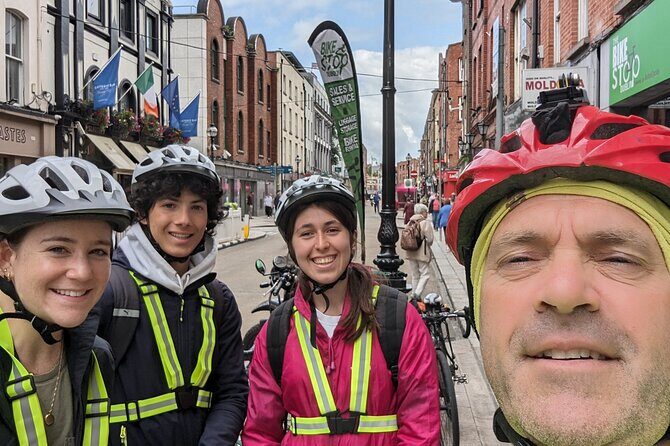
You start back at the meet point at Bike Stop Dublin, 37 Capel St. If you’re staying close—within about 1 km—you can be met where you are, then you’ll walk to the start point. The tour ends back at the same place, which makes planning easier after.
Bicycle use is included, and the tour is near public transportation. That’s handy if you’re pairing it with other parts of your trip, like a pub session later. The pace suits a moderate physical fitness level, so it’s not framed as a race. Still, you should expect steady riding between stops and a decent amount of time outdoors.
One more practical note: snacks, refreshments, and drinks are not included. The itinerary includes several short stops, but you’re also out long enough to benefit from a plan—especially if you’re sensitive to hunger or you like taking photos slowly.
Grattan Bridge and Dublin Castle: starting with the city’s oldest overlap points
Early on, the tour sets you up with Dublin’s “layer cake” history—different centuries side by side. The ride begins with Grattan Bridge, a historic bridge in the center of the city. What makes it more than a pretty crossing is what your guide points out: it was rebuilt in 1875 on the foundation of an original bridge from 1755.
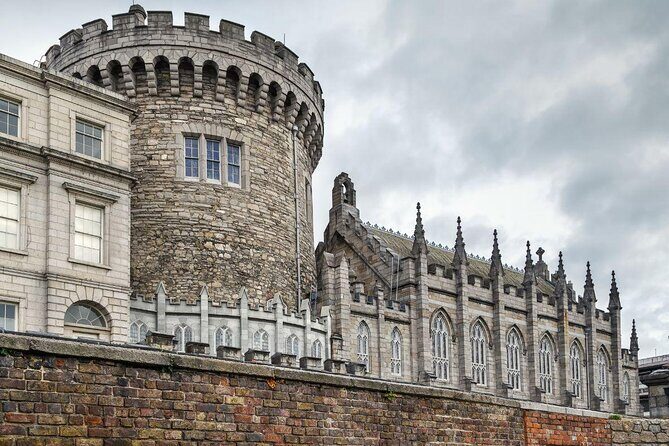
From there you cycle into Dublin Castle and pass through the courtyard of Ireland’s center of government administration during British rule. This stop is all about contrasts. You’ll notice the juxtaposition of architecture from different eras, including remnants linked to early Norman rule. The main takeaway here is how long the city’s power centers have been shifting—often in the same physical space.
You’ll also spend time thinking about geography, not just buildings. The route focuses on how streets and landmarks relate to water and civic life, so you’re building context as you go instead of learning it all at the end.
Dubh Linn Gardens and the meaning behind Dublin’s name
Right near Dublin Castle, you slow down at Dubh Linn Gardens—a small city-center oasis that helps you reset your senses. The centerpiece is the circular garden connected to the idea of the dark pool. Your guide ties it to Dublin’s name, so you get the sense that the city’s identity isn’t random; it grows out of the local landscape and water.
This stop also gives you the softer, more modern layers of civic memory. You’ll see the Garda Memorial, plus a David and Goliath Statue and a tribute connected to the Special Olympics. It’s a reminder that “heritage” isn’t only medieval castles and grand cathedrals. It’s also how a city remembers people and values.
As a practical bonus, this kind of garden stop is great if you want a breather without losing the historical thread. The tour keeps moving, but you’re not just “parking and passing.”
The 40 Steps and St Patrick’s Cathedral: Swift, street stories, and cathedral views
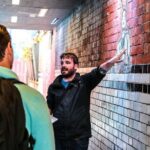
If you like stories that are a little odd in the best way, The 40 Steps is one of the tour’s memorable moments. The stop is built around a street corner full of clues. You’ll see metal plates that point to imagined elements of medieval walls, and you can also relate the story to what’s in front of you in real life.
This is where your guide’s storytelling really matters—especially with Jonathan Swift and the mis-translated street detail. You’ll also hear about the suffragettes and how activists were arrested for throwing stones at windows. It’s not a textbook stop; it’s the kind of location where you start noticing how protest and politics leave physical traces.
A short ride later you reach St Patrick’s Cathedral, described as the rival to Christchurch Cathedral. You’ll stop for views of the cathedral and its gardens, plus you’ll pass Norman walls and another reference point tied to Swift’s birthplace along the route.
This sequence works because it balances two types of heritage:
- one that’s loud and architectural (the cathedral)
- one that’s street-level and story-driven (the 40 Steps)
You can also read our reviews of more private tours in Dublin





Teeling Whiskey and the Liberties: working-class Dublin with modern sparkle
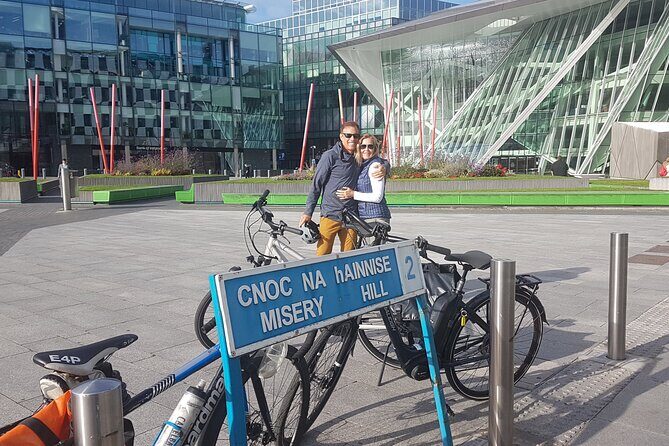
Next comes the ride through the Liberties, one of Dublin’s older residential districts. This part of the tour doesn’t treat history like it’s only on monuments. It frames the area as the working-class heart and soul of the city and connects it to business history—especially the link to Guinness.
Right along the way, you stop at Teeling Whiskey Distillery. Even if you’re not a hardcore whiskey person, the value is in the narrative: you’ll hear about the great whiskey fire of Dublin in the 19th century. Distilleries in many cities are “just shops” if you walk by. Here, it’s treated like a piece of local survival and industry.
And the guide adds something useful: local recommendations for where to eat and what to do next. That matters because by the time you reach this stage, you’ve already clocked the major sights—so now you can steer your remaining day with better taste.
From Kilmainham hospital grounds to Kilmainham Gaol: memory through architecture and gates
The tour then shifts to Royal Hospital Kilmainham, built as the Royal Kilmainham Hospital in the 17th century and now home to the Irish Museum of Modern Art. Even without going deep into museum programming, this is a strong stop for the gardens and the views over the city.
You also cycle along a traffic-free path, which feels like a gift in a city where traffic can be mentally tiring. On the way, you stop by Dublin’s oldest cemetery, another place where the tour doesn’t need you to rush. It’s a chance to take in the setting and let the bigger story sink in.
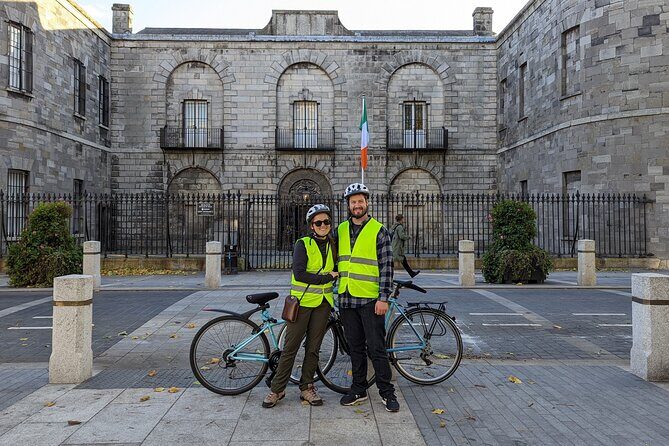
Then comes Kilmainham Gaol. The tour approach is simple: park, look at the entrance, and hear the stories connected to the site’s past of public executions. Today it’s a famous museum, but the stop here keeps focus on the emotional weight of the location.
This segment can hit harder than the central cathedral stops. If you prefer lighter storytelling, you might want to pace yourself with a few extra seconds between points, just to keep your head clear.
The War Memorial Gardens, the River Liffey cycle path, and Chapelizod
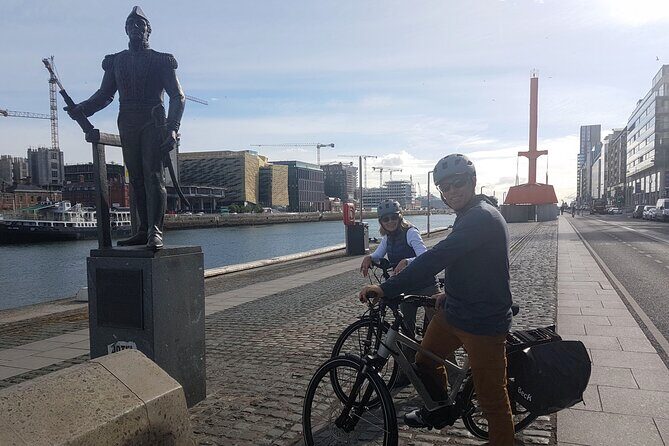
After Kilmainham, you move into calmer rhythms. You pedal through the War Memorial Gardens, built in remembrance of those who lost their lives in the First World War. This stop is part reflection, part reset—like the tour breathing out after the gaol.
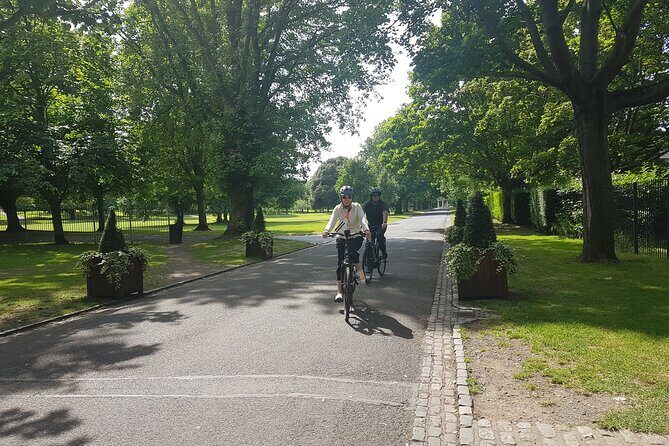
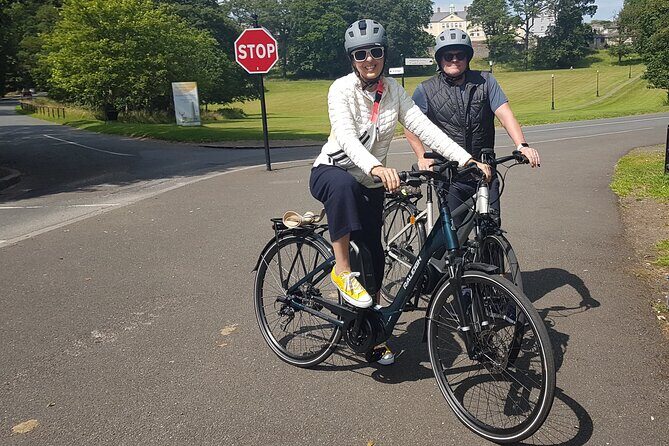
From there, you continue along safe, purpose-built cycle paths and a scenic route beside the River Liffey toward the historic village of Chapelizod. This is one of those stretches where you stop thinking of it as “getting from A to B” and start thinking of it as “seeing Dublin the way locals might ride it.”
Chapelizod is included as a destination feel, not just a pass-through. It gives you a sense of Dublin extending beyond the densest historic core.
Europe’s largest urban park segment: deer odds and a 17th-century wall gate
Leaving Chapelizod, you enter one of Europe’s largest urban parks through a gate in 17th-century walls. The tour keeps it practical: dedicated cycle paths, natural scenery, and the chance to spot wild deer if you’re lucky.
I like stops like this because they break the pattern of “buildings, then more buildings.” A green segment also makes the whole tour feel balanced—historic sites for the mind, park time for the eyes.
Also, it’s a nice moment to slow your pace a touch and let your guide finish big-picture connections. When you’re surrounded by open space, the contrast between old Dublin and newer urban life becomes easier to see.
Croppies Acre Memorial Park and the Guinness across the river
You end the heritage arc at Croppies Acre Memorial Park, connected (through folklore) to a mass burial grave for victims of the 1798 rebellion. This is another story stop where your guide’s narration matters. Locations like this can feel quiet at first glance, so the context you’re given is what turns it from a grass patch into a meaningful landmark.
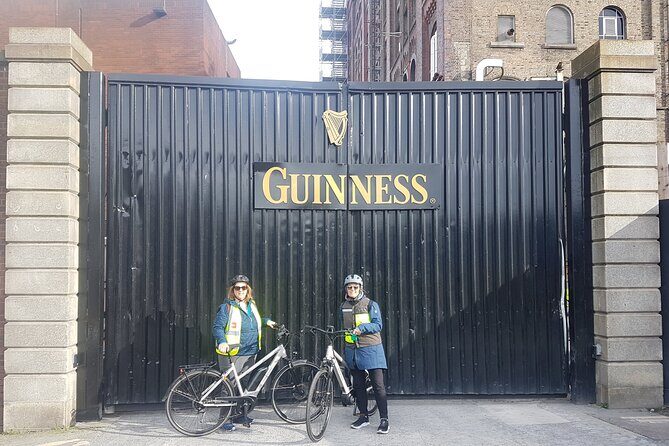
Nearby, you’ll hear about Collins Barracks and the National Decorative Arts and Military Museum. You also get a viewing payoff: the Guinness Brewery across the River Liffey. That view lands especially well because earlier you heard about the city’s working-class districts and how Guinness ties into Dublin’s identity.
It’s a clever loop: you’ve seen civic power (Castle), spiritual power (cathedral), industry power (distillery, Guinness), and political struggle (gaol, rebellion site). Then you bring it home with a final panorama moment.
The tour’s photo and souvenir video touch (and why it matters)
One of the standout features here is that you’re not left to fend for yourself with a shaky phone. Your guide can help take photos during the ride, so you actually get shots that include you.
After the tour, you receive a souvenir video later, complete with captioned photos from your route. That’s more useful than a random folder of pictures because captions help you remember what you were looking at and why it mattered.
If you’re traveling as a couple, this is a big deal. It’s also a win for families or friend groups who want photos without passing a phone back and forth every five minutes.
Price and value: what $120.14 buys you in real terms
At $120.14 per person, the headline cost looks a bit like a “special tour” price. But here’s the value logic I see:
- You’re paying for a private guide, not a shared bus experience.
- The route covers a lot of major stops in a short timeframe, with built-in breaks.
- Bicycle use is included, and the listed stops are set up without added ticket cost in the tour experience.
- The guide’s recommendations add practical value for your remaining hours in Dublin.
- The photo help + captioned video is real added value, not just marketing fluff.
Is it the cheapest way to see Dublin? No. But if you want efficient sightseeing plus story context and actual help getting photos, it’s priced like a thoughtful experience rather than a generic ride.
One extra value note: it’s offered in English, with a mobile ticket. That reduces friction if you don’t want to deal with paperwork mid-trip.
Who this bike tour fits best (and who might rethink it)
This tour suits you if you want:
- a private experience
- a route that blends big landmarks with smaller story stops
- safer cycling on traffic-free paths and purpose-built cycle routes
- photo support and a keepsake follow-up
You might rethink it if you:
- need lots of snack breaks (since snacks and drinks aren’t included)
- don’t feel comfortable with moderate physical activity outdoors
- dislike weather-dependent plans, since the experience requires good weather
It also tends to do well when you book ahead. On average, it’s booked about 59 days in advance, so if your trip dates are fixed, don’t wait until the last minute.
The guide impact: Ben and the difference a real storyteller makes
The best part of many tours isn’t the map—it’s the guide. One review specifically praises the guide Ben for being excellent and strong on Dublin history details, and that lines up with the way the route is designed. You’re not just being shown stops; you’re being guided through connections between places, eras, and local identity.
When a route mixes sites like the 40 Steps, Kilmainham Gaol, and the River Liffey cycle paths, you need narration that makes the pieces click. This tour is built for that.
Should you book this bike tour?
Book it if you want a structured Dublin day that still feels personal. The private pace, guide-led storytelling, and photo/video keepsake are the big reasons I’d choose this over a self-guided ride or a standard walking tour.
Skip it if you’re trying to travel super light and snack-free, or if you only want a slow, low-effort day with no riding between stops. Also, if bad weather is likely during your dates, consider having a flexible plan—this ride depends on good conditions.
If you’re like most first-timers, this is a smart way to get oriented fast, then continue your Dublin exploration with better direction for food and what to see next.
FAQ
How long is the private Dublin historical and heritage tour by bike?
It runs for about 2 hours 30 minutes to 3 hours 30 minutes.
What is the meeting point and where does the tour end?
The tour starts at Bike Stop Dublin, 37 Capel St, North City, Dublin, and it ends back at the same meeting point.
Is pickup available?
Pickup is offered if you are staying within 1 km of the designated meet location. In that case, you’ll be met and then walk to the start point of the tour.
Do I need to buy tickets for the stops?
The tour info states that the listed stops have free admission tickets, so you shouldn’t need separate paid entry for those stops.
Is bicycle use included?
Yes. The tour includes use of a bicycle.
What should I know about food and drinks?
Snacks, refreshments, and drinks are not included. Plan for your own food and water outside the tour.
What weather conditions affect whether the tour runs?
The experience requires good weather. If it’s canceled due to poor weather, you’ll be offered a different date or a full refund.