REVIEW · DUBLIN
Dublin (Dun Laoghaire) Top-Rated Coastal Walking Tour
Book on Viator →Operated by Walk the Coast Tours · Bookable on Viator
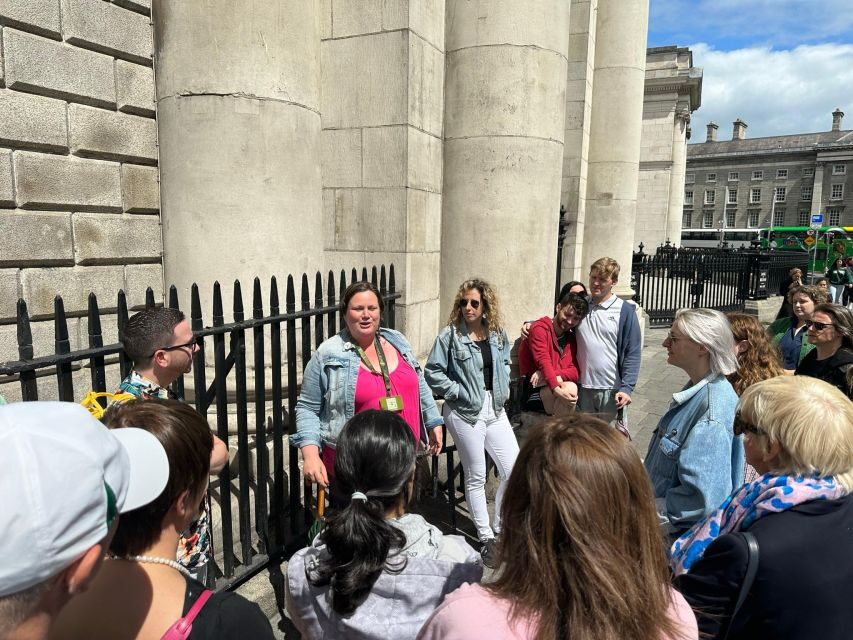
A coastal walk with real stories beats sightseeing buses. This top-rated Dun Laoghaire to Dalkey tour mixes harbours and villages with sea-air history, ending at Dalkey’s DART station for an easy ride. I also like that it’s guide-led and paced, with built-in stops so you’re not just marching for 3.5 hours.
The tour’s biggest practical draw is that you start right by the DART, so you can focus on the walk (and not on a complicated meetup). Still, the main consideration is the distance and uneven paths—bring proper shoes and don’t plan to rely on flip-flops.
If you want city sights plus a slice of Dublin’s coast and maritime life, this is a strong pick. And if you’re short on time, the ending at Dalkey makes it easy to continue your day without backtracking.
In This Review
- Key moments that make this walk feel worth it
- Why Dun Laoghaire to Dalkey works as a “Dublin but not Dublin” day
- Getting there: meeting at the Dart station and finishing at Dalkey
- The pacing: what 3 hours 30 minutes feels like on foot
- Stop 1: Dun Laoghaire Harbour and Pier history
- Stop 2: People’s Park (and the Sunday farmer’s market bonus)
- Stop 3: The Metals laneway and railway history
- Stop 4: The Dublin swimming-point view (Sandycove area)
- Stop 5: James Joyce Tower & Museum spiral climb
- Stop 6: Bulloch Harbour with seals and industrial-to-modern clues
- Stop 7: Bulloch Castle ruins and medieval context
- Stop 8: Dalkey village, plus Viking history and real-world recommendations
- Final views near the railway route: castles and the village island
- What this tour is great for (and who should skip it)
- Price and value: $114.65 for a guide-led coastal day
- Practical tips for a smoother day (without guessing)
- Should you book this Dublin coastal walking tour?
- FAQ
- How long is the Dublin (Dun Laoghaire) coastal walking tour?
- Where do I meet the tour, and where does it end?
- Is the tour easy to find using public transportation?
- What’s included in the tour price?
- Do I need to pay train fare during or after the tour?
- How big are the groups?
- What if the weather is poor?
- What is the cancellation policy?
Key moments that make this walk feel worth it
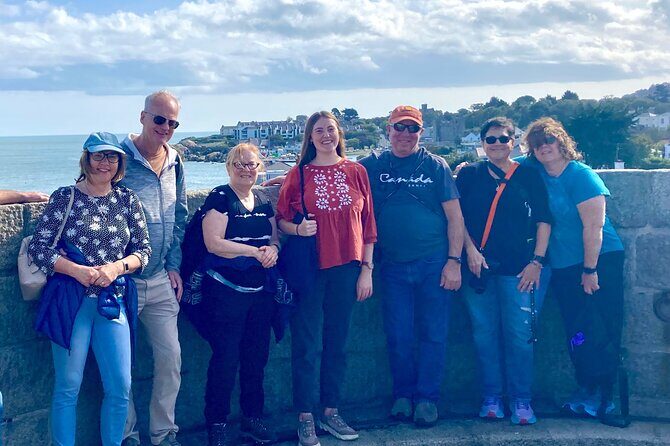
- Start at Dun Laoghaire Harbour Rd near the DART for a fast, low-stress meetup
- James Joyce Tower & Museum with a spiral-stair climb and a rooftop view stop
- Sandycove-style swimming point moments where locals actually head into the water
- Medieval-to-modern contrast at places like Bulloch Harbour and Bulloch Castle
- Dalkey’s Viking and Norman layers plus practical dining/nightlife ideas from the guide
- Small group size (max 20) so questions don’t get lost in the crowd
Why Dun Laoghaire to Dalkey works as a “Dublin but not Dublin” day
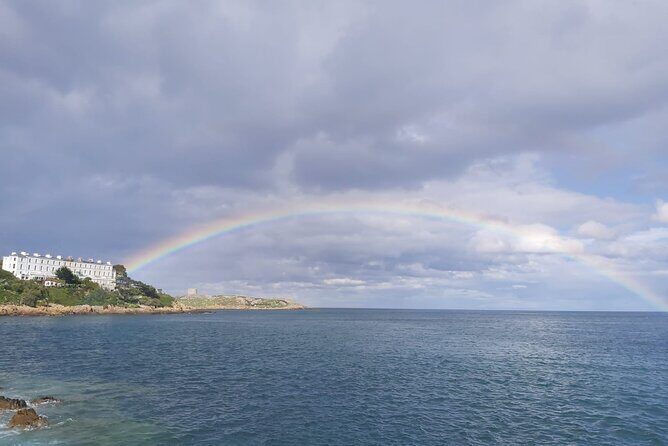
Most Dublin trips run head-first into the center. This one gives you a different angle: coastal suburbs, working harbours, and village streets where Irish history shows up in everyday details. You’re basically swapping museum-and-statue time for seaside context.
I love that the walk is built around meaningful stops, not random photo corners. A harbour tells one kind of story. A park tells another. Then you climb into Joyce territory and the day shifts gears again.
The other smart move is the ending at Dalkey DART station. You don’t have to guess how to get back. You just walk, finish, and hop on the train toward the city center, Dun Laoghaire, or another DART stop.
You can also read our reviews of more walking tours in Dublin



Getting there: meeting at the Dart station and finishing at Dalkey
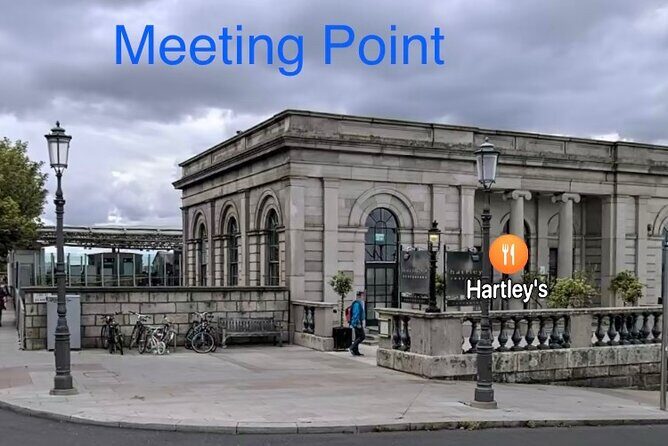
The meetup is at 1 Harbour Rd, Dun Laoghaire. It’s easy to find because it’s tied to the DART area, and the tour ends at Dalkey DART station. That matters because good walking days go sideways when logistics are messy.
If you’re arriving by cruise, you may find this setup especially convenient since the start point is close to the port area. Either way, plan to arrive a few minutes early, because the whole rhythm depends on starting on time.
Also note the tour includes a mobile ticket. Keep your phone handy and make sure you can show it at check-in.
The pacing: what 3 hours 30 minutes feels like on foot
This is listed at about 3 hours 30 minutes, and the experience is structured with multiple short stops (often around 5–10 minutes each). That sounds small on paper, but it adds up fast when you factor in the walking time between viewpoints.
From the practical side: expect a proper walk. Many people describe it around the “10,000 steps” range and note it can feel like a long morning. The pathways can be a little uneven in places, so I’d skip delicate footwear. Bring walking shoes and consider layers for wind off the water.
If you’re the type who likes to stop, look, and ask questions, this pace will feel comfortable. If you’re expecting a slow stroll, manage your expectations a bit.
Stop 1: Dun Laoghaire Harbour and Pier history
You begin with Dun Laoghaire Harbour, where you’ll view and hear about the history of the pier and harbour. This is a great opener because it sets the theme: Dublin’s relationship with the sea isn’t just postcards—it’s jobs, movement, and coastal life.
Even if you’ve never studied maritime history, this kind of starting point gives you a framework. You start to recognize what you’re seeing later: harbours, industries, and why people built where they did.
Stop 2: People’s Park (and the Sunday farmer’s market bonus)
Next comes People’s Park, a local green space that’s perfect for catching your breath without ending the story. It’s also the kind of place where the coast-to-community connection becomes obvious.
On Sundays, the tour spends extra time exploring the farmer’s market. That’s a meaningful difference, not a gimmick—markets turn a “pretty park” into a living snapshot of local routines.
If you’re visiting on a weekday, you’ll still get the park time. Just don’t count on the market element unless you’re sure it’s Sunday.




Stop 3: The Metals laneway and railway history
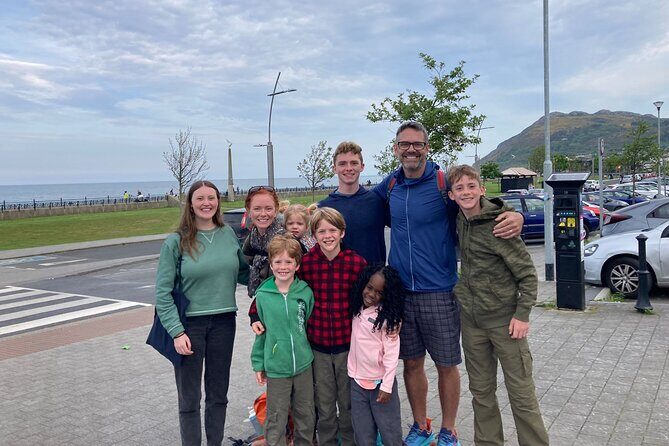
Then you walk through The Metals, a historic laneway where you’ll hear about Dun Laoghaire’s railway history. Rail isn’t a flashy topic until you see it as the engine behind coastal growth.
This stop gives the day a “how it works” layer. You start connecting trains to harbours, and harbours to village life. It’s also short, which keeps momentum without sacrificing context.
Stop 4: The Dublin swimming-point view (Sandycove area)
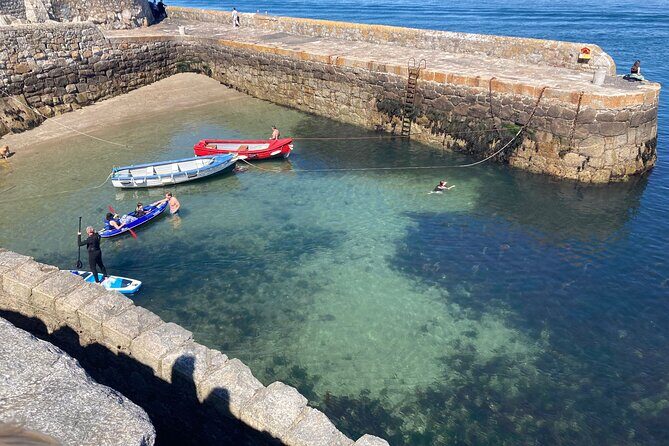
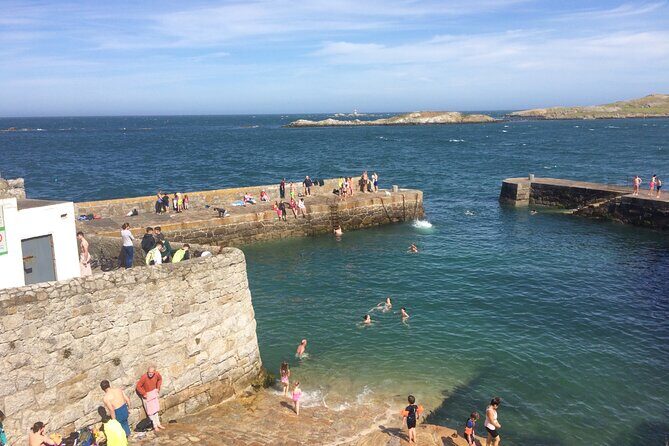
You’ll also get a look at Dublin’s most famous swimming point. From the way this area is talked about, it’s the kind of spot locals treat like a ritual—yes, even in cold weather.
This part of the tour is as much about observation as education. You see the coastline’s shape, understand why the water area draws people in, and hear why it became famous.
I’d bring a camera here, but also just take a minute to look and process. The whole point is the contrast: sea-air scenery paired with a very human habit.
Stop 5: James Joyce Tower & Museum spiral climb
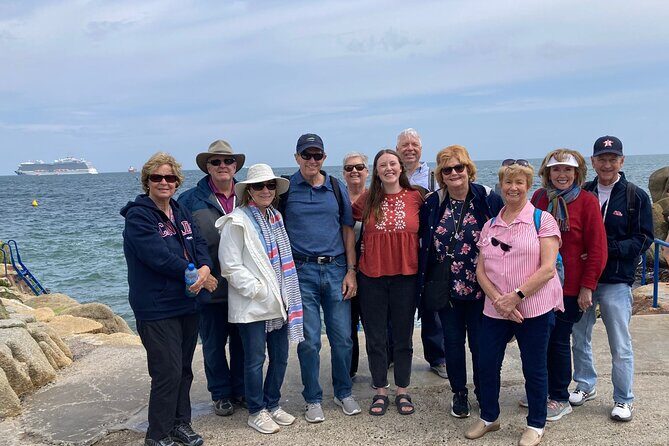
Now for the star moment: James Joyce Tower & Museum. You’ll enter the museum, hear its history, and climb the spiral staircase to a rooftop viewing point.
This is the best “energy shift” on the tour. Up to this point you’ve been walking and looking outward. Here, you climb and look over the entire coastline—exactly what you want from a coastal walk.
One practical note: the spiral staircase means this is not a “sit down and snack” stop. If you’re not comfortable with stairs, it’s still a good viewpoint, but pace yourself.
Admission to the tower and museum is included, so you don’t need to add any extra ticket costs.
Stop 6: Bulloch Harbour with seals and industrial-to-modern clues
After Joyce, the tour heads to Bulloch Harbour. You’ll view the harbour village and hear about its industrial past and how it’s used today.
One of the most memorable details here is the chance to see seals lounging in the water or on rocks. Even if you don’t see seals, the harbour setup makes sense: you’re learning where industry used to matter, and where nature and modern use now share the frame.
This stop also helps the day feel varied. You’re not just repeating “walk, look, listen.” You’re switching between harbour life, village atmosphere, and ruin views.
Stop 7: Bulloch Castle ruins and medieval context
Next up: Bulloch Castle, a medieval ruin. The tour frames it in the bigger story of the area—Dalkey once contained several castles, and you’ll see how that defensive world evolved into today’s coastline villages.
Ruins are always a little eerie in the best way. But the value here is in the connection to place. You’re not just looking at old stone. You’re hearing why castles were positioned where they were.
This is also a short stop, which keeps the flow from getting too tiring.
Stop 8: Dalkey village, plus Viking history and real-world recommendations
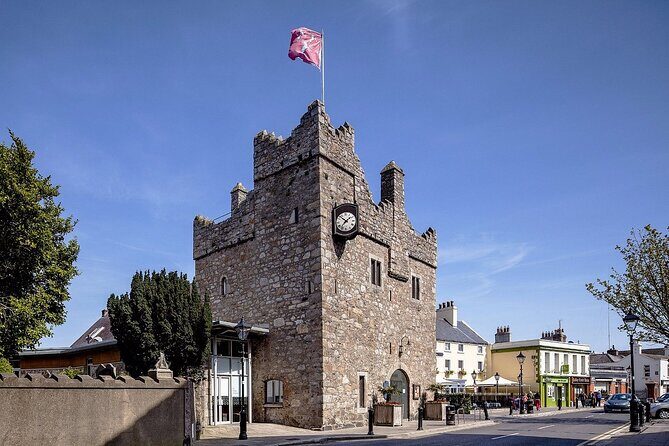
Then you arrive at Dalkey, often described as one of Dublin’s more affluent coastal villages. You’ll walk through and hear about its fascinating Viking history, along with tips for nightlife and dining.
This is where the tour becomes useful for your next step. A guide can tell you where locals go, not just where guidebooks point. Even if you already have plans, it’s a nice way to leave with options.
Final views near the railway route: castles and the village island
You’ll also get views and history related to one of Dalkey’s castles and the surrounding heritage. There’s an additional story angle tied to a Norman castle and heritage centre, plus time to see a village island from the railway tour viewpoint.
That final stretch is a payoff moment. The earlier stops prepare you to understand what you’re seeing, and the end gives you a complete picture of Dalkey’s layers—Viking, Norman, Catholic heritage, and the coastal reality around it.
What this tour is great for (and who should skip it)
This experience is best for people who want more than “Dublin landmarks.” If you like maritime history, harbours, small-town feel, and coast views with actual context, you’ll enjoy it.
It’s also a good choice if you’ve already seen the main Dublin sights. You get a different side of the city without spending hours commuting into the center and out again.
On the flip side, if you hate stairs or uneven ground, this may not be ideal. The day includes a spiral staircase at Joyce, and the walking paths can be a bit rough in places.
Price and value: $114.65 for a guide-led coastal day
At $114.65 per person, this isn’t a budget-only activity. But it also isn’t just a “walk and go” tour.
Here’s what you’re paying for that matters:
- A local guide for a structured story-based walk
- All fees and taxes
- James Joyce Tower & Museum admission included
- A route that uses short, targeted stops instead of long detours
- A small group size (max 20) that keeps the experience from feeling like crowd control
You still pay for a few things not included, like snacks and train fare if you choose to ride after the tour. You also cover transport to and from the meeting point.
So the value check comes down to this: if you want the Joyce stop and guided history, the price starts to make sense quickly. If you’re just chasing scenery and you don’t care about museum entry or guided interpretation, you might compare it to a self-guided route.
Practical tips for a smoother day (without guessing)
A coastal day in Dublin can swing between mild and windy fast. Bring a light layer and plan for sea air.
Because snacks aren’t included, I’d pack something small or buy along the way where possible. You’ll finish in Dalkey, and that’s a good place to grab a bite if you didn’t bring anything.
Wear good walking shoes. The tour is not described as needing hiking boots, but uneven paths and stairs show up. Leave the flip-flops for the beach day, not the history day.
Should you book this Dublin coastal walking tour?
If you want an honest Dublin day outside the center—coast, villages, harbours, and Joyce with rooftop views—this is an easy yes. The ending at Dalkey DART station makes it feel efficient, and the guide-led pacing helps you enjoy the story instead of just grinding through steps.
I’d say go for it especially if:
- You already did the core Dublin sights
- You like local history tied to real places
- You want a small-group experience with time for questions
- You’re okay with a longer walk and a spiral staircase
I’d hesitate if you’re sensitive to stairs, uneven ground, or long walking. Otherwise, this is the kind of coastal outing that makes Dublin feel bigger than the postcard map.
FAQ
How long is the Dublin (Dun Laoghaire) coastal walking tour?
It’s about 3 hours 30 minutes.
Where do I meet the tour, and where does it end?
You start at 1 Harbour Rd, Dun Laoghaire, Dublin, and you finish at Dalkey DART station.
Is the tour easy to find using public transportation?
Yes. The meeting point is near public transportation, and it’s described as easy to find by the DART station.
What’s included in the tour price?
The price includes all fees and taxes and a local guide. Admission to the James Joyce Tower & Museum is included, while snacks are not.
Do I need to pay train fare during or after the tour?
Train fare is not included. If you want to ride the train after the tour, you’ll need to pay separately.
How big are the groups?
The tour has a maximum of 20 travelers.
What if the weather is poor?
The experience requires good weather. If it’s canceled due to poor weather, you’ll be offered a different date or a full refund.
What is the cancellation policy?
You can cancel for free up to 24 hours in advance for a full refund. If you cancel less than 24 hours before the start time, the amount paid won’t be refunded.