REVIEW · DUBLIN
DayTripper Dublin: A Guided City Walking Tour
Book on Viator →Operated by Unearthed Tours · Bookable on Viator
Dublin history is right on the sidewalk. This DayTripper Dublin walk is one of the easiest ways to get your bearings fast, with a local guide who talks you through what you’re seeing. Two things I really like: the route keeps you in the center of town, and the guide’s Q&A style makes it feel more personal than a rushed sightseeing loop.
You’ll cover classic landmarks like St Stephen’s Green and Grafton Street, plus the city’s big story threads—Vikings, rebellion, and Ireland’s 20th-century political shifts. I also like that you get stops for Irish music and dance as well as the monuments and churches, so the city feels like culture, not just stone.
One consideration: you don’t go inside several major sights, and some stops are brief. That’s great for a first pass, but if you want long interior time at places like St Patrick’s Cathedral or Dublin Castle, you’ll need to plan that separately.
In This Review
- Key takeaways before you walk Dublin
- Why this Dublin walking tour works for first-time visitors
- Meeting at St Stephen’s Green: easy start, central feel
- Timing and walking pace: plan for 2.5 to 3 hours on foot
- Stop-by-stop: what you’ll actually see and why it matters
- St Stephen’s Green: Irish history in a park setting
- The Irish dance and music moment: culture you can feel on the street
- Grafton Street: Dublin’s high-street energy
- Molly Malone: working-class Dublin through a famous statue
- St Patrick’s Cathedral grounds (no interior entry)
- Dubh Linn Gardens: Vikings meet present-day Dublin
- Dublin Castle courtyards (outside viewing)
- Christ Church Cathedral courtyard: Viking history and architecture cues
- Temple Bar neighborhood: a quick walk through an iconic area
- O’Connell Street: statues that track Ireland through the 20th century
- Trinity College Dublin area and the Great Irish Hunger
- The value question: is $27.82 a smart buy?
- Who should book this tour (and who might not love it)
- Practical tips so you get more from the walk
- Should you book DayTripper Dublin?
- FAQ
- How long is the DayTripper Dublin walking tour?
- Where does the tour start and where does it end?
- Is the tour in English?
- How much does it cost?
- What’s included in the price?
- Do you enter St Patrick’s Cathedral, Dublin Castle, or Christ Church Cathedral?
- Are any admission tickets included?
- Is this tour suitable if I’m only moderately fit?
- Can I cancel for a full refund?
Key takeaways before you walk Dublin
- A strong first-timer route through the city core, built to help you understand where everything is and why it matters
- Local-guide energy and flexibility, with examples like Kyron and Ciarán showing up in guide performance that turns questions into mini-lessons
- Vikings to Irish independence themes that connect streets and statues, not just facts-by-list
- No-stress logistics with a mobile ticket, a near-public-transport meeting area, and a capped group size of 25
- Mostly outside viewing at several big-name sites, which keeps the walking tour moving while still giving context
Why this Dublin walking tour works for first-time visitors

If Dublin is your first stop (or you’re short on time), a guided walk does something a bus tour can’t. It forces you to notice the small stuff: how streets link up, where monuments sit, and how different eras overlap in the same few blocks.
This tour is built for that. You start near St Stephen’s Green at a Wolfe Tone sculpture, then work your way through some of Dublin’s most recognizable street scenes. Along the way, your guide connects the dots between culture and politics, so the city stops feeling random.
The payoff is practical. After the tour, you’re usually better at choosing what to do next, because you’ve already traced the main routes on foot. And if the group stays small, you may get more direct conversation than you’d expect from a typical group tour.
You can also read our reviews of more walking tours in Dublin



Meeting at St Stephen’s Green: easy start, central feel
The meeting point is at the Wolfe Tone sculpture by St Stephen’s Green. That matters because St Stephen’s Green is a central landmark, and it’s an easy mental anchor: it helps you orient yourself even before you begin.
Also, the tour is designed to be simple to show up for:
- Mobile ticket (no printing needed)
- English-speaking guide
- Near public transportation
- Max 25 travelers, so it’s not a crowd shove
You’ll end at College Green, close to Grafton Street (about a 2-minute walk). There’s also mention of a roughly 15-minute walk to Tara or Pearse Station, which can be handy if you’re planning dinner or a later commute.
Timing and walking pace: plan for 2.5 to 3 hours on foot

The tour runs about 2 hours 30 minutes (approx.). At the same time, one part of the route is described as part of a 3-hour history-focused experience. Translation: you should expect a brisk but not frantic walk, with room for questions.
You also need a moderate fitness level. This isn’t a long-distance hike, but it is continuous city walking. Wear comfortable shoes, and don’t schedule anything too tight immediately after—Dublin’s stories often trigger follow-up questions, and the guide usually makes space for that.
Stop-by-stop: what you’ll actually see and why it matters
St Stephen’s Green: Irish history in a park setting
You’ll spend time at St Stephen’s Green, and the focus isn’t only pretty scenery. Your guide uses the park as a doorway into Irish history and Irish culture, which is a smart move—parks are where city life relaxes, but Dublin’s built environment still carries political weight.
Think of this stop as your baseline. You come in likely knowing the famous names; you leave with a better sense of how Dublin’s identity shaped the places you’ll see next.
You can also read our reviews of more guided tours in Dublin






The Irish dance and music moment: culture you can feel on the street
There’s a dedicated stop where the guide talks about Irish dance and music. It’s short, but it changes how you read the city.
Instead of treating the sightseeing as a checklist, you start noticing cultural rhythm: why certain areas feel lively, why certain traditions stay visible, and how history shows up in everyday life, not just museums.
Grafton Street: Dublin’s high-street energy
Next up is Grafton Street, one of Dublin’s busiest high streets. Your guide walks and talks through it, which is the right approach. On your own, Grafton Street can blur together—shops, crowds, street performers. With a guide, you get a sense of where the city’s social life sits, and how the street fits into Dublin’s larger story.
This stop is brief (around 10 minutes), so treat it as orientation and context, not your full shopping plan.
Molly Malone: working-class Dublin through a famous statue
Then you hit the Molly Malone Statue, with the guide introducing working-class Dublin and the legend around Molly Malone. This is one of those stops where the statue becomes a shortcut to bigger themes: everyday life, commerce, and the way stories get turned into symbols.
Even if you’ve seen Molly’s name on postcards, your guide’s framing helps you understand why the figure sticks in Dublin culture.
St Patrick’s Cathedral grounds (no interior entry)
You’ll meet your guide at the Gardens of St Patrick’s Cathedral and hear the history and origins of Dublin City. Important detail: you do not enter St Patrick’s Cathedral.
That can sound like a drawback, but it’s also a practical choice for a walking tour. You still get the meaning of the place—without spending time navigating entry lines or losing the momentum of the day. If interiors matter to you, you’ll want to plan a separate visit later.
Dubh Linn Gardens: Vikings meet present-day Dublin
At Dubh Linn Gardens, the guide points out the landmark tied to the Vikings. This is a great contrast moment. Dublin often feels like a city of later centuries, but here you’re reminded that the roots run deeper.
For value, this is a strong stop. It gives you a shift in time period without requiring a museum ticket or extra transit.
Dublin Castle courtyards (outside viewing)
Then comes Dublin Castle—but again, you don’t go inside. You’ll see and learn from the courtyards, with the guide covering history tied to Northern Ireland and the political struggles across the nation.
If you’re the type who likes history that explains why countries and borders look the way they do today, you’ll enjoy this stop. It’s also a useful moment to connect earlier themes to modern political realities.
Christ Church Cathedral courtyard: Viking history and architecture cues
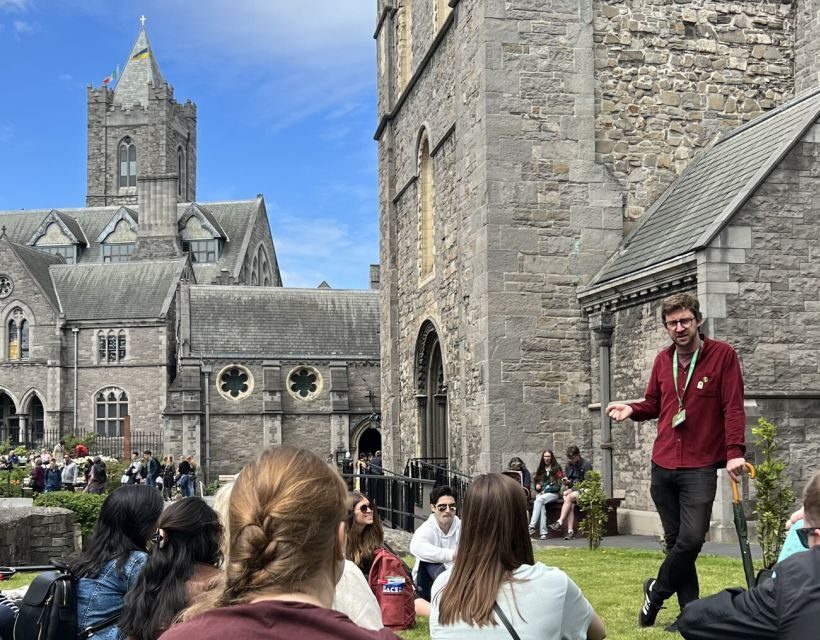
Next is Christ Church Cathedral, where the tour stays in the courtyard area and outside architecture. You learn about the cathedral’s founding and Viking history, while skipping interior entry.
From a “how to enjoy it” perspective, this is where you start practicing a useful skill: look at buildings like clues. Even without entering, you can still follow the guide’s explanation and come away with a clearer picture of what shaped the site.
Temple Bar neighborhood: a quick walk through an iconic area
You’ll pass through Temple Bar for about 5 minutes. It’s not a long stop, so think of it as atmosphere and context. Temple Bar is the kind of place you already associate with Dublin, and your guide uses that familiarity as a jumping-off point for learning, not just wandering.
If you want drinks or a full meal here, treat the tour as the pre-game, not the destination.
O’Connell Street: statues that track Ireland through the 20th century
On O’Connell Street, the guide continues with Ireland’s political landscape through the 20th century, visiting various statues along the way. This is one of the most story-heavy parts of the route.
Statues can feel like decoration if you don’t know what they’re pointing to. With context, they turn into a timeline you can walk alongside. It’s also a good place to ask questions, because the guide’s answers can connect street-level history to the larger national narrative.
Trinity College Dublin area and the Great Irish Hunger
Finally, you’ll stop outside Trinity College Dublin and the Central Bank of Ireland, with the guide talking about the Great Irish Hunger (also known as the Famine) and its place in Irish history. You don’t enter Trinity College.
This is a meaningful closing theme, especially if you’ve been learning about political struggle and national identity earlier in the walk. You leave with a heavier understanding of how historical events shaped Ireland’s population, culture, and long-term memory.
Then you wrap up near College Green, with Grafton Street close by.
The value question: is $27.82 a smart buy?
At about $27.82 per person, this tour is good value if your goal is orientation plus context. You’re paying for an in-person guide and a planned route that strings together Dublin’s most meaningful street-level landmarks.
You also save time. Instead of spending your day hopping between scattered attractions and guessing what order makes sense, you get a guided path that helps you understand how parts of the city relate to each other.
That said, remember what you’re not buying: lunch and interior access to several big sights. If your dream day is cathedral interiors and castle rooms, you’ll probably pair this with separate ticketed visits.
Who should book this tour (and who might not love it)
This tour fits best if you:
- want a first-day walking orientation in Dublin
- like learning through streets and monuments, not only inside museums
- enjoy asking questions and getting a guide’s take on Irish culture and history
- have limited time and want to see a lot of major stops in one morning/afternoon window
You might think twice if you:
- hate walking for extended periods
- want every major site entered with paid admission time
- want a deep museum-style experience rather than big-picture city context
Practical tips so you get more from the walk
A few small habits can make a big difference:
- Bring a charged phone for the mobile ticket
- Wear shoes you trust on Dublin sidewalks (you’ll be on your feet most of the time)
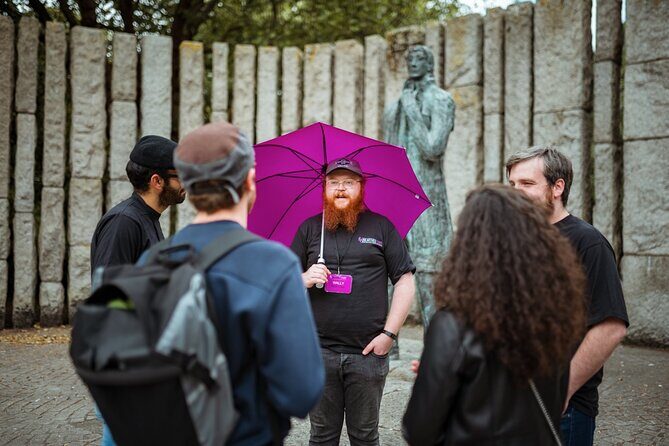
- Come with one or two questions you care about—politics, music, or the Viking roots—and the guide can steer the conversation
- If your group ends up small, don’t be shy about asking for recommendations; the guide may help you plan the rest of your day
Should you book DayTripper Dublin?

I’d book it if you want a fast, grounded way to understand Dublin beyond the postcard version. The route is central, the guide-driven storytelling connects culture with politics, and the length is right for an intro day.
Skip it only if you’re primarily looking for paid interior time at St Patrick’s Cathedral, Dublin Castle, or Christ Church Cathedral. In that case, use this as your orientation walk, then schedule separate visits where you can go inside and linger.
If Dublin is your first time in Ireland, this is an efficient way to start strong—and it tends to make the rest of your trip easier to navigate, both physically and historically.
FAQ
How long is the DayTripper Dublin walking tour?
It runs about 2 hours 30 minutes (approx.).
Where does the tour start and where does it end?
You start at the Wolfe Tone Sculpture by St Stephen’s Green, Dublin. You end at College Green, with a short walk near Grafton Street.
Is the tour in English?
Yes, the tour is offered in English.
How much does it cost?
The price is listed as $27.82 per person.
What’s included in the price?
The tour includes an in-person tour guide. Lunch is not included.
Do you enter St Patrick’s Cathedral, Dublin Castle, or Christ Church Cathedral?
No. The tour does not enter St Patrick’s Cathedral, Dublin Castle, or Christ Church Cathedral. You view them from gardens/courtyards and learn outside.
Are any admission tickets included?
Some stops are listed with free admission, but others are marked as not included. The tour does not include admission for certain sites as noted in the route details.
Is this tour suitable if I’m only moderately fit?
Yes. It’s noted for travelers with a moderate physical fitness level.
Can I cancel for a full refund?
Yes. You can cancel for a full refund up to 24 hours before the experience starts. Free cancellation is offered with that window.