REVIEW · DUBLIN
Swords Dublin Ireland Walking Tour Fun Experience
Book on Viator →Operated by Donnelly Walking Tours - Swords · Bookable on Viator
A castle walk in Swords feels like time travel. You’ll start at Swords Castle, then move through medieval and early Irish sites tied to major turning points in Ireland, from Viking-era conflict to early Christian legends. It’s a compact way to understand how this small town grew, without needing a full day in Dublin.
What I like most is the way the tour mixes place-based history with big-picture context. You’ll get a clear sense of what the castle was for, why the Round Tower matters, and why the local well became central to the town’s origins. Second, it’s practical: a mobile ticket, a short time commitment, and a meeting point that’s easy to reach by public transport.
One thing to consider: access can vary around the castle grounds. On at least one day, a concert and cleanup meant the group couldn’t go inside, even though the rest of the tour was still excellent.
In This Review
- Key Highlights
- Why Swords Castle Makes a Great Quick Stop from Dublin
- Meet at Bridge Street and Start with Medieval Power in Plain Terms
- Hallowed Turf, the Round Tower, and Brian Ború After Clontarf
- Monastic Ground and St. Colmcille’s Healing Well
- Your Guide Makes It Feel Local, Not Scripted
- Price and Time: What $18.06 Buys You in Real Terms
- Getting There: Near Public Transport and Easy Start/Finish
- When Castle Interiors Are Off-Limits, the Walk Still Works
- Who Should Book This Swords Walking Tour (and Who Might Not)
- Should You Book This Swords Dublin Walking Tour?
- FAQ
- How long is the Swords Dublin walking tour?
- Where does the tour start and end?
- What language is the tour offered in?
- Who is the guide?
- Do I need a printed ticket?
- How much does it cost?
- What is the cancellation policy?
Key Highlights
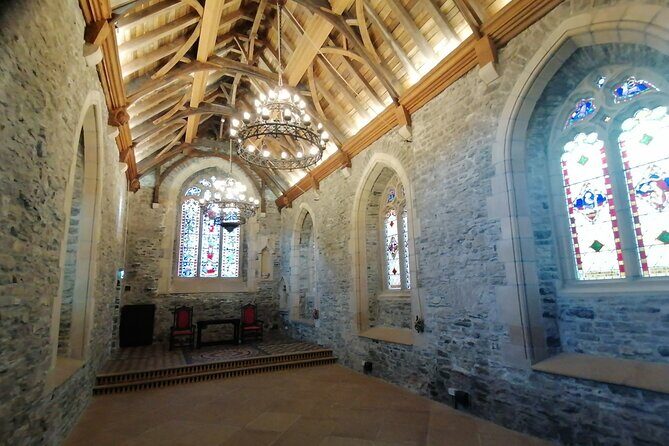
- Swords Castle as an Archbishop’s Palace (circa 1200), built by the Anglo-Normans
- Round Tower + Battle of Clontarf (1014 AD) story tied to Brian Ború
- Monastic settlement route, with early Christian sites made understandable on foot
- St. Colmcille healing well, tied to the founding of the magical town of Swords
- Short, focused walk (about 1–2 hours) that fits into a day in Dublin
Why Swords Castle Makes a Great Quick Stop from Dublin
If you’re using Dublin as a base, this kind of half-day detour is gold. Swords is close enough that you don’t lose your day to long transfers, but it still gives you a real sense of Irish life beyond the city center. The whole experience is built around one core area—castle, tower, church sites, and the well—so you’re not jumping all over town.
I also like that the tour doesn’t treat history like a museum lecture. Instead, it connects stories to specific spots you can stand on: the turf, the tower, the monastic remains, and the spring. When you hear a legend about healing or a story about a waking moment after Clontarf, you’re not just remembering facts—you’re picturing where it happened.
Finally, it’s good value for the time. The price is $18.06 per person for a walk that’s roughly 1–2 hours, and you’re not paying for a full-day bus-and-museum routine. If you want history that feels personal and local, this hits the target.
You can also read our reviews of more walking tours in Dublin

Meet at Bridge Street and Start with Medieval Power in Plain Terms
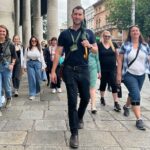
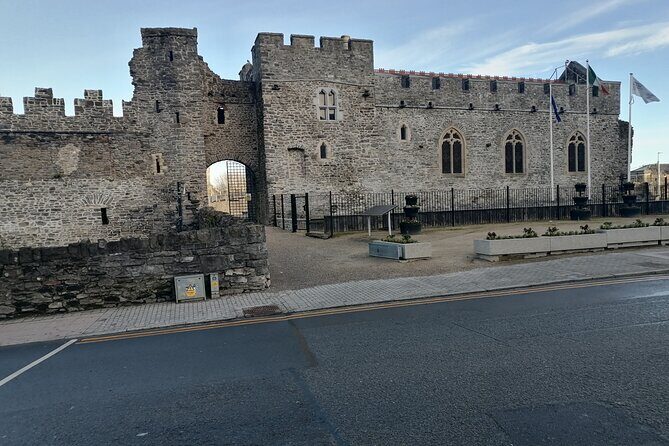
The tour starts at Bridge Street, Townparks, Swords, and it loops back to the same place when you’re done. That matters more than people think. You don’t need to figure out a new drop-off point, and you can plan your next stop in Swords or head back toward Dublin without stress.
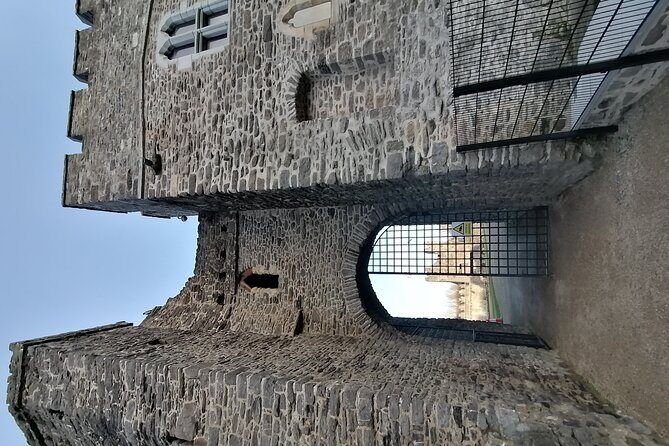
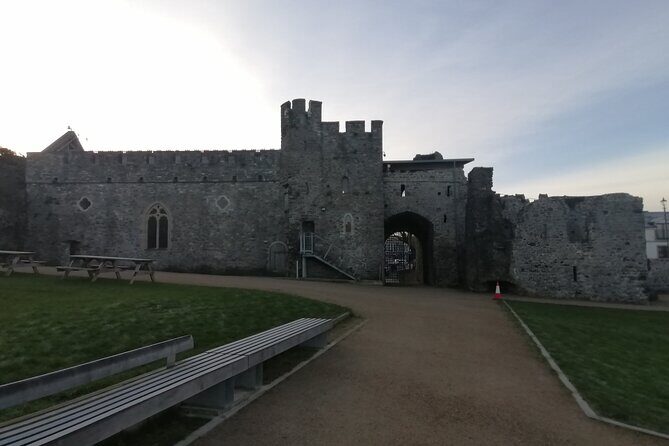
At the beginning, you’ll meet your local guide and get the big frame for what you’re about to see. The story centers on Swords Castle, described as a mediaeval castle built as an Archbishop’s Palace around 1200 AD by the Anglo-Normans. It’s a great way to reset your thinking: this wasn’t just a stone fort for drama. It was an important residence tied to power and church influence.
Then the walk moves into the feeling of the place. You’ll be encouraged to walk the hallowed turf and look at the area as more than scenery. It’s the kind of start that helps you pay attention for the rest of the tour, because you know what each next stop is connected to.
Hallowed Turf, the Round Tower, and Brian Ború After Clontarf
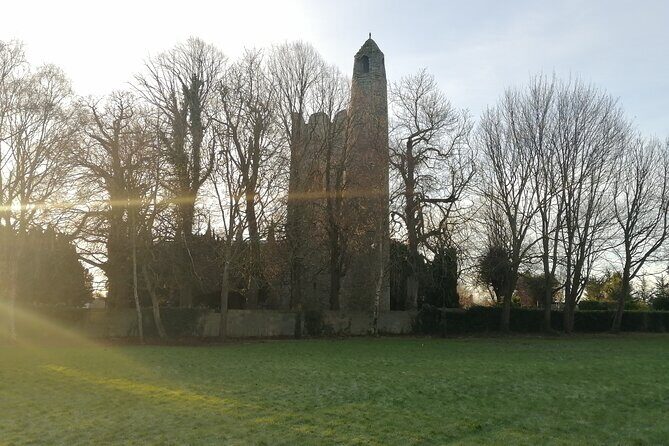
One of the best parts is how the tour uses the Round Tower to bring the Viking-age story into focus. You don’t just hear that Brian Ború mattered—you get a moment tied to him. The guide shares that Brian Ború was woken after his army’s triumphant victory over the Vikings in the Battle of Clontarf in 1014 AD.
Even if you don’t memorize dates, the human-scale details help the timeline click. A tower is easy to spot, so the story sticks. And because the tour is short, you’re not forced to sit through long stretches to get to the good stuff.
From there, you’ll keep exploring the surrounding older sites—again, grounded in what you can see in front of you. The pace is set up for understanding rather than rushing. You’ll have time to look up at structures and then listen to how the guide interprets them.
A possible drawback: towers and churches can sometimes have limited access depending on what’s happening on-site. On at least one occasion, guests were not allowed inside due to cleanup after a concert, even though the walk and storytelling continued. If this matters a lot to you, I’d plan to keep an open mind: you’ll still get the core experience even when interiors are off limits.
Monastic Ground and St. Colmcille’s Healing Well
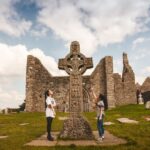
After the castle and tower moments, the tour moves into the monastic settlement area. This is where the experience broadens from Anglo-Norman power into early Irish Christian life. You’ll see the kinds of remnants and spaces that were central to community and worship, and the guide connects them to the people who lived there.
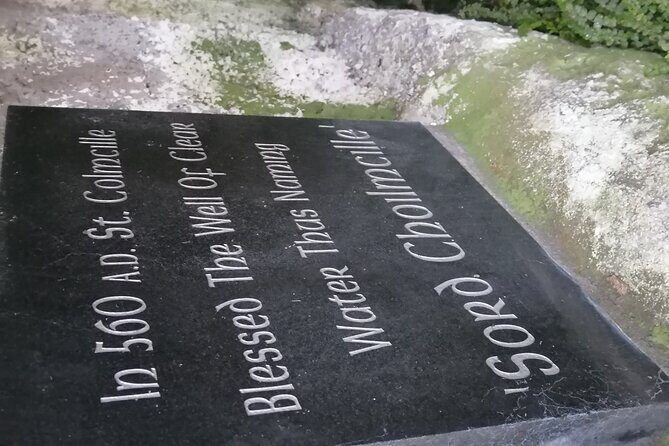
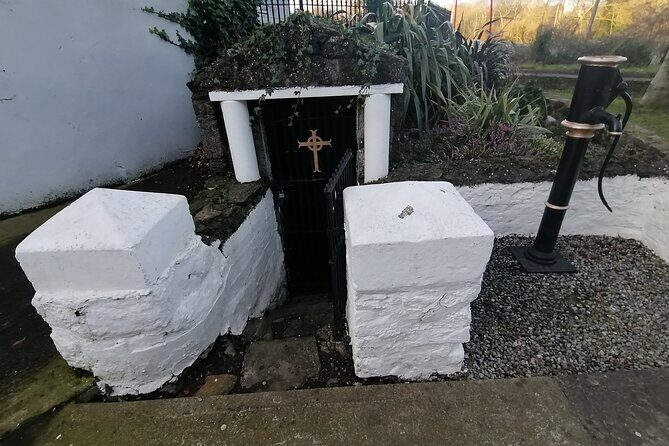
Then comes a standout legend tied to the miraculous healing well blessed by St. Colmcille. The tour explains that this well is connected to how the town of Swords was founded. It’s one of those stories that can sound like folklore until you realize how strongly it influenced settlement patterns.
Here’s the practical value: when you learn why a well mattered, you also learn why towns grow around resources. Water, blessing, ritual, and community come together in a way that feels logical, not random. Even if you don’t treat every element as literal, you get a clear picture of how beliefs shaped everyday life.
For photography, the well-and-church-side stops are often where you’ll slow down, simply because the setting invites it. Just remember to dress for a walk outdoors—this is still a stroll, even though the sites are historic.
Your Guide Makes It Feel Local, Not Scripted
The tour is led by a local historian-style approach, with the guide listed as O Donghaile from The Jungle. That local framing matters. In a good history walk, the guide doesn’t just recite. They answer questions in a way that shows they know the town’s connections.
This kind of hosting also helps you make sense of Ireland as a chain of overlapping eras. You’ll hear connections that go beyond Swords itself and tie into wider Irish history, including the Viking-era struggles and the early Christian foundations that shaped later communities. It turns your mental map from a list of monuments into a story of continuity and change.
If you’re the type who likes to ask questions, this tour is a good match. One strong theme from the experience is that the guide engages, explains what you’re looking at, and keeps the route moving without feeling rushed.





Price and Time: What $18.06 Buys You in Real Terms
The price is $18.06 per person, and the duration is about 1–2 hours. For a history-focused walking tour in a place right next to Dublin, that’s the main value equation: you’re buying time with a guide plus access to a coherent set of sites in a short window.
I also like the simplicity of the logistics. You get a mobile ticket, which means fewer hassles on your phone screen and less paper to manage. The tour is offered in English, so you’re not decoding translations while trying to follow stories about St. Colmcille or Brian Ború.
Group size is capped at a maximum of 100 travelers. That doesn’t guarantee a small-group feel every time, but it does suggest the organizer has scale in mind and the walk stays organized. If you want something calmer, you’ll still likely enjoy the outdoor pacing—this is not a stuffy, long indoor museum run.
Getting There: Near Public Transport and Easy Start/Finish
You start at Bridge Street, Townparks, Swords, and the tour ends back at the same meeting point. That’s an underrated convenience. It makes it easier to connect to public transport, grab a coffee after, or keep exploring Swords without backtracking.
The experience is also marked as near public transportation, so you’re not stuck arranging private transport unless you want to. For visitors who arrive at the airport and want a quick cultural hit, this kind of location is exactly what you want: a straightforward first stop that doesn’t eat your whole day.
Service animals are allowed, and most travelers can participate. That means you can plan for a short walking format that suits typical visitor needs. Still, wear shoes you’re comfortable walking in, because you’ll be on your feet outdoors for most of the 1–2 hour experience.
When Castle Interiors Are Off-Limits, the Walk Still Works
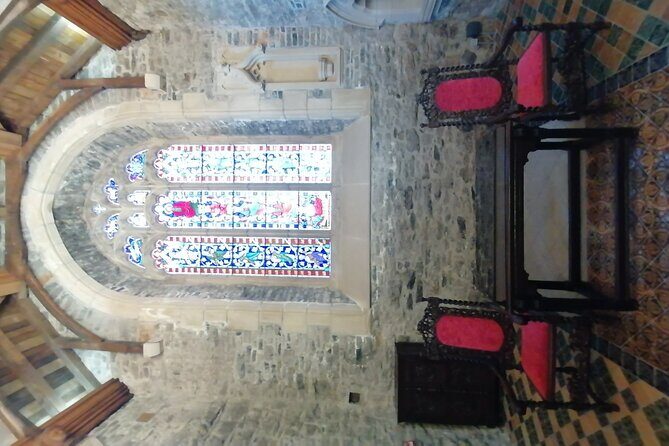
This is the one “watch out” point worth planning around. On at least one occasion, a concert and cleanup after it meant the group couldn’t enter the castle itself. The guide still tried hard to make it work, and the rest of the tour focused on the surrounding tower and church-site walk.
So here’s my advice: don’t book only for the idea of going inside. Book for the storytelling, the Round Tower and early Christian sites, and the well legend that explains why Swords exists as more than a dot on the map. If you happen to get interior access, that’s a bonus. If you don’t, the core experience still makes sense.
This mindset keeps you happy and helps you enjoy what you can control: your questions, your pace, and how closely you look at each stop.
Who Should Book This Swords Walking Tour (and Who Might Not)
This tour is best for you if you want history you can walk through. If you like medieval castles, church sites, and the way legends explain real-world settlement patterns, you’ll enjoy the structure. The Clontarf-to-Round-Tower connection and the St. Colmcille well story give you both big Irish history and local meaning.
It’s also a good fit if you’re short on time. One to two hours means you can do it even if your Dublin schedule is tight. And because it starts and ends at the same spot, it’s easier to stitch into a day.
You might think twice if you’re only interested in a long indoor visit or guaranteed access to every building interior, since access can depend on what’s happening at the site. But if your goal is to understand Swords and its key historic anchors, the tour is built for that.
Should You Book This Swords Dublin Walking Tour?
Yes—if you want an efficient, local-feeling way to learn Swords. For the $18.06 price, you get a focused 1–2 hour walk with clear connections: Anglo-Norman castle power, Round Tower stories tied to Brian Ború and Clontarf, and the healing well legend of St. Colmcille that helps explain how the town took shape.
I’d book it especially if you’ll be in the Dublin area and want something slightly off the main tourist path without sacrificing quality. The key reason to choose this tour is simple: it teaches you how to see the place, not just how to read about it later.
FAQ
How long is the Swords Dublin walking tour?
It runs about 1 to 2 hours (approx.).
Where does the tour start and end?
It starts at Bridge Street, Townparks, Swords, Co. Dublin, Ireland and ends back at the same meeting point.
What language is the tour offered in?
The tour is offered in English.
Who is the guide?
The experience is listed with O Donghaile from The Jungle as the guide.
Do I need a printed ticket?
No. You’ll receive a mobile ticket.
How much does it cost?
The price is $18.06 per person.
What is the cancellation policy?
Cancellation is free up to 24 hours in advance for a full refund. If you cancel less than 24 hours before the start time, the amount paid is not refunded.