REVIEW · DUBLIN
2 Hour Walking Tour of Dublin’s City Centre
Book on Viator →Operated by Dublin Walking Tours · Bookable on Viator
Two hours, and Dublin clicks into place. This short walk is a smart way to get street-level context for the big landmarks, with just enough story to help you sort what matters once you’re on your own.
I like the easy meeting spot at the Gaiety Theatre, plus the fact it runs in a small group (max 10), so you actually get to interact and swap notes. I also like that the stops are packed with real contrasts, from cathedrals tied to St. Patrick to the power-and-prison world of Dublin Castle.
One thing to plan for: several major interiors are not included (including St Patrick’s Cathedral, Dublin Castle, and Christ Church Cathedral). You’ll learn a lot from outside views and the guide’s setup, but if you want to go in, you’ll need to add separate tickets.
In This Review
- Key things I’d zero in on
- Getting Oriented Fast: Dublin City Centre in Two Hours
- Price, Group Size, and What You Really Get for $28.96
- Meeting at the Gaiety Theatre and Walking Pace
- From the Gaiety Theatre to St Patrick’s Cathedral: How Dublin Got Its Voice
- Dublin Castle and Christ Church Cathedral: Power, Vikings, and Architectural Twist
- Temple Bar: From Notorious Corners to Pub and Art Territory
- Trinity College Dublin and the Book of Kells Connection
- Bank of Ireland: When Old Parliament Set the Stage
- St Stephen’s Green Finish at Fusiliers Arch: A Lovely Button on the Day
- The Guide Factor: How Alin and Others Keep It Moving
- Morning vs Afternoon Start: Pick What Fits Your Day
- What If You Want More Than 15 Minutes per Landmark?
- Who This Tour Fits Best (and Who Might Want Another Option)
- Should You Book This 2-Hour Highlights Walk?
- FAQ
- How long is the tour?
- How much does it cost?
- How big is the group?
- What’s included in the tour price?
- Are admission tickets included for all stops?
- Where do I start and end?
Key things I’d zero in on
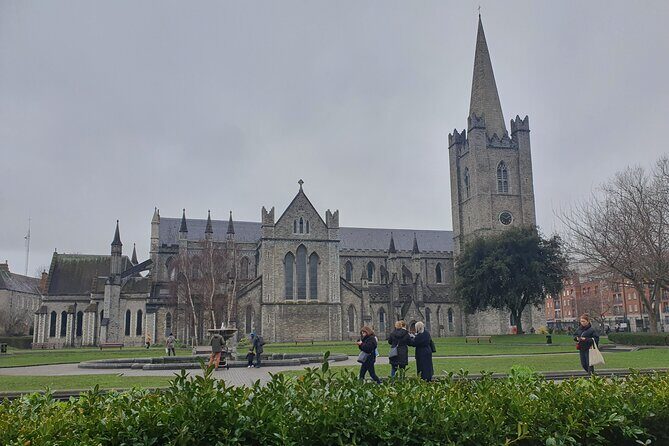
- Small-group feel (up to 10): easier Q&A, better pacing, and you’ll meet fellow history lovers fast.
- Fast orientation route: you cover Dublin City Centre highlights without pulling out a map every five minutes.
- Story-driven stops: each landmark is explained with quick cause-and-effect context, not random facts.
- Practical insider nudges: the guide shares ideas for food and pubs beyond the loudest tourist lanes.
- Fun, interactive guidance: quizzes and games show up during the walk, and families find it keeps kids engaged.
- Clear start and finish: meet at the Gaiety Theatre and end at Fusiliers Arch in St Stephen’s Green by the Luas tram.
Getting Oriented Fast: Dublin City Centre in Two Hours

If Dublin feels like a jumble of streets at first, this kind of tour fixes that quickly. In about two hours, you walk a tight line through some of the city’s biggest names, and the guide stitches them together so you start seeing the whole pattern: religion, power, and everyday life layered on the same stone.
I especially like the pacing here. You’re not stuck listening forever at one stop, and you’re not racing through ten places where nothing sinks in. Each stop is given room to breathe, roughly 15 minutes each, which is exactly what you want when you still plan to explore later.
You also get to choose timing. Morning or afternoon start times can be helpful when you’re juggling jet lag, a day trip, or a timetable that includes museums or pub hopping.
You can also read our reviews of more walking tours in Dublin



Price, Group Size, and What You Really Get for $28.96
At $28.96 per person for a guided, small-group walk, the value is mostly about context. You’re paying for someone to explain why these buildings matter and how they connect, while you simply follow along and look up.
A practical detail: some admission is not included. St Patrick’s Cathedral, Dublin Castle, and Christ Church Cathedral all list admission as not included. That means the tour is designed so you still get the story and the sights even if you don’t go inside. If you do want interiors, budget extra time and money for separate tickets.
The upside is that you don’t feel forced to spend at every stop. You can treat the walk like a guided syllabus. Then, when you decide what you actually want to see up close, you can do it on your own terms.
Meeting at the Gaiety Theatre and Walking Pace
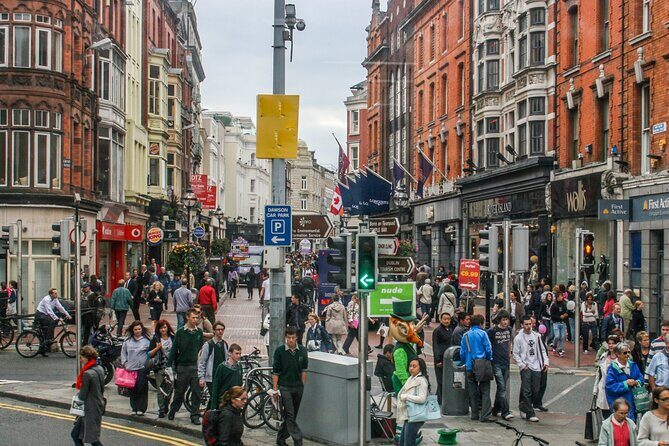
The tour starts at the Gaiety Theatre, King St S (Dublin 2), and it’s an easy pin to find. That matters in Dublin, because the city centre is compact but busy, and it’s the quickest way to start your day without stress.
The walk ends at Fusiliers Arch in St Stephen’s Green, right by the Luas tram stop. Translation: you’re dropped off at a convenient access point for getting around, and you’re also placed near one of the nicest breaks in the city.
This isn’t a marathon. It’s described as requiring moderate physical fitness, and because you’re walking continuously for about two hours, you’ll want comfortable shoes. Dublin weather also has opinions, so keep a light layer in your day bag.
From the Gaiety Theatre to St Patrick’s Cathedral: How Dublin Got Its Voice

The first stop, Gaiety Theatre, sets the tone. The tour frames it as part of Dublin’s larger story, and it’s a good warm-up because it gets you moving right away rather than starting with a cold history lecture.
Then you hit St Patrick’s Cathedral. This one is loaded with drama in the best way. You’ll hear how it’s linked to St. Patrick, plus the building’s evolution from Anglo-Norman roots through a period when it fell into near ruin, and then a Guinness family rescue. That arc gives the cathedral a bigger role than just being old and impressive. It becomes a symbol of survival and repair.
One consideration: the tour time is short at each stop, so don’t expect a full inside visit here. Admission is noted as not included. If your priorities include stepping into the cathedral, plan to do that after the tour with your own entry ticket.
Dublin Castle and Christ Church Cathedral: Power, Vikings, and Architectural Twist
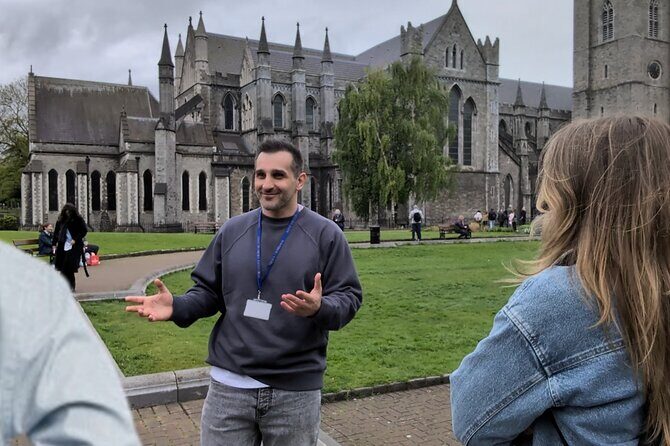
Next comes Dublin Castle, with the kind of origin story that makes you look differently at the walls. It’s described as beginning with an Anglo-Norman tower, then growing into a complex that served as a seat of power and a prison. The tour also mentions a daring jewel heist tied to its history. That mix of governance, confinement, and high-stakes legend is exactly what makes Dublin Castle feel alive.
Admission is not included, so again, you’ll get the highlights from the outside and the guide’s narrative framework. If you love prisons, courts, or official buildings, you’ll likely want to return for a proper interior visit.
After that, you reach Christ Church Cathedral, one of Dublin’s key historic anchors. This stop is fascinating because it starts with Vikings in 1030, then moves forward through changes under different rulers. You’ll also hear about how Anglo-Normans added Gothic flair, and how later restoration involved funding described as coming from the 19th-century whiskey trade. (That detail is a great example of how Dublin’s economy and culture keep leaving fingerprints on the architecture.)
Same practical note: admission is not included, so treat the stop as your “why it matters” moment. If you want the inside experience, you can plan it as a follow-up.
You can also read our reviews of more city tours in Dublin






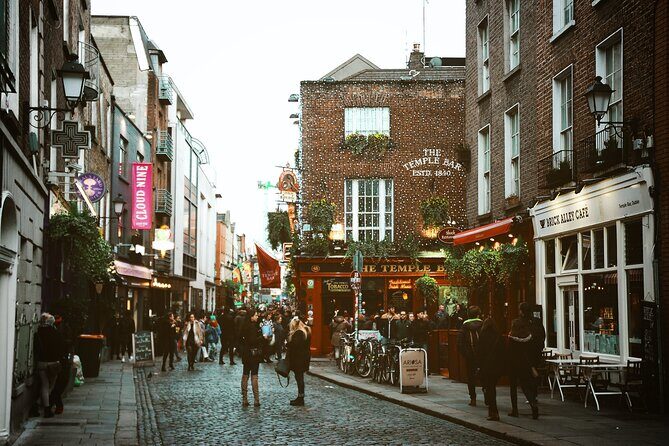
Temple Bar: From Notorious Corners to Pub and Art Territory
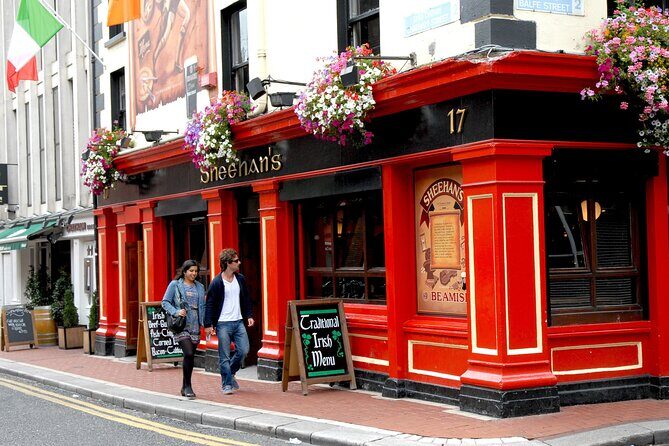
Then you walk into Temple Bar. The guide frames it as a place that used to be a more maze-like neighbourhood with a notorious reputation, and it’s now turned into a highly visited area with pubs and art galleries plus nightlife energy.
Here’s what I like about including Temple Bar on a short highlights tour: it’s a reminder that Dublin isn’t only about stone monuments. It’s also about how neighborhoods get reshaped by reputation, tourism, and timing.
The stop is listed as free admission, and it’s also one of the easiest places to break your walking rhythm. You can use the guide’s context to decide what you actually want to do later: browse a gallery, sit down for a pint, or keep moving toward quieter streets.
If you’re sensitive to crowds, you might prefer to use Temple Bar as a learn-then-leave stop. The tour helps you understand it first, so you’re not just reacting to what’s in front of you.
Trinity College Dublin and the Book of Kells Connection
A quick walk brings you to Trinity College Dublin. The tour treats the campus as more than a backdrop by connecting it to a bigger learning tradition. Trinity is described as a renowned center of learning, with fame tied to the Book of Kells, and the campus itself is called out as beautiful.
Because the stop is listed with free admission, you can linger and look around without the friction of extra entry decisions. Just know the tour time is still about 15 minutes, so it’s more about getting oriented than doing a full campus visit.
This stop is one of the best examples of why a guided overview helps. Once you know the story behind Trinity, you’ll recognize what you’re seeing instead of treating it as a pretty gate photo.
Bank of Ireland: When Old Parliament Set the Stage
Bank of Ireland is an intriguing change of pace. You’re not just looking at a financial building; the tour explains how the site ties to Irish politics, specifically referencing the Old Parliament House.
You’ll hear how the place witnessed major political developments, including the Act of Union, and how it also influenced architecture with connections to grand buildings. It’s a useful reminder that Dublin’s power history is not only in castles and cathedrals. Sometimes it’s in offices you’d walk past without a second glance.
The stop is marked as free admission, which helps. You can take in the architecture and let the guide connect dots without worrying about ticket timing.
St Stephen’s Green Finish at Fusiliers Arch: A Lovely Button on the Day
The final stop is St Stephen’s Green, and it’s a strong way to end. The tour shares how the park started as an exclusive green space for Dublin’s elite, thanks to the Guinness family, and then became the public park enjoyed by everyone now.
Ending at Fusiliers Arch works well because it marks the main park entrance on Grafton Street and puts you near the Luas. If you want to keep exploring, you’re positioned to do it without backtracking.
This is also a mental reset. After churches, castles, and political landmarks, you get a breather in a city-centre park. Even if you don’t stop long, it helps your brain file the day in order.
The Guide Factor: How Alin and Others Keep It Moving
The reviews you’ll find for this tour highlight one thing consistently: the guide is the difference between walking and learning. Names that show up include Alin (and sometimes Alan/Allen spelling), and Leonore as a guide. The common thread is delivery style.
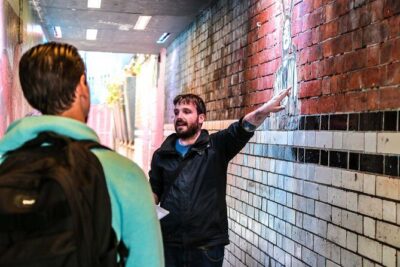
From the way the experience is described, guides use questions, quizzes, and games to keep people engaged. That shows up even for families with teens and kids. You’ll also hear guides are patient with photo stops, and that they sometimes share practical suggestions for local restaurants and pubs, including places that don’t feel like they’re right on the main tourist conveyor belt.
One more detail that I think matters: some guides use a notebook of old photos. That kind of visual aid makes the stories feel anchored, like you can picture what the street looked like before it looked like it does now.
If you want a tour that feels like a conversation with a local who knows how to explain, this format tends to deliver.
Morning vs Afternoon Start: Pick What Fits Your Day
Because you can choose a morning or afternoon start time, you can line it up with the rest of your Dublin plan. If you’re arriving early and want to hit the ground running, a morning slot can set your priorities for what to return to after.
If you prefer a slower start, an afternoon walk can work because you’ll get your bearings before evening activities. Temple Bar in particular can be more fun once you understand what you’re looking at.
Either way, you get a short list of landmarks with context, and that helps you avoid the classic problem: wandering around later and not knowing what’s what.
What If You Want More Than 15 Minutes per Landmark?
This tour is best viewed as a highlights primer, not a full museum plan. Some of the biggest stops are listed with admission not included, and each site is given a short chunk of time.
So here’s the honest trade-off:
- If your goal is orientation and story, this is excellent value.
- If your goal is to spend a lot of time inside cathedrals, castles, or historic rooms, you’ll likely want to pair this with separate entries after.
The good news is that the tour helps you choose. After you hear the guide’s quick explanation, you’ll know what to prioritize when you buy tickets for interiors later.
Who This Tour Fits Best (and Who Might Want Another Option)
This walk fits especially well if:
- you have limited time and want a straight route through the city centre highlights
- you like small-group dynamics and actually want to ask questions
- you’re interested in how Dublin’s buildings connect to politics, religion, and everyday identity
- you’re traveling with mixed ages, since the interactive style can keep families engaged
It might not be ideal if you:
- want a long, slow visit inside major sites as part of the tour price
- hate walking in the city centre with crowds around popular areas like Temple Bar
- expect a deep dive into one specific attraction. The strength here is breadth, not hours at one museum.
Should You Book This 2-Hour Highlights Walk?
Yes, if you want a quick, practical introduction to Dublin’s core landmarks with a real guide behind it. At $28.96 for a 2-hour small-group format, the value makes sense because you’re buying narrative structure, not just movement.
I’d book it particularly if it’s your first day in Dublin. The route through St Patrick’s Cathedral, Dublin Castle, Christ Church Cathedral, Temple Bar, Trinity College, and the political-thread stop at Bank of Ireland gives you a map in your head. Then you can explore the rest at your pace, with fewer wrong turns and more good choices.
If you do book, wear comfortable shoes and keep expectations aligned: you’re getting the story fast, and interiors are your follow-up option.
FAQ
How long is the tour?
The tour runs for about 2 hours.
How much does it cost?
The price is $28.96 per person.
How big is the group?
The tour has a maximum group size of 10 travelers.
What’s included in the tour price?
You get a guided introduction to Dublin’s history and culture. A mobile ticket is used, and the tour is offered in English.
Are admission tickets included for all stops?
No. Some stops are listed as free to enter, while others (including St Patrick’s Cathedral, Dublin Castle, and Christ Church Cathedral) note admission is not included.
Where do I start and end?
You start at the Gaiety Theatre on King St S, Dublin 2, and you end at Fusiliers Arch in St Stephen’s Green, near the Luas tram stop.
If you want, tell me your travel dates and whether you prefer morning or afternoon, and I’ll suggest a simple follow-up plan for what to see next around the places you’ll pass.