REVIEW · DUBLIN
Private Walking Tour in Dublin
Book on Viator →Operated by Francesca D'Angelo · Bookable on Viator
Dublin can feel like a big story. This private walking tour strings together the city’s most important sights with a logical route that helps you get your bearings fast. I really like the focus on big moments (freedom from empire, the Easter Rising) next to everyday Dublin icons like Ha’penny Bridge and Molly Malone. One drawback to consider: several of the top buildings charge for entry, so you’ll want a few extra euros in your pocket.
The best part is that the guide can steer the walk toward what you care about. In the past, people praised guides like John, Sinead, Yvonne, and Francesca for being responsive, answering questions, and even adjusting the pace for kids. The other consideration is simple: it’s a walking tour, so you’ll cover quite a bit over 2–3 hours on mostly city sidewalks.
If you want a quick, friendly first sweep of Dublin’s highlights—without getting lost in Irish history homework—this is a strong way to start.
In This Review
- Key highlights at a glance
- A smart way to start Dublin on foot
- Price and what you actually get for $90
- The walking route: where you begin and where you finish
- Trinity College Dublin: more than a campus
- GPO Museum and the Easter Rising: history you can see
- The Spire and Ha’penny Bridge: quick icons, good context
- Temple Bar area: the nightlife zone, explained
- Wood Quay Amphitheatre: Vikings in plain sight
- Christ Church Cathedral: medieval Dublin, Viking roots, major name drops
- Saint Patrick’s Cathedral in the Liberties
- Dublin Castle: the English rule layer
- George’s Street Arcade and Molly Malone: finish with charm
- Why private guides change the whole experience
- What to expect from timing and pacing
- Who this tour is best for
- Small planning tips that make it smoother
- Should you book this private walking tour?
- FAQ
- How long is the private walking tour?
- What is the meeting point for the tour?
- Where does the tour end?
- What language is the tour offered in?
- Is this a private tour or shared group?
- Do I need an entry ticket for all stops?
- Is the tour ticket mobile?
- How far in advance should I book?
- Is the tour dependent on weather?
- What’s the cancellation policy?
Key highlights at a glance
- Private group means you’re not stuck in a crowd or rushing someone else’s pace
- Trinity College Dublin gives you a powerful “city within a city” introduction
- Easter Rising context at the GPO Museum connects dates to real places and bullet marks
- Free iconic stops like the Spire, Ha’penny Bridge, and Molly Malone keep the budget in check
- Flexible guide energy, including help for families (one group included children ages 6 and 8)
A smart way to start Dublin on foot
This tour is built for first-timers who want the city to make sense quickly. You’ll start at Trinity College Dublin on College Green and end at the Molly Malone statue on Suffolk Street, so the walk has a clear arc rather than a random “hit everything” scramble.
The duration is about 2 to 3 hours, which is perfect for a morning or early afternoon when your legs are fresh and your brain is ready for stories. And since it’s a private tour, you can ask questions without feeling like you’re interrupting a busy group.
The price is $90.11 per person, which is in the range where value matters. Here, value comes from how many major landmarks you cover in one outing and the fact that the guide can tailor the tour to your interests, including family-friendly pacing.
You can also read our reviews of more walking tours in Dublin



Price and what you actually get for $90
For the money, you get a focused walking route plus interpretation at nearly every stop. Some entrances are included, but most are not—so the final cost depends on what you choose to go inside.
Here’s the practical breakdown based on what’s listed:
- Admission ticket not included: Trinity College Dublin, GPO Museum, Christ Church Cathedral, Saint Patrick’s Cathedral, Dublin Castle
- Free stops: The Spire, Ha’penny Bridge, Temple Bar area, Wood Quay Amphitheatre, George’s Street Arcade, Molly Malone statue
That means you can control your budget. If you want the full experience with interior visits, plan for ticket costs at the major sites. If you prefer exterior viewing and guide stories, you’ll still get a strong overview without paying entrance fees.
The walking route: where you begin and where you finish
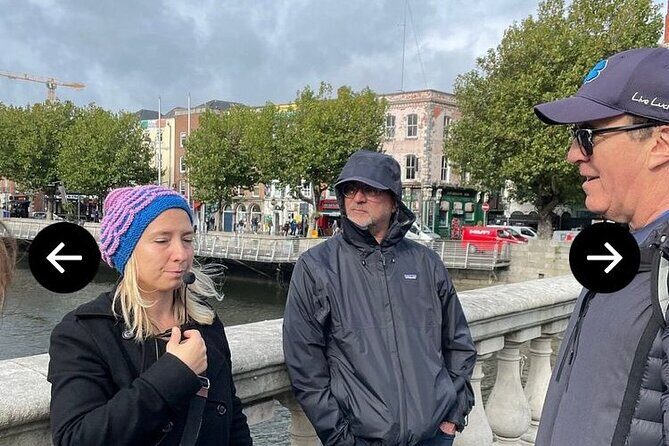
You meet at Trinity College Dublin, College Green (Dublin 2). The tour ends in front of the Molly Malone statue on Suffolk St (Dublin 2), so you finish near a popular central area.
That end point matters. Molly Malone is a well-known landmark, and once you’re there, you can easily branch off on your own—toward pubs, restaurants, or a museum day—without needing another navigation step.
Also, the tour is offered in English, and you’ll receive a mobile ticket. That’s useful in Dublin where you may be hopping between areas quickly and want minimal hassle.
Trinity College Dublin: more than a campus
You’ll begin at Trinity College Dublin, Ireland’s most prestigious university. The guide frames it as a real “city within the city,” with more than 20,000 people working and studying there, which changes how you perceive the neighborhood around College Green.
The big reason this stop works is the way it anchors Dublin’s identity. Trinity connects to major writers like Oscar Wilde, Bram Stoker, and Jonathan Swift, so you get literary Dublin in one glance. It’s also a time capsule: founded in 1592 from Queen Elizabeth I, it’s a reminder that power, politics, and culture have always overlapped here.
Plan for the practical part: admission isn’t included. You can still enjoy the exterior and street-level atmosphere, but if you want to go inside, you’ll need to budget for tickets.
GPO Museum and the Easter Rising: history you can see
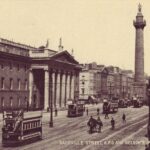
Next up is the GPO Museum, set in an elegant Georgian building that became a symbol of freedom from British rule. The guide ties the Easter Rising of 1916 to a very specific moment—Easter Monday—when Irish Volunteers and the Irish Citizen Army seized the building.
What makes this stop feel real is the detail about the building itself: bullet marks can still be seen on the front pillars. Even if you don’t go far inside, those visible marks help you understand why places matter in political history.
Again, admission isn’t included, so you’ll decide whether you want to invest time and ticket cost here. If you care about Irish independence and want more context, this is the stop where interior time can be the most rewarding.
You can also read our reviews of more private tours in Dublin





The Spire and Ha’penny Bridge: quick icons, good context
You move from the heavy history into instant Dublin visuals.
First is The Spire, officially called the Monument of Light. It’s the tallest modern art monument in the world at 120 metres tall, and it was built to celebrate the new millennium. It’s modern, but the guide’s job is to connect it to Dublin’s changing face—proof that the city keeps building while it remembers.
Then you’ll get to Ha’penny Bridge, officially named the Liffey Bridge but famous by its nickname. It was built in 1816, and the story of the name is practical and clever: it was a tall bridge for more than 100 years, and ha’penny is half a penny.
These are short stops—about 5 minutes each—but that’s the point. They give you landmarks you’ll recognize later, especially if you plan to wander the Liffey area after the tour.
Temple Bar area: the nightlife zone, explained
The walk then reaches Temple Bar, Dublin’s best-known cultural and nightlife district. This isn’t just a photo stop. You’ll explore the old neighborhood’s secrets, and you’ll get a sense of why this area became famous for traditional Irish music and for places that serve traditional food.
Because the itinerary lists Temple Bar as a free admission-free segment, this is a good place to linger briefly if you’re curious. You can also use it as a planning moment: decide which pub or restaurant you want to revisit later tonight.
One consideration: Temple Bar is popular. If you’re aiming for quiet sightseeing, you may prefer to keep this stop short and then head a few streets away afterward.
Wood Quay Amphitheatre: Vikings in plain sight
At Wood Quay Amphitheatre, the story shifts again—this time to the Viking era. At the feet of a hill culminating with Christchurch, archaeologists discovered the biggest Viking settlements outside Scandinavia connected with Dublin’s growth.
You’ll get a timeline anchor too: Vikings were traders and marauders at first, and they began permanently settling in Dublin in 841 AD. That early settlement context helps when you later look at medieval churches and castle sites. Suddenly, Dublin’s layers feel like they’re in conversation, not isolated eras on separate plaques.
This stop is listed as free, so you’re paying only with time, not tickets. It’s one of the places where a short guide stop can change how you see the whole city.
Christ Church Cathedral: medieval Dublin, Viking roots, major name drops
Christ Church Cathedral sits in the medieval district and has an unusual origin story. The site began as a Viking church, and it’s been welcoming visitors and pilgrims for almost 1,000 years.
This is also where the tour helps you connect big names to specific artifacts. The guide points you to treasures such as Strongbow’s tomb and even a copy of the Magna Carta. If you like when Dublin ties into the wider European medieval world, this stop delivers.
Practical note: admission is not included. Even so, you can enjoy the architecture and atmosphere from outside. If you want the full cathedral experience, budget for tickets here—because the pay-off is in the details inside.
Saint Patrick’s Cathedral in the Liberties
The next major sacred stop is Saint Patrick’s Cathedral, located in the Liberties. The building was completed between 1225 and 1270 in honor of Ireland’s patron saint, St. Patrick.
This stop is meaningful because the guide ties it directly to conversion stories—how St. Patrick baptized Irish Gaelic people and helped drive Christianization. It’s not just a pretty Gothic shell; it’s a place presented as part of Ireland’s identity-building.
Just like Christ Church, admission is not included. The guide also calls out treasures such as Jonathan Swift’s tomb, which makes the visit feel grounded in Irish literature as well as religious history.
Dublin Castle: the English rule layer
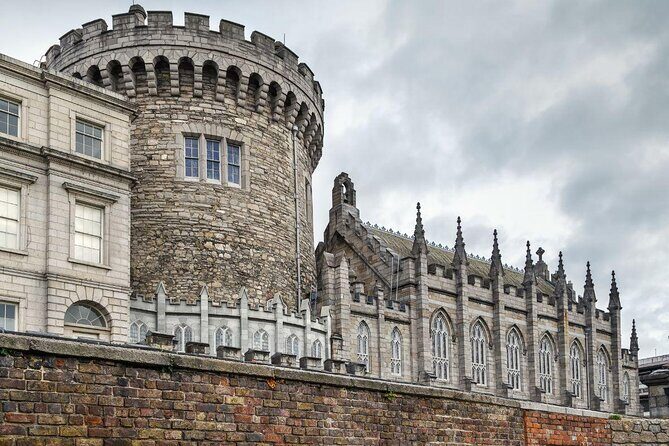
At Dublin Castle, the focus shifts to political power. The castle served as the seat of the viceroy, the English monarch’s representative in Ireland, and it was central to English rule for more than 700 years.
The tour clarifies what you’re actually looking at. The Record Tower is the only remaining piece from the original medieval castle, while other architecture you’ll see is from 18th-century State Apartments. That detail helps you avoid the common mistake of assuming everything old-looking is medieval.
Admission is not included, so you’ll choose your level of investment. If you’re curious about government, conflict, and how power shows up in architecture, this is a stop worth paying for.
George’s Street Arcade and Molly Malone: finish with charm
The tour ends with two lighter, very Dublin moments.
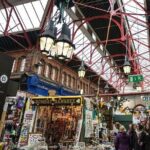
George’s Street Arcade is the heart of the creative quarter and Dublin’s oldest shopping centre. It’s also a classic Victorian-style structure, opened for almost 140 years as part of South city market buildings. It’s listed as a free stop, so it’s a low-cost way to see the city’s design and shopping culture.
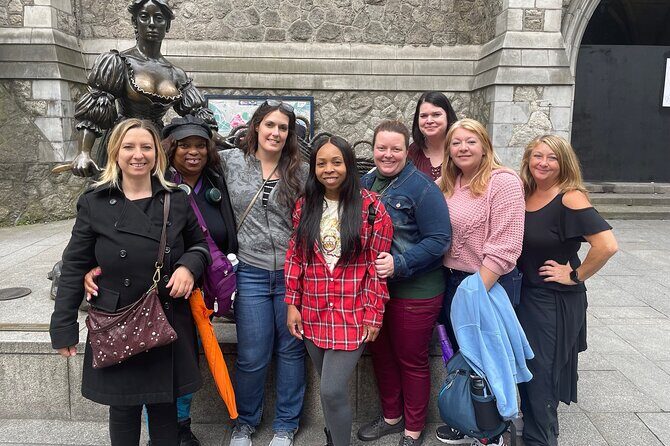
Then you reach the Molly Malone statue, unveiled in 1988 to celebrate Dublin’s first millennium. The character inspired the famous song Molly Malone, often treated as the unofficial Dublin anthem. The tour also mentions the “did she exist?” question, including a theory that Molly Malone may have been based on a real woman who died in Dublin in 1699.
This ending works well because it’s memorable and easy to navigate from. Once you’re at Molly Malone, you can keep exploring with confidence.
Why private guides change the whole experience
One reason this tour earns strong marks is how the guide handles questions and personal interests. In past runs, people highlighted that guides like Sinead tailored the walk to what the group wanted, and that John could answer questions on Irish history and adapt for families with kids.
You also get practical value: at least one group credited their guide for giving recommendations for what to do later, not just reciting facts. That kind of guidance is gold on a first day.
Even with a set route, the best walking tours feel flexible. A private format helps because the guide can slow down when you want more detail—or speed up when you’re simply hunting your next pint.
What to expect from timing and pacing
The total is 2 to 3 hours, and the stops range from quick “look and learn” moments (like the Spire and Ha’penny Bridge) to longer, story-heavy areas (like Trinity and the cathedral stops).
Because admission isn’t included for several key sites, you should think about how you’ll handle tickets:
- If you plan to go inside, you’ll want to arrive ready for a bit of waiting and extra time at those stops.
- If you keep it exterior-focused at ticketed sites, you’ll stay closer to the lower end of the time range.
Either approach works, but your expectations should match your ticket plan.
Who this tour is best for
This is a great fit if you’re:
- visiting Dublin for the first time and want a coherent “highlights arc”
- traveling with kids (the tour has been praised for accommodating a family with children ages 6 and 8)
- interested in how Irish history connects to buildings you can actually see
- the type of traveler who likes asking questions mid-walk
If you already know Dublin well and want deep museum time, you might prefer a more specialized tour or longer stays inside the ticketed attractions. But for a first afternoon or morning, this format is strong.
Small planning tips that make it smoother
A walking tour in central Dublin rewards simple preparation:
- Wear shoes you don’t mind using for a solid 2–3 hours of city walking.
- Bring a bit of cash or card for entrance tickets at Trinity, GPO Museum, Christ Church, Saint Patrick’s, and Dublin Castle if you want to go inside.
- If weather looks iffy, have a backup plan. This experience requires good weather, and rain can change the experience.
Also, since it’s near public transportation, you can easily top up your day if you want to jump to something nearby before or after.
Should you book this private walking tour?
I’d book this if you want a guided route that helps Dublin click into place fast. The itinerary balances major political moments (GPO and the Easter Rising) with iconic Dublin visuals (the Spire, Ha’penny Bridge) and medieval anchors (Christ Church and Saint Patrick’s). You also get the benefit of private pacing, with guides praised for tailoring and for handling questions smoothly.
Don’t book it if you’re hoping every stop is included and timed for minimal walking. Several of the big-name sites require separate entry, and the tour is built for walking plus stories, not for long museum deep dives.
If you do book, treat it like your first chapter. Afterward, you’ll know exactly where you want to return.
FAQ
How long is the private walking tour?
It runs for about 2 to 3 hours.
What is the meeting point for the tour?
You start at Trinity College Dublin, College Green, Dublin 2.
Where does the tour end?
The tour ends at the Molly Malone Statue on Suffolk St, Dublin 2.
What language is the tour offered in?
The tour is offered in English.
Is this a private tour or shared group?
It’s a private tour/activity, meaning only your group participates.
Do I need an entry ticket for all stops?
No. The tour notes admission tickets are not included for Trinity College Dublin, GPO Museum, Christ Church Cathedral, Saint Patrick’s Cathedral, and Dublin Castle. It lists several stops as free, including The Spire, Ha’penny Bridge, Temple Bar area, Wood Quay Amphitheatre, George’s Street Arcade, and Molly Malone statue.
Is the tour ticket mobile?
Yes, you get a mobile ticket.
How far in advance should I book?
On average, it’s booked about 49 days in advance.
Is the tour dependent on weather?
Yes. The experience requires good weather. If it’s canceled due to poor weather, you’ll be offered a different date or a full refund.
What’s the cancellation policy?
You can cancel for a full refund up to 24 hours before the experience starts. If you cancel less than 24 hours before, the amount paid isn’t refunded.