REVIEW · DUBLIN
Dublin Walking Tour: Top 10 highlights
Book on GetYourGuide →Operated by MP Tour Guiding · Bookable on GetYourGuide
Dublin gets easier to read on foot. This 2-hour walk strings together the city’s top landmarks with clear, on-the-street explanations from a French-speaking guide. I like the tight route that hits major sights without turning into a full-day mission, and I like that you learn things while you’re actually standing in the locations.
I also appreciate the outside-only format. You get context on big buildings and street scenes without the pressure of lining up or rushing inside. That’s great for keeping the pace friendly, especially if you want photos and quick questions.
One catch: you won’t go inside the major sites. If you’re hoping for interior visits at places like the cathedral or castle, plan something else alongside this walk.
In This Review
- Key things that make this tour worth your time
- Starting at the Spire: get your bearings fast
- O’Connell Street and the bridge-and-city view points
- Ha’penny Bridge and the Liffey bridges story
- The GPO Museum stop: a building with public meaning
- Temple Bar District: culture at street level
- A couple of short side stops that add context
- Christchurch Cathedral from the outside
- Dublin Castle and the medieval power story
- St Patrick’s Cathedral: a quieter shift in tone
- Trinity College Dublin: finishing with a landmark that frames Dublin
- Is this $54, 2-hour tour good value?
- Who this tour fits best (and who should skip it)
- Should you book it?
- FAQ
- How long is the walking tour?
- Where does the tour start?
- What is the tour language?
- Does the tour include visits inside buildings?
- How much does the tour cost?
- What places are included during the route?
- Is the tour wheelchair accessible?
- Can I cancel for a refund?
- Can I reserve without paying right away?
- Who provides the tour?
Key things that make this tour worth your time
- A concentrated top-10 route in just 2 hours, so you get oriented fast.
- History explained on the street, not behind ticket lines.
- Frequent guide check-ins and question time, with praise for patience and humor.
- Landmarks tied to Dublin’s big themes: religion, power, culture, and the Liffey bridges.
- A guide like Matthew gets mentioned for answering lots of questions and taking his time.
- Wheelchair accessible, with viewing kept to the street level.
Starting at the Spire: get your bearings fast
The tour kicks off at the foot of the Spire on the GPO side. This is a smart starting point because it’s central, easy to locate, and it gives you an instant sense of how Dublin’s modern city center is laid out. From there, you’re not just sightseeing. You’re building a mental map: where the streets funnel, where the bridges connect, and how the big monuments fit into everyday Dublin.
Right away, your guide helps translate what you’re seeing. They explain the significance of the Spire and nearby streets, and they set you up for the rest of the walk so later landmarks make more sense. Even if you’re not a history buff, you’ll start noticing patterns: where authority lived, where culture gathered, and how the river shaped movement.
Practical tip: wear comfortable shoes. The whole point is that you’re walking between stops that are meant to connect in a logical story.
You can also read our reviews of more walking tours in Dublin


O’Connell Street and the bridge-and-city view points
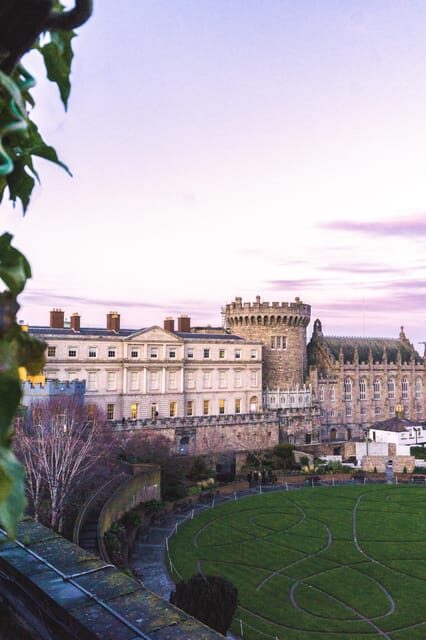
Next comes O’Connell Street, one of Dublin’s key central thoroughfares. This is where the city’s scale hits you. Buildings line the street in a way that makes it easier to understand Dublin’s mix of old influence and newer momentum.
Your guide gives context directly from street level, including explanation related to O’Connell Street, the Portal/Spire area, and surrounding views. It’s the kind of stop that works well if you like structure. You’ll walk away knowing why this corridor matters, not just that it looks important.
Why this is valuable: O’Connell Street is the spine for many visitors. When you understand how it ties to nearby landmarks, the rest of your trip becomes simpler—where to go next, what to look for, and how to route yourself without backtracking.
Ha’penny Bridge and the Liffey bridges story
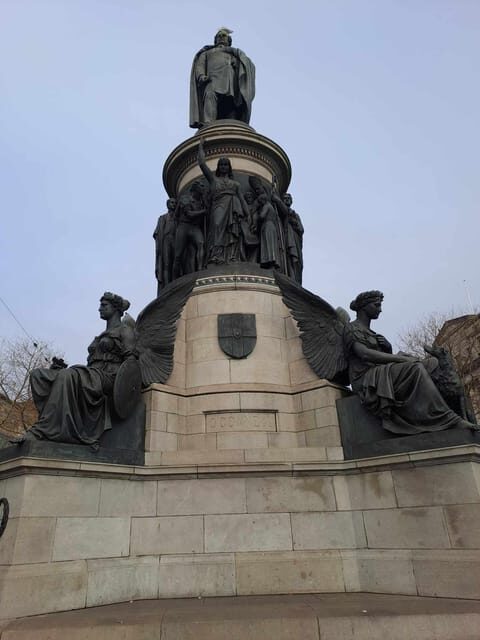
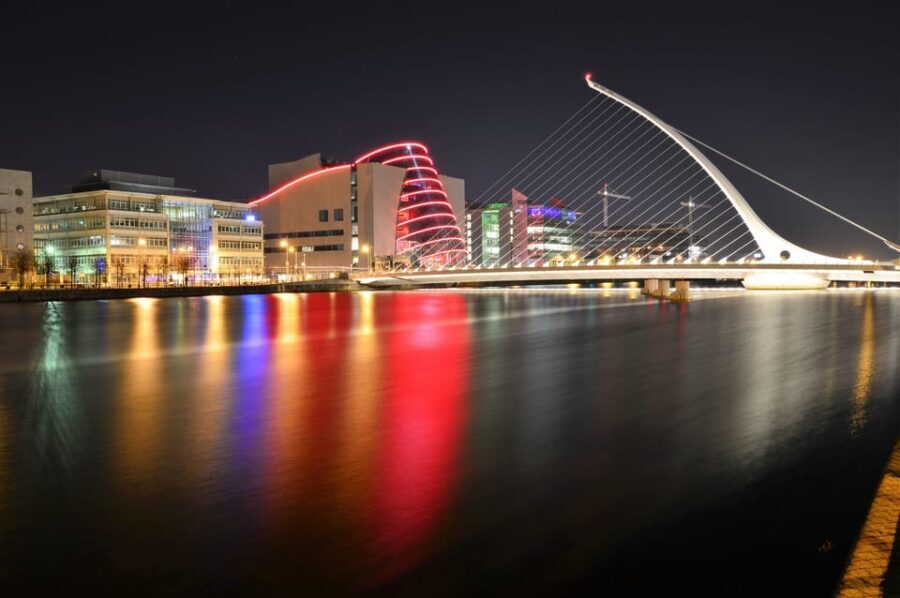
The walk moves toward the Liffey, with a focus on the river and its bridges. When you reach Ha’penny Bridge, you’re at one of Dublin’s best-known crossing points, the kind of place where the river stops feeling like scenery and starts feeling like infrastructure.
Your guide connects the visual to the bigger idea: bridges aren’t just pretty. They shape neighborhoods, movement, and how the city grew. Even though you’re moving quickly, the explanations help you “read” the river’s role as the city’s connector.
This is also a photography-friendly segment. You get a chance to pause on a classic view point and understand what you’re seeing before you turn the corner and keep going.
The GPO Museum stop: a building with public meaning
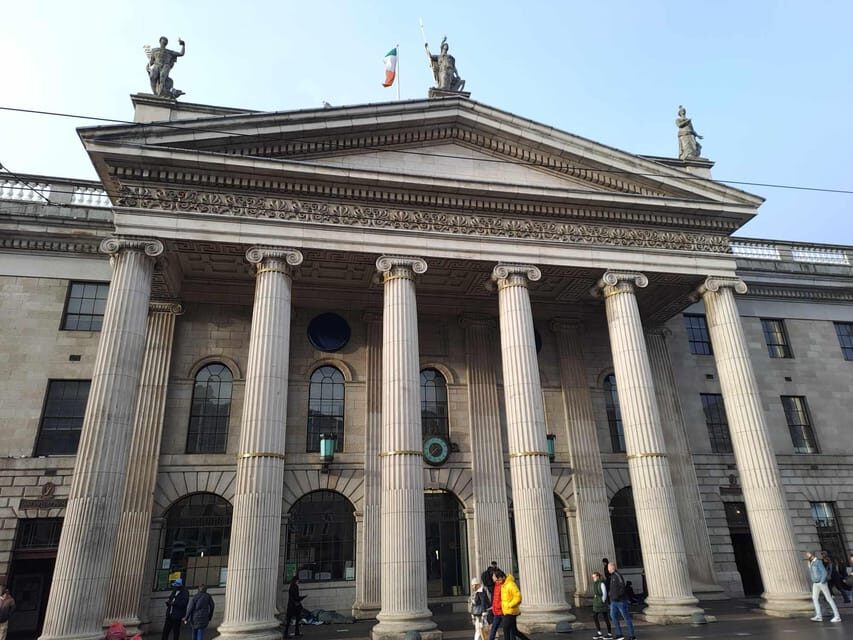
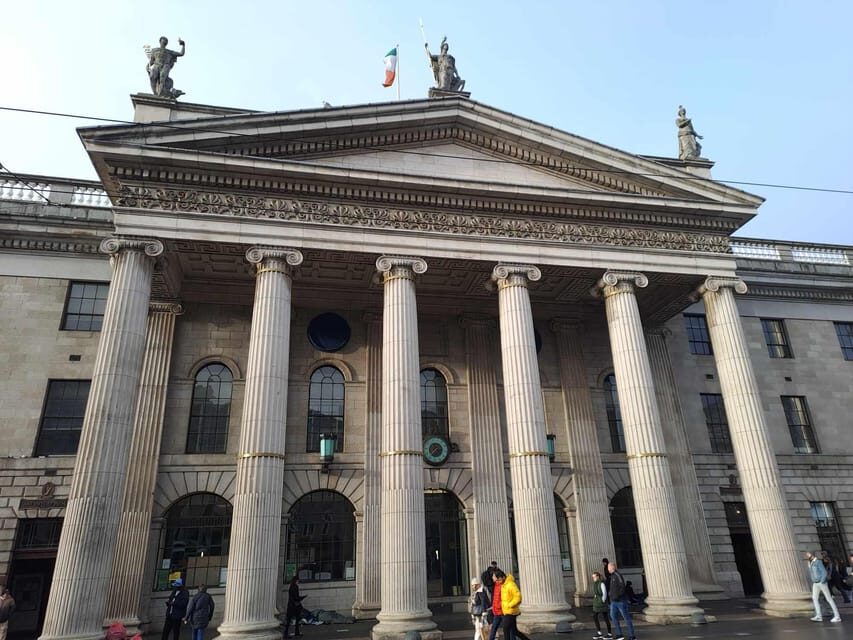
You’ll then spend time at the GPO Museum, Dublin. This is one of the walk’s strongest learning stops because the building is widely recognized, and your guide uses it to explain the history behind what you’re looking at.
Even without going inside, you can still grasp why a landmark like this matters to the identity of the city. The guide provides historical and cultural context right outside, keeping things flowing with the walking pace. Expect explanations on the major building presence, not just surface-level trivia.
Why it works: A lot of city tours toss you into the next photo spot. Here, you slow down just enough to connect the architecture to Dublin’s story, so the day doesn’t become a checklist.
Temple Bar District: culture at street level
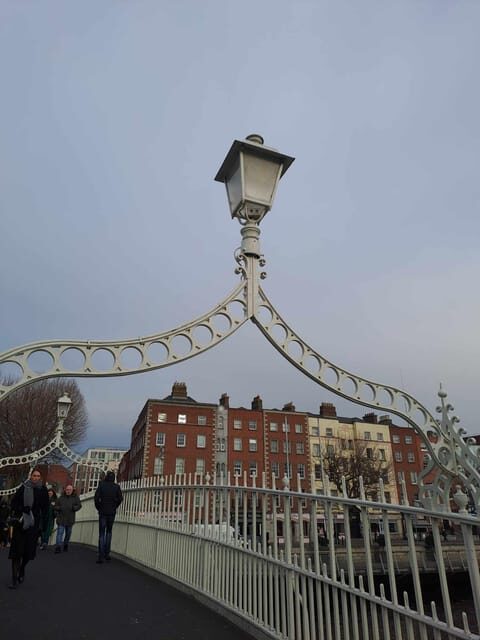
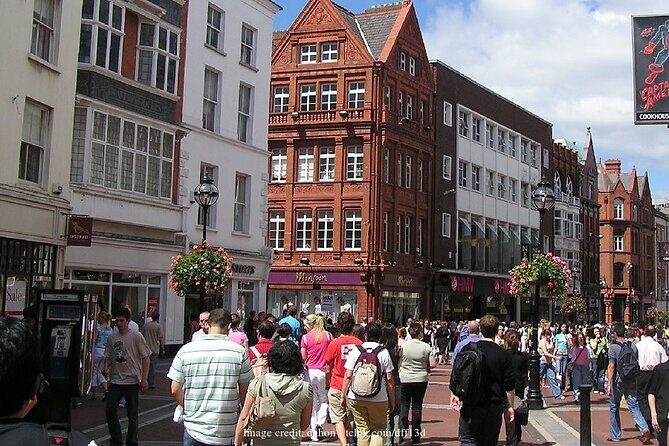
Then you hit Temple Bar District, where the mood of Dublin changes. This is where the walk brings in Irish spirit and culture in a practical way: you’re learning about the area while walking through it, not reading about it later.
Your guide shares what the Temple Bar area represents and explains its significance as a cultural hotspot. It’s a useful counterbalance to the more solemn stops earlier. Even if you’re not planning to spend your evening there, you’ll understand why people go.
One more bonus: your guide’s humor and patience are repeatedly praised in feedback, and that kind of delivery makes a lively street stop easier to enjoy without getting overwhelmed by crowds or noise.






A couple of short side stops that add context
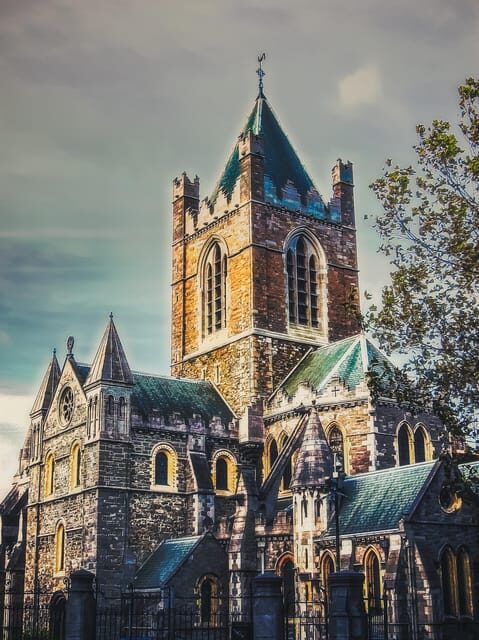
Between the big name landmarks, you’ll get a few short, guided context pauses. The tour includes additional stops labeled as side moments (sometimes described as surprise stops) where the guide fills in connections between major sites.
These moments matter more than they seem. They help you connect dots—like how one area’s cultural meaning ties to another area’s political or religious importance. The tour is designed so you’re not walking blindly from one famous building to the next.
If you like tours that feel like a guided story rather than a set of coordinates, this structure will suit you.
Christchurch Cathedral from the outside
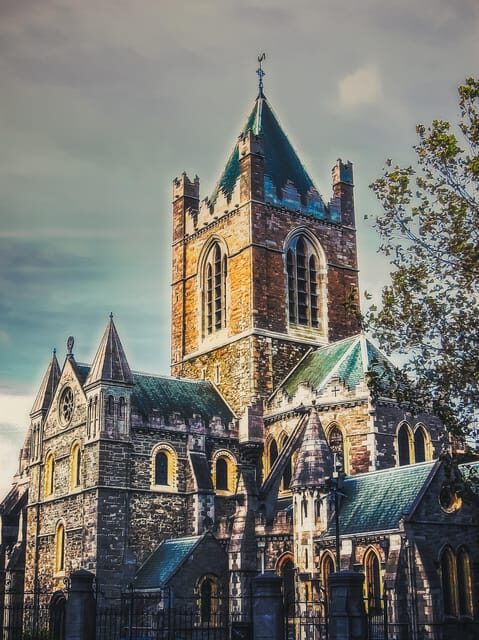
Next on the route is Christchurch Cathedral. You’ll view it from outside, with your guide explaining its role and significance in Dublin’s story. Even if you don’t enter, a cathedral stop still gives you plenty to work with: scale, position in the city, and the visual language of religious architecture.
This is also a good moment to slow down mentally. After Temple Bar’s energy, the cathedral feels like a different volume of Dublin. The explanations help you see it as more than an impressive facade—something that shaped the city’s identity in a practical, day-to-day way over time.
Tip: keep an eye on how surrounding streets frame the cathedral. A guide-led outside view is often the best kind for noticing alignment and placement.
Dublin Castle and the medieval power story
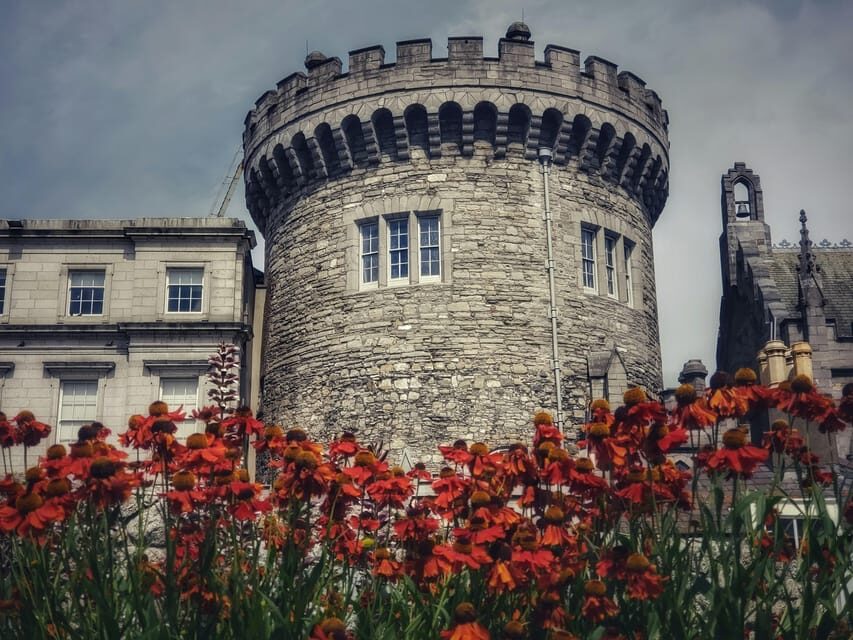
Then comes Dublin Castle / Medieval Dublin. This stop ties power, governance, and the city’s older layers together. Again, you won’t go inside. Instead, the focus stays on what you can see from the street and why those visible parts mattered.
Your guide provides information on the castle’s medieval context, helping you understand what kind of authority lived here and how that influence shaped the city layout. For me, this is the strongest “major landmark” segment because castles look like castles, but the explanations make it clear what that look stood for.
If you enjoy walking history, you’ll like the way the tour organizes themes: religion first, then authority, then back toward national identity.
St Patrick’s Cathedral: a quieter shift in tone
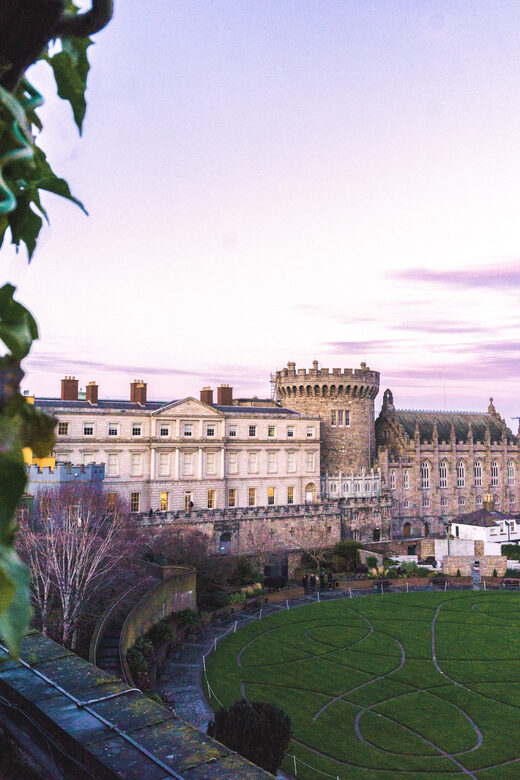
After Dublin Castle, the route reaches St Patrick’s Cathedral. This is another outside viewing stop, with guided explanations about its significance. The tour’s design gives you a clear tonal shift here: you move from medieval power imagery to a more reflective, ceremonial setting.
What I like about this placement is pacing. By the time you arrive, you’ve already built the framework for interpreting what you see. Now it’s easier to notice how the cathedral’s presence fits into the broader story your guide has been building.
If you’re traveling with someone who gets tired of constant activity, this is a natural place to breathe and take your time with photos.
Trinity College Dublin: finishing with a landmark that frames Dublin
The tour wraps up at Trinity College Dublin. This is a fitting ending because it’s a landmark that helps you understand the next layer of Dublin—education, architecture, and modern cultural identity.
Your guide provides information connected to Trinity College, so you’re not just looking at a famous institution. You’re learning what it represents and why it’s such a central piece of Dublin’s public face.
Even though the tour is only 2 hours, ending at Trinity College helps the whole experience feel anchored. It’s a place you can remember and build future plans around, like where to head for a meal or how to continue exploring nearby streets on your own.
Is this $54, 2-hour tour good value?
For $54 per person over about 2 hours, you’re paying for more than walking. You’re paying for a guided thread that connects multiple iconic Dublin highlights, with explanations delivered by a live guide in French.
If you’re short on time, this is where the value shows. You get a top-10 sweep that would take you much longer to assemble yourself—especially if you want context instead of just photos. You also don’t waste time entering buildings, because the tour keeps everything outside. That can be a real win when you’d rather spend your time learning and moving than waiting in lines.
On the flip side, if your ideal Dublin day is ticketed interiors and self-directed wandering inside major sites, this format won’t fully satisfy that itch. Think of it as orientation plus storytelling from the sidewalk.
Who this tour fits best (and who should skip it)
This walking tour is a great fit if:
- you want a fast Dublin orientation that hits famous sights in a logical flow,
- you enjoy guide-led explanations and like asking questions,
- you prefer street-level viewing over interior visits,
- you’re in town for a limited time and want maximum payoff per hour.
You may want to choose something else if:
- you’re specifically trying to tour interiors at the cathedral/castle/museum level,
- you need a slower pace with more free time at each stop.
Should you book it?
Yes, you should book it if your goal is to understand Dublin quickly and walk away with a clearer sense of how the city’s major landmarks connect. The strongest selling points are practical: a tight 2-hour route, outside-only explanations, and guides who bring energy, humor, and patience—names like Matthew come up in positive feedback, along with praise for thoughtful answers and taking time.
If you’re the type who likes learning while you move, this is an efficient, enjoyable way to get your bearings and set up the rest of your Ireland trip.
FAQ
How long is the walking tour?
The tour lasts 2 hours.
Where does the tour start?
It starts at the foot of the Spire (GPO side).
What is the tour language?
The live tour guide speaks French.
Does the tour include visits inside buildings?
No. The explanations are provided outside, and you won’t visit inside the listed places.
How much does the tour cost?
The price is $54 per person.
What places are included during the route?
The tour includes guided explanations for Christchurch Cathedral, St Patrick’s Cathedral, Dublin Castle / Medieval Dublin, GPO, Guinness Heritage, Trinity College, Temple Bar District, O’Connell Street / Bridge Portal / Spire, and the Liffey and its bridges.
Is the tour wheelchair accessible?
Yes, the activity is wheelchair accessible.
Can I cancel for a refund?
Yes. You can cancel up to 24 hours in advance for a full refund.
Can I reserve without paying right away?
Yes. It offers Reserve now & pay later, so you can book your spot and pay nothing today.
Who provides the tour?
The experience provider is MP Tour Guiding.