REVIEW · DUBLIN
Dublin Sightseeing Cruise on River Liffey with Local Guide
Book on Viator →Operated by Dublin Discovered Boat Tours · Bookable on Viator
Bridges, stories, and Dublin from the water. This short River Liffey cruise is a smart way to learn the city’s layout while you float under major crossings and landmarks. I especially like the live local guide commentary that turns architecture and neighborhoods into something you can picture. One possible drawback: at times the ride can feel short, and on a rainy day visibility drops fast.
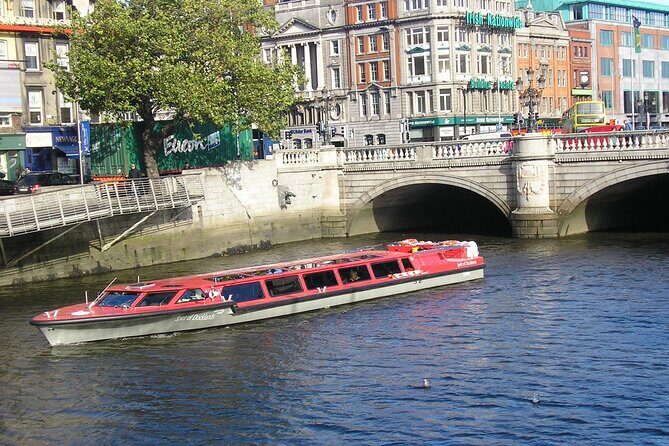
You board at Seán O’Casey Bridge on the south side of the River Liffey area, and you’ll head out from the north-side meeting point. With a small group cap of 22, the tour keeps moving without feeling like a floating bus.
If you want Dublin in one easy hit—bridges, shipyards, and the river’s changing role—this is a good match. Just know this is mostly sightseeing and narration, not a long, leisurely cruise with long stops.
In This Review
- Key highlights you’ll feel fast
- Entering the River Liffey: what you’re really buying
- Boarding at Seán O’Casey Bridge and riding a small pontoon
- Jeanie Johnston Tall Ship: the first clue that this is more than sightseeing
- Samuel Beckett Bridge: why Dublin’s modern icon looks best from below
- Ha’penny Bridge: the wrought iron stop that hits hardest for walkers and cyclists
- Dublin Docklands: the river’s job changes, and the city changes with it
- The live guide and captain vibe: humor helps you remember
- How long is enough? The 45-minute pace and what you’ll miss
- Price and value: does $27.15 make sense for what you get?
- Weather and visibility: how to plan when the sky changes
- Who should book this Liffey cruise?
- Should you book Dublin’s River Liffey Sightseeing Cruise?
- FAQ
- How long is the Dublin River Liffey sightseeing cruise?
- Where does the tour start?
- What’s included in the ticket?
- Is food or drinks included?
- Is the tour suitable for children and service animals?
- What happens if bad weather cancels the cruise?
Key highlights you’ll feel fast
- See Dublin’s bridges from the water, including the Santiago Calatrava Samuel Beckett Bridge and Ha’penny Bridge
- Jeanie Johnston Tall Ship views as you learn why it matters to Ireland’s famine history
- Docklands in a nutshell: how 18th-century shipping territory became Dublin’s newer center
- Live guide storytelling with plenty of humor in the delivery
- Small-boat feel with a max of 22 travelers and a comfortable pontoon ride
- About 45 minutes on the river, so it fits busy itineraries
Entering the River Liffey: what you’re really buying
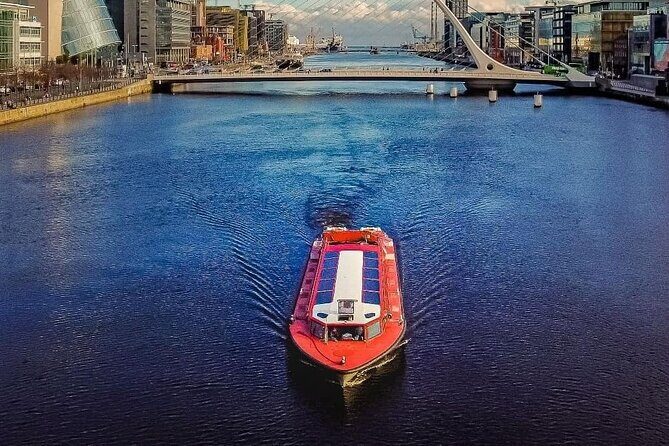
This experience is built around one simple idea: Dublin is best understood from its river. The Liffey cuts through the city, and the cruise gives you a moving viewpoint that’s hard to replicate from street level.
At about 45 minutes (approx.), you’re not signing up for a full-day float. You’re buying a concentrated orientation—how the city is arranged, what neighborhoods connect, and why certain bridges became famous. The payoff is especially good if you’re arriving with jet lag or you only have a small window before dinner.
You can also read our reviews of more boat tours in Dublin

Boarding at Seán O’Casey Bridge and riding a small pontoon
You make your own way to the meeting point on the north side of the River Liffey, starting at Seán O’Casey Bridge (in the South-East Inner City area). From there, you step aboard a comfortable pontoon and settle in for the commentary.
Two practical notes matter here:
- The group size is capped at 22, which helps keep the ride organized and keeps the guide from getting lost in the crowd.
- Because it’s a guided boat tour with live narration, you’ll want to be ready to listen while also looking out for landmarks.
If you’re traveling with kids, service animals are allowed, and children must be with an adult. And based on how people describe the trip, the boat setup tends to work well for many visitors who don’t want a lot of walking between stops.
Jeanie Johnston Tall Ship: the first clue that this is more than sightseeing
Early in the ride, you’ll cruise by the Jeanie Johnston Tall Ship, a museum connected to the Great Famine. From the river, it’s easier to grasp that this isn’t just a pretty old ship in a picture. It’s tied to real Irish history, and the guide’s job is to connect the dots between the water you’re traveling on and the story behind the ship.
This stop matters because it changes your mindset for the rest of the cruise. You start looking at Dublin’s river not as scenery, but as a working corridor—one that carried people, trade, and tragedy over time.
What to watch for:
- How the ship sits against the riverfront.
- The way the guide frames Ireland’s 19th-century hardship in plain language you can follow.
Samuel Beckett Bridge: why Dublin’s modern icon looks best from below
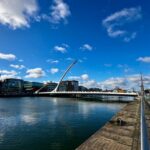
Then comes one of the most memorable moments: the Samuel Beckett Bridge, designed by Santiago Calatrava. This bridge is striking from the street, but from the water you get a better sense of scale and motion—your boat literally passes beneath it, so the structure feels more physical, less like a photo prop.
If you like architecture, this is a highlight. The guide helps you see why the bridge stands out and how it fits into Dublin’s shifting identity, especially where older industrial riverfront meets newer development.
A small practical tip: when you know you’ll be looking upward or toward a crossing, keep your camera ready early. People sometimes spend a second too long adjusting settings right when the bridge comes into view.
Ha’penny Bridge: the wrought iron stop that hits hardest for walkers and cyclists
Next up is Dublin’s oldest pedestrian bridge, the Ha’penny Bridge. It’s famous on foot, but it’s also a great river moment because you can see the bridge’s wrought iron work clearly from the angle of the water.
This is one of those stops where the narration makes sense of the details. Instead of just admiring the look, you learn how the bridge’s origin connects to Dublin’s older pedestrian crossings and the everyday movement of the city.
What makes this part work:
- It’s a smaller, tighter structure than the big modern crossings.
- It’s visually rich, so you don’t need to strain to find what to look at.
You can also read our reviews of more guided tours in Dublin





Dublin Docklands: the river’s job changes, and the city changes with it
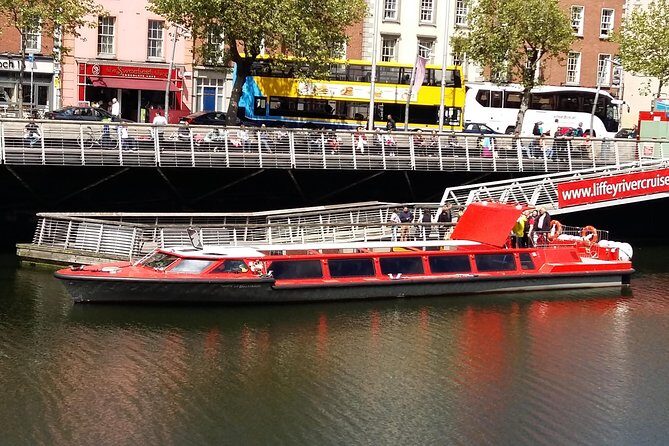
As you cruise along, you’ll spend time around Dublin Docklands, learning how the area evolved from 18th-century shipyards into something much more cosmopolitan. Even when you can’t picture the old working port in your head, the guide’s explanation helps you understand why the riverfront shifted roles over the centuries.
For me, that’s where the tour earns its keep. Many short tours only point at buildings. This one also tells you why the riverfront became the kind of district Dublin has today.
What you’ll likely come away with:
- A clearer mental map of where “old Dublin” and “new Dublin” meet.
- A better feel for the city’s growth pattern along the water.
The live guide and captain vibe: humor helps you remember
The cruise is live commentary on board, led by a local guide. That matters because the river moves fast, and without narration you’d mostly be left doing the sightseeing-without-context thing.
From the tone described in the onboard experience, the narration often lands with humor, not just dates. People mention guides like Jerry and Terry (and in other cases Gerry and Terry) and also a guide named Dave who paired stops with very clear building and city detail. The common thread is the delivery: lively, organized, and designed to keep you engaged on a short timeline.
Here’s the trade-off: because it’s narration-heavy, if you hate talking over the air or you’re hoping for a quiet, scenic float, you might find it a bit much. One way to handle that is simple: plan to enjoy the view in “chunks,” and don’t expect long silent stretches.
How long is enough? The 45-minute pace and what you’ll miss
At about 45 minutes, you see several key sights and you get a fast city primer. That’s great for first-timers, but it also explains why some people feel they wanted more time or a longer route.
In plain terms:
- You’ll get the highlights.
- You won’t get every river detail you can see on longer tours or day-long walking routes.
One smart way to use this cruise is pairing it with a second activity right after. After you’ve got the bridge-and-district context, you can choose where to spend more time on foot or via another sightseeing option. This is especially handy if you’re trying to keep one day light.
Price and value: does $27.15 make sense for what you get?
At $27.15 per person, you’re paying for three things at once: a short boat ride, live narration, and a guided “route memory” of Dublin’s river. For a 45-minute experience, that’s not bargain-basement pricing, but it does feel reasonable if you value context over just views.
You also get value through efficiency. Instead of doing separate tours or spending time figuring out where bridges sit relative to each other, you cover multiple major spots in a single outing. That’s the real reason this price can work.
If you’re on a tight budget, your biggest question should be: do you want a guided river overview, or would you rather save money for a self-paced walk? If you want guidance, the price is easier to justify.
Weather and visibility: how to plan when the sky changes
This cruise requires good weather. That’s not just fine print—the river is open, and rain can reduce what you can see clearly from the boat.
So if you’re traveling in Ireland’s changeable conditions, treat this like a flexible day-plan item:
- If the forecast looks messy, go in with the mindset that views might be limited.
- Dress for cool and damp conditions, and be ready for the fact that “rainy day” can mean blurry landmarks.
If a sailing is canceled due to weather, you’ll be offered a different date or a full refund (so you’re not stuck). That makes it easier to book without turning it into a stress project.
Who should book this Liffey cruise?
This tour is a strong fit for:
- First-time visitors who want quick city orientation
- People who learn well through live storytelling
- Travelers who prefer a boat viewpoint but still want history explained in clear, friendly terms
- Families and mixed groups, since it’s short and keeps moving
- Anyone who doesn’t want heavy walking while still getting major sights
It’s less ideal if:
- You want a quiet ride with minimal narration
- You’re hoping for a long cruise with lots of time at each location
- Weather is likely to be rough and you’re traveling on a day you can’t reschedule
Should you book Dublin’s River Liffey Sightseeing Cruise?
I’d book it if you want the fastest path from “I’m in Dublin” to “I understand the river and the big landmarks.” For $27.15, you’re getting a guided river route that connects bridges, Docklands, and Jeanie Johnston in under an hour.
Skip it only if you’re confident you’ll enjoy self-guided sightseeing more, or if you need a longer, quieter, less talk-focused experience. If you’re unsure, this one is a smart early-day activity—short enough to fit, guided enough to be useful.
FAQ
How long is the Dublin River Liffey sightseeing cruise?
It runs for about 45 minutes.
Where does the tour start?
The meeting point is at Seán O’Casey Bridge in Dublin. The activity starts there and ends back at the meeting point.
What’s included in the ticket?
You get a local guide and live commentary on board. A mobile ticket is used.
Is food or drinks included?
No. Food and drinks are not included.
Is the tour suitable for children and service animals?
Children must be accompanied by an adult. Service animals are allowed.
What happens if bad weather cancels the cruise?
The experience requires good weather. If it’s canceled due to poor weather, you’ll be offered a different date or a full refund.