REVIEW · DUBLIN
Dark Dublin: Torture, Murder & Mystery
Book on Viator →Operated by Unearthed Tours · Bookable on Viator
Dublin gets darker fast. This evening walk threads together courtyards, cathedrals, and the Smithfield area with dark history stories told by guides like Killian and Cillian, easy to spot with purple umbrellas.
I love the balance of big-name sights and lesser-known corners, so you get Dublin Castle’s courtyards and then finish with a real local murder story in Smithfield Square. I also like the small, medium-group feel, with a route that stays readable even when the subject matter turns grim.
One drawback to think about first: this is not a light night out. You’ll hear about torture, grave robbery, cannibalism, and other gruesome topics, and the tour moves at a steady pace between stops.
In This Review
- Key highlights worth your time
- A 2-hour evening walk that goes beyond the postcards
- Price and value: what $23.22 really buys you
- The meeting point: Barnardo Square and the purple umbrella system
- Stop 1: Dublin’s older streets at Barnardo Square
- Stop 2: Dublin Castle courtyards without the castle interior
- Stop 3: The 40 Steps and the included admission ticket
- Stop 4: St Patrick’s Cathedral grounds and Jonathan Swift
- Stop 5: Christ Church Cathedral’s hidden stories (from outside)
- Stop 6: St Audoen’s Church and grave robbery folklore
- Stop 7: St Michan’s Church and Billy in the Bowl
- Stop 8: Smithfield Square, where the final murder story lands
- The guides are the secret sauce: what I’d look for
- Who this tour is best for (and who should skip it)
- Practical tips to make it smooth
- Should you book Dark Dublin: Torture, Murder & Mystery?
Key highlights worth your time
- Purple-umbrella meet-up: start at Barnardo Square near City Hall, opposite the Olympia Theatre, with guides easy to spot
- Famous landmarks, story-led: Dublin Castle courtyards, St Patrick’s Cathedral area, and Christ Church Cathedral area without entering
- Smithfield Square ending: a strong final story that ties the walk to the city’s darker side
- One included ticket stop: the 40 Steps stop includes admission, while most other locations are outside/grounds
- Dark humor and sharp storytelling: guides like Kim, Stephen, Michaël, and Michael are repeatedly praised for keeping it engaging
- Two hours of focused walking: built for a compact route rather than an all-day sprint across Dublin
A 2-hour evening walk that goes beyond the postcards
If you only have one or two nights in Dublin and you’re tired of the same parade of selfies, this tour gives you a different angle on the city. You still see major landmarks along the way, but the guiding theme is the stuff that rarely makes it into a standard guidebook: murder, torture, grave robbery, and the creepy “how did that happen here?” stories that make Dublin feel layered.
The timing also matters. Starting at 5:30 pm, it’s a great option when daylight is fading and you want the streets to feel like they belong to the story. It’s a walk tour, so you’ll be moving, listening, and looking at the city at the same time—no museum time, no long ticket lines.
You can also read our reviews of more tours and experiences in Dublin.



Price and value: what $23.22 really buys you
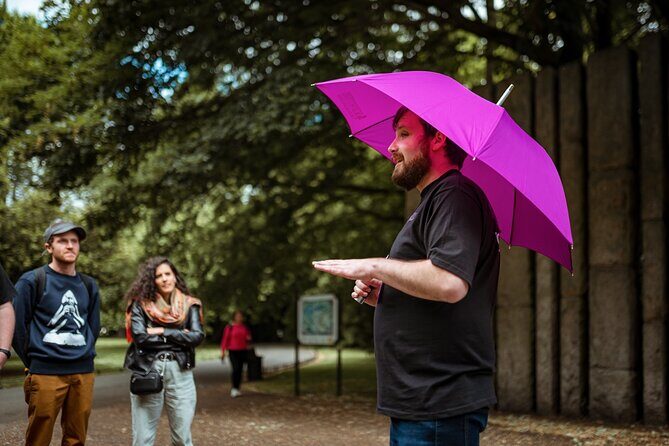
At $23.22 per person for about 2 hours, the value is mostly in the guide and the structure. You’re paying for a planned route plus a guide who knows how to connect places to events and rumors that shaped the city.
The tour is also small-group friendly, with a maximum of 30 travelers. That helps the pacing and makes it easier to ask questions when something sparks your curiosity. Add in the mobile ticket and the fact that it’s in English, and it stays pretty friction-free for visitors.
One practical point: not every stop has an entry fee. The tour doesn’t enter Dublin Castle or the churches/cathedrals. The walk-by experience matters here. Most locations are explored from the courtyards or grounds, so you’re not paying for multiple interiors. The 40 Steps stop is the one that includes admission, so you’re not wondering whether you’ll need extra money at each location.
The meeting point: Barnardo Square and the purple umbrella system
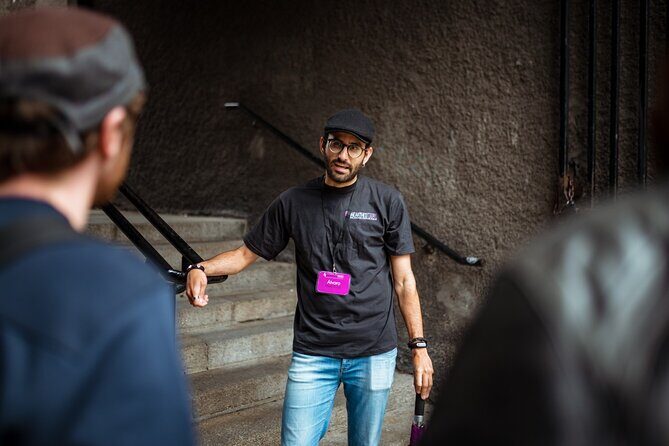
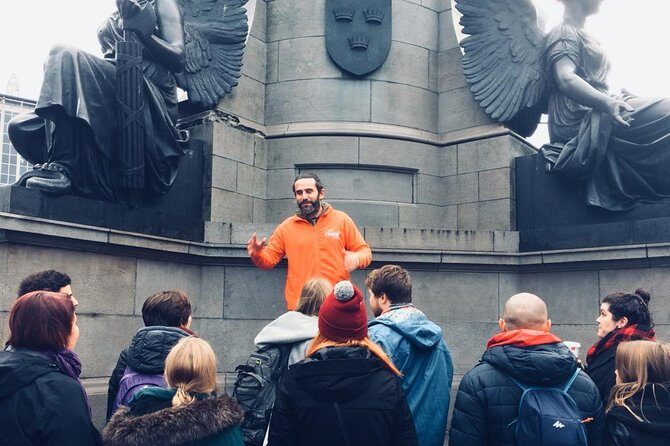
You’ll begin at Barnardo Square on Dame Street. It’s a small square by Dublin City Hall, opposite the Olympia Theatre. The guides use purple umbrellas, which is a small detail but a big sanity-saver when you’re arriving in the evening and streets start to blur.
This is also one of the reasons the tour works well for first-time Dublin visitors. You get a clear starting point that isn’t buried in a maze of side streets. Once you’re there, the tour feels like it “builds momentum” quickly, moving from the meeting square toward the city’s power-and-crime geography.
If you’re the type who hates waiting around, this helps. The tour format keeps the story going so you’re not standing still too long.
Stop 1: Dublin’s older streets at Barnardo Square
Barnardo Square is more than a meeting spot. It’s close enough to major central sights that you can orient yourself, but it also sets the mood. You start the walk already thinking in terms of “what happened here” rather than “what’s here now.”
A lot of walking tours start with small talk. This one starts with context. Expect the guide to frame how the city’s darker reputation developed, before you hit the heavier stops.
Stop 2: Dublin Castle courtyards without the castle interior
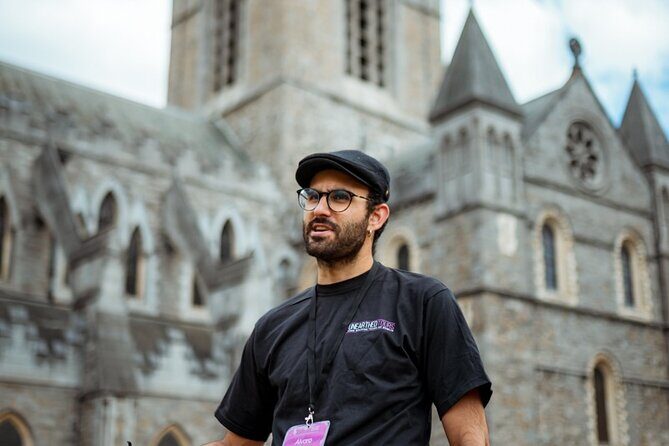
Next up is Dublin Castle, and here’s the key thing: the tour does not enter the castle. Instead, you spend time in the Lower Courtyard, then the guide talks in the Upper Courtyard about the Devil’s Half Acre.
Why I like this approach: you still get the dramatic castle backdrop, but you avoid the “rush through a big interior” feeling that some tours create. Courtyards give you open sightlines and a natural sense of scale—useful when the stories are about punishment, rumor, and fear.
Drawback check: if you came hoping for full access inside Dublin Castle rooms, you’ll be disappointed. The tour is designed for outdoor narration and historical storytelling rather than interior exploring.






Stop 3: The 40 Steps and the included admission ticket
The 40 Steps stop is where the tour leans into the most notorious stories, including cannibalism. This is also the stop where admission is included, so you won’t need to hunt down an extra ticket on the fly.
This part is a good match for true crime lovers. It’s less about architecture and more about connecting a place to a shockingly human story. It also tends to be a “turn the volume up” moment in the tour—stories go from unsettling to downright stomach-churning.
If you’re sensitive to heavy subject matter, do read that as your signal to prepare mentally. The tour style is storytelling first, not gore effects.
Stop 4: St Patrick’s Cathedral grounds and Jonathan Swift
You’ll head to St Patrick’s Cathedral, but again: you don’t enter. You’ll be taken into the grounds, where the guide unpacks the history tied to Jonathan Swift.
This is one of the smarter stops for a balanced evening. Swift’s name brings Dublin’s literary history into the mix, even while the guide keeps pointing out darker undercurrents. You’re not just learning “what people feared.” You’re learning how power, reputation, and commentary shaped public life.
Practical note: since you’re on the grounds rather than inside, you’ll likely get more atmosphere than “checklist sightseeing.” It’s easier to stay present when the group isn’t wrangling tickets and door policies.
Stop 5: Christ Church Cathedral’s hidden stories (from outside)
At Christ Church Cathedral, you also won’t go inside. The focus is on the church’s hidden history and what that means for understanding Dublin’s darker past.
This stop works best if you enjoy historical detective work: piecing together what’s visible with what’s been left out of ordinary narratives. You’ll see the church from the outside and hear how its story connects to bigger themes—authority, punishment, and survival.
It’s also a good palate cleanser after the heavier 40 Steps moment. The tone shifts, but the “what happened here” lens stays on.
Stop 6: St Audoen’s Church and grave robbery folklore
St Audoen’s Church is another outside/grounds stop, with the guide covering grave robbings and attacks from The Black Pig. That phrasing alone tells you the tone: this is Dublin history with teeth.
I like that the tour doesn’t treat these as random spooky legends. The guide frames them as part of how the city’s worst behaviors spread, and why certain areas became linked to fear.
No entry here either, so the “value” is in the story, not in an interior visit. If you’re only into official-looking museum facts, you may feel like this is more atmosphere than evidence. If you enjoy the way folklore and documented events get braided, you’ll likely enjoy this stop more than you expect.
Stop 7: St Michan’s Church and Billy in the Bowl
Next is St Michan’s Church, again without entering. The guide talks about Billy in the Bowl and also includes more recent dark events.
This is the stop that often feels like it stretches the timeline. Instead of only focusing on centuries-old crime, you get a sense that the city’s appetite for mystery didn’t vanish with time. Even if you’re not sure how much is legend versus record, the tour’s point is clear: Dublin keeps telling itself stories about death and danger.
One more reason this works: St Michan’s is associated with the kind of morbid intrigue people travel for. Even from outside, the setting fits the theme.
Stop 8: Smithfield Square, where the final murder story lands
You end at Smithfield Square—a public square near 7 Smithfield. This is the tour’s closing moment, and it comes with an “incredible finishing story” about a local murderer.
This kind of ending matters more than you’d think. Lots of walking tours end with a “thanks for coming” fade-out. Here, the final story gives you a mental bookmark. You leave thinking about how the city layout—streets, squares, and choke points—can shape what people do and how rumors spread.
If you’re heading to dinner afterward, this is a decent drop-off area. You’ll already be in a part of Dublin that feels walkable and atmospheric for the rest of your night.
The guides are the secret sauce: what I’d look for
The tour’s ratings are mostly about storytelling quality, and you can feel that in the way guides are described by name. People rave about guides like Killian, Cillian, Kim, Stephen, Michaël, Michael, Micheal, John, Keiron, and Kieran/Ciarán.
What keeps coming up:
- guides stay engaging for the full stretch (so you’re not bored halfway through),
- they manage dark humor without making it silly,
- they answer questions and keep the group focused even when rain or crowds add friction.
If you want to get the best experience, show up ready to listen. This tour is about sound and attention as much as it is about sights.
Who this tour is best for (and who should skip it)
This is a strong pick if you:
- love true crime and mystery,
- want Dublin at night without sitting indoors,
- like your history with real edge,
- are traveling in October or around Halloween vibes.
It’s also a good between-activities tour. It’s short enough that you can still do dinner and a pint afterward, and the route hits multiple key places in a compact radius on the south side.
Skip or choose carefully if you:
- want light, carefree sightseeing,
- can’t handle stories involving torture or cannibalism,
- prefer slower walking with lots of long stops.
Also keep in mind a planning expectation: this tour focuses on major south side landmarks and not the north side. If your “must-see” list is all about north Dublin sights, you might feel like you’re not getting everything you wanted. You’re trading breadth for a tighter theme.
Practical tips to make it smooth
Bring a mindset for walking and listening. The route is built for steady movement, and some parts can feel quick if your group moves slower. Wear shoes you trust. This is Dublin, and wet evenings turn cobblestones slick.
If you’re booking for a night out, give yourself a little buffer around the start time at 5:30 pm. Once you’re running late, it’s harder to catch that first moment when the guide sets the tone.
And if you’re sensitive to dark topics, decide what level of “spooky” you want before you go. This one goes farther than ghost stories.
Should you book Dark Dublin: Torture, Murder & Mystery?
If you like Dublin but want a new angle, I’d book it. For $23.22 and around two hours, you get a guided walk that hits big landmarks (Dublin Castle courtyards, St Patrick’s and Christ Church areas) while also spending real time on the city’s darker storytelling, ending in Smithfield Square with a memorable murder finish.
Book it when you’re in the mood for murder and mystery, and when you’re okay with the fact that you won’t enter the main interiors. Skip it if you want a gentler sightseeing vibe, or if dark torture-related stories are a hard no for you.
Either way, this is one of those Dublin experiences that changes how you look at the streets afterward.