REVIEW · DUBLIN
A Self Guided Walking Tour of Dublin’s Docklands
Book on Viator →Operated by VoiceMap Audio Tours · Bookable on Viator
Docklands feels like a city “from the river up.” This self-guided walking tour strings together Dublin’s maritime past and today’s Docklands changes in about an hour, using an audio narration you can play at your own pace. I like that the route is practical, with major riverfront sights you can actually see as you walk, and that you get offline access to maps and audio so you don’t burn data. One drawback: you’ll need to bring your own smartphone and headphones to listen and follow the GPS route.
If you like your walking tours with clear timing and easy-to-follow narration, this one fits well. But if you prefer a live guide to answer questions on the spot, this is more of a “press play and explore” setup than a talk-to-a-person experience.
In This Review
- Key highlights worth your attention
- Dublin Docklands, mapped by audio: from Custom House to Grand Canal Square
- Price and value: is $11.99 a fair deal for an audio walk?
- Setup and timing: what you need on your phone (and why it matters)
- From the Custom House onward: Docklands landmarks you’ll recognize fast
- Custom House and the port-era frame
- Quayside walking: old warehouses meet new development
- Labor and movement memorials: James Connolly and Liberty Hall Theatre
- Transportation hubs: Busáras and Connolly Station
- The IFSC and the Triumphal Arch
- Lift bridges, famine memorials, and seafaring reminders
- Scherzer Rolling Lift Bridges: engineering you can picture
- The Great Famine Memorial and Irish seafarers
- The Jeanie Johnston replica: emigration made visible
- Samuel Beckett Bridge and the modern waterfront
- Crossing the Liffey: Seán O’Casey Bridge plus big-event city space
- Statues, naval links, and port infrastructure details near the canal
- Admiral William Brown statue: Ireland to the Argentine Navy
- Historic Diving Bell: maintenance and the port’s real work
- Sea lock and Grand Canal Docks entrance signage
- Hanover Quay Studios and a creative finish
- How to pace it: making the 50-70 minutes feel like more
- Who this Docklands audio walk is best for (and who might skip it)
- Should you book this self-guided Dublin Docklands walk?
- FAQ
- How much does the Dublin Docklands self-guided walking tour cost?
- How long is the walking tour?
- Where does the tour start and end?
- What language is the audio available in?
- Is offline access included?
- Do I need to bring my own headphones and smartphone?
- Is this a guided tour with a person leading you?
- Is it private for my group?
- Is it easy to reach by public transport?
Key highlights worth your attention

- Offline GPS audio with maps and geodata, built for low-data travel days
- Custom House start and a forward-moving route along the Liffey and canal basins
- Docklands landmarks tied together by narration, including major bridges and memorials
- Lift bridges, famine-era memorials, and maritime tributes in one continuous walk
- A manageable 50 minutes to 1 hour 10, with flexibility to pause and look
- Tour use stays available before and after your booking date (lifetime access)
Dublin Docklands, mapped by audio: from Custom House to Grand Canal Square
Dublin’s Docklands can feel like two cities at once: the industrial port that once ran the show, and the newer commercial and creative district that fills the same streets today. This tour gives you a way to read that change while you walk, not just pass it.
You start at the Custom House on North Wall. From there, the path pushes you along the quayside and toward the Liffey crossing, then threads on through bridges, memorials, and engineering features before you finish around the Grand Canal area near Grand Canal Square and Red Sticks Dublin.
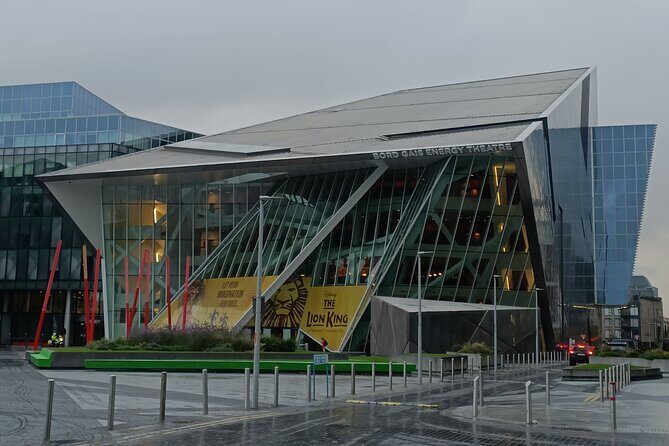
I like the way the audio narration keeps you oriented. Even when you’re looking at modern buildings—offices in the IFSC and event spaces like the Convention Centre Dublin—the story doesn’t vanish. It keeps tying what you see back to trade, labor, emigration, and the port’s working life.
You can also read our reviews of more walking tours in Dublin



Price and value: is $11.99 a fair deal for an audio walk?

At $11.99 per person, this is priced like a low-cost add-on to your Dublin day. The question is what you get for that money beyond “audio on a phone.”
Here’s the value case that makes it feel fair:
- Unlimited lifetime use before your booking date and after it. That’s useful if your plans shift or you want to repeat sections later.
- Offline access to audio, maps, and geodata. In a city, that’s often the difference between a smooth walk and a stressful data scramble.
- Self-guided GPS flexibility. You’re not stuck keeping up with a group, and you can linger at bridges, statues, and memorials.
You’re not paying for a bus ride or for a guide’s spoken-time. You’re paying for a curated route, clear directions, and audio you can replay. If you like walking with structure, it’s good value. If you only want highlights and zero walking, you might feel it’s more effort than you need.
Setup and timing: what you need on your phone (and why it matters)
This is offered in English, and it works on your smartphone with offline maps and audio. But the tour does not include the smartphone or headphones—so plan for that. If your phone battery is low, bring a charger or a battery pack.
You’ll also want to download before you head out, since the promise here is offline playback. Once you’re walking, the GPS tour approach matters because it helps you know where you are and when the narration changes.
In terms of timing, expect 50 minutes to 1 hour 10 minutes. That’s a useful window for a city break: long enough to feel like you did something meaningful, short enough to still keep your afternoon open for pubs, museums, or just wandering.
From the Custom House onward: Docklands landmarks you’ll recognize fast
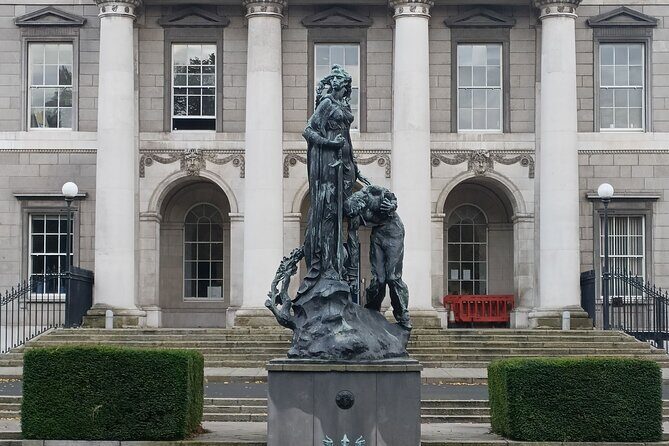
The best audio tours are the ones that give you quick anchors. This one uses several very Dublin markers early on, so you don’t spend the first part guessing.
Custom House and the port-era frame
You begin at the Custom House at North Wall. It’s a natural starting point because it’s closely tied to trade and commerce. In Docklands, that matters: lots of streets and buildings make sense only when you realize this was built for shipping, storage, and handling goods.
You can also read our reviews of more guided tours in Dublin






Quayside walking: old warehouses meet new development
As you move along the quayside, you’re watching the district change in real time. This section helps you notice how the waterfront shifted from warehouses and port infrastructure toward a modern urban district.
The potential drawback here is also practical: it’s mostly outdoor walking, and you’ll be exposed to weather. Bring a light layer and treat it like any riverside stroll.
Labor and movement memorials: James Connolly and Liberty Hall Theatre
You pass the memorial honoring James Connolly, tied to Ireland’s fight for independence and workers’ rights. Right after that, you’re guided past the Liberty Hall Theatre, an important landmark connected to Dublin’s labor history.
These are the kinds of stops that can become background if you walk them without context. The audio helps you connect the sidewalk scene to the bigger political and labor story—without forcing you to read a textbook on the move.
Transportation hubs: Busáras and Connolly Station
Then you reach the major transport zones: Busáras, followed by Connolly Train Station. This is a smart part of the route because it reflects Docklands’ role as a connector, not just a shipping area.
If you like people-watching, these stops are naturally lively—though the tour is still calm because it’s self-paced. The main thing to watch is crossing streets safely as you transition between blocks.
The IFSC and the Triumphal Arch
As you approach the IFSC (the financial hub with multinational corporations and financial institutions), you can feel the economic shift from port work to office work.
Then you come to the Triumphal Arch, which memorializes Dublin’s maritime heritage and economic prosperity. It’s a good “reset” moment: after the modern district, the narration steers you back to the port story.
Lift bridges, famine memorials, and seafaring reminders
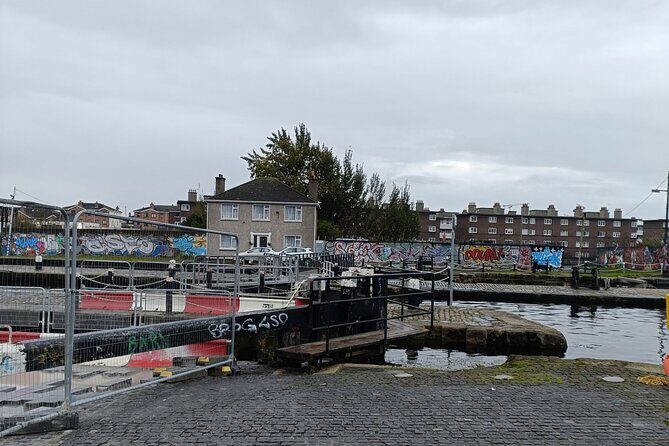
This is where the Docklands walk becomes more than a scenic stroll. You’ll hit engineering features, memorials, and maritime artifacts that help explain why the waterfront mattered so much.
Scherzer Rolling Lift Bridges: engineering you can picture
You’ll see the Scherzer Rolling Lift Bridges, described as engineering marvels that supported maritime traffic. Even if you don’t know the engineering terms, you’ll get the idea: these structures were built to manage waterway movement when ships needed access.
If you like watching infrastructure, this is one of the most satisfying parts because it’s tangible. You can stand there and actually understand the role of the port.
The Great Famine Memorial and Irish seafarers
Next you pass the Famine Memorial, a tribute tied to the suffering during Ireland’s Great Famine in the 19th century. A little later, you also pass a memorial honoring Irish seafarers who lost their lives at sea.
These are heavy topics. A practical tip: don’t rush through them. Let the audio finish the thought. The Docklands area isn’t only about ships and commerce—this part puts human cost back into view.
The Jeanie Johnston replica: emigration made visible
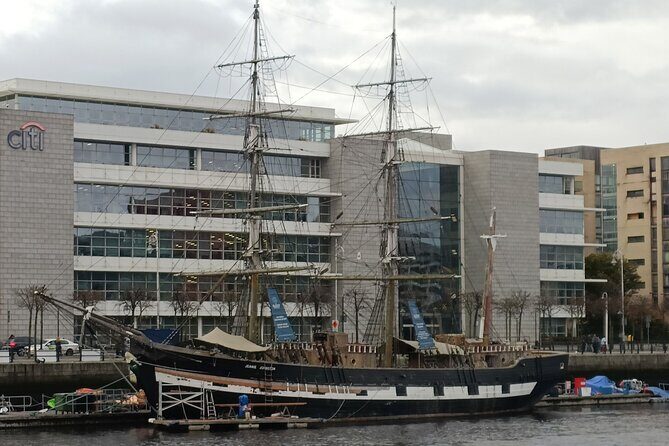
You also see a replica of The Jeanie Johnston, a ship connected to Irish emigrants traveling to North America during the Great Famine. You’ll likely find this section helps you connect the famine memorial to a lived reality—migration as survival, not just a historical headline.
Samuel Beckett Bridge and the modern waterfront
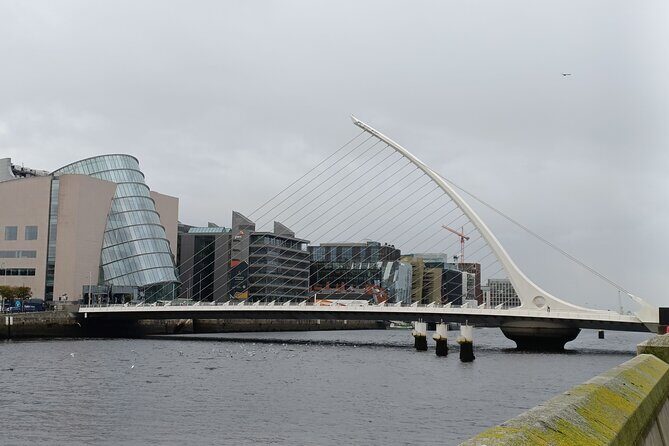
After that, you’ll cross over to the Samuel Beckett Bridge, an iconic modern bridge named after the writer. Bridges are great in audio tours because they force a clear change in perspective: you’ll look out over the skyline and the waterfront, then continue with fresh bearings.
Crossing the Liffey: Seán O’Casey Bridge plus big-event city space
The tour includes a river crossing over the Seán O’Casey Bridge, described as offering views of Dublin’s skyline and waterfront. This is a strong “midpoint” feature because you get a wider look at how Docklands fits into the city.
From there, you pass by the Convention Centre Dublin, a state-of-the-art venue hosting conferences, events, and exhibitions. Even if you’re not going into anything, it helps you understand what this area has become: a public-facing, event-ready part of Dublin.
There’s also a sequence of maritime-themed landmarks and public art that keeps the story anchored while you walk.
Statues, naval links, and port infrastructure details near the canal
As you continue, you’ll spot a mix of fact-based history and city texture.
Admiral William Brown statue: Ireland to the Argentine Navy
You’ll pass the statue of Admiral William Brown, an Irish-born naval officer who founded the Argentine Navy. It’s a surprising connection, and that’s the kind of detail that makes an audio tour feel worth it. It stops the Docklands story from being only local—it shows how Irish seafaring influence spread.
Historic Diving Bell: maintenance and the port’s real work
You’ll see a historic Diving Bell, once used for dock maintenance in Dublin’s port. This is one of those features you might never notice on a normal walk, because it’s more “infrastructure” than “attraction.” But it fits perfectly with the port narrative: ships weren’t just launched and admired; they needed care.
Sea lock and Grand Canal Docks entrance signage
Then the tour guides you by the sea lock, described as crucial maritime infrastructure regulating water levels in the docks. You’ll also pass the sign for Grand Canal Docks, which marks the entrance to Dublin’s historic canal basin.
If you’re trying to understand Dublin’s waterways, locks and basins are key. They explain how movement through the city’s water systems was controlled.
Hanover Quay Studios and a creative finish
Near the end, you pass Hanover Quay and the Hanover Quay Studios, a recording studio complex frequented by musicians and artists. That’s a neat tonal shift: from shipping and engineering to making music.
Then you end near Grand Canal Square—a vibrant public space with modern architecture and cultural attractions—and you’ll pass Red Sticks Dublin as you make your way there.
How to pace it: making the 50-70 minutes feel like more
For a tour like this, pacing is everything. The audio helps, but you still control how fast you walk.
A good rule: when you reach a memorial, stop walking for the last minute of the audio segment. That’s usually when the story lands and you’ll want a moment to absorb it.
On the bridges, slow down even if your phone says you’re on track. The views are part of why the route works. Also, bridges mean wind, and wind can make phones and headphones a bit annoying—so be ready with a snug fit.
If you’re visiting in busy tourist hours, you won’t be “stuck” waiting in a line since it’s self-guided. But you will still be sharing sidewalks, so keep an eye on safe crossing spots.
Who this Docklands audio walk is best for (and who might skip it)
This tour suits you if:
- you want an intro to Docklands that ties buildings and landmarks to stories
- you prefer self-paced exploring without a group schedule
- you like walking routes that mix architecture with memorials and engineering details
- you’re trying to travel with less data use thanks to offline audio and maps
You might want to choose something else if:
- you don’t want to rely on a smartphone + headphones
- you prefer a live guide for questions and spontaneous detours
- you only have 20-30 minutes and need a very short experience
Should you book this self-guided Dublin Docklands walk?
I’d book it if your goal is a meaningful Docklands orientation in about an hour, with audio you can replay and maps that work offline. The price is modest, and the route is packed with recognizable Docklands anchors—Custom House, major transport hubs, lift bridges, famine and seafaring memorials, and a canal-side finish at Grand Canal Square.
Skip it only if you don’t want to manage your own phone setup or you’re expecting a traditional guided tour. In the right mindset, this kind of audio walking experience turns a waterfront stroll into a connected story you can follow block by block.
FAQ
How much does the Dublin Docklands self-guided walking tour cost?
It costs $11.99 per person.
How long is the walking tour?
The tour takes about 50 minutes to 1 hour 10 minutes.
Where does the tour start and end?
It starts at the Custom House, North Wall, Dublin 1 and ends at Red Sticks Dublin on the Grand Canal.
What language is the audio available in?
The tour is offered in English.
Is offline access included?
Yes. You get offline access to audio, maps, and geodata, plus offline capability is designed to save on data usage.
Do I need to bring my own headphones and smartphone?
Yes. The tour says smartphone and headphones are not included, so you’ll need to bring both to listen and follow the GPS tour.
Is this a guided tour with a person leading you?
No. It’s a self-guided GPS tour with audio narration you play on your phone.
Is it private for my group?
Yes. It’s a private tour/activity, so only your group will participate.
Is it easy to reach by public transport?
Yes. It’s described as near public transportation and accessible from Busáras by luas and bus stops, also the Tara Street DART station. The start point is also about a 10-minute walk from O’Connell Street and 15–20 minutes from College Green.