REVIEW · DUBLIN
Turtle Bunbury’s Dublin: A Self-Guided Audio Tour from a Celebrated Author
Book on Viator →Bookable on Viator
Dublin is a city that talks back. This self-guided audio walk stitches together St Stephen’s Green to Trinity College with stories you can follow on the move. I love the easy-to-use VoiceMap experience, and I also like that you get offline access to the audio and maps so you’re not hunting for signal.
What makes it especially interesting is the cast of characters the route spotlights, from Wolfe Tone to Oscar Wilde, plus a few surprising historical links you don’t expect to find on ordinary sidewalks. The main drawback is timing: parts of Trinity College—and the area around the Book of Kells—were listed as closed until August 10, and that status could change when you go.
In This Review
- Key highlights at a glance
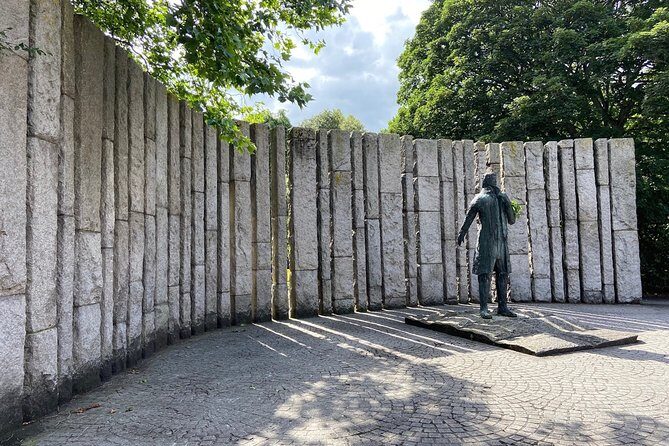
- Starting at St Stephen’s Green: Edward Delaney’s Famine Memorial to your first stories
- Walking past Hugenot Cemetery and local landmarks that feel lived-in
- Leinster House and the slower section toward Merrion Square
- Oscar Wilde statue and Oscar Wilde House: brief stops, big payoff
- Kennedy’s Pub and the Merrion Hotel area: when the route smells like a pause button
- Entering the Trinity College grounds: what to expect when buildings are closed
- Book of Kells outside stop and Parliament Square ending: a strong finish
- The stories you’ll hear: from Vikings-to-Normans to names you might not expect
- How the self-guided format works in real life (VoiceMap + offline)
- Itinerary length: why 1 hour to 1 hour 15 minutes is a sweet spot
- Price and value: $7.99 for a lifetime of audio structure
- Who this audio tour suits best (and who might want a different plan)
- Practical tips before you start near St Stephen’s Green
- Should you book Turtle Bunbury’s Dublin audio tour?
- FAQ
- How much does the Turtle Bunbury’s Dublin audio tour cost?
- How long is the audio tour?
- Where does the tour start and end?
- What app do I use to listen?
- Can I download the audio and maps for offline use?
- Do I need tickets or entrance fees for sights along the route?
- Do I need my own smartphone and headphones?
- Are parts of Trinity College and the Book of Kells accessible?
- What happens if I cancel my booking?
Key highlights at a glance

- VoiceMap with offline audio and maps, so you can keep walking without depending on cell coverage
- A tight, walkable route from St Stephen’s Green to Parliament Square, with stops that make sense as a sequence
- Trinity College Dublin narration, even if you can’t enter the buildings when they’re closed
- Oscar Wilde moments built into the stroll, including brief stops for the statue and house
- A storytelling mix that ranges across Vikings to figures tied to Ireland, France, Mexico, and more
Starting at St Stephen’s Green: Edward Delaney’s Famine Memorial to your first stories
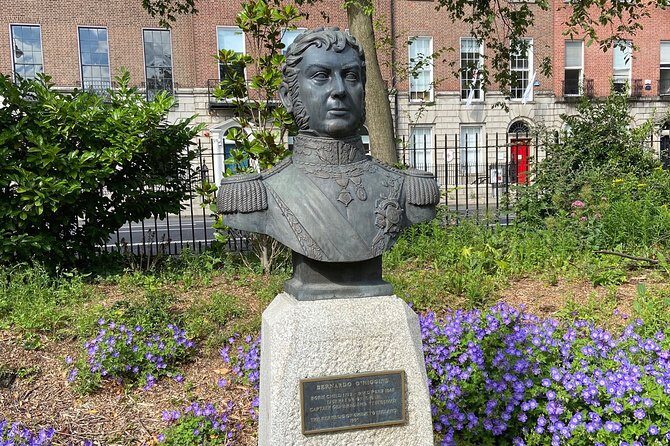
The tour begins near Edward Delaney’s Famine Memorial at 42 St Stephen’s Green. It’s a solid place to start because the area gives you a clear sense of the direction you’ll be heading, and you’re already in the middle of things Dublin does well—public space, foot traffic, and historic layers.
One thing I like about this kind of start is that it’s not random. You’re kicked off in a well-known civic pocket, which makes the first few minutes feel smooth instead of guessy. Then the audio gets rolling with the kind of framing Dublin is famous for: 1,200-plus years of change, told block by block.
You can also read our reviews of more guided tours in Dublin



Walking past Hugenot Cemetery and local landmarks that feel lived-in
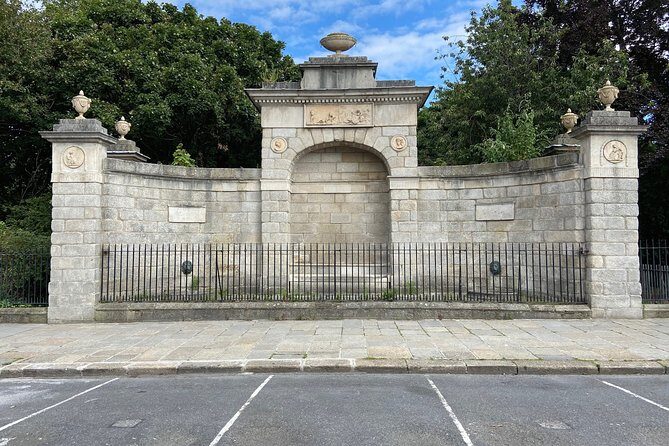
After you get going, you’ll pass the Hugenot Cemetery and then glide by spots like O’Donoghue’s and the Merrion Hotel. This is the part of the route where the walking stays comfortable and the narration helps you “read” what you’re seeing instead of just recording it.
What’s valuable here is the mix of landmark scale and street-level detail. A cemetery signals deep time. A well-known pub signals everyday life. Putting them in the same audio thread helps you understand Dublin as a city that keeps moving while old stories stay in place.
At a glance, the tour also threads through major government and museum-adjacent streets. That means you’ll catch sight of the Department of the Taoiseach and the National Museum of Ireland along your way, even though you aren’t there to enter anything. You’re using the walk itself as your museum ticket.
Leinster House and the slower section toward Merrion Square
As you move along, you’ll pass Leinster House and then come through the area with a playground before entering Merrion Square. This is a key design choice. Merrion Square is a classic “recenter” point—once you’re there, you know you’re crossing from fast-moving city edges into a more open, easier-to-follow section of the route.
The practical win: it breaks your attention span. If you’ve ever tried to do too much in Dublin at once, you know the danger zone is when your feet are fine but your brain is tired. This route keeps you interested with frequent audio cues and short visual checkpoints, rather than forcing you to march through one long unbroken stretch of narration.
Oscar Wilde statue and Oscar Wilde House: brief stops, big payoff
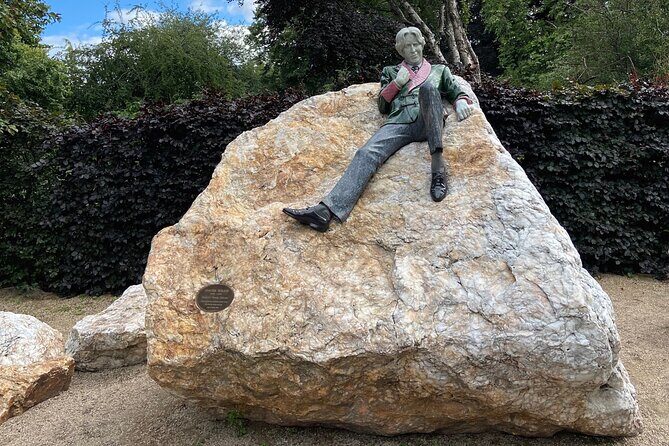
The tour stops briefly at the Oscar Wilde Statue, then again briefly at the statue, and later you pass by Oscar Wilde House. Those quick touches are exactly the sort of thing that makes a self-guided tour work well.
You’re not committing to a long museum stop. You’re not standing around waiting for a guided group. You’re just getting an on-the-spot story cue, then you keep walking. If you like Dublin for its street corners and the way names stick to buildings, these stops give you that hit without draining your afternoon.
Kennedy’s Pub and the Merrion Hotel area: when the route smells like a pause button
Between the Oscar Wilde sections and your approach toward Trinity College, you’ll pass by a pharmacy and then Kennedy’s Pub. This is where I’d call the route thoughtfully paced. It’s not trying to rush you through the city; it’s setting you up for a natural pause at a comfortable point.
Even though food and drink aren’t included, having a pub on the route is helpful. If your legs are good, you keep going. If your legs need mercy, you can stop where other locals stop.
You can also read our reviews of more tours and experiences in Dublin




Entering the Trinity College grounds: what to expect when buildings are closed
The tour then goes through the college grounds. Here’s the important reality check: Trinity College Dublin was listed as closed to the public until August 10 to prevent the spread of coronavirus, and the closure could reopen sooner or later—or close again after reopening. The same timing note applies to the Book of Kells area.
So what does that mean for you? Plan to use the narration as the main event. You may get the campus atmosphere from outside and between accessible viewpoints, but you should assume you won’t have full access to indoor spaces if closure rules are in effect.
Still, the route is built to be worth it even with limited entry. You’ll pass by the Museum Building and the Berkeley Library, and the audio is there to connect those visuals to the larger stories you’re hearing. Think of it as “context-first sightseeing,” not museum-hopping.
Book of Kells outside stop and Parliament Square ending: a strong finish
The tour stops briefly outside the Book of Kells. Like the college grounds, that listed closure could affect what you can see directly, but the stop is designed as a clear endpoint marker. Then you pass by Parliament Square and the tour ends there.
Ending at Parliament Square is smart. It’s a recognizable civic moment where you can easily transition into your next plan—whether that’s another walk, a museum elsewhere, or just wandering without feeling like you’re lost.
Even if the Book of Kells area is closed, you still get a satisfying narrative arc. The tour doesn’t strand you deep inside a restricted zone. It returns you to open space where Dublin keeps doing what it does best: making the city itself feel like a guide.
The stories you’ll hear: from Vikings-to-Normans to names you might not expect

The narration isn’t just about famous buildings. It’s structured around people and connections—some expected, some delightfully odd.
You’ll hear about characters such as Bernardo O’Higgins, Maurice Fitzgerald, Wolfe Tone, and Paddy Hitler, plus how the tour connects Vikings who became Normans, Frenchmen who fought for Ireland, and Irishmen who fought for Mexico. That last trio of themes is a big part of the tour’s appeal: it pushes you to think of Irish history as part of a wider network, not an isolated tale.
I also like that the tour includes major Dublin literary gravity with Oscar Wilde in the middle of the route. It prevents the history from feeling like a dry lecture. You’re walking, and the voices shift from politics and conflict to names that belong to culture.
How the self-guided format works in real life (VoiceMap + offline)
You use the VoiceMap app (Android and iOS) and get lifetime access to the tour in English. You also get offline access to audio, maps, and geodata, which is a big deal in Dublin where cell service can be fine in some pockets and flaky in others.
To make this kind of tour work smoothly, you’ll want to do two things:
- Download ahead of time so everything is ready offline.
- Bring a phone charge level you can trust, because GPS tracking and playback both draw power.
One more practical note: smartphone and headphones aren’t included. That’s normal for self-guided audio tours, but it’s worth planning for. If you show up with low battery and no headphones, you’ll still see the city—but you’ll lose the point of this experience.
Itinerary length: why 1 hour to 1 hour 15 minutes is a sweet spot
The tour is listed at roughly 1 hour to 1 hour 15 minutes. That timing matters because it lets you fit it into a busy day without surrendering half of your plans to one attraction.
It’s also a good match for the city’s walking rhythm. Dublin streets reward you for taking quick looks around, but you don’t want to be trapped on a schedule. This route keeps you moving while still giving you brief pause points—like the statue stops and the Book of Kells outside stop—so you can reset mentally.
If you’re doing other sights around St Stephen’s Green and Trinity, this tour can work like a “connective tissue” activity that links what you see to why it matters.
Price and value: $7.99 for a lifetime of audio structure
At $7.99 per person, this is priced like a low-commitment introduction rather than a full-day paid guided experience. What makes the value feel real is the combination of:
- Lifetime access (you can return and reuse it later)
- Offline audio and maps (so you’re not paying for convenience twice)
- A coherent route from St Stephen’s Green to Parliament Square with clear stops
You aren’t paying for museum tickets, since those are not included. You also aren’t paying for transportation or food. In other words, you’re paying for the narration and the routing.
For me, that’s the right kind of value in a city like Dublin. If you like wandering and you want a way to keep your bearings fast, this price is small compared to the cost of one major attraction entry. And because it’s reusable, you can spread the cost over future visits.
Who this audio tour suits best (and who might want a different plan)
This tour is best for you if you want:
- A guided-feeling walk without booking a timed ticket
- A short route with built-in story stops and logical pacing
- Offline audio you can rely on throughout the walk
- History that’s told through people and connections, not just dates
It may feel less ideal if you’re expecting full access to Trinity College interiors. Since the grounds and Book of Kells area were listed as closed until August 10 (with uncertainty around reopening), you should treat this as an “outside + audio” plan rather than a guaranteed indoor visit.
Also, if you need a lot of handholding, remember this is self-guided. You’ll be using the app to steer yourself.
Practical tips before you start near St Stephen’s Green
A few small choices can make a big difference with audio walking tours:
- Wear comfortable shoes. The route is short, but you’re still walking through a city.
- Download the audio and map data before you leave wifi or signal coverage.
- Bring your own headphones and a smartphone you trust.
- If Trinity or the Book of Kells area is closed when you go, don’t treat it as a failure. Use the audio stops as your payoff and pivot to nearby streets or a nearby pub.
Should you book Turtle Bunbury’s Dublin audio tour?
I’d book it if you want a structured, low-cost way to connect the dots between Dublin landmarks, Oscar Wilde spots, and wider historical threads. At $7.99 with lifetime access and offline functionality, it’s a strong value for a one-day plan that still leaves room to wander on your own.
Skip or rethink it if your top priority is guaranteed indoor access to Trinity College or the Book of Kells. This route is designed to work with what you can see from the walk, and closure rules could limit what’s physically accessible on the day you go.
FAQ
How much does the Turtle Bunbury’s Dublin audio tour cost?
The tour costs $7.99 per person.
How long is the audio tour?
It’s listed at about 1 hour to 1 hour 15 minutes.
Where does the tour start and end?
It starts near Edward Delaney’s Famine Memorial at 42 St Stephen’s Green, Dublin 2, and ends at Parliament Square.
What app do I use to listen?
You use the VoiceMap app on Android and iOS.
Can I download the audio and maps for offline use?
Yes. Offline access is included for audio, maps, and geodata.
Do I need tickets or entrance fees for sights along the route?
Tickets or entrance fees are not included, and the tour is designed as an audio walk rather than a museum ticket package.
Do I need my own smartphone and headphones?
Yes. A smartphone and headphones are not included.
Are parts of Trinity College and the Book of Kells accessible?
At the time this tour info was published, Trinity College and the area around the Book of Kells were listed as closed until August 10, and reopening timing could vary. You should be prepared for closure when you visit.
What happens if I cancel my booking?
This experience is non-refundable and cannot be changed for any reason.