REVIEW · DUBLIN
Macabre, Ghostly & Bloody Walking Tour
Book on Viator →Operated by Yellow Umbrella Tours Ltd · Bookable on Viator
Dublin gets darker after sunset. This Macabre, Ghostly & Bloody Walking Tour strings together lesser-known streets and famous landmarks with grisly stories that feel made for an evening stroll. I especially like the way the guide blends dark scenes with clear local context, and I appreciate that you’re not paying for stop-by-stop entry. One possible drawback: if you hate gore and grim legends, this is not the soft version of Dublin history.
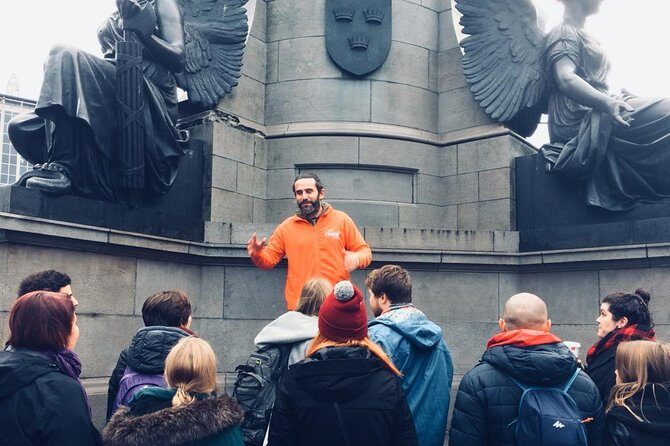
The setup is simple and easy to handle: it runs for about two hours starting at 6:00 pm, with a small group capped at 25. In the past, guides like Rob and Peter have been singled out for enthusiasm and professionalism, and one guide was noted as having literally written the tour—so the storytelling tends to feel tight, not improvised. You’ll finish near Christchurch Cathedral and the Temple Bar area, which makes it convenient to keep the night going.
In This Review
- Key things to know before you go
- Price and what $20.43 really buys you
- The 6 pm timing: why evening works for macabre history
- First stop at The Spire: setting the tone fast
- General Post Office and the Death of Cú Chulainn
- Wolfe Tone Park: grave robbers and Arthur Guinness’s wedding venue
- Oxmantown and Viking history with a gorier edge
- Father Matthew Bridge: the man-eating rats story
- St. Audoen’s Church and the Black Death quarantine cages
- Fishamble Street: the brothel keeper and death by fire
- St. Michan’s Church: mummified corpses and a legless serial killer
- After the tour: finishing near Christchurch and Temple Bar
- Who this tour is best for (and who should skip it)
- Quick FAQ
- FAQ
- What is the duration of the Macabre, Ghostly & Bloody Walking Tour in Dublin?
- Where does the tour start?
- What time does the tour begin?
- Where does the tour end?
- How much does the tour cost?
- Is the tour offered in English?
- Do I need to buy separate tickets for the stops?
- Is there a maximum group size?
- Is a mobile ticket provided?
- Are service animals allowed?
- What is the cancellation policy?
- Should you book this tour?
Key things to know before you go

- Small group size (max 25) keeps the tour from feeling like a cattle herd.
- Evening start at 6:00 pm is ideal for ghost stories and dramatic street mood.
- Professional guide storytelling is a big reason this tour scores so highly.
- Multiple famous Dublin stops show up alongside the less-visited streets between them.
- Dark themes with humor seem to be part of the formula, not an afterthought.
- Mobile ticket, English-only makes last-minute logistics pretty painless.
Price and what $20.43 really buys you
At $20.43 per person for roughly two hours, this tour sits in the sweet spot for Dublin. You’re paying for two things: a professional guide and a route that links together several standout city points. Each listed stop shows admission ticket free, which matters because it keeps the day from turning into a pile of separate entry fees.
The value is also about friction. You don’t have to figure out what connects Cú Chulainn to plague quarantine cages or why Viking-linked rituals show up around Oxmantown. The guide does that work in a way that stays walkable and chronological enough to follow without slowing everyone down.
If you’re the type who wants your money to go toward a person (not a collection of unrelated facts), this is a good fit. The reviews are also strongly positive—100% recommendation with a 4.9 rating—so the product seems to land well for most people.
You can also read our reviews of more walking tours in Dublin

The 6 pm timing: why evening works for macabre history
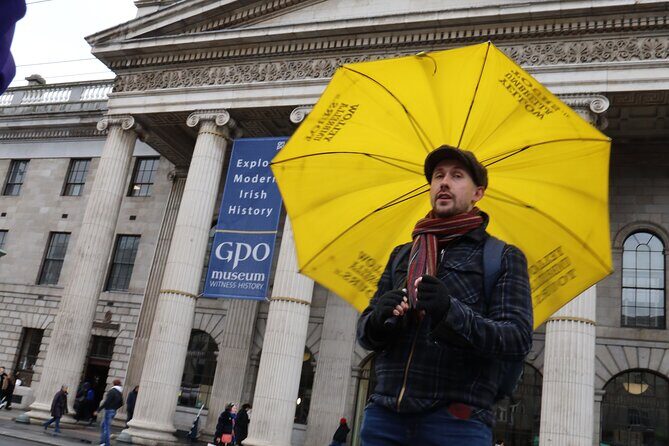
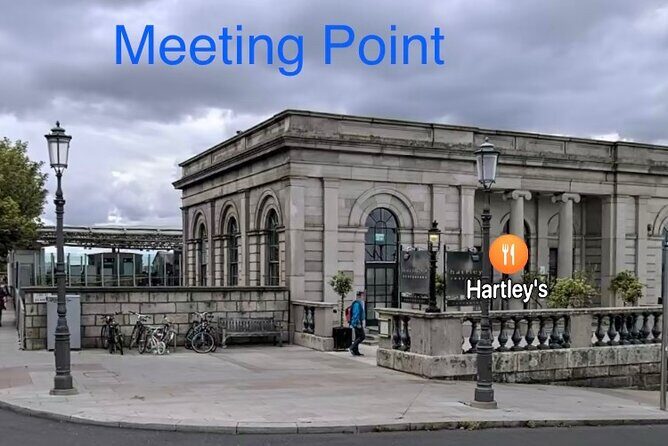
This tour starts at 6:00 pm at the Spire on O’Connell Street Upper, and that timing isn’t random. Dublin’s center gets that late-day blend of street activity and fading daylight, which suits stories about brothels, serial-killer legends, plague quarantine, and people being eaten by rats. Even if you’re not scared easily, the mood helps the stories click.
You also get a practical win: two hours is short enough that you can still eat dinner afterward without feeling like you lost half your day. And since the ending point is near Christchurch Cathedral and Temple Bar, you can roll straight into the next part of your evening with less hassle.
One thing to plan for: you’ll be outside for the full experience, and Dublin evenings can swing cool and damp. Wear shoes you trust, and if you have one of those days when you hate carrying stuff, think light layers.
First stop at The Spire: setting the tone fast
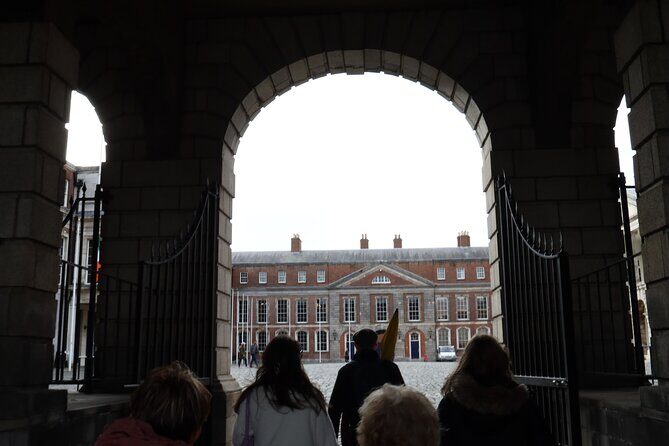
You meet beside the Spire, the tall 120-metre landmark in Dublin’s center. That’s a smart choice because it gives you a clear starting point where everyone can gather without hunting down a back-alley clue.
This first phase usually functions as a warm-up. You’re not yet in the darkest topics; you’re getting oriented and handed the tour’s style: the combination of macabre detail, city history, and pacing that keeps moving. It’s the moment you learn what kind of tone to expect. If the guide’s humor and energy match your taste, the rest of the walk will feel like a smooth sequence rather than a forced march.
Tip: Arrive a few minutes early. Dublin sidewalks can be busy at this hour, and you’ll want time to settle in before the group starts.
General Post Office and the Death of Cú Chulainn
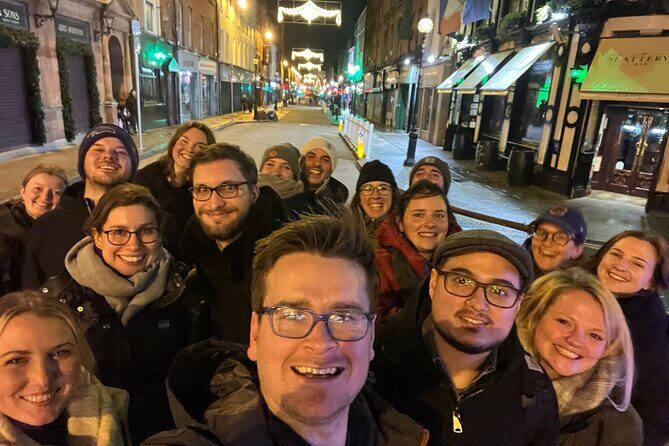
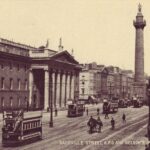
Next comes the An Post General Post Office, where you view a statue tied to the story of the Death of Cú Chulainn. If you only know Cú Chulainn as a name from school or mythology trivia, this stop is one of the best places on the tour to ground the darkness in Irish legend.
Why it’s valuable: it reminds you that macabre storytelling in Dublin isn’t only about crime. It’s also about myth, death, and how stories travel through time and get tied to real locations. You’re in a major public building, which makes the lesson land: legends don’t stay trapped in books; they get anchored to street corners.
If you’re someone who likes connecting famous places to older stories, this stop will feel like a turning point. It also sets up the rest of the route, where the themes shift from myth to plague to crime.
Wolfe Tone Park: grave robbers and Arthur Guinness’s wedding venue
From there, the tour moves into Wolfe Tone Park, where the focus is Victorian-era grave robbers and the wedding venue of Arthur Guinness.
This stop works well because it connects two kinds of dark: the sensational kind (grave robbers) and the everyday kind (a wedding site). That contrast is the point. Dublin’s past doesn’t march in one mood. Places you’d call normal today often had far stranger roles before.
What you should expect here is story context: who these people were in the broader social world, and how the city’s attitudes could turn from ceremony to horror without changing the setting. That makes the tour feel more like “how a city thinks” than “just a list of creepy facts.”




Oxmantown and Viking history with a gorier edge
The walk then takes you to Oxmantown, outside the old fruit and vegetable market. Here you get the history of Vikings in the area, plus the gorier aspects of Viking ritual.
This is a stop for people who want more than generic Viking talk. Instead of focusing only on raids and ships, it leans toward the uncomfortable side of ritual and violence. If you’re the kind of traveler who reads the gray-area parts of history, you’ll likely enjoy it.
A practical consideration: this stop may not be for you if you prefer your violence implied rather than described. Since the tour’s entire premise is macabre, the guide doesn’t soften the tone when the subject turns grim.
Father Matthew Bridge: the man-eating rats story
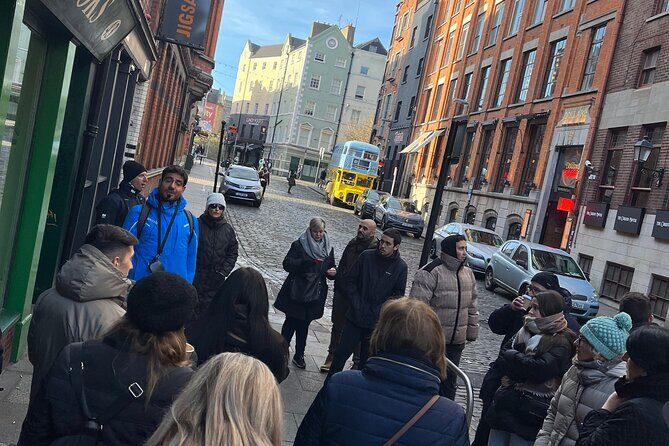
Outside Father Matthew Bridge, the tour tells the story of a soldier devoured by man-eating rats. It’s one of those legends that feels like it belongs in folklore, even if you’re not trying to judge truth versus myth in the moment.
Why it matters: it shows how cities explain suffering. During rough times—war, breakdown, overcrowding—people look for meaning, and stories like this become a way to talk about fear. You’re also hearing it in a real urban setting, which makes it stick.
This stop also signals that the tour isn’t just about old monuments. It’s about human-scale horror: the kind that would have made everyday life feel unsafe.
St. Audoen’s Church and the Black Death quarantine cages
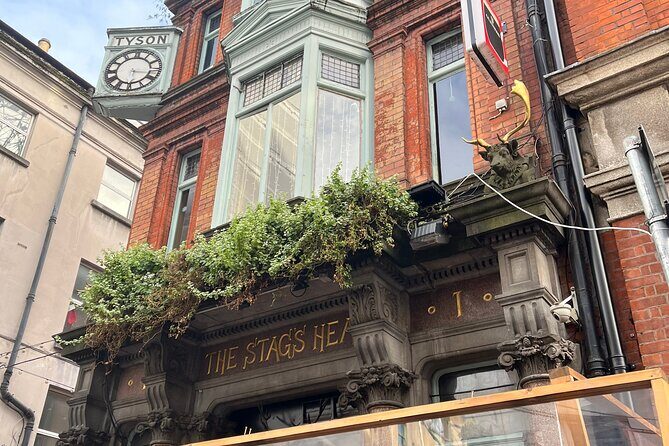
St. Audoen’s Church is where you see quarantine cages at the old city walls tied to the Black Death. This is one of the more heavy-hitting stops because it swaps sensational crime for real epidemic history.
What you can take from it: you get a sense of how Dublin tried to control disease using the tools it had. Even if you’re not a history nerd, the physical idea of quarantine cages helps you imagine what the city’s mindset might have been when fear spread faster than remedies.
If you’re worried the tour will only be campy spooky, this is the stop that balances the tone. It brings it back to human reality: disease, isolation, and the desperate logic of survival.
Fishamble Street: the brothel keeper and death by fire
Then comes Fishamble Street, where the story centers on an infamous brothel keeper and her death by fire at the stake.
This is the “bloody chapter” stop for many people, and it also shows why this tour works as a walking route. You move from plague survival logic into moral panic, punishment, and the kind of public storytelling that cities used to control behavior.
You might find yourself thinking about gender, power, and how quickly societies decide who deserves shame. The guide’s job here is to keep it from turning into pure shock value, by tying the story back to Dublin’s streets and social tensions.
As a heads-up: if you’re sensitive to details involving punishment and burning, this stop is likely the hardest one. It’s not graphic-for-the-sake-of-it, but it’s still squarely in the tour’s macabre lane.
St. Michan’s Church: mummified corpses and a legless serial killer
The final thematic stop is St. Michan’s Church, where you learn about mummified corpses in the cellar and a legless serial killer.
This is the climax in most people’s minds because it combines two of the biggest “city horror” triggers: preserved remains and a notorious killer legend. Even if you don’t care about true-crime accuracy, the way these stories become part of local identity is fascinating. You’re seeing how Dublin learned to package fear into a place-name and a building.
Practical angle: you’ll likely have questions in your head after this. The guide’s job is to keep the story coherent while you’re standing in the middle of it. If you like guided explanations with a little bite, this stop is where you’ll feel most satisfied.
After the tour: finishing near Christchurch and Temple Bar
The tour ends beside Christchurch Cathedral and the Temple Bar District. That’s convenient because it puts you back in a lively area where you can eat and hydrate fast, without needing a long walk back toward transit.
If you want to keep the theme going, you can. If you want to switch modes, you can do that too. The key is you’re not stuck on a remote route at night with no plan.
Who this tour is best for (and who should skip it)
You’ll probably love this tour if you:
- like dark street stories with humor and momentum
- want a guided walk that hits major Dublin anchors plus lesser-known streets
- enjoy myth, plague history, and criminal legends as different shades of the same human story
- want an easy night plan that still feels like you learned something
You might want to choose something lighter instead if you:
- dislike gore and graphic-feeling legends
- prefer history that stays strictly factual and non-sensational
- get uncomfortable with stories about disease and punishment
It’s also ideal for groups who want a single shared vibe. Two hours is long enough for a satisfying arc, but short enough to keep the mood from wearing you down.
Quick FAQ
FAQ
What is the duration of the Macabre, Ghostly & Bloody Walking Tour in Dublin?
It runs for approximately 2 hours.
Where does the tour start?
The tour starts beside The Spire on O’Connell Street Upper, North City, Dublin, Ireland.
What time does the tour begin?
The start time is 6:00 pm.
Where does the tour end?
It ends beside Christchurch Cathedral and near the Temple Bar District, at Fishamble Street, Wood Quay, Dublin.
How much does the tour cost?
The price is $20.43 per person.
Is the tour offered in English?
Yes, it is offered in English.
Do I need to buy separate tickets for the stops?
Each listed stop shows admission ticket free, and the tour includes a professional guide.
Is there a maximum group size?
Yes. The tour has a maximum of 25 travelers.
Is a mobile ticket provided?
Yes, it uses a mobile ticket.
Are service animals allowed?
Yes, service animals are allowed.
What is the cancellation policy?
You can cancel for a full refund up to 24 hours before the experience start time.
Should you book this tour?
If you want a two-hour Dublin night plan that mixes macabre storytelling with real, recognizable places, I’d book it. The pricing is fair for guided route value, and the stops cover a strong range: myth at the General Post Office, plague-linked quarantine cages at St. Audoen’s, brothel legend on Fishamble Street, and the mummified-objects plus serial-killer lore at St. Michan’s. That combination is exactly why this tour has such a high recommendation rate.
Just be honest with yourself about the theme. This is ghostly and bloody by design. If that sounds fun, you’ll likely leave entertained, a bit unsettled in the best way, and with Dublin’s darker corners newly mapped in your head.