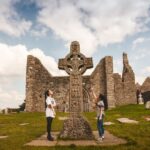
Tallaght has surprises you won’t expect. This 2-hour walking tour turns a Dublin suburb into the main stage, with stops tied to poets, war reporting, mythology, and Irish-language moments. I love how much story you get fast, and how often language and literature show up, not just famous dates. One catch: it’s an outdoor walk, so you’ll want to dress for the weather.
I also like the small group limit (max 12) and the practical format: a mobile ticket and free admission-style stops built into the route. If you want a quiet, slow stroll with lots of time to sit, this may feel a bit “packed”—but if you’re after context and character, it works.
In This Review
- Key highlights in a nutshell
- Tallaght’s story starts at Kingswood Heights, not the center of Dublin
- Whitehall at Tallaght: Katharine Tynan and the Irish Renaissance links
- Belgard Road: William Howard Russell’s reporting and the Dickens connection
- Oisín I dTír na nÓg and Dublin Mountains: mythology with a view
- Tallaght Aerodrome, Urney Chocolates, and Jacob’s: 20th-century change you can smell
- TU Dublin Tallaght: 1970s–80s urban growth, plus the human side of economic pressure
- St Maelruain’s Church of Ireland: monasteries, the two eyes of Ireland, and St Maelruain
- Alice Furlong at St Maelruain’s: poetry, Irish-language advocacy, and a bilingual look
- Tallaght Village: the Fenian Rising of 1867 and Thomas Joseph Byrne cottages
- Timing, pace, and what to bring for a comfortable 2-hour walk
- Should you book this Tallaght walking tour?
- FAQ
- How long is the tour?
- What is the price per person?
- Is the tour offered in English?
- How many people are in each group?
- Where does the tour start and end?
- Do I need a printed ticket?
- Are there admission fees at the stops?
- Is the tour suitable for most people?
- What happens if the weather is poor?
- Does the tour include Irish language practice?
- Is service allowed?
Key highlights in a nutshell
- A small-group, local-guided walk that keeps the pace friendly and conversation possible
- Literary Tallaght via Katharine Tynan and her circle, with letter details shared
- War-correspondent stories through William Howard Russell and his connections to major names
- Myth meets real views with Oisín I dTír na nÓg and a lookout toward the Dublin Mountains
- 20th-century Tallaght change from the Tallaght Aerodrome to Urney Chocolates
- A hands-on Irish-language ending with basic phrases and a local café option
Tallaght’s story starts at Kingswood Heights, not the center of Dublin
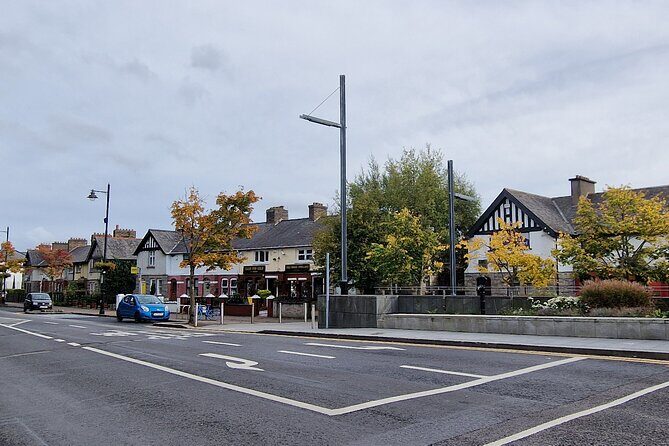
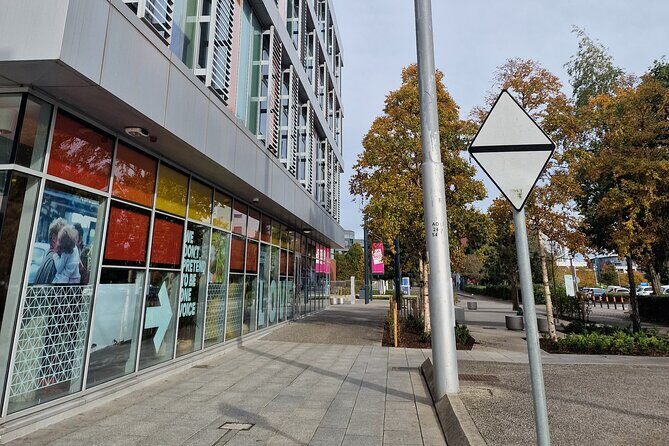
Most Dublin sightseeing zooms straight to the postcard core. This tour does the smart thing: it begins at Kingswood Heights and treats Tallaght as a real destination with deep roots. You start with a quick orientation to the area and a look at Tallaght’s beginnings in ancient Irish history, which helps everything else click later.
The whole session runs around 2 hours, and the route is broken into short segments, from about 5 to 20 minutes per stop. That structure matters because it keeps the walk from turning into a lecture marathon. Also, with a maximum of 12 people, it’s easier to ask questions and keep pace.
If you’re used to tours that barely leave the main street, you’ll like how this one stitches together multiple sides of Tallaght—mountain-edge village feel, then the evolution into a larger urban area.
You can also read our reviews of more walking tours in Dublin

Whitehall at Tallaght: Katharine Tynan and the Irish Renaissance links
One of the tour’s best moves is how it uses people, not just buildings. At the stop connected to Katharine Tynan at Whitehall, you get a guided look at her life and why she mattered to Irish and English literary circles.
You’ll hear about how Katharine Tynan contributed to the kind of cultural energy associated with the Irish Renaissance. The tour also leans into the relationships that made that literary world real—especially her friendships and correspondence involving major figures like W.B. Yeats and George William Russell (AE).
What makes this stop feel tangible is that the guide shares contents of letters (not just a passing reference). That turns Katharine from a name into a network—how ideas traveled, who visited, who supported whom. You also get an AE description of Katharine as an early voice in that imagination-awakening period, which gives you a simple mental hook for the rest of the tour.
Practical note: this is a quick stop (about 15 minutes), so if you’re the type who likes to linger, plan to jot down what you want to read later.
Belgard Road: William Howard Russell’s reporting and the Dickens connection
Next, the tour shifts from poets to the newsroom—still in Tallaght, still in Dublin’s wider story. On Belgard Road, you’ll hear about William Howard Russell, born in Jobstown, Tallaght. He’s described as one of the first war correspondents, and the tour’s focus is how that role shaped his identity.
You’ll follow his career through major conflicts and major Ireland moments. Expect references to reporting for The Times, from coverage that includes Daniel O’Connell’s meetings, the Great Famine in Ireland, the Crimean War, and the American Civil War. That’s a lot of ground for one stop, but the guide keeps it coherent by linking the theme: a correspondent attached to events as they unfold.
Then the tour adds a fun (and very human) connection: Russell’s friendship with Charles Dickens. This matters because it gives you a cross-world bridge—journalism, storytelling, and the public voice. If you’re the kind of person who likes how history travels through networks, this stop will land.
This segment is shorter (around 10 minutes), so it’s best viewed as a strong launch pad for your own reading later. You’ll leave with names to chase.
Oisín I dTír na nÓg and Dublin Mountains: mythology with a view
At another Belgard Road stop, the tour slows down just enough to shift gears into Irish mythology. You’ll get background on mythology first, then move into one of the most famous legends: Oisín I dTír na nÓg (Oisín in the Land of Youth).
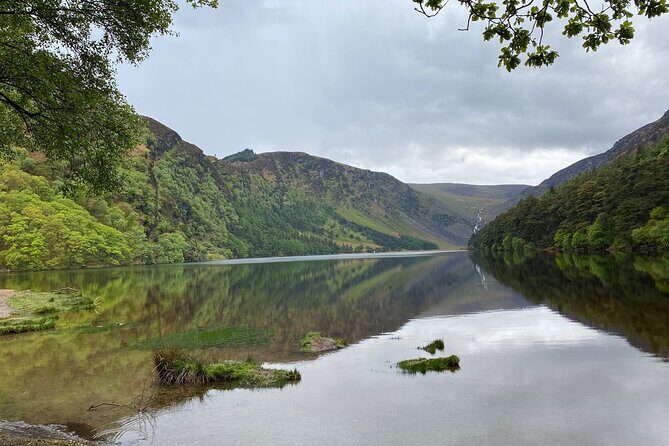
The guide shares a bilingual (Irish and English) version, and you’ll learn the link this legend has with the Dublin Mountains. There’s a clear “you are here” advantage: the stop includes lovely views of the mountains, so the myth isn’t trapped in a book. It’s mapped onto the place.
This is also one of the tour segments that feels best if you’re not only into facts. Even if myths aren’t your thing, the bilingual format makes it easier to pick up phrases and meaning in a gentle way. And because the stop is about 10 minutes, it stays brisk.
If you’re traveling with kids or teens, mythology plus a lookout is often a win. It breaks the pattern of names-and-dates.
Tallaght Aerodrome, Urney Chocolates, and Jacob’s: 20th-century change you can smell
At Belgard Retail Park, the tour covers stories that feel more like local memory than distant history. You’ll learn about the former Tallaght Aerodrome, including its role across World War I, the Irish War of Independence, and the Irish Civil War. That timeline alone helps explain how places in Tallaght weren’t just “suburb background”—they were part of national turning points.
The stop also connects the Aerodrome to Katharine Tynan’s father’s lands, and the guide shares a poem tied to this development. It’s a nice reminder that culture and conflict didn’t live in separate worlds. Local land, local authors, local sites all intertwine.
Then the tour does something genuinely memorable: it brings in everyday brands. You’ll hear the story of the Gallagher family and how they brought Urney Chocolates into being. The tour highlights how Urney became a nostalgic fixture in Tallaght for decades until it closed in 1980, and how the brand’s story continues afterward.
There’s also mention of Jacob’s operating in Tallaght for a time, with a quick talk about how these businesses affected the area.
Why this matters for you: when you understand the Aerodrome and the factories/shops, Tallaght starts making sense as an evolving community—not just a modern catch-all for Dublin sprawl.
This stop is about 15 minutes, so it’s a concentrated burst. If you love food history, you may walk away craving the next chapter of that local brand story.
You can also read our reviews of more guided tours in Dublin



TU Dublin Tallaght: 1970s–80s urban growth, plus the human side of economic pressure
By the time you reach TU Dublin, Tallaght Campus, the tour shifts from older stories into the period most people can recognize. Here, you’ll look at how Tallaght transformed in a few decades, especially during the 1970s and 1980s, into one of Ireland’s largest urban areas.
The guide notes that in the 1980s, Tallaght was among the fastest growing urban centres in Western Europe. But the tour doesn’t treat growth as a glow-up only. You also get the context of an Ireland facing economic difficulties, with high unemployment and high emigration. That’s key. A place’s streets and buildings reflect the pressure people lived under.
After that backdrop, you’ll spend time seeing how Tallaght grew from that period into what you know as it today. This is one of the stops where you’ll feel the tour’s real-world value: it helps you read a neighborhood you might otherwise pass through without thinking.
Time-wise, it’s about 15 minutes, so it’s enough for orientation without bogging you down.
St Maelruain’s Church of Ireland: monasteries, the two eyes of Ireland, and St Maelruain
Then you get a quieter, older layer. At St Maelruain’s Church of Ireland, the tour explains that the church stands on what used to be a monastery of importance in ancient Ireland. You’ll hear about the idea that this monastery, alongside a monastery at Finglas, were known as the two eyes of Ireland.
You’ll also learn about St Maelruain himself, and how the present-day church came into being. This stop is shorter (about 5 minutes), but it works as a reset—like turning the page from modern urban growth back to centuries of belief and practice.
Even if you’re not a church-history person, the key is the framing: you’re standing where “Tallaght as a place” has been repeatedly reinterpreted over time.
Alice Furlong at St Maelruain’s: poetry, Irish-language advocacy, and a bilingual look
Immediately after that monastery layer, the tour points you to the grave of Alice Furlong, buried on the church grounds. This is one of the most compelling human-story stops, because it connects local identity to wider Irish cultural movements.
You’ll learn that Alice was a founding member and vice-president of Inghinidhe na hÉireann (Daughters of Ireland). She’s described as a talented poet and writer, and the tour emphasizes her work as an Irish-language advocate, tying her love of the language back to Tallaght.
The guide shares Alice’s poetry in Irish, with professional translations into English provided. That matters because it avoids the common problem where people get the Irish words without the meaning. Here you get both.
This is about a 15-minute stop. If you’re into language at all, it’s one of those segments where you’ll likely remember more than the dates—because poetry sticks.
Tallaght Village: the Fenian Rising of 1867 and Thomas Joseph Byrne cottages
Next comes Tallaght Village and the tour’s emphasis on how national history shows up in local markers. At the village green, you’ll see a plaque commemorating the Fenian Rising of 1867, and you’ll explore Tallaght’s role in that period.
Again, you’ll hear a connection to Charles Dickens through his writings on the period. The tour repeats this pattern on purpose: it links Tallaght’s story to larger public voices from Irish and British life.
Then you wrap with a look at cottages designed by architect Thomas Joseph Byrne, who’s described as one of the most influential architects of his day. You also get a quick historical note about the Dublin and Blessington Steam Tramway, which ran through the area before closing in 1932.
This final stretch is about 20 minutes, and it finishes with a small but effective cultural touch: you’ll be taught some basic Irish. The guide also points you toward using it at a local café in the heart of Tallaght Village right after the tour, if you want.
Timing, pace, and what to bring for a comfortable 2-hour walk
This tour is built around short stops and quick context. Expect a walk that’s active, not a sit-down history lecture. Most people can participate, but you’ll still want comfy footwear, since you’ll be moving between multiple points across the area.
Because the experience says it requires good weather, bring a rain layer if there’s any chance of drizzle. The route’s outdoors most of the time, and you’ll enjoy it more if you’re not fighting cold or wet.
Also, since you get taught some basic Irish at the end, it helps to keep your attention during the final segment—those few phrases can feel like a souvenir you actually use.
Should you book this Tallaght walking tour?
Book it if you want Dublin beyond the usual lines on a map. I like this tour because it gives you a strong sense of place, from poets and correspondence to war reporting, myth with mountain views, and even the stories behind local brands like Urney Chocolates.
It’s also a good choice if you learn best by walking—this route turns Tallaght into a readable timeline without making it feel like homework. The small group size (max 12) and the fact that the guide shares materials like letters and bilingual poems are real value, not fluff.
Skip it only if you hate outdoors walking or you want a long, slow pace at each stop. This tour moves. It packs a lot into about two hours.
If your Dublin plan is short on time but you want a deeper, more personal view of the city, this is one of the better ways to spend it.
FAQ
How long is the tour?
It runs for about 2 hours.
What is the price per person?
The price is $18.05 per person.
Is the tour offered in English?
Yes, it’s offered in English.
How many people are in each group?
The tour has a maximum of 12 travelers.
Where does the tour start and end?
It starts at KingswoodKilnamanagh, Dublin, Co. Dublin, Ireland and ends in Tallaght Village, beside a bilingual Irish/English café.
Do I need a printed ticket?
No. You’ll receive a mobile ticket.
Are there admission fees at the stops?
The tour indicates admission tickets are free for the stops listed.
Is the tour suitable for most people?
Most travelers can participate.
What happens if the weather is poor?
The experience requires good weather. If it’s canceled due to poor weather, you’ll be offered a different date or a full refund.
Does the tour include Irish language practice?
Yes. You’ll be taught some basic Irish at the end, and you can use the phrases at a café in Tallaght Village if you want.
Is service allowed?
Yes, service animals are allowed.