REVIEW · DUBLIN
Dublin: Dublin City Highlights Private Guided Walking Tour
Book on GetYourGuide →Operated by Ireland Travelling · Bookable on GetYourGuide
A few streets in Dublin tell big stories. This private walk strings together Temple Bar, Trinity College, and the city’s famous bridges and memorials, with an authorized guide explaining what you’re seeing as you go.
I like that it’s built for real people, not a rigid script: you can request changes to fit your interests, and the guide is available in English and Italian.
One thing to keep in mind: key sites like Trinity College (and the General Post Office) have entrances that aren’t included, so you’ll want to plan around optional tickets.
In This Review
- Key takeaways before you book
- Getting Your Bearings: Why This 3-Hour Dublin Walk Makes Sense
- Claddagh Records: Where Dublin Meets U2 Music Lore
- The Wall of Fame: A Shortcut to Modern Irish Pop Culture
- Temple Bar: How the Street Became a Symbol
- Ha’penny Bridge at Day and Night: Built for Photos, Loved for Views
- College Green and the Bank of Ireland: Where Government and Education Touch
- Trinity College Dublin: Book of Kells, Brian Boru Harp, and the Meaning Behind the Gate
- Molly Malone Statue and Grafton Street: The Folklore and the Everyday
- St. Stephen’s Green: The Small Central Park Moment
- Government Buildings, Parliament, and Oscar Wilde in Merrion Square Park
- Price and Value: Is $153 for 3 Hours Worth It?
- Who This Dublin Highlights Tour Fits Best
- Tour Style Details: How to Make the Most of Your 3 Hours
- Should You Book This Dublin City Highlights Private Walking Tour?
Key takeaways before you book
- Music-first stops at Claddagh Records and the Wall of Fame make modern Dublin feel personal fast
- A tight 3-hour route covers the most central sights without turning it into a marathon
- Your itinerary can change so you’re not stuck with a one-size plan
- Authorized, live guiding in English or Italian helps you connect the dots as you walk
- Trinity College highlights like the Book of Kells and Brian Boru Harp are part of the story, even if entrance tickets cost extra
- Private group pacing means you can ask questions and move at a human speed
Getting Your Bearings: Why This 3-Hour Dublin Walk Makes Sense
Dublin can feel like a lot at first—pub signs, statues, bridges, government buildings, and college gates all competing for your attention. This tour is designed to give you a clean starting frame: where to stand, what to look at, and what each place meant when it mattered.
The big strength here is how the stops connect. You start in the Temple Bar orbit, pivot through key river-crossing scenery, then move into education and government landmarks, finishing around parks and major memorials. That means by the end, you’re not just saying you saw Temple Bar and Trinity College—you understand why they sit where they do, and how they fit together in Dublin’s story.
You also get the advantage of a private format. Even with a 3-hour schedule, it’s easier to ask questions and adjust your pace than on a larger group tour. And because this is a walking tour, the city looks like itself, not like a brochure.
The only real “watch out” is time and entrances. The tour covers major sights, but it doesn’t include paid entry for Trinity College (and the General Post Office). So you’ll likely spend more time looking and learning than going inside, unless you choose to add tickets.
You can also read our reviews of more walking tours in Dublin



Claddagh Records: Where Dublin Meets U2 Music Lore
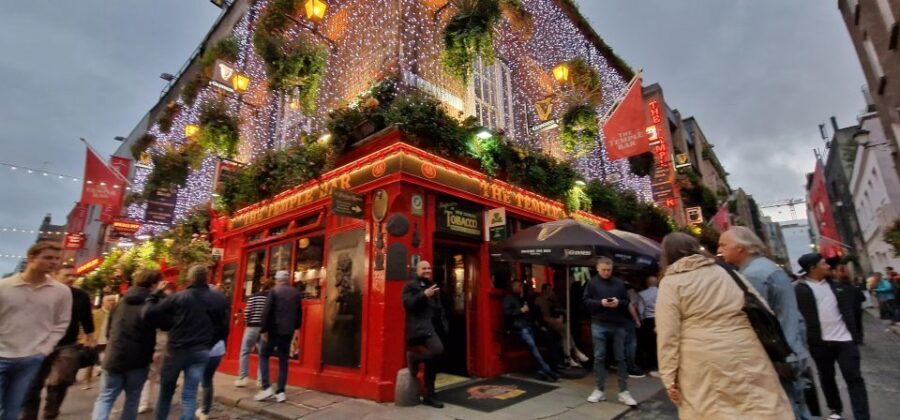
If you’ve ever wondered why Dublin’s music culture feels so tied to specific corners, start at Claddagh Records. It’s framed here as an iconic place for music lovers—and for a reason that the guide will spell out.
You’ll hear the connection to Galway through the name: the “Claddagh” is a ring created in Galway. That’s a neat cultural bridge, because it ties a Dublin shop name to older Irish identity. Then the story turns modern: the info shared for this stop notes that U2 used to meet here and recorded a few songs. Whether you’re a longtime fan or just curious, it gives you a real sense of Dublin as a place where global music actually has local roots.
Practical tip: because this is a short stop (about 10 minutes), don’t expect shopping time to replace the story time. If you want to browse, do it after your tour learns what matters at that location.
Why it’s valuable for your trip: you’ll leave with a Dublin “ear.” Later, when you’re told where to find live traditional sessions around Temple Bar, it clicks more quickly because you’ve already connected the neighborhood to the music scene.
The Wall of Fame: A Shortcut to Modern Irish Pop Culture
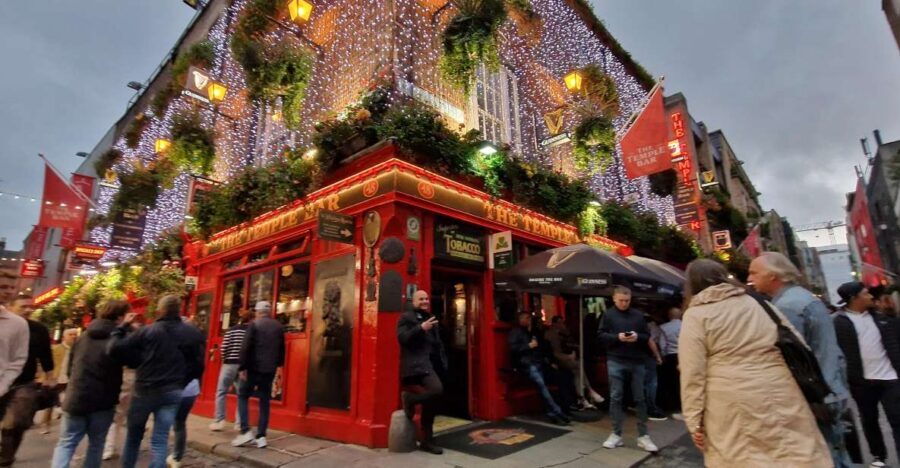
A few minutes later, you’ll pass by the Wall of Fame at Temple Lane South in Temple Bar. This stop is built for recognition. The tribute lists major Irish acts and singers—names like U2, Phil Lynott, Rory Gallagher, Sinead O’Connor, Shane MacGowan, Bob Geldof, The Undertones, and Luke Kelly.
This is one of those places where the guide does more than point. You’ll get help placing each name in the broader Irish music timeline, which matters because Dublin’s streets can feel like they’re telling stories in layers—traditional music in one direction, rock and pop in another.
How to use this stop well: take 30 seconds to scan the wall as if you’re building your own playlist. Then ask the guide which names shaped Dublin’s musical identity most. Even in a quick stop (about 10 minutes), you’ll come away with context that makes later conversations easier.
Temple Bar: How the Street Became a Symbol
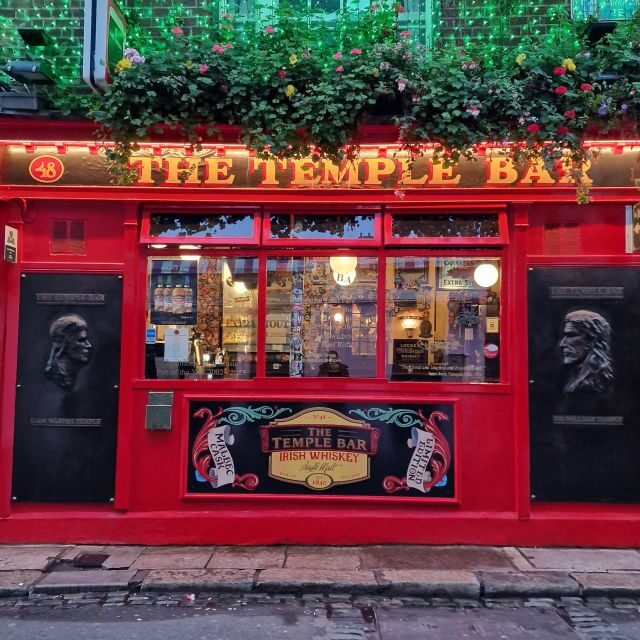
No Dublin highlights walk is complete without Temple Bar, and this one uses the neighborhood strategically. The tour focuses on how Temple Bar became famous, why so many people come, and where to find good food—and importantly—where you can join a live traditional Irish music session.
Temple Bar can be crowded and touristy, depending on the hour. The way to make it work is exactly what a guide helps with: learn what to look for, then choose where to linger and where to simply pass through.
This stop is about 20 minutes. That’s enough time for the guide to explain the neighborhood’s vibe and enough time for you to get your bearings on the streets—so you can plan your own evening later. If you’re traveling for your first Dublin stay, Temple Bar is the kind of area where knowing what to do next makes the whole day feel more successful.
Practical timing note: aim to keep your schedule flexible around meals. The guide will point you toward spots to eat and the best places for a live music session, but you’ll need to pick based on your personal hunger and energy level.
Ha’penny Bridge at Day and Night: Built for Photos, Loved for Views
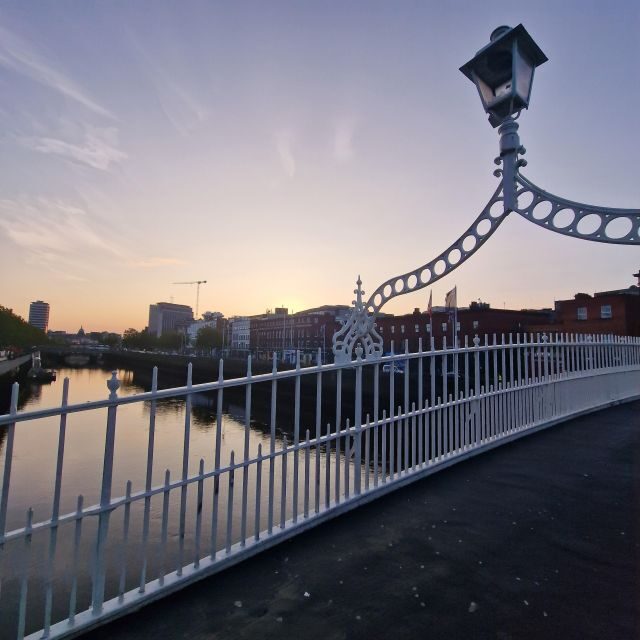
From Temple Bar, you head to Ha’penny Bridge, one of Dublin’s most recognizable river crossings. The tour highlights the history: it was built in 1816, and it’s described as especially beautiful both at night and during the day.
That’s useful because it tells you what kind of photo opportunity you’re actually getting. This bridge isn’t just a landmark; it’s a viewpoint. Depending on the time you’re walking, the light changes the mood quickly.
Even though the stop is about 10 minutes, it’s a strong moment in the walk because you’re seeing Dublin’s geography and flow. Ha’penny Bridge also helps connect the older parts of the city to the modern bustle—river in the middle, streets all around.
If you want the best effect, stand still for an extra minute after the guide finishes. The difference between “looked at the bridge” and “noticed the bridge” is mostly that pause.
You can also read our reviews of more guided tours in Dublin

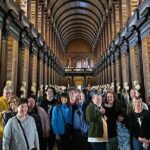




College Green and the Bank of Ireland: Where Government and Education Touch
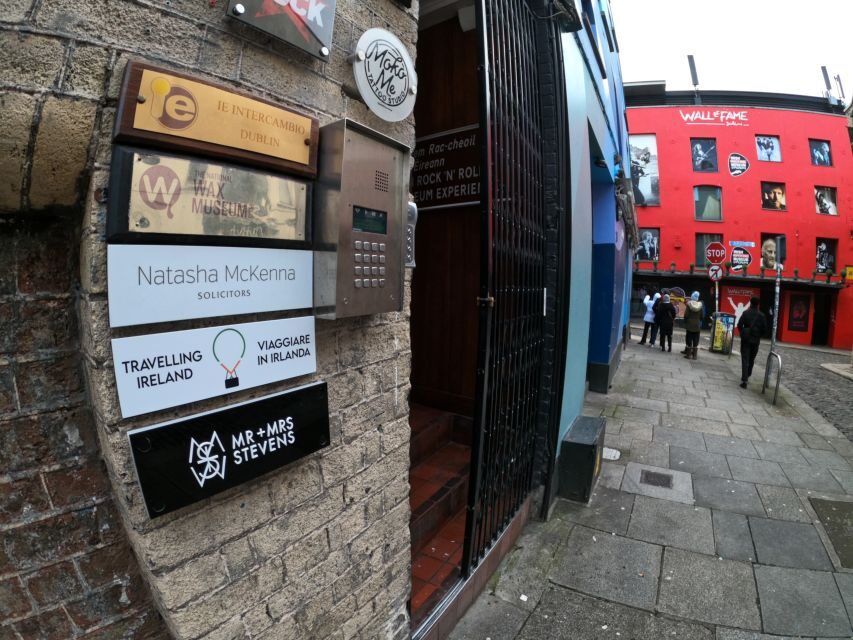
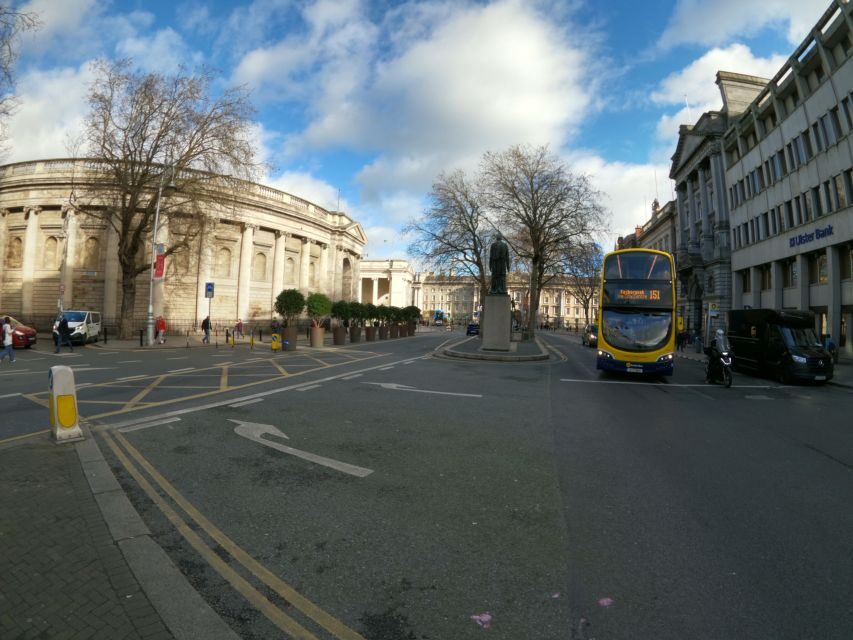
Next comes Bank of Ireland / Former Irish Parliament on College Green. This is a three-sided plaza in central Dublin, and it’s one of those places where the “empty space” is actually doing a lot of work.
Here’s what you learn: on the northern side, the Bank of Ireland building used to be Ireland’s Parliament House until 1800. To the east is Trinity College Dublin, and to the south are 19th-century buildings. Seeing all of that in one glance makes the area feel like a hub of power and learning—past and present stacked close together.
The guide’s job is to help you read the architecture like a timeline. Without that, College Green is just a plaza you pass through. With it, you start noticing how Dublin organizes itself around major institutions.
This stop is about 20 minutes, which is enough time to understand the layout and still move on without getting stuck in a picture loop.
Trinity College Dublin: Book of Kells, Brian Boru Harp, and the Meaning Behind the Gate
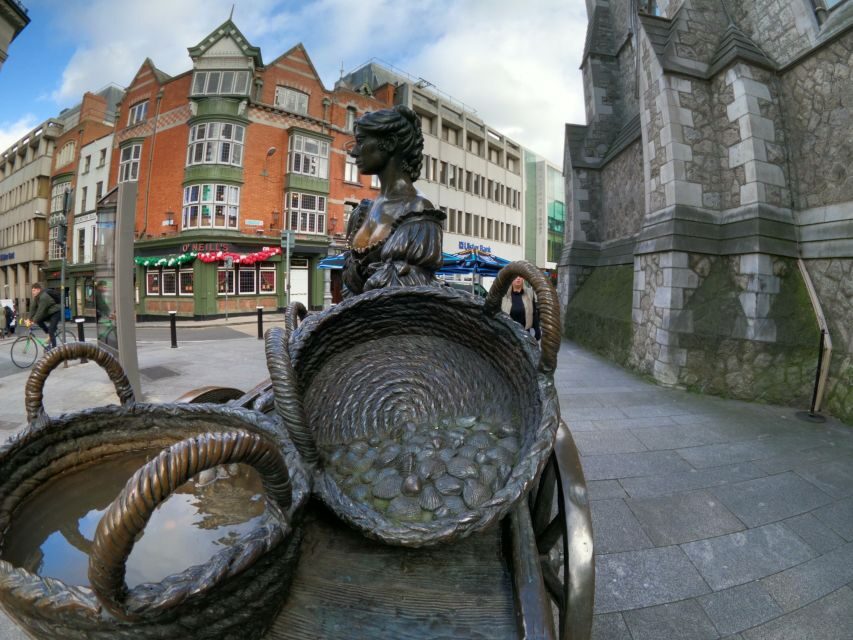
Then you arrive at Trinity College Dublin on Grafton Street near College Green. The tour frames Trinity College through a big historical lens: the university was built in Ireland by Elizabeth I. It also connects you to two famous artifacts: the Book of Kells and the Brian Boru Harp.
This matters because Trinity College isn’t just a pretty campus. It’s treated here as the meeting point of history, culture, and Irish identity. You’re not simply hearing what these items are; you’re learning how they sit inside a place that has long helped define what Ireland is and what it preserves.
Important practical detail: entrance is not included for Trinity College. So treat this stop as a guided orientation plus highlights, and decide separately if you want to add tickets for indoor viewing.
How to get value even without paid entry: ask the guide what you should look for on the grounds and what people usually miss. You’ll walk away with a better plan for a return visit, even if today stays ticket-light.
Molly Malone Statue and Grafton Street: The Folklore and the Everyday
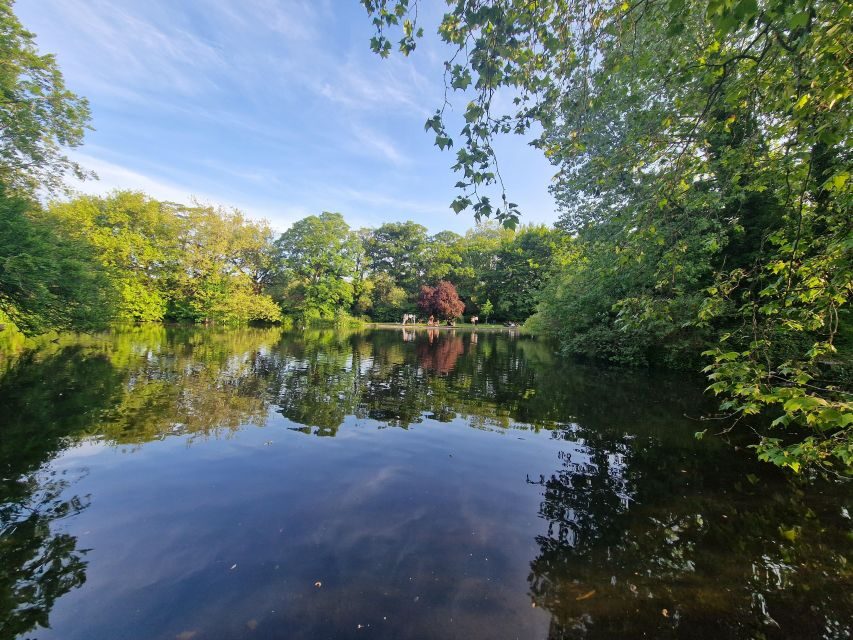
Next up is Molly Malone Statue at Suffolk Street. This is where Dublin’s folklore starts to feel like street-level storytelling. The tour notes Molly Malone’s life and folklore and calls her the most well-known woman in Dublin.
Whether you know the song already or not, the statue makes Dublin feel human—like it isn’t only about kings, colleges, and parliaments. It’s a reminder that cities also remember themselves through characters people carry in their heads.
About 15 minutes at Molly Malone, then you shift to Grafton Street. This is your “live Dublin” segment: strolling, shopping, and street artists. The tour also points you toward nice food in nice places, which is helpful because Grafton Street is full of options that range from quick bites to sit-down meals.
This stop is about 20 minutes, and it’s ideally timed. By now, you’ve learned enough context that you can enjoy the city rather than only interpret it.
If you’re hungry: pick a spot based on what the guide suggests, not just what looks busiest. A longer line doesn’t always mean better value.
St. Stephen’s Green: The Small Central Park Moment
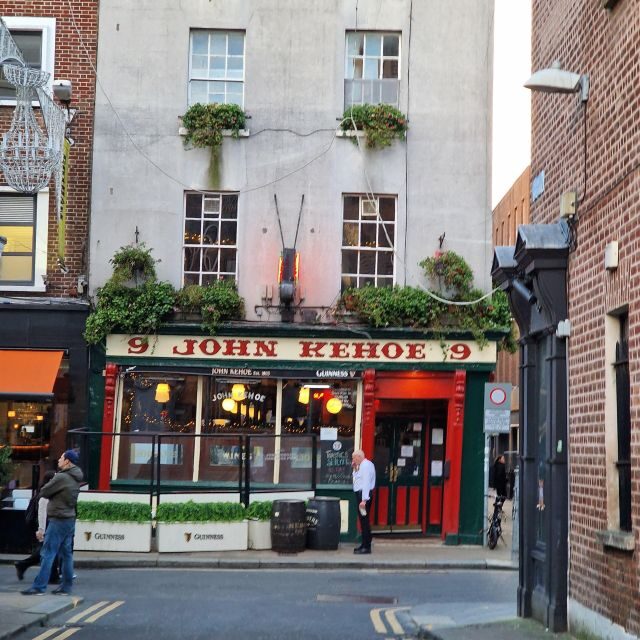
After all the city landmarks, you get a reset at St. Stephen’s Green. The tour includes a walk through the St. Stephen’s Green Park, plus the adjacent shopping center area. The park is described as lovely, and people call it the small Central Park. There are also animals, flowers, and plenty of people.
This stop is about 25 minutes, which gives you time to slow down. And slowing down is the whole point here. You’ll have been on streets, then bridges, then institutional buildings. St. Stephen’s Green lets your brain process what you’ve seen without constant scanning for the next landmark.
Practical tip: if you’re traveling in a season with good daylight, St. Stephen’s Green is a great place to refresh. Grab water, take a breather, and decide what you want to do for the rest of your day.
Government Buildings, Parliament, and Oscar Wilde in Merrion Square Park
The tour then moves into Dublin’s political center and its literary memory.
First is the Department of the Taoiseach. The guide explains what the Taoiseach means in Ireland: it’s the title for the head of government. This department is based in the Government Buildings on Merrion Street.
Then you visit Irish Parliament (Leinster House). The info shared here is specific: Leinster House was the former ducal residence of the Duke of Leinster and, since 1922, it has served as the parliament building of the Irish Free State. Even if you’ve never studied Irish political history, this stop gives you a clear anchor point in the physical city.
Finally, the walk ends with a cultural punctuation mark: Monument to Oscar Wilde at Merrion Square Park. The tour notes the bronze statue and Oscar Wilde House in the area, plus the park itself as a pleasant stop to walk around for about 10 minutes.
Why these late stops work: they round out your Dublin picture. The early tour gives you music and streets. The middle gives you landmarks and learning. The end shows you power and literature. It’s a full spectrum in a small radius.
Price and Value: Is $153 for 3 Hours Worth It?
At $153 per person for a private 3-hour guided walking tour, the value depends on how you travel.
This price makes sense if:
- you want an authorized guide who can tailor the route to your needs
- you’re traveling as a small group where the cost can be shared
- you’d rather pay for context than spend your time guessing from a map
It can also be worth it if you like efficiency. With a 3-hour format, you get multiple Dublin highlights without having to research how they connect. And the inclusions matter: the tour includes a national guide, an official guide, plus insurance.
What’s not included is also important. Entrance in Trinity College and the General Post Office is not included. That doesn’t make the tour “less,” but it means you should treat those as optional add-ons, not guaranteed included visits.
Bottom line: if you’re a first-time visitor who wants the city’s main themes explained clearly, this is a reasonable private-option price. If you already know Dublin well or you don’t care about historical context, a cheaper group option might suit better.
Who This Dublin Highlights Tour Fits Best
This tour is ideal for:
- music lovers who want to connect Dublin’s modern artists to physical places like Claddagh Records and the Wall of Fame
- first-time visitors who want Temple Bar, Trinity College, key bridges, and major civic landmarks in one focused walk
- couples or small groups who want a private pace and the chance to tweak the itinerary
- people who prefer learning while walking instead of reading museum labels all day
It’s also a good match if you like your sightseeing organized. The route is compact, and the guide’s explanations help you see what matters instead of getting lost in photo-taking.
Tour Style Details: How to Make the Most of Your 3 Hours
Because this is a walking tour with multiple stops, your best strategy is to stay present.
- Wear shoes that handle cobblestones and city sidewalks. Dublin sidewalks can be uneven.
- Keep your questions short. The tour moves efficiently, so you’ll get better answers by asking focused stuff like what a building used to be or why a bridge has its name.
- If you care about Trinity College as an inside visit, plan for possible extra tickets since entrance isn’t included.
- Build in one small buffer. Even though each stop is timed, real life happens—people stop for photos, and you might want a longer look at a statue or a street scene.
The private format and the option to change the itinerary also means you can steer toward what you want more of. If your priority is music, ask for extra time around Temple Bar-related stops. If you prefer institutions and monuments, you can focus more on College Green and government landmarks.
Should You Book This Dublin City Highlights Private Walking Tour?
I’d book it if you want a guided, high-impact introduction to Dublin that connects the dots between Temple Bar, Trinity College, river views, and the city’s civic and cultural landmarks. The private setup, authorized guidance, and ability to adjust the route are the big reasons it works.
Skip it (or choose another option) if you’re mainly chasing inside-the-building visits and you don’t want to think about paid entrances you’ll need to add separately. In that case, you might prefer a tour that explicitly includes admissions.
If you like your sightseeing with context—and you want to leave Dublin knowing what you saw and why—this is a solid way to spend a half-day.