REVIEW · DUBLIN
Dublin: Bucket List Sights Walking Tour
Book on GetYourGuide →Operated by Yellow Umbrella Tours Ltd · Bookable on GetYourGuide
If you like major landmarks with real stories, Dublin does not waste time. This 2-hour walking tour strings together the city’s big-name sites with plain, human history, from Viking-era Christchurch to the Book of Kells doorstep at Trinity College. I especially like how the guide explains what you’re looking at as you’re standing there, not later from a screen. I also like the small, useful extras—like direction for what to do next in your remaining time.
The main drawback is also the obvious one: it’s a walk. Even with a short route, you’ll want comfortable shoes, and your pace may feel brisk if you stop often to take photos. If you’re expecting long time inside buildings, plan your expectations for more outdoor and “look + learn” time.
In This Review
- Key highlights to expect
- Getting your bearings near Christchurch Cathedral
- Christchurch Cathedral: Vikings, Normans, and Henry Roe’s whiskey money
- St. Patrick’s Cathedral: snakes, Swift, and 19th-century restoration
- Dubh Linn Garden and Chester Beatty Library: Vikings moored here
- Dublin Castle and the 700 years of British rule
- Temple Bar: Tudor-era streets and modern pub life
- Crossing the Liffey: from the Celtic settlement to the Silicon Docks
- Ha’penny Bridge, Merchant’s Arch, and Crown Alley’s Central Plaza
- College Green and the power-and-finance core
- Molly Malone outside St. Andrew’s Church: a quick, charming anchor
- Trinity College finish: Book of Kells territory without the rush
- What the guide really adds (and why reviews focus on it)
- Price and value for a $19 Dublin walking tour
- Who this tour is best for
- Should you book this Dublin bucket list sights walking tour?
- FAQ
- Where does the tour start?
- How long is the walking tour?
- How much does it cost?
- What sights are included?
- What language is the guide?
- Is it wheelchair accessible?
Key highlights to expect
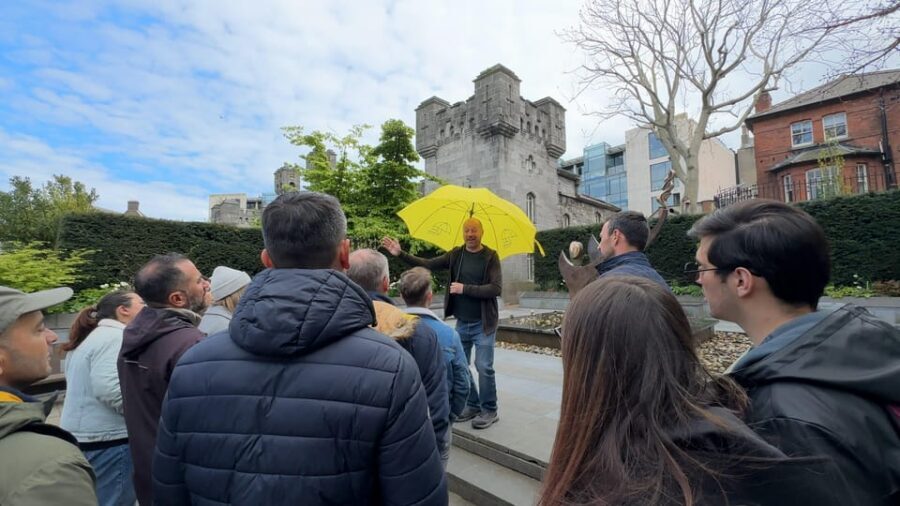
- Christchurch Cathedral: from early Viking wood to Norman stone to the 19th-century look people recognize
- St. Patrick’s Cathedral: the patron saint story plus Jonathan Swift’s burial site
- Dublin Castle and the British timeline: how political power shaped the city for centuries
- Temple Bar: Tudor-era streets, plus live music and pub life concentrated in one area
- Trinity College finish: a quick landing spot outside the gate for the Book of Kells area
Getting your bearings near Christchurch Cathedral
I like starting a Dublin walk at Christchurch because the place sets the tone instantly. You’re in walking distance of the heart of old Dublin, and the guide frames what you see with dates and cause-and-effect, not just names. The meeting point is across the road from Christchurch Cathedral, outside the Bull and Castle, and that location matters: you’re stepping into the medieval-to-modern arc right away.
One of the best parts of this tour’s approach is that it turns landmark viewing into orientation. You begin with Christchurch and gradually learn how Dublin’s layers overlap—Celts, Christians, Vikings, Normans, English rule, and the modern global influence. If this is your first visit, you’ll come away with a mental map you can actually use.
You can also read our reviews of more walking tours in Dublin



Christchurch Cathedral: Vikings, Normans, and Henry Roe’s whiskey money
Christchurch Cathedral is the first real “wow” moment, and it’s also a history lesson you can see. The story starts with Vikings building something in wood about a thousand years ago, then the Normans recasting it in stone. That transition is the kind of detail that makes a cathedral feel less like a postcard and more like a long-running construction project—one that followed power shifts.
The tour also points out why the modern cathedral looks the way it does. The current 19th-century neogothic cathedral is tied to Henry Roe’s whiskey money. That detail helps you connect Dublin architecture to Dublin industry and wealth. In other words, it’s not just religion and royalty—it’s economics, too.
St. Patrick’s Cathedral: snakes, Swift, and 19th-century restoration
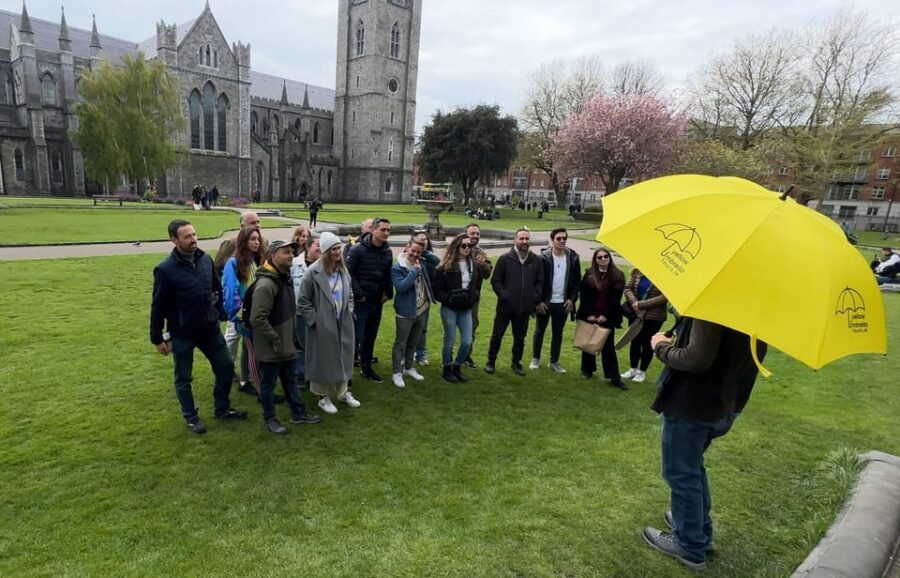
Next comes St. Patrick’s Cathedral, and the guide uses it to explain a different kind of Dublin pride: patron saints and Irish identity. The story centers on St. Patrick banishing the snakes from the island—an easy hook, but it also sets up why the site matters to many people today.
Then the tour anchors the site in literature. You’ll learn that the former Dean, Jonathan Swift, who wrote Gulliver’s Travels, is buried there. Even if you’re not a Swift superfan, it’s a helpful way to understand why Dublin’s famous names don’t live in isolation—they cluster around institutions.
Finally, the tour ties the cathedral’s survival to a specific benefactor: Sir Benjamin Lee Guinness helped with wonderful restoration in the 1860s. That’s a good reminder that preservation often depends on generosity and practical funding, not just reverence.
Dubh Linn Garden and Chester Beatty Library: Vikings moored here
A quick step next, and you’re in the Dubh Linn Garden area. The tour frames it as a location tied to both cultural collections and Viking arrivals. One highlight here is the Chester Beatty Library, called out by the tour because it sits in this broader historic zone.
What makes the stop memorable is the Viking detail: it’s described as the place where Vikings moored their longboats when they arrived in Dublin about twelve hundred years ago. Standing in an area like this can feel abstract unless someone gives you the mental picture—so having that mooring story is genuinely useful.
Dublin Castle and the 700 years of British rule
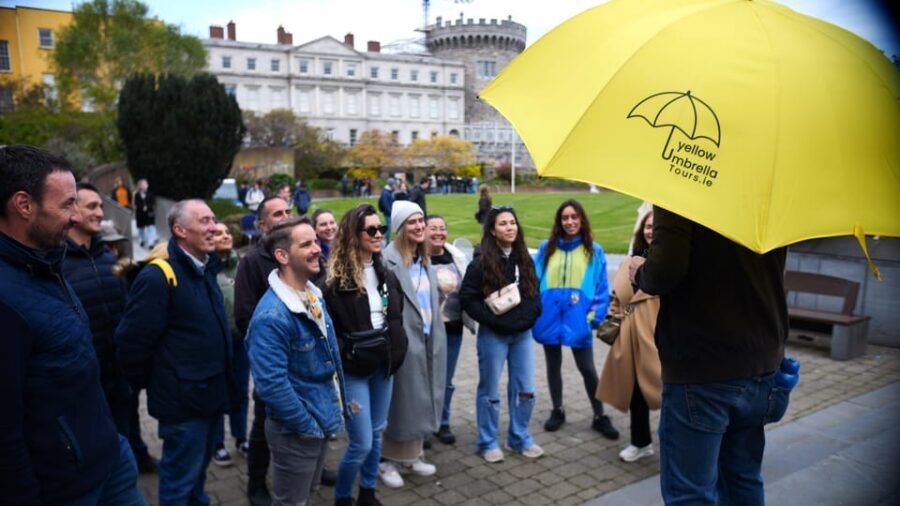
From the Dubh Linn Garden area, the walk leads to Dublin Castle, and this is where the tour gets its teeth. The tour highlights the mix of medieval and Georgian architecture across both the lower and upper courtyards. That matters because Dublin Castle isn’t one style—it’s a timeline you can walk through.
The guide also connects the site to power. Dublin Castle is presented as the centre of British rule in Ireland for about 700 years, and then the shift after independence in 1922, when it was handed over to Michael Collins and the Irish Free State. If you’re the kind of traveler who wonders why buildings look the way they do, this is a key stop: political control tends to leave physical marks.
Practical tip: if you want photos without feeling rushed, slow your pace during this section. You’re in an open area where you can look up and around, not just forward. The story the guide tells makes those architectural changes easier to notice.






Temple Bar: Tudor-era streets and modern pub life
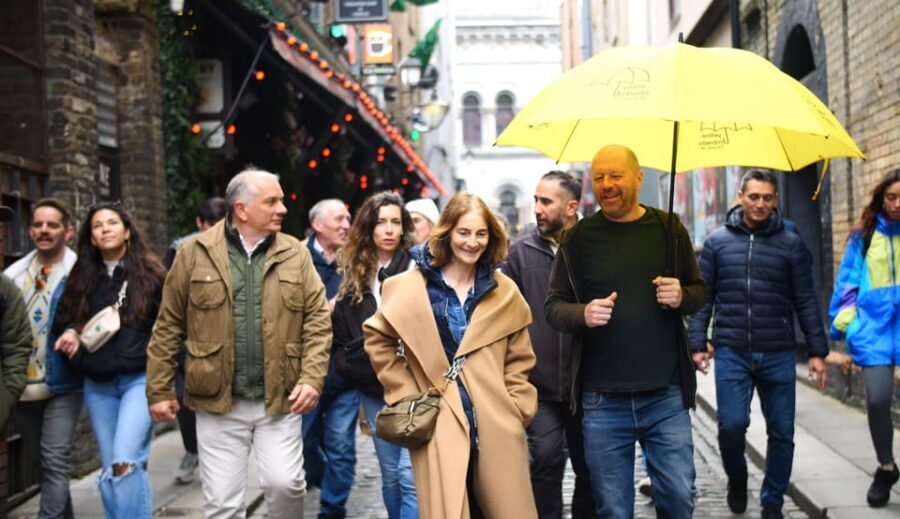
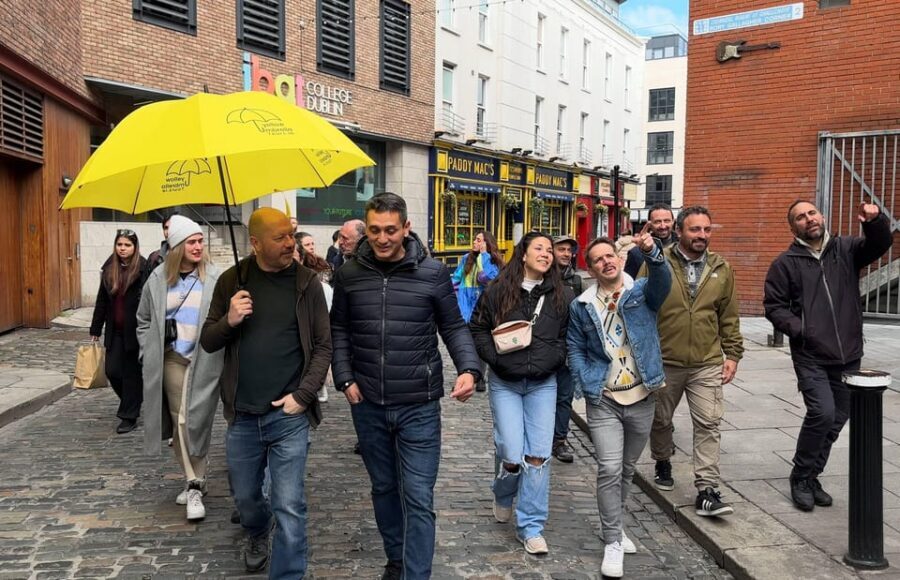
After castle history, the tour moves toward Temple Bar District. This is where you get a street-level sense of modern Dublin life—especially live music and lively Irish pubs—while still keeping one foot in the past.
The tour points out that Temple Bar includes one of the oldest parts of the city dating from the Tudor Conquest in the 16th century. That’s a useful contrast. You’re standing in a place people associate with nightlife, but it also has a deeper timeline than the current reputation.
If you’re wondering whether to prioritize Temple Bar or skip it for quieter areas, this tour helps you decide. It doesn’t ask you to treat Temple Bar as a theme park; it gives you the age of the area and then lets you see why it became the pub-and-music zone it is now. You’ll finish the segment understanding both the atmosphere and the why behind it.
Crossing the Liffey: from the Celtic settlement to the Silicon Docks
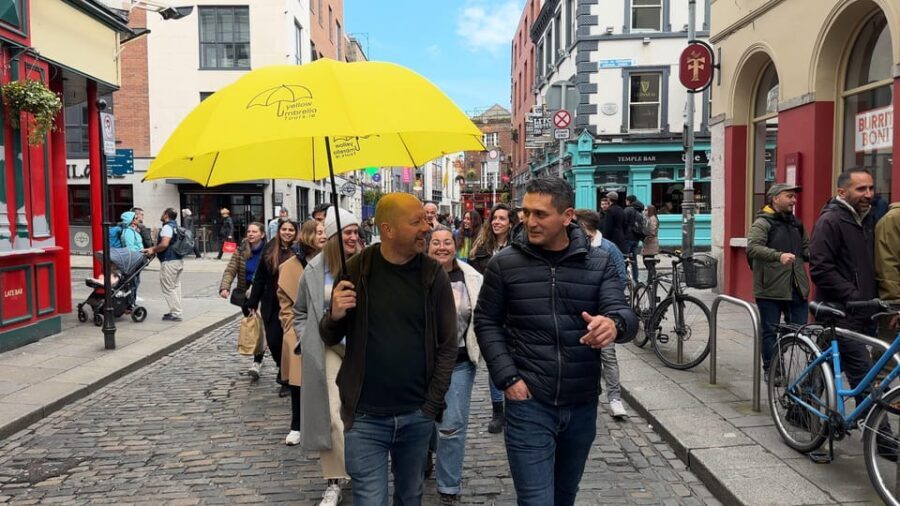
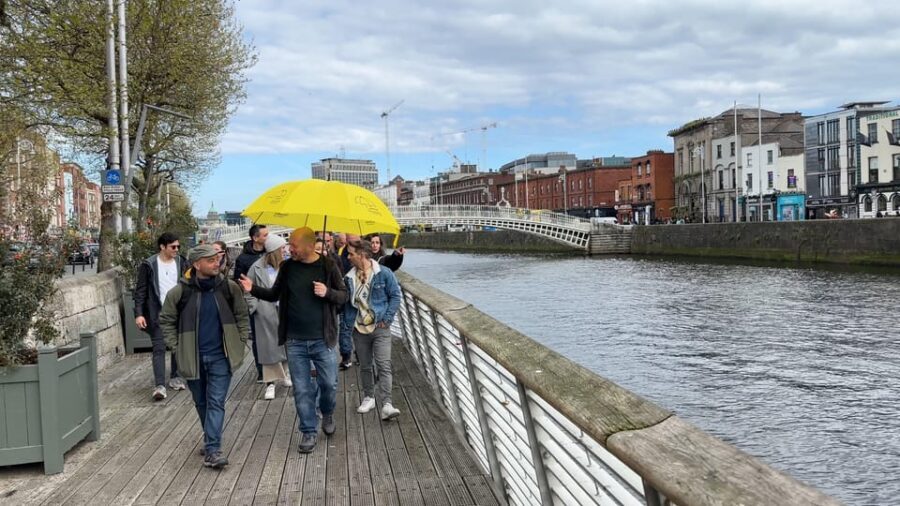
One of the tour’s smartest choices is what happens after Temple Bar. Instead of staying in one “old town” bubble, you cross the River Liffey to the north side for a view that runs from the original Celtic settlement site about 2,100 years ago to the modern influence linked to the Americans at the Silicon Docks.
Even if you don’t memorize every detail, this viewpoint gives you scale. Dublin doesn’t only feel old—it layers old and new in a way you can literally see from the river corridor. For first-timers, that’s a big value. It turns Dublin from a list of landmarks into a city with a timeline you can spot.
Ha’penny Bridge, Merchant’s Arch, and Crown Alley’s Central Plaza
After the river view, the tour heads back over the iconic Ha’Penny Bridge. Then it threads through Merchant’s Arch onto Crown Alley. This section is helpful because it teaches you how small passageways connect major neighborhoods.
The stop at Central Plaza is a conversation piece for anyone who likes modern architecture. The tour explicitly calls out Sam Stephenson’s brutalist behemoth at Central Plaza. Even if brutalism isn’t your style, you’ll likely appreciate seeing how Dublin’s city planning includes big, hard-edged landmarks alongside medieval streets.
If you’re worried about getting lost in this part, don’t be. The guide’s route makes the connections clear. You’ll understand why you’re walking through these arches and alleys instead of just cutting straight across.
College Green and the power-and-finance core
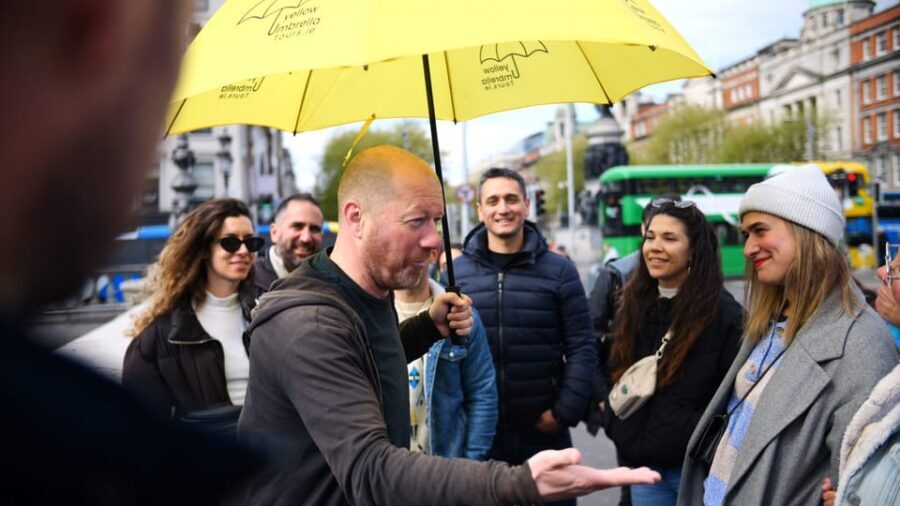
As you move to College Green, you shift again into “look and compare.” The tour frames this area around fine neoclassical Georgian architecture, with banks and Parliament called out as key elements. The message here is that Dublin’s government and finance hub shaped the city’s look and flow.
This stop helps you connect political history with everyday geography. When you know this area was the center of government and finance for the city that considered itself the second city of the empire, the buildings stop being generic “pretty facades.” They become part of a story about influence, administration, and prestige.
A small practical note: this is a good place to ask questions if you have them. You’ll have multiple eras in your head by then, and a good guide can tie threads together.
Molly Malone outside St. Andrew’s Church: a quick, charming anchor
No Dublin tour feels complete without Molly Malone, and this one checks that box. You’ll say hello to Dublin’s favourite daughter outside St. Andrew’s Church.
What I like about a moment like this is that it’s not just a photo stop. It’s a release from heavier politics and cathedrals—an emotional reset—while still keeping you grounded in something that feels unmistakably Dublin. It’s quick, easy, and it works.
Trinity College finish: Book of Kells territory without the rush
The tour ends outside the front gate of Trinity College, where you’re positioned near the famous Book of Kells exhibition area. The guide doesn’t just point at the campus; it gives you context for why Trinity is the ending you want on a first-day itinerary.
This is a great finishing move because it lets you transition naturally. If you want to keep exploring after the tour, Trinity is a clean next step. If you’re done with walking, you can still regroup in a spot that feels central and well known.
What the guide really adds (and why reviews focus on it)
A big reason this tour scores highly is the way the live guide works with you. The standout pattern in reports is that guides like Peter are kind, ask about you, and use that to shape the tour. That sounds soft, but it changes the experience.
Here’s what that translates to in practice:
- You get explanations that match your level, including the ability to adapt to your English comfort.
- You’re not stuck with a one-way lecture; questions get answered.
- You also leave with practical recommendations for the rest of your stay, not just a stop list.
That last part matters more than people think. A walking tour can show you sights. A good guide helps you decide what to do after the tour.
Price and value for a $19 Dublin walking tour
At $19 per person for about 2 hours, this is the kind of deal that makes sense for your first visit. You’re paying for guided context across several major Dublin icons: Christchurch Cathedral, St. Patrick’s Cathedral, Dublin Castle, Temple Bar District, and a Trinity College finish.
The value isn’t that you visit everything in one afternoon without effort. The value is that you get the story behind the effort. Cathedral facades, castle courtyards, and river views can be confusing if you’ve never heard the timeline. With a guide, those places turn into a coherent narrative.
Also, 2 hours is a smart length. It’s long enough for real learning but short enough that you can still handle other plans the same day. For many travelers, that flexibility is worth as much as the tour itself.
Who this tour is best for
This Dublin walking tour fits best if you want:
- A fast introduction to major landmarks without jumping between museums first
- Clear storytelling tying architecture to the events that shaped the city
- A guide who handles questions and adjusts to your comfort
- A route that mixes religious sites, government history, a pub district, and a modern city perspective from the river
It’s also a good choice if you’re traveling with mixed interests—someone who likes buildings, someone who likes political history, and someone who just wants to know what to do next.
If you’re a slow walker who stops for long interior visits or you hate crowds, you might find the pace a bit tight. Still, the structure is designed for a compact “bucket list” loop.
Should you book this Dublin bucket list sights walking tour?
Yes, if it’s your first time in Dublin and you want a guided way to understand why the big places matter. This is especially worth it when you prefer context over scrolling through plaques alone. The mix of eras—Viking arrivals, Norman stone, Guinness-era restoration, centuries of British rule, and modern Dublin views from the river—gives you a full-feeling city in one compact outing.
I’d skip it only if you’re looking for long time inside each landmark or you want a slower, unstructured wander. For most people, the short, organized walk is exactly what gets you oriented and excited for the rest of your trip.
FAQ
Where does the tour start?
You meet your guide across the road from Christchurch Cathedral, outside the Bull and Castle. The tour ends back at this same meeting point.
How long is the walking tour?
The tour lasts 2 hours.
How much does it cost?
The price is $19 per person.
What sights are included?
The tour focuses on Christchurch Cathedral, St. Patrick’s Cathedral, Dublin Castle, Temple Bar, and Trinity College (outside the front gate, near the Book of Kells exhibition area).
What language is the guide?
The live tour guide is English.
Is it wheelchair accessible?
Yes, the tour is wheelchair accessible.