REVIEW · DUBLIN
Dublin: Boyne Valley with Newgrange and Bru Na Boinne Entry
Book on GetYourGuide →Operated by Hilltoptreks · Bookable on GetYourGuide
Five thousand years of stone, in one day.
This Dublin-area coach trip takes you into the Boyne Valley to see UNESCO sites that still feel oddly alive: Newgrange and the wider Bru na Boinne complex, set in rolling countryside and timed with real human stories, not just dates. I especially like how the tour connects what you see with why it mattered, from Neolithic belief to later Irish and British power struggles.
I love two parts most: the guided visit at Newgrange, where you get the full meaning behind the chambers and the famous light effect story, and the stop at the Battle of the Boyne Visitor Centre, where the 1690 battle is explained in a way that helps you understand why July 12 still carries weight today.
One drawback to plan around is food: lunch is on your own, and while there are options at the Newgrange visitor area, they can be limited and not everybody loves what’s available.
In This Review
- Key things that make this tour worth your time
- Price and logistics: what $96 really buys you
- Getting out of Dublin and into the Boyne Valley
- What to bring so the day stays comfortable
- Newgrange: why this site feels bigger than a tomb
- The skip-the-queue advantage
- A note about guides (Matt, Kevin, Richard)
- Bru na Boinne: megalithic history and what changes in winter
- What makes this stop satisfying
- The Battle of the Boyne Visitor Centre: history with modern consequences
- Why this works on a day trip
- Monasterboice: the 28-meter round tower and Muiredach’s High Cross
- The high crosses are the big draw
- Quick reality check on time
- Pace and comfort: a full day without feeling like a sprint
- Food and drink: plan to eat like a grown-up
- Who this tour suits best (and who might not love it)
- Should you book this Dublin to Boyne Valley trip?
- FAQ
- How long is the tour?
- Where do I meet the group in Dublin?
- Is Newgrange entry included, and do we skip the queue?
- Do I need to pay for food and drinks?
- Is the tour guided in English?
- Will Knowth always be accessible at Bru na Boinne?
- What time will I be back in Dublin?
- What’s the cancellation policy?
Key things that make this tour worth your time
- Newgrange entry with skip-the-queue so you spend less time waiting and more time learning
- Bru na Boinne access (with a slightly shorter stop in winter when Knowth isn’t accessible)
- A real “why this matters” explanation tying Neolithic sites to later Irish history
- Monasterboice’s standout high crosses plus a very well-preserved round tower
- Guides who keep the day moving with a steady pace (English live commentary throughout)
Price and logistics: what $96 really buys you
At about $96 per person for an 8-hour day trip, the value is in the combination: round-trip transport from Dublin plus guided time plus entrance fees. If you try to piece this together solo, you’d still be paying for entry tickets, plus your own transport problem-solving (and queue time can eat the day).
This is also the kind of trip where timing matters. Newgrange and Bru na Boinne are popular for a reason, but they’re not the sort of sites where you just wander until you feel satisfied. You’ll get more out of your visit when someone frames what you’re looking at and keeps you on schedule between stops.
Practical note: you start at the Molly Malone statue on Suffolk Street. Aim to arrive about 10 minutes early, and look for a small white minibus with the HilltopTreks sign.
You can also read our reviews of more tours and experiences in Dublin.


Getting out of Dublin and into the Boyne Valley
The day runs like a classic “out-and-back” coach experience. You’ll leave Dublin in the morning, settle in, and spend time on the drive while your guide sets context—so the countryside you’re passing through doesn’t feel like random scenery. The Boyne Valley stretches through Meath and Louth toward the coast at Drogheda, so you’ll feel that gradual shift from city edges to farmland and quiet roads.
What I like about this format: the bus time isn’t treated as dead time. Your guide gives you enough background that when you reach the sites, you’re not starting from zero.
What to bring so the day stays comfortable
Wear comfortable shoes—stone sites mean uneven ground and walking between small areas. Bring an umbrella. Even when the forecast looks good, the Boyne Valley can still toss wind and sudden showers at you.
Newgrange: why this site feels bigger than a tomb
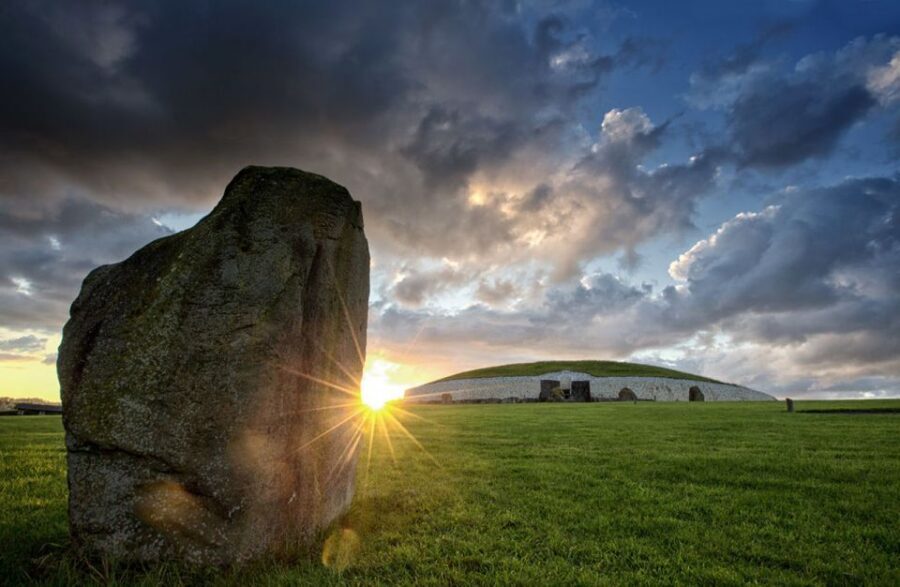
Newgrange is the star attraction, and the tour is built around that fact. You’ll get a photo stop and then a guided visit that turns the site from a pile of impressive stone into a place with ceremony, astronomy, and meaning.
Here’s what makes Newgrange special for first-timers: it isn’t just old. It’s old and intentional. The mound, the chamber design, and the story about how light interacts with the entrance during key times of year are part of a wider Neolithic understanding of the sky. In other words, people didn’t build it only to bury someone. They built it to mark time, gather the community, and perform beliefs where the architecture itself mattered.
The skip-the-queue advantage
Newgrange is popular, and that’s where the skip-the-queue entry helps most. It keeps the day from turning into standing around in line while your best viewing window slips away. You get more “site time” per hour, which matters when the day is only about eight hours total.


A note about guides (Matt, Kevin, Richard)
This tour runs with different guides on different days, and names like Matt, Kevin, and Richard have shown up as the live commentary leaders. The common thread is storytelling with clear explanations, plus pacing that avoids the awful feeling of being rushed through something sacred.
Bru na Boinne: megalithic history and what changes in winter
After Newgrange, you head into the wider Bru na Boinne area. This is where you start to see the bigger pattern: the Boyne Valley isn’t one monument—it’s a whole system of Neolithic tombs and ceremonial landscapes spread across the region.
You’ll experience the guided portion of the Bru na Boinne visit, and here’s the important seasonal detail: between Nov 1 and Mar 1, Knowth isn’t accessible, so the Bru na Boinne stop is slightly shorter. If your trip falls in that window, don’t worry—you’ll still get the core experience of this UNESCO landscape. Just understand that one component may be missing due to access.
What makes this stop satisfying
Some heritage sites leave you thinking, okay, impressive rocks. This one usually leaves you thinking, okay, humans had a plan here. The guided framing helps you connect what you see to a culture that treated astronomy, ritual, and monumental building as part of everyday belief.
The Battle of the Boyne Visitor Centre: history with modern consequences
Next comes a very different kind of history at the Battle of the Boyne Visitor Centre, where you’ll spend about 1.5 hours. This is the 1690 battle between Catholic King James II and Protestant King William of Orange, and the guide gives you the context for why it mattered well beyond the battlefield.
What I like about this stop is that it helps you read modern Ireland through an older lens. The battle is tied to the displacement of Irish Celts and the shifting power structures that echoed across the island. And it also explains why the July 12 commemoration remains important for the Loyalist community.
Why this works on a day trip
Neolithic sites are easy to treat like museum objects. Pairing them with a modern political history makes the day feel more grounded. You’re not only looking at the past—you’re learning how the past gets remembered, argued over, and used.
Monasterboice: the 28-meter round tower and Muiredach’s High Cross
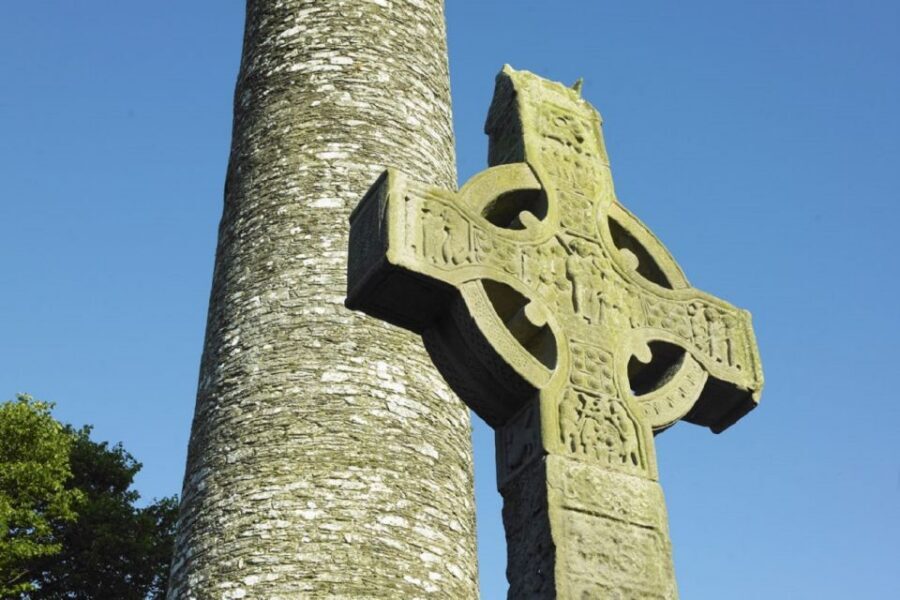
The final major stop is Monasterboice, a 5th-century monastic site founded by St Bhuite. You’ll have a guided visit here plus time to take photos, and you’ll see a strong mix of periods: two churches built in the 14th century and a round tower from the 10th century.
That tower is about 28 meters tall and is in very good condition. It was likely built shortly after 968 and damaged in a fire in 1098—so it comes with real scars, not just perfect restoration vibes. For me, that’s part of why it’s memorable: it feels like a working landmark that survived drama.
The high crosses are the big draw
Monasterboice is famous for its Celtic high crosses, and the tour focuses on the sculptural story groups. You’ll see three high crosses from the 10th century forming a scriptural set, and you’ll get special attention to Muiredach’s High Cross, about 5.5 meters tall.
Muiredach’s cross is often regarded as the finest high cross in Ireland, and it features Biblical carvings from the Old and New Testaments. It’s named after Muiredach mac Domhnaill, an abbot who died in 923. Even if you don’t read the carvings like a scholar, the guide’s explanations make it easier to see how the art was meant to teach and to frame belief in stone.
Quick reality check on time
This stop is shorter than the UNESCO sites, around 45 minutes. That’s enough for the big monuments and a guided overview, but if you’re the kind of traveler who wants to linger and sketch every angle, you might wish you had more time here. Still, the structure of the day keeps the overall pace sane.
Pace and comfort: a full day without feeling like a sprint
The structure is simple: a morning departure, two big UNESCO-focused blocks, then a visitor centre history stop, then Monasterboice, and back to Dublin around 5:00 PM. In practice, it works because each stop has a purpose and a time window, and you’re not left guessing what to prioritize.
One small thing I appreciate: you get built-in “reset” moments between the main visits, including breaks and photo stops. It’s enough breathing space that you can absorb what you’re seeing instead of clock-watching nonstop.
Food and drink: plan to eat like a grown-up
Food isn’t included. That’s not automatically bad, but you should plan. You’ll have time during the Newgrange/visitor-centre area when you can grab something, and there are options—though some food situations can feel limited and more like grab-and-go than a proper lunch break.
My advice: pack a snack you trust, especially if you’re picky about microwave-style meals. And if you want a more satisfying lunch, plan to bring something simple or be ready to choose the best option you can find on-site.
Who this tour suits best (and who might not love it)
This is ideal if:
- You want guided, skip-queue access to Newgrange and Bru na Boinne without handling tickets and timing yourself
- You care about understanding how Neolithic Ireland connects to later history, including why the Battle of the Boyne still matters
- You’re comfortable with a long day coach trip and prefer a structured route
It may be less ideal if:
- You strongly prefer slow travel and unstructured time at a site
- You’re hoping for a big, sit-down lunch with lots of variety (because food isn’t included and options can be limited)
Should you book this Dublin to Boyne Valley trip?
I think it’s a smart booking if you’re short on days in Ireland and you want high-impact stops without logistical headaches. The Newgrange and Bru na Boinne access plus a guided explanation is the core value, and pairing it with the Battle of the Boyne Visitor Centre and Monasterboice makes the day feel more complete than a one-topic heritage tour.
If you’re the kind of traveler who enjoys monuments and context—stone plus story—this one is built for you. Just go in expecting a packed schedule, bring your umbrella and comfortable shoes, and plan ahead for lunch.
FAQ
How long is the tour?
The tour runs for about 8 hours.
Where do I meet the group in Dublin?
Meet at the Molly Malone statue on Suffolk Street. Arrive about 10 minutes before departure and look for a small white minibus with the HilltopTreks sign.
Is Newgrange entry included, and do we skip the queue?
Yes. Entrance fees and skip-the-queue entry for Newgrange and Bru na Boinne are included.
Do I need to pay for food and drinks?
Food and drinks are not included, so you’ll need to cover lunch and snacks yourself.
Is the tour guided in English?
Yes, it’s a live English tour.
Will Knowth always be accessible at Bru na Boinne?
No. Between Nov 1 and Mar 1, Knowth isn’t accessible, so the Bru na Boinne part of the tour is slightly shorter.
What time will I be back in Dublin?
You’ll return around 5:00 PM.
What’s the cancellation policy?
You can cancel up to 24 hours in advance for a full refund.