REVIEW · DUBLIN
6-Day All Ireland Tour from Dublin Including Accommodation
Book on Viator →Operated by Paddywagon Tours · Bookable on Viator
That first big drive out of Dublin sets the tone. This All Ireland tour strings together famous stops with included entry tickets, comfortable planning, and the kind of guide-led stories that make road time feel shorter.
What I like most is the built-in ticket value: Titanic Belfast and the Cliffs of Moher are included, plus you get skip-the-line access at the Giant’s Causeway visitor area. I also like the structure—five nights of lodging and breakfast, with WiFi and USB chargers on the coach—so you’re not constantly figuring things out.
The trade-off is pacing. It’s a full week of long drives, tight meeting times, and you’ll be on and off the bus a lot. If you’re sensitive to rushed sightseeing, this route may feel like it moves faster than you’d like.
In This Review
- Key things worth knowing before you go
- Value and what your money actually buys
- Getting started in Dublin: Paddy’s Palace and the 7:50 departure
- Day 1 Belfast: Monasterboice, Titanic Belfast, and optional Black Cab
- Day 2 North Coast to Derry: Dark Hedges and the Giant’s Causeway Visitor Centre
- Galway and the Wild Atlantic Way: Strandhill for lunch, then a walking tour in town
- Day 4 Burren, Cliffs of Moher, Adare, and overnight on the Dingle Peninsula
- Day 5 Slea Head Drive: Inch Beach, Gaelic-speaking coasts, and Dingle town time
- Day 6 Killarney National Park and Blarney Castle: optional horse and a long castle visit
- How the guide changes everything on this route
- Accommodation reality check: hostels for backpackers vs B&B rooms in Economy
- Who this tour suits best (and who should think twice)
- Should you book? My straight answer
- FAQ
- What’s included in the tour price?
- What is the meeting point in Dublin?
- What time does the tour start?
- How many nights are you in Ireland on this trip?
- How big is the group?
- Is WiFi and charging available on the bus?
- Are any activities optional?
- What room options are offered?
- Is lunch included each day?
- Does the tour return to Dublin each night?
- Can the route or itinerary be changed by request?
Key things worth knowing before you go
- Included major admissions: Titanic Belfast, Cliffs of Moher, Blarney Castle & Gardens, and Giant’s Causeway Visitor Centre skip-the-line entry
- Dark Hedges + Causeway timing: short stop for the Dark Hedges photo moment, then a guided-style visit that starts from the visitor centre area
- A true road-trip route: North Coast to Derry, then Wild Atlantic Way to Galway and the Burren/Cliffs stretch
- You sleep in the places you’re touring: Belfast, Derry/Londonderry, Galway, the Dingle Peninsula, and Killarney
- Guide energy matters: several guides are named in reviews, and the best days seem to be the ones with a strong driver-storyteller
Value and what your money actually buys
At $1,087.65 per person for about six days, you’re paying for two big things: access and logistics. This isn’t just a bus ride with stops. It includes 5 nights of accommodation, breakfast for 6 days, and transport via air-conditioned coach with live commentary. You also get WiFi on board and USB charging points at every seat, which sounds small until you’re trying to keep your phone alive for photos and directions.
Then there’s the admissions value. You get included entry for:
- Titanic Belfast
- Giant’s Causeway Visitor Centre (not just a random parking lot drop)
- Cliffs of Moher
- Blarney Castle & Gardens
On top of that, you’re given walking-tour time in Derry and scheduled sightseeing across some of Ireland’s most-visited areas. If you’re doing Ireland for the first time and don’t want to drive a rental car through narrow roads and roundabouts, this kind of all-in-one route can feel like a fair trade.
What’s not included is the day-to-day spending: food and drinks (unless specified), and optional activities like the Belfast black cab tour and horse-and-cart in Killarney. Budget for lunch stops—especially on days that focus on cliffs, coastal drives, and photo points.
You can also read our reviews of more tours and experiences in Dublin
Getting started in Dublin: Paddy’s Palace and the 7:50 departure
Your pickup is at Paddy’s Palace, 5 Beresford Pl, Gardiner Street Lower, Mountjoy, Dublin 1, starting at 7:50 am. This is one of those tours where being early isn’t optional. One review specifically warned that the schedule can be strict, and the group may leave if you’re late by about 15 minutes.
Here’s the practical move: plan to arrive at least 20–30 minutes early so you can find the right pickup area calmly. Also note that there’s been confusion for at least some people about where the bus is parked near the address, so give yourself buffer time to locate the big green bus and get settled.
You’ll end the tour back at the same meeting point in Dublin in the late afternoon on day six. That’s useful if you want dinner reservations that same evening, or if you’re continuing your trip without needing a second long transfer.
Day 1 Belfast: Monasterboice, Titanic Belfast, and optional Black Cab
Day one is a strong “welcome to Ireland” mix of ancient ruins and modern wow-factor.
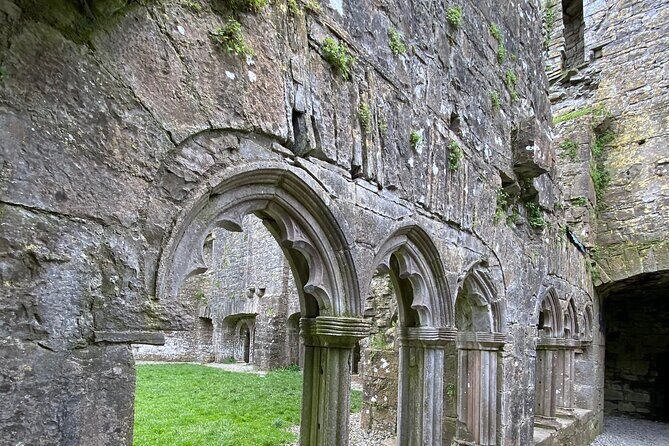
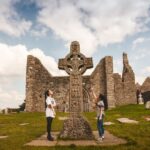
Monasterboice is your first stop after leaving Dublin. You’ll see a monastic settlement dating back to around 501, including some of the best-preserved Celtic crosses in Ireland and a fully intact Round Tower. It’s a great contrast to what comes next: this isn’t just scenery. It’s the kind of place that helps you understand how old Ireland storytelling and place names run deep.
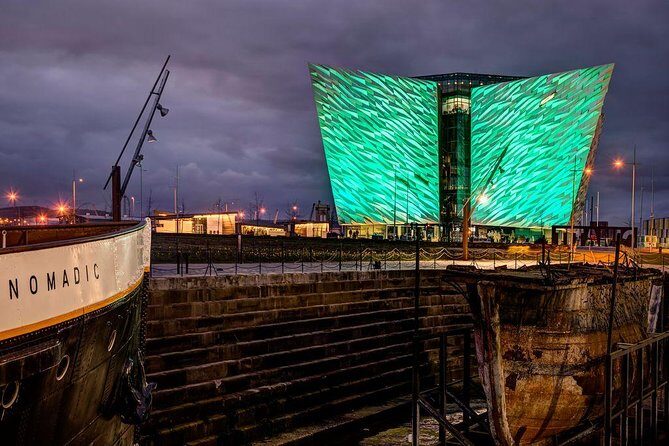
Then it’s straight to Titanic Belfast, Belfast’s number one attraction. You get entry included. Expect a story-driven experience that follows Titanic from design and construction in early 1900s Belfast through launch and the tragic maiden voyage. Even if you think you know the basics, this tends to land because you’re seeing it where the ship was built.
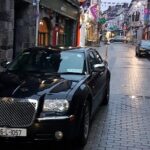
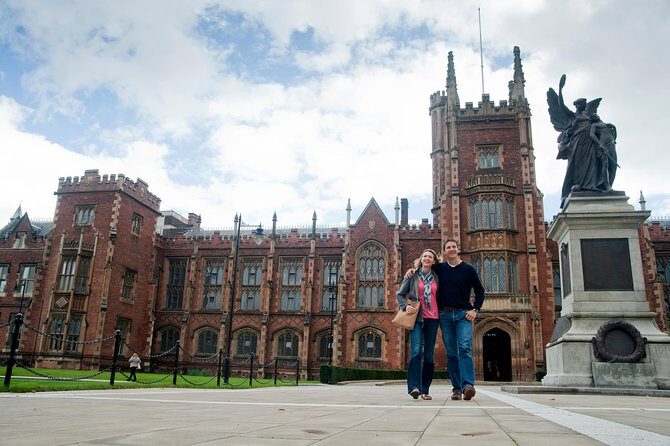
After that, there’s an optional Black Taxi tour. This is where you’d see things like the Peace Wall and political murals, plus a guided sweep past major landmarks such as City Hall, Queen’s University, Albert’s Clock, and the Botanic Gardens. If you want context beyond postcards, this is the add-on that can make Belfast feel less like a quick stop and more like a place with a real story.
You sleep in Belfast overnight.
Day 2 North Coast to Derry: Dark Hedges and the Giant’s Causeway Visitor Centre
Day two is built around a classic Northern Ireland combo: Dark Hedges, Giant’s Causeway, and Derry.
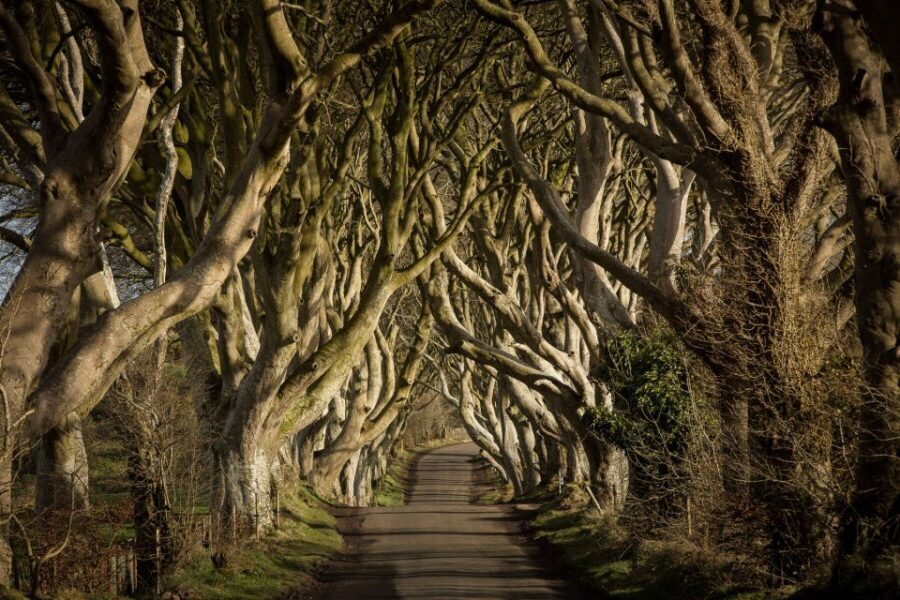
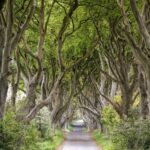
The Dark Hedges stop is short, but it’s the kind of photo stop that many people will remember for years. The trees were planted in the 18th century by the Stuart family, and many folks recognize it from the TV series Game of Thrones as the King’s Road look. Even if you’re not chasing the TV connection, it’s a neat visual—like a green tunnel that seems to pull you forward.
Next is the Giant’s Causeway Visitor Centre area, where you get skip-the-line admission. That matters because the Causeway is popular, and waiting around reduces your time on the stones. From the visitor centre, the path to the actual causeway stones starts behind it and is about a 10-minute walk. If you have mobility concerns, the tour information notes a mobility bus that can take you down the path for a small fare. (If that applies to you, plan to ask the guide how it works on the day.)
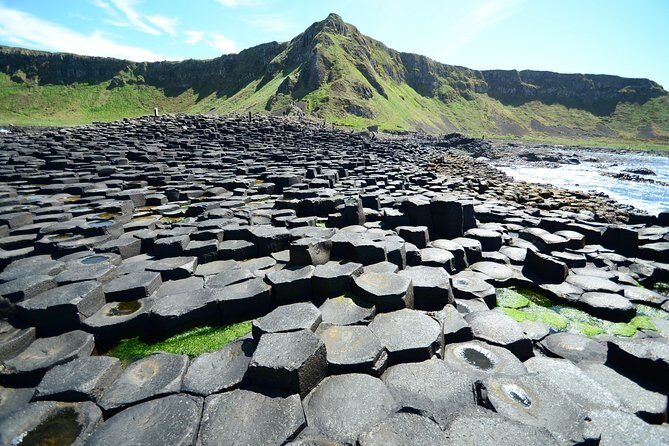
The Causeway itself is the star: hexagonal basalt columns shaped by ancient volcanic action, paired with local legends about giants. Your guide will share the stories during the visit, which is part of why this is more satisfying than a basic drop-off.
Then you head to Derry (Londonderry) for an included in-depth walking tour focused on the Derry walls (1613) and the Bogside district. The Bogside area is closely linked to the events of January 1971 and is referenced in the U2 song Bloody Sunday. After the walking tour, you get leisure time to explore.
Overnight is in the Derry/Londonderry area.
Galway and the Wild Atlantic Way: Strandhill for lunch, then a walking tour in town
Days three and four shift to the Wild Atlantic Way side of Ireland—more ocean views, coastal roads, and western culture.
On day three, you drive along the Wild Atlantic Way with stops that break up the time in the bus.
First is Strandhill in County Sligo. This is a simple but useful stop for lunch. You might grab a bite in the Strand Bar area (pub fare is the point here), and you also get a chance to stretch your legs by the beach. Strandhill is known for surfing conditions, so even a short stroll gives you that west-coast feel.
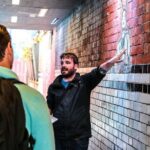
Later you arrive in Galway by mid-afternoon. You can join a free walking tour or explore on your own. If you like wandering with purpose—medieval streets, shopfronts, and the kind of conversations where you hear accents from everywhere—Galway is a good place to get a few hours without being rushed.
You sleep in Galway overnight.


Day 4 Burren, Cliffs of Moher, Adare, and overnight on the Dingle Peninsula

Day four is a packed “Ireland greatest hits” day, and it’s the one where good timing really matters.
The day starts with the Burren, described as a rare mix of Alpine, Arctic, and Mediterranean flowers that grow side by side. You also get stories about the Potato Famine (1845–49) and the mass emigration that followed. It’s heavy subject matter, but the way it’s woven into the scenery tends to keep it from turning into a lecture.
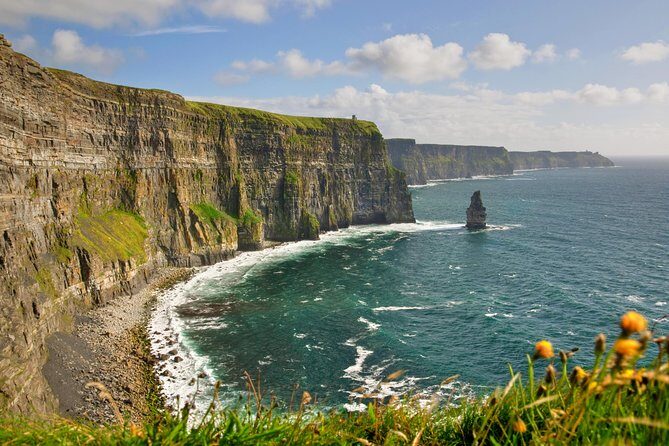
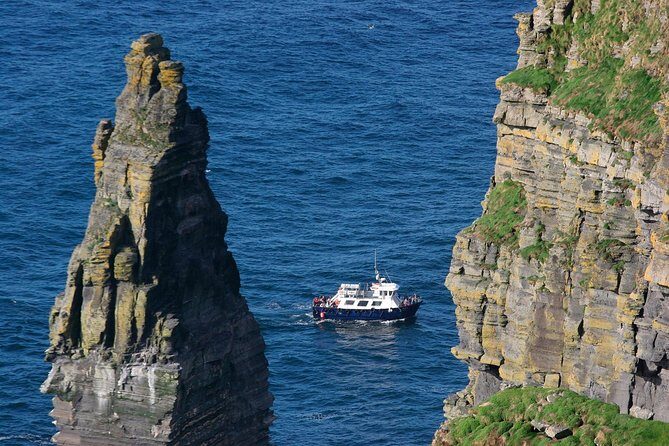
You’ll stop in the village of Doolin for lunch, and then head to the Cliffs of Moher, which are over 700 ft tall. This is where you get your included admission, plus time to look for seabirds such as puffins and gannets. If the weather turns, don’t panic. Cliffs days are often about wind, clouds, and sudden light changes. Dress for it.
After the cliffs, the route crosses the River Shannon in historic Limerick, then ends day four in Adare, known for its thatched cottages and its reputation as one of Ireland’s tidiest towns. It’s a pleasant “reset” stop before you go further west.
Then it’s overnight on the rural Dingle Peninsula. One real-world note from reviews: your lodging may not be in the exact town center of Dingle—it can be a short drive away. That doesn’t ruin the trip, but it can reduce how easy it is to pop into Dingle for extra time at night. Plan for that when you’re thinking about where you want your evenings.
Day 5 Slea Head Drive: Inch Beach, Gaelic-speaking coasts, and Dingle town time
Day five leans into the myth-making part of Ireland: dramatic coastlines, tiny lanes, and places that feel like they’ve been holding onto stories for a long time.
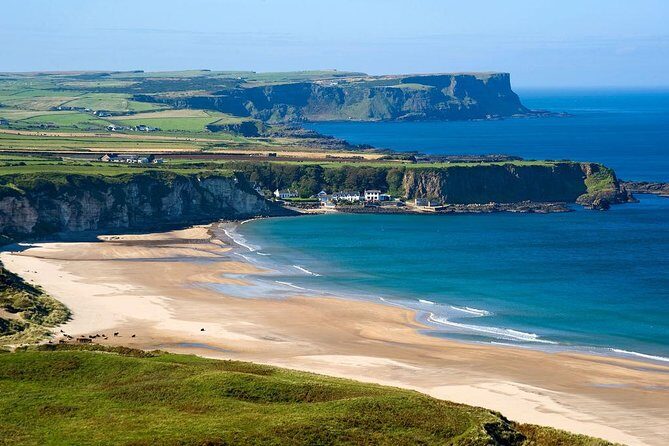
You start with the Dingle Peninsula and the Slea Head Drive. You’ll see Inch, described as Ireland’s longest beach, and then continue toward Dingle village. The coastal viewpoints include references like Sleeping Giant Island, the Blasket Islands, and Beehive huts dating back to 2000 B.C. It’s the kind of stop that works best when you slow down and let the ocean take over your attention.
This part of the route is also Gaelic speaking, and the tour format notes that you may hear locals converse in the language. Even if you don’t speak it, that detail matters because it keeps the west from feeling like a theme park. It’s a living region.
Later you reach Dingle town for time to explore. Dingle is known for having 52 pubs for a town of about 2,000 people, and there’s time for shopping in arts-and-crafts style stores and enjoying music in local pubs.
You then stay overnight in Killarney, which sets you up for day six’s castles and national park time.
Day 6 Killarney National Park and Blarney Castle: optional horse and a long castle visit
Day six is built to end strong: nature first, then the classic castle payoff.
You begin in Killarney National Park with an optional horse and cart ride through the park, or an optional horseback ride for the more energetic. Reviews and itinerary notes suggest this is a scenic way to start the day—slow enough to enjoy the park, fast enough to keep the schedule.
After regrouping, the route crosses the Cork and Kerry mountains toward Blarney Castle.
At Blarney Castle & Gardens, you get about 2 hours, and the admission is included. If you want to kiss the Blarney Stone, you can. If you don’t, the gardens still give you a place to stretch, and you can shop at Blarney Woolen Mills, described as the world’s largest Irish shop. It’s one of those places that can be touristy in the best sense: easy to browse, easy to bring something home.
After lunch, you drive through the Golden Vale—Ireland’s prime dairy/agricultural region—and return to Dublin late afternoon.
How the guide changes everything on this route
This tour is scheduled, so you don’t get to freestyle the route. But you do get a lot of control through the guide, mainly through storytelling, timing, and practical tips.
Several guides are mentioned in reviews: Danny, Vincent, Gordon, Stevie, Gabriel, Alex, Rory, and Brian. The common thread is that the best days feel like you’re driving with someone who actually knows the places, not just someone who reads a script. People highlighted humor, safety, and guides who keep you moving while still giving context for why a stop matters.
Here’s where you should set expectations, based on the reported experience range:
- Be on time for pickup and re-board times. The schedule can be strict.
- Lunch can feel rushed on high-velocity days. Plan to be flexible and hungry at the right moments.
- Some people reported disorganization or missed items in certain situations. It doesn’t mean the whole tour is chaos, but it is a reason to keep your own expectations grounded.
In other words: you’re buying the route, but you’re living the day through your guide and the group energy.
Accommodation reality check: hostels for backpackers vs B&B rooms in Economy
Your lodging is part of the value here, but it’s not a luxury-hotel package.
You get to choose between:
- Backpacker option: a bed in a mixed youth hostel dorm (male and female together, as standard in Europe).
- Economy option: a private room in a B&B (double, twin, triple, or single), with rates per person sharing.
Breakfast is included for six days. Many rooms are described as clean and centrally located in the reviews, but “basic” is the word that shows up repeatedly. Some accommodations are reported with older beds and limited comfort features like air conditioning or elevators. One review specifically called out stairs/elevator limitations and the lack of air conditioning in some places, and another mentioned a Killarney hotel with strong issues (odor and uncomfortable beds) during a situation where someone got sick and couldn’t continue as planned.
So, how should you plan?
- If you pick Backpacker, expect dorm life and smaller spaces.
- If you pick Economy, you’re generally in better privacy, but still in the realm of B&Bs and older properties.
- If stairs are a concern, you’ll want to factor that in before you assume elevators will be available.
Who this tour suits best (and who should think twice)
This is a strong fit if:
- You want maximum Ireland coverage in a short time.
- You’re a first-time visitor who’d rather not drive.
- You like guided context—stories, legends, and local meaning tied to real stops.
- You can handle long days on the road without needing a slow, independent pace.
It might not be ideal if:
- You hate feeling rushed at attractions.
- You want lots of downtime built into the schedule every day.
- You’re the type who gets stressed by tight timing and strict re-boarding windows.
Should you book? My straight answer
Book it if you want a low-stress route that hits Belfast, Derry, the Wild Atlantic Way, the Burren, Dingle, Killarney, and Blarney with key admissions included. The value is real when you compare the ticket costs plus the fact that lodging and breakfast are handled.
Skip or at least reconsider if you need a slow pace, deep exploration at each town, or guaranteed hotel comfort like modern mattresses and air conditioning everywhere. This is a “see a lot” tour, not a “wander forever” tour.
If you do book, your best move is simple: show up early on day one, pack layers for Ireland weather, and treat the bus time as part of the experience—not downtime you’ll resent.
FAQ
What’s included in the tour price?
The tour includes 5 nights of accommodation in Belfast, Derry/Londonderry, Galway, the Dingle Peninsula, and Killarney, plus breakfast for 6 days. Transport is provided by air-conditioned coach with live commentary, and the tour includes WiFi on board and USB charging points at every seat. Several attractions are included with admission, including Titanic Belfast, Cliffs of Moher, Giant’s Causeway Visitor Centre, Dark Hedges (admission is listed), and Blarney Castle & Gardens.
What is the meeting point in Dublin?
The tour pickup is at Paddy’s Palace, 5 Beresford Pl, Gardiner Street Lower, Mountjoy, Dublin 1.
What time does the tour start?
Start time is listed as 7:50 am.
How many nights are you in Ireland on this trip?
You stay 5 nights total, across five locations: Belfast, Derry/Londonderry, Galway, the Dingle Peninsula, and Killarney.
How big is the group?
The maximum group size is listed as 56 travelers.
Is WiFi and charging available on the bus?
Yes. WiFi is available on board, and there are USB charging points at every seat.
Are any activities optional?
Yes. The Belfast black taxi tour is optional, and the horse and cart ride or horseback ride in Killarney National Park is also optional.
What room options are offered?
Backpacker includes a bed in a small to medium mixed youth hostel dorm. Economy includes a double, twin, triple, or single room in a bed and breakfast accommodation, with rates per person sharing (Economy single is for one person in a private room).
Is lunch included each day?
Food and drinks are listed as not included unless specified, so lunch is generally on your own.
Does the tour return to Dublin each night?
No. The trip ends with drop-off back in Dublin in the late afternoon on day six. During the 6 days, you overnight in Belfast, Derry/Londonderry, Galway, the Dingle Peninsula, and Killarney.
Can the route or itinerary be changed by request?
No. The route is scheduled and cannot be modified by request.