REVIEW · DUBLIN
Women Of Ireland: Trailblazers & Pioneers
Book on Viator →Operated by Unearthed Tours · Bookable on Viator
Dublin gets a fresh female lens. On this small-group walk, you follow the stories of Ireland’s women trailblazers around real streets and landmarks, guided by a story-first approach rather than the usual headlines. The route keeps the focus where it should be: on women who helped shape independence, social change, and modern Ireland.
I also like the small-group size (max 14). It makes the tour feel like a shared conversation, with your guide adjusting to the mix of backgrounds people bring. One practical consideration: this is a walking tour with short stops, and you don’t go inside RCSI or Dublin Castle, so don’t expect long museum-style time.
You’ll do it at a comfortable pace too: about 1 hour 30 minutes total, starting at 11:00 am with an easy meetup at St Stephen’s Green. Plus, the experience uses a mobile ticket, so you’re not fumbling with paper on a busy street.
In This Review
- Key things to know before you go
- A Female-Focused Dublin Walk That Fits Your 90-Minute Plans
- Meeting at St Stephen’s Green and Getting Oriented Fast
- Countess Markievicz at St Stephen’s Green, Plus Women Tied to the 1916 Rising
- Mercer Street Upper and Ship Street Great: “Nun of Kenmare” and Suffrage Action
- Dubh Linn Gardens and Veronica Guerin: Where the Walk Gets Modern
- Dublin Castle Gardens and Anne Devlin: The Final Thread into Modern Ireland
- Price and Logistics: Why $17.35 Can Be a Smart Value
- Who This Tour Suits Best (and Who Might Want a Different Style)
- Should You Book Women Of Ireland: Trailblazers & Pioneers?
- FAQ
- How long is the Women Of Ireland: Trailblazers & Pioneers tour?
- Where do I meet the guide?
- What time does the tour start?
- Does the tour include entry into Royal College of Surgeons (RCSI)?
- Does the tour enter Dublin Castle?
- Are tickets digital or paper?
- Is food or private transportation included?
- Is the tour easy to reach with public transportation?
- Is service animals allowed?
- Is free cancellation available?
Key things to know before you go
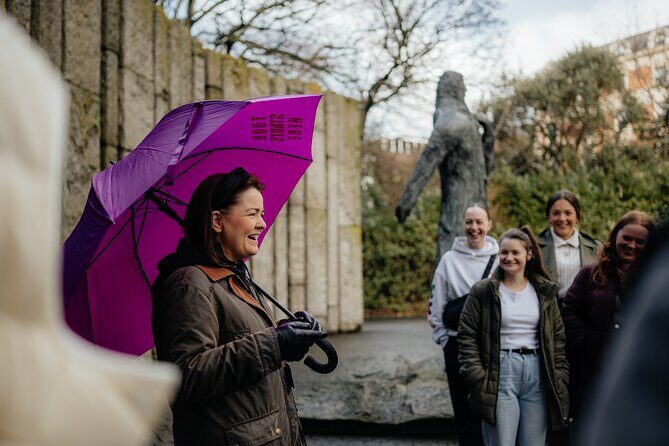
- Small group (14 max) means the guide can keep things personal without dragging.
- Real Dublin landmarks connect the women’s stories to the exact streets you’re standing on.
- Short, 15-minute stop structure keeps momentum high and helps the time feel efficient.
- Most stops are free to access, but you won’t enter RCSI or Dublin Castle.
- Eco-friendly format and a walking route help you see the city at human speed.
A Female-Focused Dublin Walk That Fits Your 90-Minute Plans
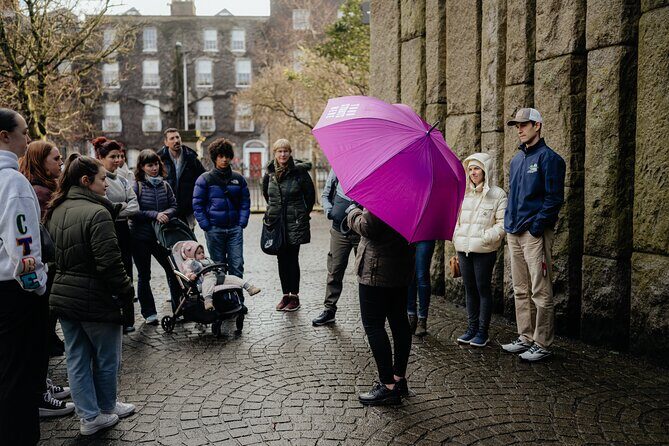
If you’ve ever done a classic Dublin sightseeing loop, you’ve probably noticed a pattern. The names are familiar, but the story is usually male-heavy. This tour is built to fix that. Instead of generic “famous facts,” it threads together Irish women who pushed boundaries—independence fighters, reformers, suffrage supporters, and people whose influence stretches toward modern Ireland.
The big win for me is that you’re not just hearing dates. You’re walking through places where those stories connect to the city. Even if you’ve never read much Irish history, you can still follow along because the guide keeps each stop tight and story-driven.
The tour also fits real-life scheduling. Ninety minutes is long enough to feel like you learned something, but short enough that you can still do other Dublin plans afterward—pub dinner, a museum visit, or a second walk through a different neighborhood. And at this price point, you’re paying for a guide-led walking experience, not for a complicated package of separate tickets and transfers.
Just keep your expectations aligned: this is an outdoor-oriented route with brief time at each stop. You’ll get context and names you can remember. You won’t get a slow, inside-only history lecture.
You can also read our reviews of more tours and experiences in Dublin.



Meeting at St Stephen’s Green and Getting Oriented Fast
You start at St Stephen’s Green, near the Wolfe Tone Sculpture. The timing is set: the tour begins at 11:00 am, and you’ll want to show up a bit early so the group can gather and you’re not waiting at the wrong landmark while your stomach wonders if you grabbed coffee yet.
From that first meetup, the tour style is clear. The guide sets expectations quickly and then moves stop to stop with a rhythm that’s easy to track. Each main moment is about 15 minutes, which matters because it keeps attention from wandering. It also gives you a natural pause to look around, notice the street scene, and re-orient yourself before the next story begins.
The tour uses a mobile ticket, so you’ll be able to check in from your phone. That’s a real convenience in Dublin, where lines and paper tickets can turn into a mini adventure you didn’t ask for.
Also, the meeting point is in a central spot with near public transportation. That’s helpful if your plans include hopping between areas rather than starting your whole day in one location. St Stephen’s Green is one of those places where you can orient fast, even if it’s your first time in town.
Countess Markievicz at St Stephen’s Green, Plus Women Tied to the 1916 Rising
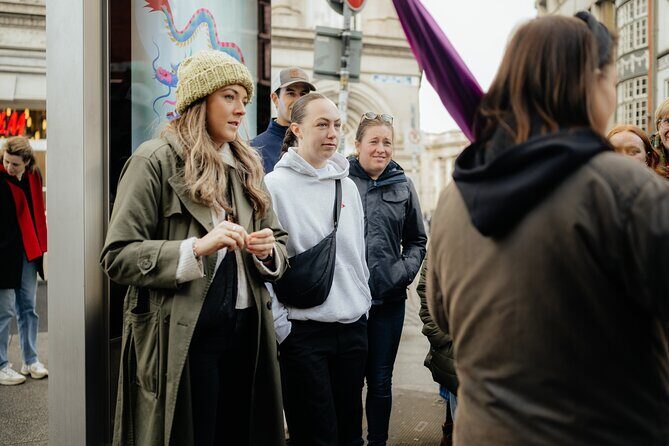
The tour opens with a bust of Countess Markievicz at St Stephen’s Green. This is a smart first stop because it anchors the whole theme right away: women weren’t just on the sidelines of Irish change. They were part of the independence fight.
The guide explains her role, and then the tour quickly moves into the bigger theme of women stepping into high-stakes public moments. Starting with a visible landmark helps you remember what you’re looking at as the tour travels deeper into the stories.
Next up is Royal College of Surgeons (RCSI). Important detail: the tour guide talks about women connected to RCSI during the 1916 Rising, including Margaret Skinneder, but the tour does not enter RCSI. Admission isn’t included here, which is exactly why the tour can keep moving without delays.
So what do you gain from this stop if you’re not going inside? You get a location-based story. The guide links the women’s roles to a place you can see, even if you’re viewing it from the outside. That helps the tour feel grounded. You’re not treating history like a set of disconnected facts.
If you’re the kind of person who likes going inside buildings for the full effect, just note this tradeoff. You’ll get story and context with less time spent in formal interiors.
Mercer Street Upper and Ship Street Great: “Nun of Kenmare” and Suffrage Action
After the heavier independence-era focus, the route shifts into two different kinds of rebellion: social influence and political pressure.
At Mercer Street Upper, the guide explores the story of Margaret Anne Cusack, known as The Nun of Kenmare. Even without a long stop, this is the kind of name you’ll remember because it’s specific and human. It also expands the tour’s view beyond one narrow definition of “activism.” You’re reminded that women shaped change through organizations, community work, and strong convictions—not only through battles.
Then you move to Ship Street Great for the suffragette movement and Hannah Sheehy-Skeffington. This stop is where the tour turns political in a clear, direct way. It’s a different energy than the earlier independence framing. You’re learning how women pressed for rights, and the guide connects that to Dublin’s public spaces and streets.
What I like about putting these two stops close together is the contrast. You end up seeing that “trailblazer” doesn’t mean one single style of influence. It can be faith and service in one story, and organized campaigning in the next. The tour keeps you from assuming the only important kind of activism is the loudest kind.
Quick practical note: because the stops are short, it helps to be mentally ready to listen and then look. Don’t spend the first minute of each stop distracted by your phone. Give the guide a clean minute, and you’ll catch more.
Dubh Linn Gardens and Veronica Guerin: Where the Walk Gets Modern
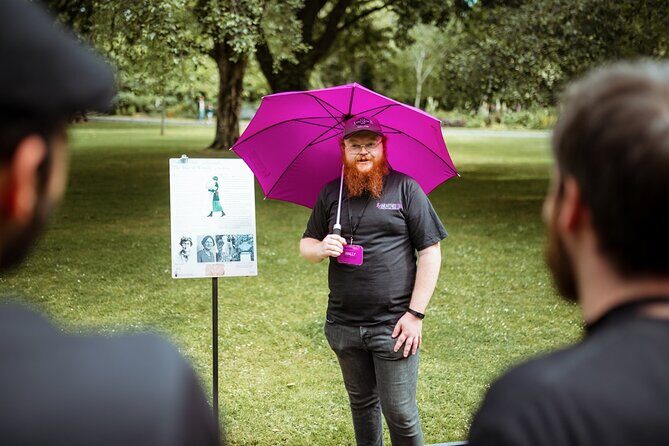
One of the most satisfying parts of the route is Dubh Linn Gardens. Here, the tour enters the gardens, and the guide focuses on Veronica Guerin. This is where the tour’s time period starts to feel closer to modern Ireland, and the atmosphere shifts from street corners to a calmer pocket of green.
The gardens stop matters for two reasons. First, the setting changes the pace. It’s easier to focus when you’re not dodging traffic and crowd noise every few seconds. Second, it signals that the tour is not only about the early political era. It’s about women who remained relevant as Ireland’s story moved forward.
You’ll get a guided look at her life, and it’s the kind of storytelling that makes you think differently after you leave the gardens. Instead of the women feeling like characters in a distant textbook, they feel like part of a living line of influence.
This also connects nicely to what you end with later. The tour uses Guerin’s story as a bridge toward discussions of modern Ireland.
Plan for a bit of walking within the garden space. Even though it’s a guided stop, you’ll still want to wear shoes that handle uneven ground comfortably.






Dublin Castle Gardens and Anne Devlin: The Final Thread into Modern Ireland
The tour finishes near Dublin Castle, specifically in the gardens area. Here’s the key detail: the tour does not enter Dublin Castle, and admission isn’t included. You get the setting and the closing narrative without turning the experience into a full castle visit.
The guide wraps up with the history of Anne Devlin and then talks about modern Ireland. This ending works well because it gives you a sense of continuity. You’re not just collecting women’s names. You’re seeing how different kinds of influence—from independence-era struggle to later public life—feed into the present-day conversation about Ireland.
If you’re wondering how effective that is after a busy walking route: pretty effective. The last stop is short and intentional, designed to leave you with a few “anchor” figures you can connect when you’re walking around Dublin on your own later.
Also, because Dublin Castle is such a major landmark, your brain keeps using it as a mental reference point. Even though you don’t go inside, you still get that feeling of landing in a central place where history is hard to miss.
Price and Logistics: Why $17.35 Can Be a Smart Value
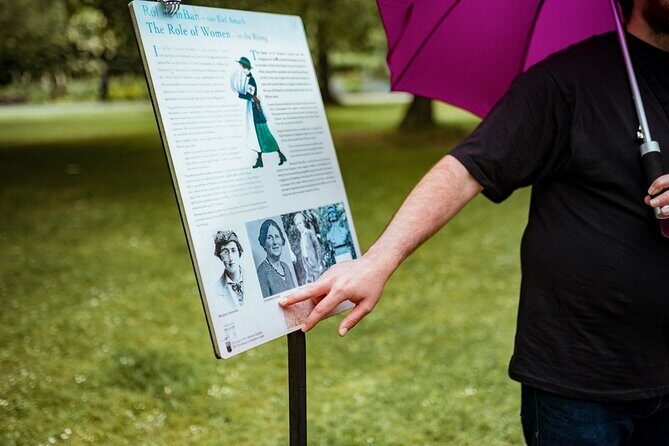
At $17.35 per person for roughly 1 hour 30 minutes, this is priced like a practical guided experience. You’re paying for a guide, a small group experience, and a route that hits multiple story locations without requiring you to piece together a bigger itinerary.
Value comes from a few places:
- Short stop timing keeps it efficient. You aren’t stuck for ages at one place.
- Limited to 14 travelers, so you’re not lost in a crowd.
- Several stops have free admission (including St Stephen’s Green, Mercer Street Upper, Ship Street Great, and Dubh Linn Gardens).
- You avoid paying extra just to participate because the tour doesn’t include entries at RCSI or Dublin Castle.
The only “cost” is time and attention. This tour works best when you lean in and listen. If you treat it like background noise while checking messages, you’ll miss the whole point.
One more practical tip: because it’s a walking tour, dress for comfort. Dublin weather can change quickly, and you’ll want layers that make it easy to stay comfortable for 90 minutes.
Finally, consider timing your booking. The tour is commonly booked about 24 days in advance on average, so if your schedule is tight, it’s smart to lock in early.
Who This Tour Suits Best (and Who Might Want a Different Style)
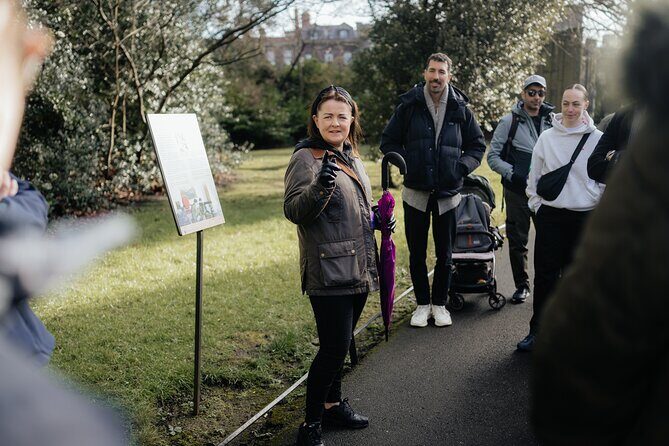
This tour is a great fit if you want Dublin history that feels human and specific. You’ll like it if you enjoy learning from a guide who tells stories clearly, keeps a good pace, and doesn’t overload you with facts for the sake of facts.
Based on how the tour has been experienced, I’d call out two standout traits you should expect:
- Energetic guiding and strong storytelling. People have highlighted guides who keep the mood light while staying focused on the subject.
- Good pacing. It’s the right amount of information for a short walking tour, and the guide can meet different levels of interest without making anyone feel behind.
It might be less satisfying if you’re mainly looking for indoor museum time or hands-on exhibits, because the tour doesn’t enter RCSI or Dublin Castle. Still, the tradeoff is that you get more street-level context and less waiting around.
This is also a good “first Dublin history” choice if you’re new to the city. The route centers on major Dublin anchors—St Stephen’s Green and the Dublin Castle area—so you’ll leave with a clearer sense of where things are.
Should You Book Women Of Ireland: Trailblazers & Pioneers?
Yes, I think you should book it if your goal is Dublin history with a sharper lens. The women featured are memorable, the route is compact and well-paced, and the small group size makes it feel like a real experience instead of a conveyor belt.
It’s also a smart choice for value. For $17.35 you’re getting a guide-led tour with multiple themed stops and several free-access locations. The only real downside is that it’s not an indoor-heavy format, so if you specifically want to enter RCSI or Dublin Castle, plan a separate visit.
If you want your afternoon to feel like more than just sightseeing, this is the kind of walk that leaves you thinking—and gives you names you can carry around Dublin like little signposts.
FAQ
How long is the Women Of Ireland: Trailblazers & Pioneers tour?
The tour lasts about 1 hour 30 minutes.
Where do I meet the guide?
Meet at the Wolfe Tone Sculpture in St Stephen’s Green, Dublin.
What time does the tour start?
The start time is 11:00 am.
Does the tour include entry into Royal College of Surgeons (RCSI)?
No. The tour does not enter RCSI, and admission is not included.
Does the tour enter Dublin Castle?
No. The tour does not enter Dublin Castle, and admission is not included. You finish in the gardens area.
Are tickets digital or paper?
The tour uses a mobile ticket.
Is food or private transportation included?
No. Private transportation and lunch are not included.
Is the tour easy to reach with public transportation?
Yes, the meeting area is near public transportation.
Is service animals allowed?
Yes, service animals are allowed.
Is free cancellation available?
Yes, you can cancel for a full refund if you cancel at least 24 hours before the experience’s start time.