REVIEW · DUBLIN
Dublin Mythology and Folklore Tour with Irish Stories and Legends
Book on Viator →Operated by Original Dublin · Bookable on Viator
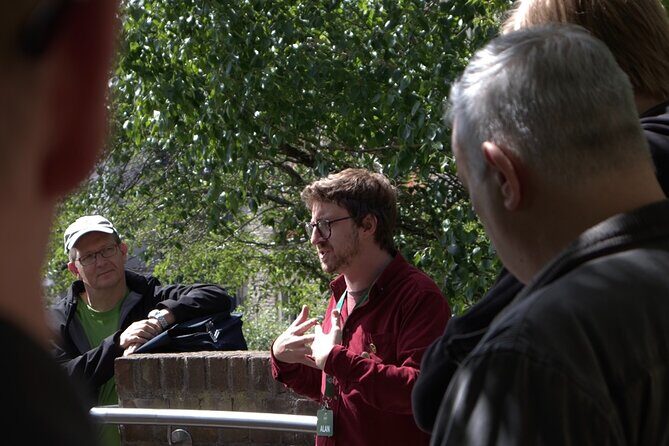
Dublin’s legends are written in street corners. This Irish mythology and history walk runs about 2 hours, starting in Temple Bar and ending in Parnell Square, with a guide who turns buildings into storybook set pieces. I especially like how each stop connects folklore to something you can actually point at on the street. I also like the human energy—guides named in past groups such as Deidre, Helena, Emily, Lee, Ross, Alan, and David bring humor and room for questions. The main drawback to consider: it’s a lot of moving and standing, and in larger groups some people say it can be tough to hear every word.
Logistics are refreshingly simple. You get a mobile ticket, the meeting point is near public transport, and the group size tops out at 25. It’s also listed as wheelchair and stroller accessible, and service animals are allowed, which helps if you’re traveling with mobility needs.
In This Review
- Key things to know before you go
- Temple Bar (3 Crown Alley) to start: why this first stop works
- Grattan Bridge: seahorse lamps, mythic street geometry, and a great photo moment
- River Liffey stories north and south: understanding Dublin through its water
- St. Michan’s Church and the crypt-and-prison angle: where folklore turns darker
- GPO Museum facade stop: Irish mythology meets modern Irish history
- Finishing at Children of Sir in the Garden of Remembrance: a thoughtful wrap-up
- Pace, group size, and hearing the stories: getting the best value from 2 hours
- Price and value at $29.02: what you’re really paying for
- Who should book this Dublin mythology walk
- Should you book the Dublin Mythology and Folklore Tour?
- FAQ
- How long is the Dublin mythology and folklore tour?
- Where does the tour start and where does it end?
- What language is the tour offered in?
- Is the tour wheelchair and stroller accessible?
- How big is the group?
- Is there free cancellation?
Key things to know before you go

- Temple Bar start, guided stroll through the area so you don’t just see one photo spot—you get the vibe of the neighborhood first.
- Grattan Bridge’s seahorse lamps show up in the story, and the bridge is a natural hinge between old Dublin and modern street life.
- River Liffey on both sides gives you context for why the city grew the way it did, with myths tied to the waterway.
- St. Michan’s Church + nearby historic corners bring darker folklore into the conversation, including tales tied to the crypt and the old prison and courthouse area.
- Finish at Children of Sir in the Garden of Remembrance so the walk ends with a meaning-forward landmark, not a random curb.
Temple Bar (3 Crown Alley) to start: why this first stop works
You begin at 3 Crown Alley in Temple Bar, right in the center of the area where Dublin’s tourist life and its older character overlap. From there, you don’t rush straight to a single landmark; you move through most of Temple Bar as part of the warm-up story route. That matters, because Dublin folklore is often about place. The guide helps you read the city like a map of clues.
Temple Bar can be loud and crowded in the evenings, so a small “orientation” moment at the start helps. You learn what to watch for as you walk: street patterns, bridge lines, and how the city’s layout keeps showing up in the legends. It’s a smart way to set expectations without turning the tour into a lecture.
This start also gives you an easy timing benefit. Since the tour is about 2 hours and each major stop is roughly 10 minutes, you’ll get multiple layers of the story rather than burning all your time on one site. If you’re arriving for the first time, it’s a solid way to get your bearings fast.
You can also read our reviews of more tours and experiences in Dublin.



Grattan Bridge: seahorse lamps, mythic street geometry, and a great photo moment
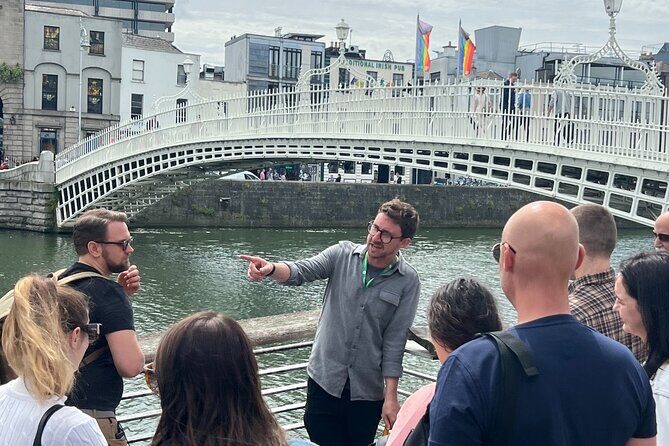
After Temple Bar, the route heads toward Grattan Bridge, a favorite crossing over the River Liffey. The bridge links Parliament Street to Capel Street, which is the kind of practical detail guides love because it turns the city into something you can navigate after the tour. And yes, the bridge is famous for its ornate lamps—seahorse-adorned in a way you’ll remember long after you leave the riverbank.
What I like about this stop is how it uses a simple crossing as a story device. Bridges are literal connections, but they also act like metaphors in folklore. The guide uses the bridge to show you how Dublin’s identity keeps echoing in the built environment.
Practical tip: the stop is only about 10 minutes, so treat it like a quick hit. Take your photos early, then listen. If you wait until the end to look around, you’ll miss the point of why the lamps and the bridge design are part of the tale.
River Liffey stories north and south: understanding Dublin through its water
Next you spend time exploring the River Liffey from both sides—north and south—around the main city corridor. Even if you’ve heard Dublin myths before, this part helps you see how the river functions as more than scenery. It’s a dividing line, a route, and a reason for where people built, traded, and argued.
This is also where the tour feels most like “walking with a local brain.” Instead of just naming legends, the guide ties the idea of the river to how Dublin developed and how later Irish history kept borrowing from older stories. You end up with a sense of the city’s logic: why certain areas feel like they belong together, and why certain stories feel linked even when they come from different eras.
One careful note: the stop time is short, about 10 minutes. If you want more time at the river, plan a separate stroll before or after. The tour gives context; you’ll supply the lingering.
St. Michan’s Church and the crypt-and-prison angle: where folklore turns darker
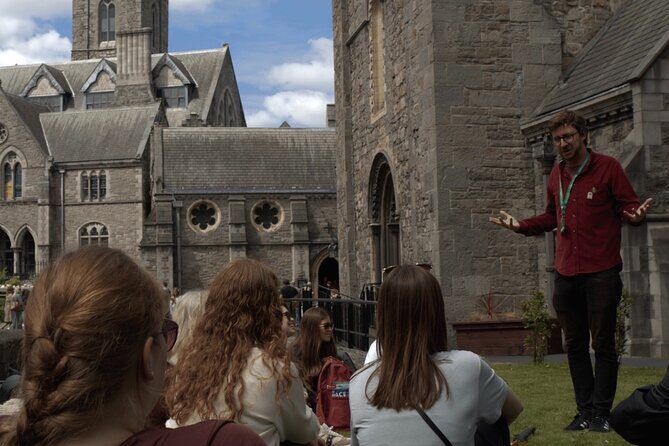
St. Michan’s Church is one of those Dublin spots that feels like it has been absorbing secrets for centuries. During this stop, the guide talks about how the church shaped some of Dublin’s secret tales, including stories connected to the bodies it holds in its crypt. If you prefer your folklore with a bit of edge, this is the moment.
You’ll also hear about the grounds nearby tied to older institutions—the area of the old Newgate Prison and the Green Street Courthouse. This is where mythology and history start bumping shoulders. You’re not just hearing legends as fairy tales; you’re learning how a country’s stories can grow alongside its laws, punishments, and public memory.
The practical drawback: because the stop is outside and the subject matter is heavier, it’s not the most “feel-good” segment of the walk. If you’re with kids, you might want to judge whether crypt-related topics fit your comfort level. For adults, though, it’s a memorable pivot that makes the darker side of Irish storytelling make sense in a real place.
Wear shoes you’re comfortable standing in. Even with a short stop, you may spend time shifting positions for listening and sightlines.
GPO Museum facade stop: Irish mythology meets modern Irish history
The route includes a pause outside the GPO Museum, known for one of the most impressive facades in the city and for its importance in Ireland’s modern story. Here, the guide focuses on how Irish mythology helps shape modern Irish identity and Irish history.
This is a key reason to choose this tour over a straight “sites only” Dublin walk. Instead of treating mythology as folklore wallpaper, you see it used like a lens. Symbols, cultural memory, and narrative patterns matter. The city’s big landmarks aren’t random; they’re part of how stories get passed down and repurposed.
Time-wise, the stop is again about 10 minutes, so it’s best as a framing moment. You’ll leave with a better question in your head—how and why certain stories keep echoing through major public buildings. If you want to go deeper after the tour, this stop sets you up to explore more on your own.






Finishing at Children of Sir in the Garden of Remembrance: a thoughtful wrap-up
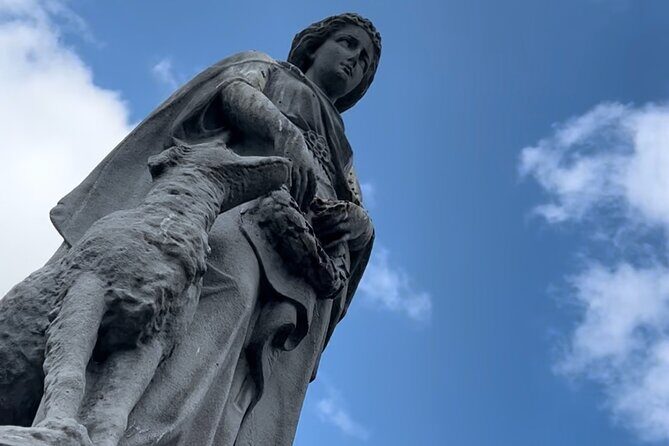
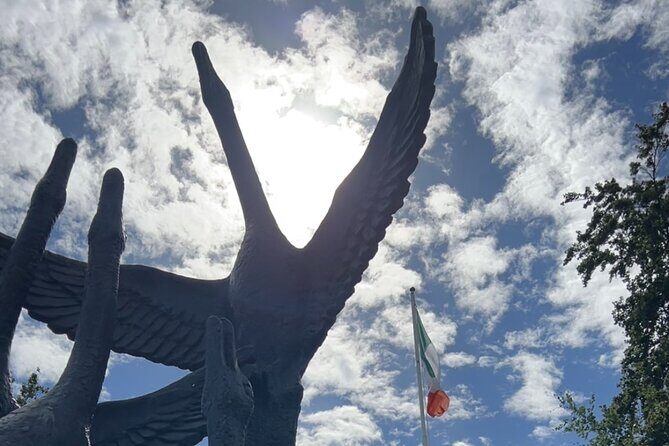
The tour ends in the Garden of Remembrance in Parnell Square, right at the foot of Oisin Kelly’s statue Children of Sir. It’s a fitting finale because it shifts from “mystery and mayhem” into something reflective. You’re not just walking around legends—you’re closing with a symbol tied to memory and national emotion.
From a traveler’s comfort point of view, this ending spot is also useful. Since you finish at the center of Parnell Square, you can easily plan your next move—dinner nearby, a museum visit, or an evening wander. The route is designed so you don’t end somewhere awkward or out of the way.
If you’re the kind of person who likes to re-scan places with new eyes, take a minute at the end. The statue gives you a moment to think about how stories evolve: from myth to public art to shared remembrance.
Pace, group size, and hearing the stories: getting the best value from 2 hours
This is a group tour with a maximum of 25, and it runs for about 2 hours. In practice, that means you’ll get a lively group atmosphere and a guided storyline that moves along without getting bogged down.
It also means sound can be an issue. A few people noted difficulty hearing the guide, which often happens when groups are large or spread out. Your best fix is simple: stand closer to the guide when you can. Ask a question if you have one during the stop—guides often work those into the flow.
Reviews also point to pacing differences depending on the guide and the group. Some people mention the guide walks quickly, while others say stops keep it manageable. So if you’re slower than average, this is one tour where it helps to set yourself up early: wear comfortable shoes, and don’t book it back-to-back with another event.
As for mobility, the tour is listed wheelchair and stroller accessible. If you’re pushing a stroller or using a wheelchair, the short stop lengths can actually help because you’re not stuck in one place too long. Still, you’ll want to follow the guide’s pace rather than expecting a slow shuffle.
Price and value at $29.02: what you’re really paying for
At $29.02 per person for about 2 hours, you’re not paying for museum entries—every listed stop is marked as free admission. You’re paying for the guide’s ability to connect the dots: myth to architecture, folklore to public memory, and story to the way Dublin looks today.
That’s where the pricing feels fair. You hit major central Dublin landmarks—Temple Bar area, the River Liffey corridor, Grattan Bridge, St. Michan’s area, the GPO facade, and the Garden of Remembrance—within one walk. If you’re trying to get a “big picture” foundation without buying multiple tickets, this can be a smart use of evening time.
One extra value signal: the rating is 4.9 with 1003 reviews, and 99% recommend the tour. High marks usually mean the guide makes the information land, not just recite facts. If you’ve had “walking tours” where you get names and dates but no story, this one aims for the story-first approach.
Who should book this Dublin mythology walk
This tour is a great fit if you want:
- A story-driven introduction to Dublin that links legends to real city spaces
- A light evening plan that’s only about 2 hours
- An easy way to understand Irish folklore without needing prior knowledge
It’s less ideal if you strongly prefer lots of sitting, need very quiet audio conditions, or want a slower, museum-style pace. It includes standing and walking throughout, and the group size can affect how clearly you hear the guide.
If you like your history filtered through culture—fairies, symbols, public memory, and how old stories shape the present—this is the kind of tour that gives you a fresh way to look at the city.
Should you book the Dublin Mythology and Folklore Tour?
I think you should book it if you’re in central Dublin for a short time and you want a guided “map” of mythology across the city. The mix of Temple Bar energy, a bridge landmark moment with seahorse lamps, the River Liffey perspective, the darker St. Michan’s/Old Newgate/Green Street angle, and the closing Children of Sir finale makes it feel like a complete arc rather than a list of stops.
Skip it only if walking and standing for a couple of hours is a deal-breaker for you. Otherwise, it’s a strong value way to learn why Dublin’s legends still matter in the real streets you’ll walk the next day.
FAQ
How long is the Dublin mythology and folklore tour?
Plan on about 2 hours. The stops are short, with around 10 minutes at each main location.
Where does the tour start and where does it end?
It starts at 3 Crown Alley, Temple Bar, Dublin, D02 CX67. It ends at the Garden of Remembrance in Parnell Square, at the foot of the Children of Sir statue (Dublin 1).
What language is the tour offered in?
The tour is offered in English.
Is the tour wheelchair and stroller accessible?
Yes. The tour is listed as wheelchair and stroller accessible.
How big is the group?
This tour has a maximum group size of 25 people.
Is there free cancellation?
Yes. You can cancel up to 24 hours in advance for a full refund.