REVIEW · DUBLIN
Dublin Full-Day Tour through Boyne Valley
Book on Viator →Operated by Ger Healy · Bookable on Viator
Ancient Ireland, in one long day. This full-day Boyne Valley route ties together prehistoric awe at Newgrange with medieval faith and power at abbeys, Tara, and Trim Castle. It’s a focused, do-it-all itinerary, built for first-timers who want their questions answered without guessing.
I really like two parts: the mix of Cistercian abbeys (Mellifont and Bective) alongside the ceremonial sites of the Boyne. And I like that you get dedicated time at Newgrange, plus a realistic chance to see more there with help from the guide Ger (Gerry) Healy.
One thing to plan for is the day is long (about 6 to 8 hours), and Newgrange (plus the exhibition) has an extra fee, with lunch not included.
In This Review
- Key things to know before you go
- Boyne Valley in a single day: the big picture you’ll feel
- Mellifont Abbey: where Cistercian Ireland starts
- Newgrange and Brú na Bóinne: 3200 BC, and yes, it’s older than your mental map
- Hill of Slane: Saint Patrick’s fire and the story behind it
- Hill of Tara: Ireland’s old power center, still loud in the imagination
- Bective Abbey: another Cistercian lesson, this time by the Boyne
- Trim Castle: the big Norman fortress that closes the loop
- Price and value: what you’re really paying for
- How to make the day smoother (and more enjoyable)
- Should you book this Dublin-to-Boyne Valley day trip?
- FAQ
- How long is the Dublin Full-Day Tour through Boyne Valley?
- How many people are on this tour?
- Is hotel pickup included?
- What’s included in the price?
- What is not included?
- How much is the Newgrange admission/exhibition fee?
- What sites are included on the itinerary?
- What language is the tour offered in?
- Is there a cancellation option?
Key things to know before you go
- Private transport with hotel pickup: You start from your accommodation and travel as just your group (up to 6).
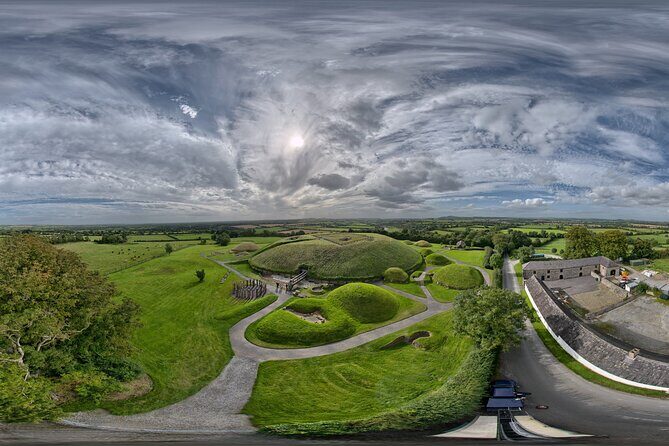
- Long time at Newgrange: You get about 3 hours at the UNESCO site, not a rushed stop.
- Free admissions on several stops: Mellifont Abbey and Bective Abbey are ticket-free during your visit.
- All the major themes of the Boyne Valley in one line: monasteries, prehistory, saints and kings, then a big Norman fortress.
- Some admissions are not included: Newgrange and Trim Castle admissions aren’t included, so budget for that day’s ticket reality.
- Moderate walking level: The route is manageable, but you should be comfortable with short stretches on uneven terrain.
Boyne Valley in a single day: the big picture you’ll feel
If you’re short on time in Ireland, this kind of day trip is a smart move. You hit prehistoric Ireland, then medieval monasteries, then you zoom into the Anglo-Norman era with Trim Castle. It’s like flipping through eras without changing hotels or doing separate tours.
Because it’s private for up to 6 people, you’re not stuck in a cattle-car pace. You can ask questions, pause for photos, and keep your group moving together when the schedule allows.
The pacing is tight in the best way and in the “don’t forget comfy shoes” way. You’ll get real time at Newgrange and Trim Castle, but the other sites are shorter—so treat them like targeted museum-style visits, not full-day wanders.
You can also read our reviews of more tours and experiences in Dublin
Mellifont Abbey: where Cistercian Ireland starts
Mellifont Abbey is the first stop, and it’s a great one to set the tone. It was founded in 1142 by Saint Malachy, Archbishop of Armagh, and it’s considered the first Cistercian abbey in Ireland. Even if you don’t know medieval orders yet, the site gives you an instant sense of why monastic life mattered.
You’ll have about 45 minutes, plus admission is listed as free for your stop. In that time, focus on the layout and the scale. Cistercian abbeys weren’t built to be showy; they were built for discipline, prayer, and a working community.
A possible drawback: if you’re the type who likes to linger for an hour per ruin, 45 minutes may feel a bit brisk. Still, as a day-trip opener, it helps you understand the religious “engine” that powered the region for centuries.
Newgrange and Brú na Bóinne: 3200 BC, and yes, it’s older than your mental map
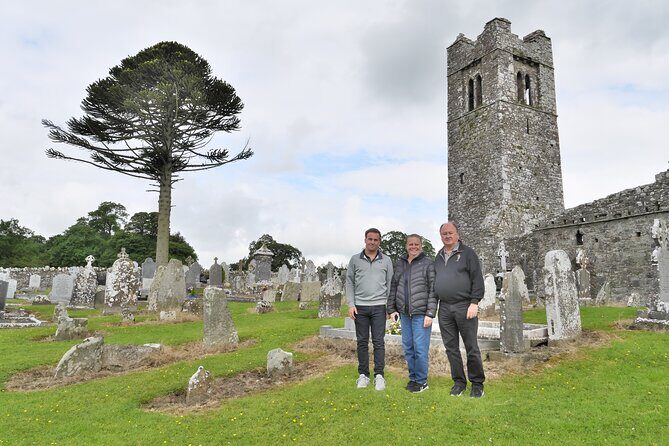
Newgrange is the star, and the numbers explain why. Built around 3200 BC, it predates Stonehenge and the Great Pyramids of Giza, and it’s part of the Brú na Bóinne UNESCO World Heritage Site with Knowth and Dowth.
You’ll spend about 3 hours here, and the big practical detail is admissions aren’t included. The tour lists the Newgrange tour + exhibition fee as €18 per booking, so it’s worth budgeting early so it doesn’t surprise you mid-day.
What I find most compelling is how Newgrange forces your brain to slow down. The structure is ancient, but it’s also clearly designed—meant to be approached, understood, and remembered. If you like archaeology, you’ll likely appreciate having a guide and time to connect the dots between what you see and why it’s considered so important.
One extra tip from the experience: Gerry Healy was able to help get access to the inner chamber for a group in one of the reviews. That doesn’t mean it’s guaranteed every time, but it’s a great question to ask when you book, especially if you want the fullest Newgrange encounter.
Hill of Slane: Saint Patrick’s fire and the story behind it
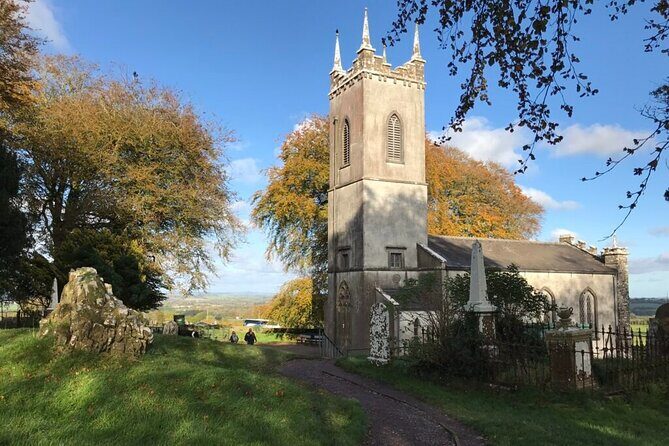
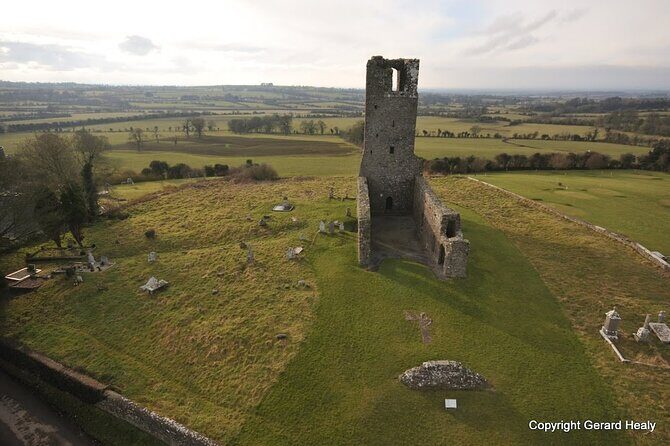
After Newgrange, you shift from prehistory to legend and early Christian identity. On the Hill of Slane, you’re told the story of Saint Patrick lighting the first Paschal fire there in 433 AD—as a challenge to pagan high kings at nearby Tara.
You’ll have about 35 minutes, and admission for this stop is included. For me, this is one of those places where a short visit works, because the value is in the background. With the legend explained, you can look at the setting and feel how power, belief, and visibility all connect.
If the weather is decent, you’ll get good sightlines in your photos. If it’s not, don’t stress—this stop is more about the narrative and the meaning than “hang out all day in the wind.”
Hill of Tara: Ireland’s old power center, still loud in the imagination
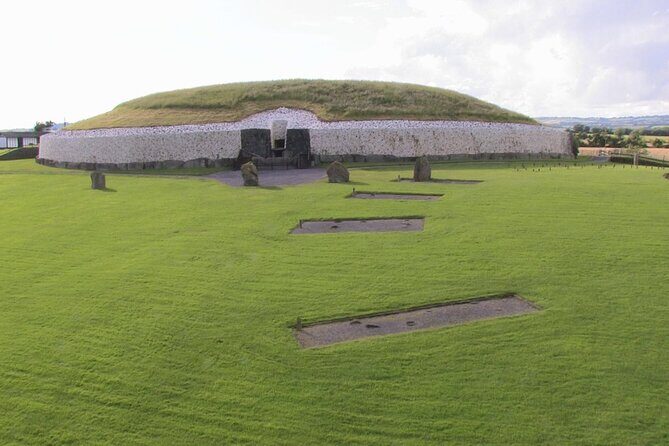
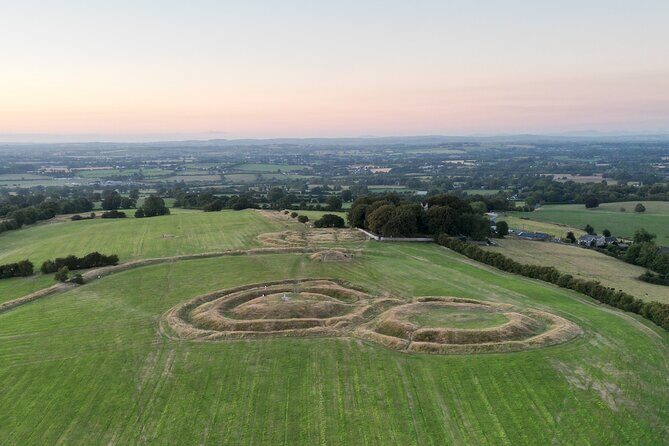
Then comes Hill of Tara, about 45 minutes with admission included. Tara is described as one of Ireland’s most important archaeological and historical sites and the ancient seat of power. It also has a special place in Ireland’s more recent history as an independent fledgling nation.
This is the kind of site where you’ll benefit from looking past the grass and seeing the layers. You’re standing in a place that kept meaning across eras: kings, ceremonies, and later national identity. With a guide, Tara stops being vague and becomes a timeline you can recognize.
The practical thing to watch: because the stop is time-limited, pick what you want most. If you love archaeological form, aim for the key viewpoints and structures. If you’re more into national story, listen closely to how the site’s “power” role is framed.




Bective Abbey: another Cistercian lesson, this time by the Boyne
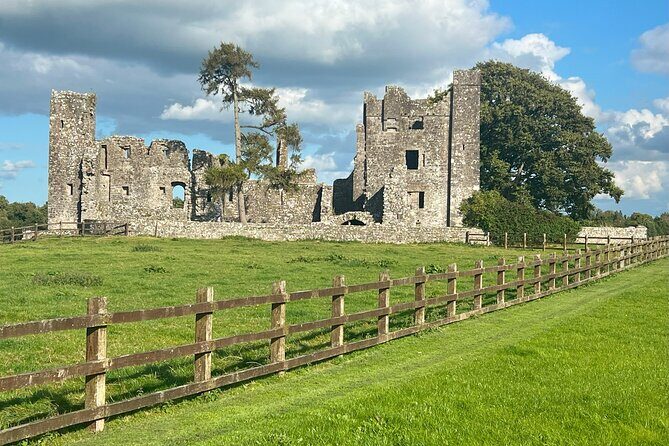
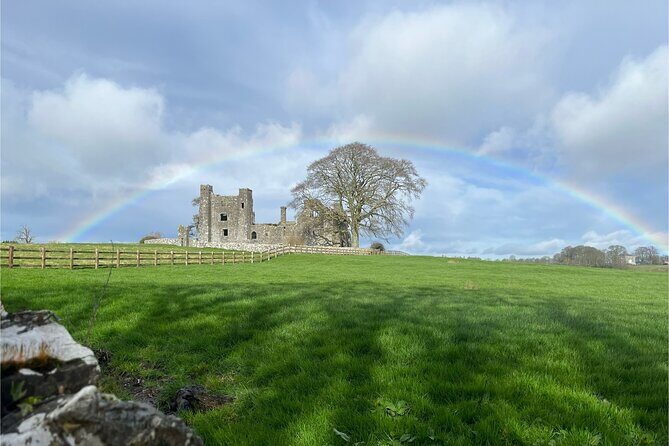
Bective Abbey is the second abbey stop, and it follows Mellifont in a helpful way. It’s near the River Boyne in County Meath and is a well-preserved Cistercian abbey founded in 1147 by Murchad O’Melaghlin, King of Meath. It was the second Cistercian abbey in Ireland, after Mellifont.
You’ll have about 35 minutes, and admission is free at this stop. I like Bective because it feels different from Mellifont: you’re not just seeing “another abbey,” you’re seeing how the Cistercian model spread and adapted in a new setting.
If you’re thinking about the day’s flow, Bective works as a palate cleanser. Newgrange is big-stakes prehistory, Tara is storytelling from another era, and then you get back to stone, symmetry, and the calmer feel of monastic ruins.
Trim Castle: the big Norman fortress that closes the loop
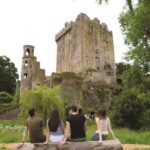
Finish with Trim Castle, and plan on treating this as your longer finale. It’s about 2 hours, and admission isn’t included. Trim is Ireland’s largest Anglo-Norman castle, built over roughly 30 years by Hugh de Lacy and his son Walter in the late 12th century.
The keep is described as monumental, three stories, and cruciform in shape, surrounded by a curtain wall, moat, and defensive towers. You also get modern walkways, which makes it easier to picture how the fortress worked rather than just staring at walls.
What I find fun here is the cultural crossover. Trim Castle has been visited by historic figures like King John and Richard II, and it’s also a filming location for Braveheart. Even if you’re not a movie buff, that connection helps you remember scale and use of space.
A note on expectations: Trim isn’t a quiet, mystical ruin like some abbeys. It’s built for defense and administration, and it shows. If you want your day to end with energy, this is the right closer.
Price and value: what you’re really paying for
The price is $1,087.16 per group (up to 6). That’s not cheap in “per person” terms, but it can be good value in “per family/group” terms—especially on a day where you’re stacking multiple high-demand sites.
Here’s what you’re getting that you’d otherwise have to coordinate yourself:
- Private transportation plus parking fees
- Bottled water
- A full route that strings together sites that are not “near each other” in a typical city-walk sense
- A dedicated schedule that gives you time where it matters: Newgrange (~3 hours) and Trim (~2 hours)
What you’re not getting (and should budget for):
- Lunch
- Newgrange tour + exhibition (€18 per booking)
- Trim Castle admission
If you’re traveling solo, the cost per person can feel steep compared to public bus tours. If you’re traveling as a couple or small group, you’re buying time, comfort, and a guide who can keep the day coherent.
How to make the day smoother (and more enjoyable)
This is one of those trips where you’ll have the most fun if you prep like an adult. The day runs about 6 to 8 hours, and you’ll move from site to site without a long sit-down lunch break.
I suggest you plan for food in a flexible way. Lunch is not included, so bring simple snacks if you’re the type who gets shaky energy mid-afternoon. Water is provided, but having a backup bottle won’t hurt.
Comfort matters too. You’ll be on hills for Slane and Tara, and you’ll be walking around ruins at abbeys plus walkways at Trim. The tour notes moderate physical fitness, so choose shoes you can trust.
Finally, if you care about Newgrange’s inner chamber experience, ask early. The review story about Gerry arranging access is encouraging, but you’ll want to confirm what’s possible for your specific booking.
Should you book this Dublin-to-Boyne Valley day trip?
Book it if you want one day that covers the Boyne Valley’s main themes: prehistoric monument, saints and legends, medieval monastic sites, and a real Anglo-Norman fortress. You’ll like the structure, the private transport, and the time at Newgrange and Trim.
Skip it (or at least reconsider) if you want slow travel with long, unstructured breaks at every stop. The schedule is built to pack in serious highlights, so you’ll be moving a lot and spending less time in each location.
If your group is up to 6, this can be an efficient, satisfying value purchase. And if you’re the kind of person who enjoys stories that connect centuries, you’ll get a lot out of the way the day is stitched together.
FAQ
How long is the Dublin Full-Day Tour through Boyne Valley?
It runs about 6 to 8 hours.
How many people are on this tour?
It’s a private tour. Only your group participates, with a maximum of up to 6 people.
Is hotel pickup included?
Yes. Pickup is offered from your hotel.
What’s included in the price?
Private transportation, parking fees, and bottled water are included.
What is not included?
Lunch is not included. Also, admission fees are not included for Newgrange (including the exhibition) and Trim Castle.
How much is the Newgrange admission/exhibition fee?
The Newgrange tour + exhibition fee is listed as €18.00 per booking.
What sites are included on the itinerary?
You’ll visit Mellifont Abbey, Newgrange, Hill of Slane, Hill of Tara, Bective Abbey, and Trim Castle.
What language is the tour offered in?
The tour is offered in English.
Is there a cancellation option?
Yes. You can cancel for free up to 24 hours in advance for a full refund.