REVIEW · DUBLIN
Irish Baking Class: Granny’s Apple Cake, Traditional Scones
Book on Viator →Operated by Emily Lavelle · Bookable on Viator
Baking in a Dublin home feels more personal. I love how this class happens in a Victorian Dublin home with Emily Lavelle, so Irish food culture feels lived-in, not staged. You start with tea or coffee, then you bake, chat, and end with warm results you can actually eat.
Two things I really like: the small group size (max 6 people) keeps it relaxed, and you get to choose between Traditional Irish scones or Granny’s Apple Cake. Either way, you learn as you go, and you leave with extra baking plus recipes to recreate the results back home.
One consideration: the whole experience runs about 1 hour 30 minutes, so it is focused on hands-on baking rather than a longer Dublin sightseeing day. If you want hours of wandering and stop-by-stop city content, this may feel too short and too kitchen-centered.
In This Review
- Key highlights before you book
- A Victorian Dublin welcome where tea comes first
- Choosing Your Bake: scones or Granny’s Apple Cake
- Traditional Irish scones
- Granny’s Apple Cake
- What Happens in 90 Minutes: from mixing to warm dessert
- A note on variety
- The Irish culture lessons that show up while you cook
- Taste test: how scones and apple cake actually feel in your hands
- Scones: buttery, tender, and made for cream + jam
- Apple cake: spiced comfort with real apple chunks
- Price and value: what $102.41 buys you in real terms
- Getting there: Morehampton Road timing and small-group logistics
- Who should book this class, and who might skip it
- Should you book this Irish baking class?
- FAQ
- FAQ
- How long is the Irish baking class?
- What time does the class start and where do I meet?
- Can I choose between scones and Granny’s Apple Cake?
- Is the class suitable for children?
- Can dietary requirements be accommodated?
- Is there free cancellation?
Key highlights before you book
- Tea or coffee starts the session so you are in a calm, chatting mood before you bake
- Choose your bake: Traditional scones or Granny’s Apple Cake made the traditional way
- Hands-on lessons plus Irish food stories during the cooking time
- Warm serving included with scones paired with Irish butter, jam, and fresh cream, or apple cake with cream
- Family-friendly format for ages 8+ with room for people who do not bake often
- Take home extra and the recipes, so your kitchen can become Irish for a night
A Victorian Dublin welcome where tea comes first
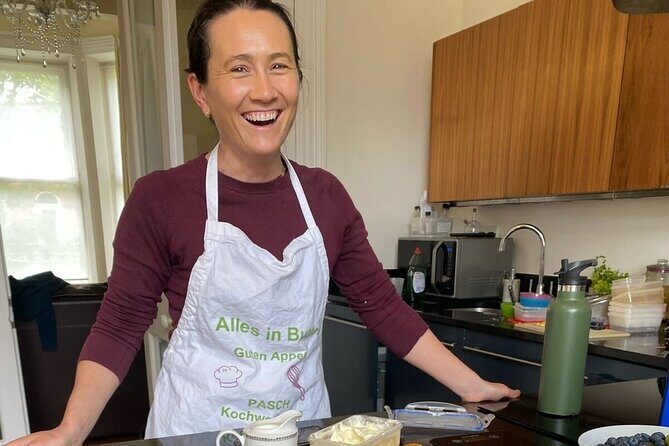
The best part of this experience is the setting. You do not meet in a loud kitchen studio with lines and timers. You meet for the class at Morehampton Road and then settle into Emily Lavelle’s home setup, which keeps the whole morning feeling friendly and unhurried.
You begin with a simple ritual: tea or coffee. That matters more than it sounds. It sets the tone, and it gives you time to ease in before flour flies. From there, the class stays practical. You bake, you get feedback, and you also get conversation about Irish food and everyday life.
The tone is warm and informal, and that shows up in how people talk with each other during the session. Emily’s approach blends cooking with culture and lifestyle coaching, since the host is also a diet & wellness coach. In plain terms, you get ideas for cooking that do not require a culinary degree.
You can also read our reviews of more cooking classes in Dublin


Choosing Your Bake: scones or Granny’s Apple Cake
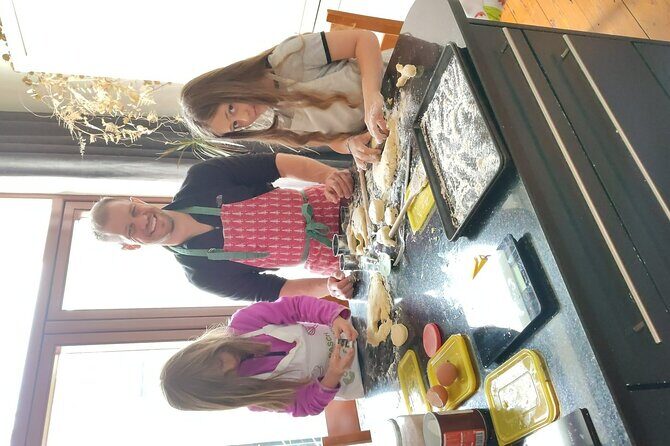
This is not a one-bake-fits-all class. You choose between two classic Irish options:
Traditional Irish scones
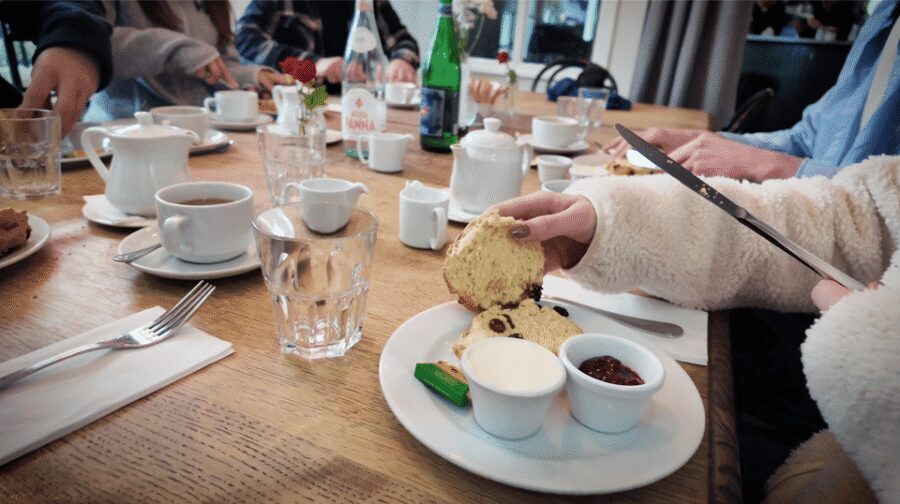
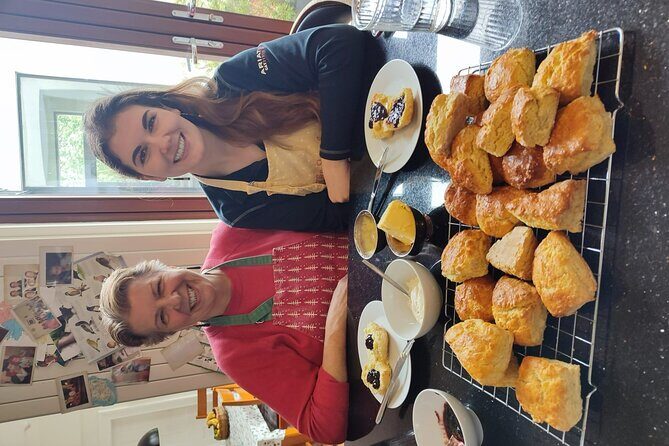
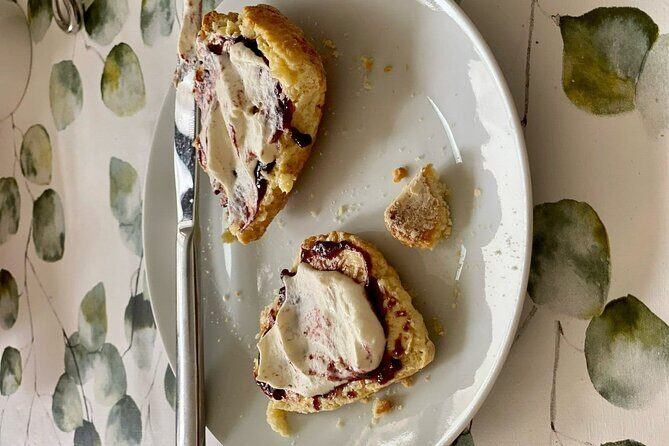
If you pick the Irish scones, the goal is light, tender, and easy to eat right away. The session includes the traditional serving style: Irish butter, Irish jam, and fresh cream. That trio is a big clue about how scones are treated in Ireland. They are not just pastries for a tray. They are a proper treat you eat warm and close to the oven.
Granny’s Apple Cake
If you choose Granny’s Apple Cake, you get something homier and spiced, with apple chunks and a sweet-spice balance. It is described as the authentic Irish way, and the finishing move is also classic: you enjoy it warm with a dollop of fresh cream.
Both choices come with the same core advantage: you leave knowing how to make something you can actually replicate. The class also says you can take home extra baking and you will receive the recipes, which is what turns this from a one-time activity into something you can use later.
What Happens in 90 Minutes: from mixing to warm dessert
The timing is tight in the best way. You have about 1 hour 30 minutes, which means you spend your effort where it counts: on technique and on eating what you make.
Here is the flow you should expect:
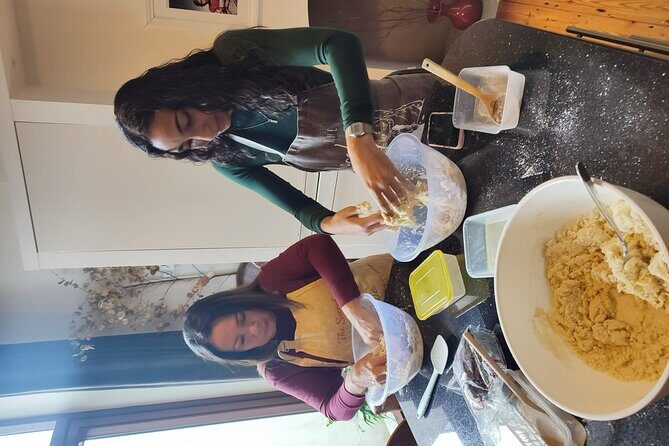
First, you settle in with tea or coffee. Then you start baking, either scones or apple cake, using the relevant traditional recipe. While you work, Emily shares cooking insights and Irish food context. This part is not just trivia. It helps you understand why certain ingredients and methods are treated as normal in Ireland.
As your bake goes in, the conversation continues. You get to talk about Irish food, culture, and traditions while your creation cooks. That mix of doing and listening is what makes this feel comfortable, even if you are not a confident baker.
When your food is ready, you sit down to enjoy it warm. If you made scones, it comes with Irish butter, Irish jam, and fresh cream. If you made the apple cake, you get the spiced flavor experience with cream. The session ends back at the meeting point, so you are not left figuring out what to do next.






A note on variety
The class menu lists scones and Granny’s Apple Cake, and that is the backbone. In at least one firsthand account, the start included a cup of tea plus warm homemade soda bread before the main baking. Even if yours does not include that exact item, the overall idea is consistent: you start with something warm, then move into the main bake.
The Irish culture lessons that show up while you cook
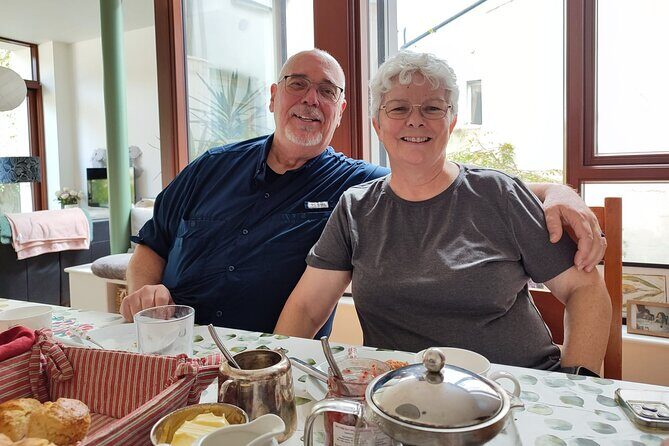
This class is sold as Irish baking, but the cultural part is not an add-on. Emily uses the kitchen to talk about Irish food habits and life—how people think about everyday meals, why comfort foods matter, and how baking fits into family tradition.
You will also get practical guidance because Emily is a diet & wellness coach. The cooking tips are aimed at helping you think about healthier habits without turning baking into a punishment. That is a useful angle for visitors who want comfort food, but also want to bring home something smarter than just a sugar-heavy recipe.
One more thing I liked: the format does not require you to be talkative. You can ask questions or just follow along. The group stays small, and the pace stays friendly, so you are not competing for attention.
Taste test: how scones and apple cake actually feel in your hands
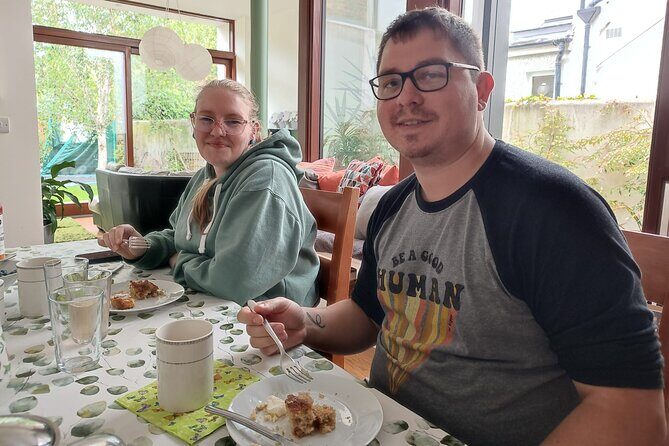
Let’s be honest: the proof is the first bite.
Scones: buttery, tender, and made for cream + jam
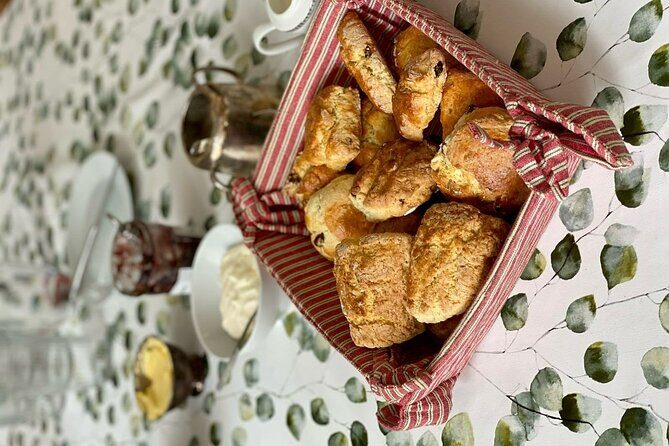
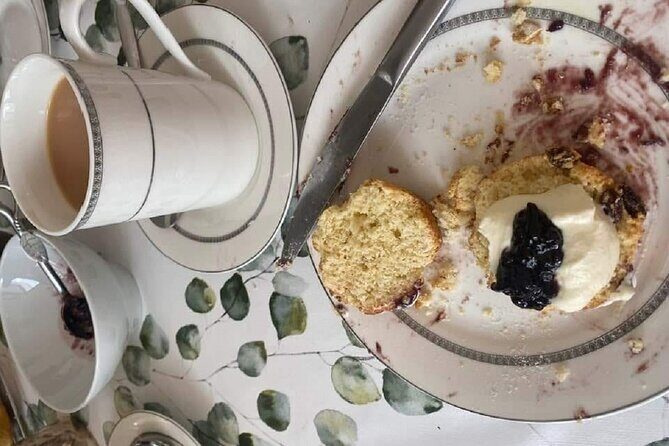
The scones are described as golden and buttery, with a light and fluffy texture. The serving method matters. In this setup, your scones are not meant to be eaten plain. They are meant to be topped and enjoyed like a proper Irish treat—with fresh cream, butter, and jam.
What you learn from that is simple: scones are about contrast. Warm pastry plus creamy richness plus sweet fruit. If you want a bakery-style result at home, this class gives you a path to get there.
Apple cake: spiced comfort with real apple chunks
Granny’s Apple Cake is described as wholesome, with apple pieces and the right sugar-and-spice balance. It also gets served warm with fresh cream. That pairing is classic because it softens the spice and makes the cake taste more rounded.
If you tend to gravitate toward desserts that feel like home cooking, the apple cake choice is likely to win you over. It is also a good option if you want something a little less delicate than scones.
Price and value: what $102.41 buys you in real terms
At $102.41 per person, this is not the cheapest activity in Dublin. But you are paying for more than a recipe.
You are paying for:
- hands-on instruction in a real home setting
- tea or coffee at the start
- your choice of bake (scones or apple cake)
- a sit-down moment to enjoy what you made warm
- the serving supplies that go with the food (butter, jam, fresh cream)
- extra baking to take home
- recipes sent to you so you can repeat the results
Then there is the small-group value: max 6 people. That usually means less waiting and more personal attention. For a cooking class, that is worth money.
Also, consider the time commitment. This is about 1 hour 30 minutes, which makes it easy to fit into a travel schedule. You get a satisfying experience without losing half a day to logistics.
One more practical note: it is typically booked ahead. On average, this kind of class is secured about 64 days in advance, so if you have a specific date in mind, plan early.
Getting there: Morehampton Road timing and small-group logistics
The start time is 10:30 am, and the meeting point is Morehampton Road, Dublin. The tour ends back at the meeting point, so you are not stuck at the end of a neighborhood with no plan.
The experience is in English, and the listing includes mobile ticket entry. It also says it is near public transportation. If you are coming from more central parts of town, using a taxi can be an easy option for the trip to and from the home area, based on how guests describe getting there.
Group size is capped at 6, so the space should stay comfortable. And the class is suitable for ages 8+, so it works for families who want something hands-on instead of another museum stop.
Dietary requirements can be catered for if you let the provider know in advance, which is especially useful for travelers who need adjustments but still want to bake.
Service animals are allowed, which is a helpful detail to have clearly stated.
Who should book this class, and who might skip it
This experience fits best if you want Irish culture you can taste and carry home.
You will probably enjoy it if:
- you want a hands-on Irish food experience
- you like small-group activities rather than crowded classes
- you are traveling with kids 8+ and want them involved
- you want comfort-food style recipes you can repeat
- you are interested in Irish food culture and not just technique
It may be less ideal if:
- you are hoping for a longer Dublin walking tour with major sight stops
- you want a silent, no-chat cooking session
- you are extremely short on time and need a very quick stop
Also, remember there is a minimum number of travelers (2) for the class to run. If your dates are flexible, you usually have options.
Should you book this Irish baking class?
If you are building a Dublin trip around memorable food moments, I think this is an easy yes. The value is strong because it is not only about baking; it is about doing it in a real home and finishing with a warm, proper serving style. Between the tea start, the two recipe choices, the small group pace, and the ability to take home extra baking plus the recipes, it checks a lot of boxes in one compact morning.
Book it if you want a class that feels relaxed and genuinely Irish, not just a cooking demo. Aim to reserve early since it is often booked about two months ahead on average.
FAQ
FAQ
How long is the Irish baking class?
The experience lasts about 1 hour 30 minutes.
What time does the class start and where do I meet?
The class starts at 10:30 am, and the meeting point is Morehampton Road, Dublin, Ireland.
Can I choose between scones and Granny’s Apple Cake?
Yes. You can choose to bake either traditional Irish scones or Granny’s Apple Cake.
Is the class suitable for children?
It is suitable for ages 8+ and is described as perfect for families.
Can dietary requirements be accommodated?
Dietary requirements can be catered for if you let the provider know in advance.
Is there free cancellation?
Yes. You can cancel for a full refund up to 24 hours before the experience start time.