REVIEW · DUBLIN
Cupid’s Trail: Romantic Puzzle Quest in Dublin
Book on Viator →Operated by Questo · Bookable on Viator
Love stories meet city puzzles in Dublin. This is a smartphone treasure hunt with romantic stops like Love Lane, plus a finish at Oscar Wilde House. I love that you’re not stuck with a fixed guide voice—you solve clues at your pace—and that the route mixes romance with real Dublin sights.
The biggest plus for me is the way it ties together a walking route and mini “story” moments. You’ll check boxes off the Dublin list (Temple Bar area, Ha’penny Bridge, Molly Malone) while working through the next clue, and that turns sightseeing into something you actually do. The only real drawback: the quest includes a stop at CHEWBREW Bubble Tea Room, and one specific location like that can be a letdown if it’s closed or not where you expect.
In This Review
- Cupid’s Trail: Romantic Puzzle Quest key highlights
- What you’re actually doing on Cupid’s Trail
- Starting at Fusiliers’ Arch near St Stephen’s Green
- Whitefriar Church: your next clue and your first real pause
- CHEWBREW Bubble Tea Room: a fun stop that can also be a risk
- Love Lane: where the romantic theme becomes more than marketing
- Temple Bar Pub and the feeling of a city that never stops
- Ha’penny Bridge and Molly Malone: two quick steps into postcard Dublin
- Irish Whiskey Museum and Gormleys Fine Art before the finish
- Price and value: is $7.21 a good deal in Dublin?
- Getting the most out of a self-guided romantic puzzle quest
- Who Cupid’s Trail is best for (and who should skip it)
- Should you book Cupid’s Trail in Dublin?
- FAQ
- How long does Cupid’s Trail take?
- Do I need a guide?
- Where do I start and where do I finish?
- Are attraction entry tickets included?
- Is it suitable for groups?
- When can I play it after booking?
Cupid’s Trail: Romantic Puzzle Quest key highlights

- Smartphone clue-by-clue play: you start at Fusilier’s Arch and keep moving stop to stop
- Romance-forward route: includes Love Lane and the Oscar Wilde House finish
- Self-paced breaks: each stop tells you what to do, and you can linger as long as you like
- Dublin classics in one walk: Temple Bar Pub, Ha’penny Bridge, and the Molly Malone Statue are on the path
- Good value for solo-friendly wandering: the price is low and you don’t need attraction entry tickets
- Tone and locations can vary: if a listed stop (like the bubble tea stop) isn’t available, your experience may feel choppy
What you’re actually doing on Cupid’s Trail
Cupid’s Trail in Dublin is a group activity, but it plays like a self-guided game. You don’t get a tour guide walking you from place to place. Instead, you use your smartphone to follow a story framework, solve puzzles, and get directions to the next stop.
The key idea is simple: you’ll walk through central Dublin and answer the clue at each location. That clue then feeds the next step. It’s a “treasure hunt” format with a romantic theme, and it’s built to help you learn history while you’re sightseeing—even though you’re the one doing the thinking on your phone.
Time-wise, plan for 30 minutes to 1 hour. That range makes sense because you control your pace at each stop. If you’re quick at puzzles, you’ll fly through. If you like reading the story beats and taking photos, you’ll stretch it toward the longer end.
You’ll also notice the experience is sold as private for your group. That’s great if you want your own rhythm and don’t want to feel like you’re waiting on other people.
You can also read our reviews of more tours and experiences in Dublin.



Starting at Fusiliers’ Arch near St Stephen’s Green

You begin at Fusilier’s Arch (near St Stephen’s Green), and you get your first clue right away. This opening matters more than it sounds. The first clue sets the tone for how you’ll interact with the game, where to look, and how quickly you should expect the story to move.
If you’ve done smartphone scavenger hunts before, you’ll probably find the start smooth. If you haven’t, give yourself a few minutes to get your phone ready before you begin. Turn on location services, confirm your sound settings, and make sure your screen won’t die halfway through. You’ll thank yourself later when you’re trying to work out the next direction without guessing.
Fusilier’s Arch is a solid starting spot because it’s central and easy to reach, and the route then carries you deeper into Dublin’s core. From the start, the game is already doing the work of getting you to walk—not just stand and read.
Whitefriar Church: your next clue and your first real pause
Your second stop is Whitefriar Church. Here you’re given a new clue, and then you can stop as long as you like and continue exploring at your own pace.
This is where the “game vs. sightseeing” balance starts to show. If you want a gentle way to see the city without feeling like you’re rushing, this stop is a good place to slow down. Take a look around, work the puzzle when you’re ready, then move on.
A practical note: churches and older buildings can mean you’ll be walking on uneven ground or curbs, and the surfaces can change quickly. Wear shoes you’d wear for real city walking, not just a casual stroll. It sounds obvious, but it matters when you’re stopping repeatedly.
CHEWBREW Bubble Tea Room: a fun stop that can also be a risk
Next up is CHEWBREW Bubble Tea Room. The game gives you another clue here, and again, you can take your time and explore before continuing.
This stop is memorable for one reason: it’s not a landmark you’d normally see in a classic sightseeing-only route. It’s a real-world Dublin business spot included as part of the story path.
The consideration is also obvious. One thing can ruin a smooth puzzle hunt faster than you’d expect: a stop location being closed or not matching what the game expects. Since the experience specifically names this bubble tea stop, I’d plan your attitude accordingly. If it’s closed when you arrive, don’t fight the phone for 20 minutes—use that time to refocus and keep moving. The game is about the flow of solving clues at each stop, not about locking onto one exact location longer than needed.
Love Lane: where the romantic theme becomes more than marketing
Then comes Love Lane, another clue location, still with that same format: solve what you need, and you’re free to linger as long as you want before heading to the next point.
Love Lane is one of the stops listed as a romantic site, and that’s the best way to think about it. This is where the “romantic puzzle quest” idea turns into a recognizable theme you can feel in the route. Even if you’re traveling with friends instead of a partner, this kind of themed walk is fun because it mixes playful storytelling with the city’s places.
If you like taking photos, this is a good place for it. Just remember: the goal is still to solve the clue. Take the picture, then get back to the puzzle so you don’t end up far behind schedule.






Temple Bar Pub and the feeling of a city that never stops
Your next clue stop is The Temple Bar Pub. Like the others, you’re free to pause, solve, and keep going whenever you’re ready.
Temple Bar is a classic Dublin area, and including it in a puzzle quest does something smart: it adds energy. Instead of ending up only at quiet, stone-and-history spots, you get a built-in “lively city break.” If you want a rest, this is the type of place where a short pause feels natural.
That said, keep your pacing realistic. Busy areas can make it harder to find the exact spot you need for the clue. I’d give yourself a little extra time here, even if you’re normally fast with puzzles. The point is to enjoy the walk, not sprint from one clue to the next.
Ha’penny Bridge and Molly Malone: two quick steps into postcard Dublin
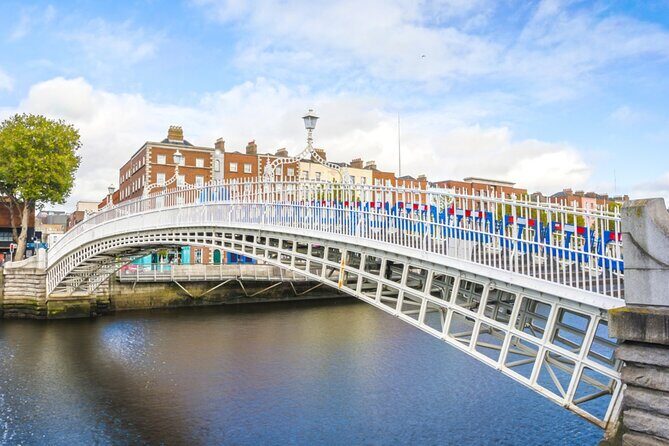
After Temple Bar, the quest routes you to Ha’Penny Bridge, then to the Molly Malone Statue. Both stops follow the same structure: new clue, then as long as you like to explore.
This is a smart section of the game because it strings together two Dublin icons that most people associate with the city. In a puzzle hunt, that matters. You’re not just learning the city by solving; you’re also getting those “I’m really in Dublin” moments.
If you’re traveling with kids or a group where puzzle-solving speed varies, this pair of stops can keep everyone engaged. Even if one person is stuck on the clue, another person can help scan the immediate area while you all take turns thinking. The format is designed for small bursts of problem-solving, not one long brain puzzle.
Irish Whiskey Museum and Gormleys Fine Art before the finish

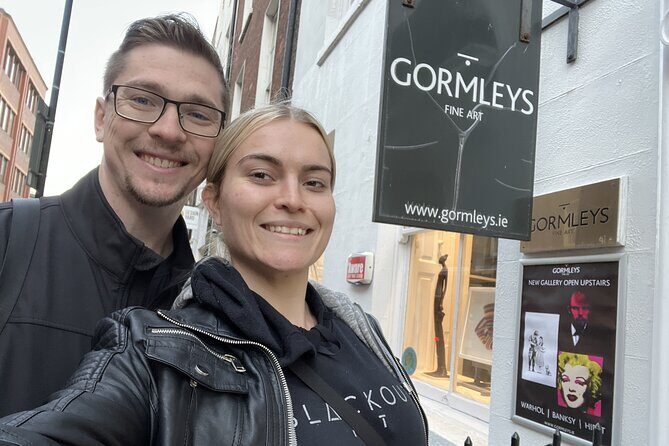
Next comes Irish Whiskey Museum, followed by Gormleys Fine Art. Then your quest ends at Oscar Wilde House, where both the story and the city exploration games finish.
What I like about ending with these types of stops is that they close the loop between theme and place. Whiskey connects to Irish identity, art connects to Irish culture, and Oscar Wilde connects directly to the literary side of Dublin. Even if you don’t plan to buy anything at these stops, the game’s structure gives you a reason to walk to them and pay attention when you’re there.
Also, finishing at Oscar Wilde House gives the experience a satisfying end point. You’re not wandering forever. You solve the final clue, then you’re done.
Price and value: is $7.21 a good deal in Dublin?
At $7.21 per person, Cupid’s Trail is priced like a budget-friendly way to turn a walk into something interactive. The value gets even better because it doesn’t require attraction entry tickets to complete. That’s important in Dublin, where costs can add up quickly if you decide to “just pop into” everything.
You also get a mobile ticket, and the experience is playable anytime after booking without rescheduling. That’s not a minor detail. It means you can fit it into your day without coordinating with a guide schedule. If your plans shift, you’re not stuck hunting for a specific departure time.
The one thing to watch is that this is still a city-walk activity. Your “real cost” isn’t just money—it’s energy and attention. If you hate puzzles or you’re traveling with limited walking stamina, you might enjoy a traditional guided tour more.
Getting the most out of a self-guided romantic puzzle quest
Here are practical tips that make this kind of experience easier, especially with a route that includes both indoor-style clue stops and open-air photo stops.
Set yourself up before you start
- Make sure your phone battery is topped up.
- Turn on location services before you hit Fusilier’s Arch.
- Take a quick breath. The first clue sets the rhythm.
Plan for short stops, not full detours
Each stop is described as allowing you to pause and explore as long as you like, but the game only works when you keep moving through the clue chain. If you get carried away wandering, you’ll end up rushed at the end.
Expect a theme, not a straight lecture
The experience is marketed around romance and puzzles, and it says it also helps you learn history while sightseeing. That usually means you’ll learn in small pieces connected to the story beats—not like a full museum-style explanation.
If one stop is a problem, keep going
Since the route includes places like CHEWBREW Bubble Tea Room, you may hit a moment where a location looks different than expected. Don’t spiral. Work the clue as written if you can, then shift your focus back to getting to the next stop.
Who Cupid’s Trail is best for (and who should skip it)
This is a good fit if you want:
- A budget-friendly smartphone treasure hunt in Dublin
- A self-paced activity that still gives you a clear route
- A romantic-themed way to see landmarks like Love Lane, Temple Bar, Ha’penny Bridge, and the Molly Malone Statue
- A group setup that stays private for you (only your group participates)
It may be a weaker fit if you:
- Want a traditional tour with a human guide doing the talking
- Dislike puzzle-based directions and prefer straightforward sightseeing
- Need guaranteed access to specific businesses at specific times (because one listed location can be a mismatch if it’s unavailable)
If you’re traveling as a couple or as friends who enjoy light competition, this route can feel playful without getting too serious.
Should you book Cupid’s Trail in Dublin?
If you like walking around central Dublin and you enjoy solving puzzles on your phone, I think Cupid’s Trail is worth a try. The price is low, the route hits recognizable landmarks, and the finish at Oscar Wilde House gives you a clean ending point.
I’d book it with two expectations set upfront: it’s self-guided, and it’s story/puzzle driven, not a lecture with guaranteed stops that always look the same. If you want flexibility and a fun way to move through the city, this is a solid pick.
FAQ
How long does Cupid’s Trail take?
The experience is listed as about 30 minutes to 1 hour.
Do I need a guide?
No. A tour guide is not included, and you play the quest using your smartphone.
Where do I start and where do I finish?
You start at Fusilier’s Arch (near St Stephen’s Green) and finish at Oscar Wilde House at American College, 1 Merrion Square N, Dublin.
Are attraction entry tickets included?
No. Entry tickets to attractions are not included, and they are not needed to complete the tour.
Is it suitable for groups?
It’s a private tour/activity, so only your group participates. If your group is larger than 15 people, you’ll need to make multiple bookings.
When can I play it after booking?
You can play it anytime after booking without rescheduling.